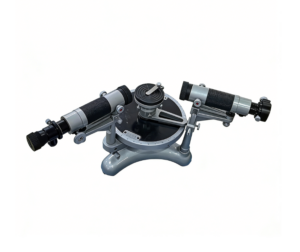
Atomfair SP-582 Spectrometer
1. Product Overview
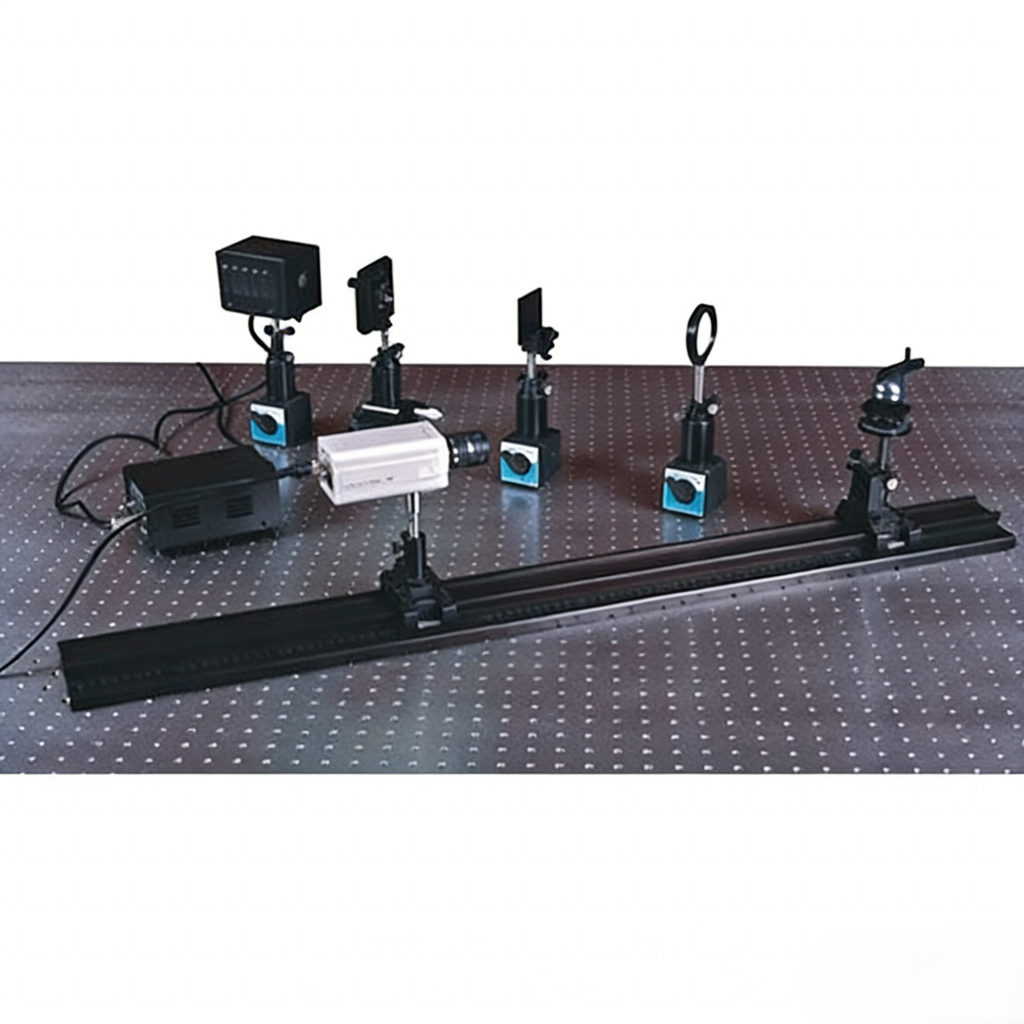
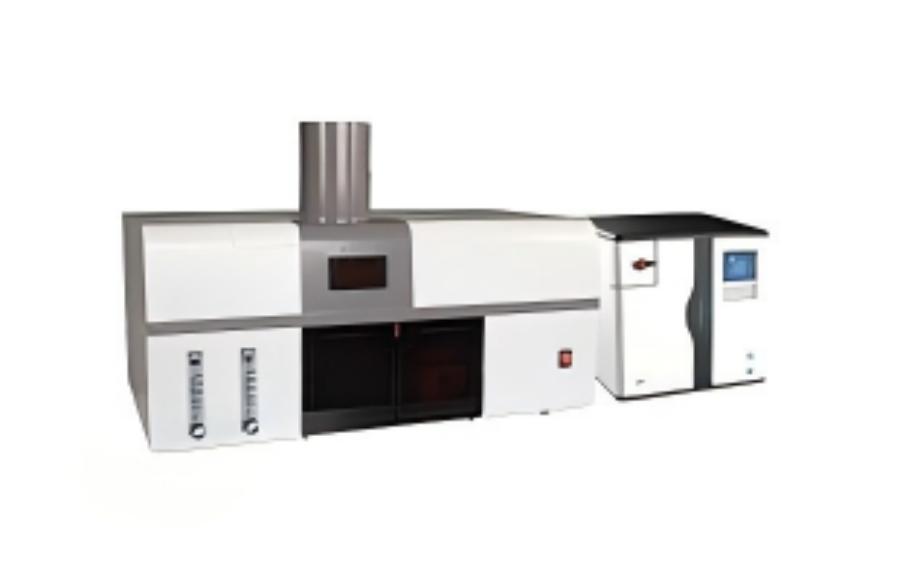
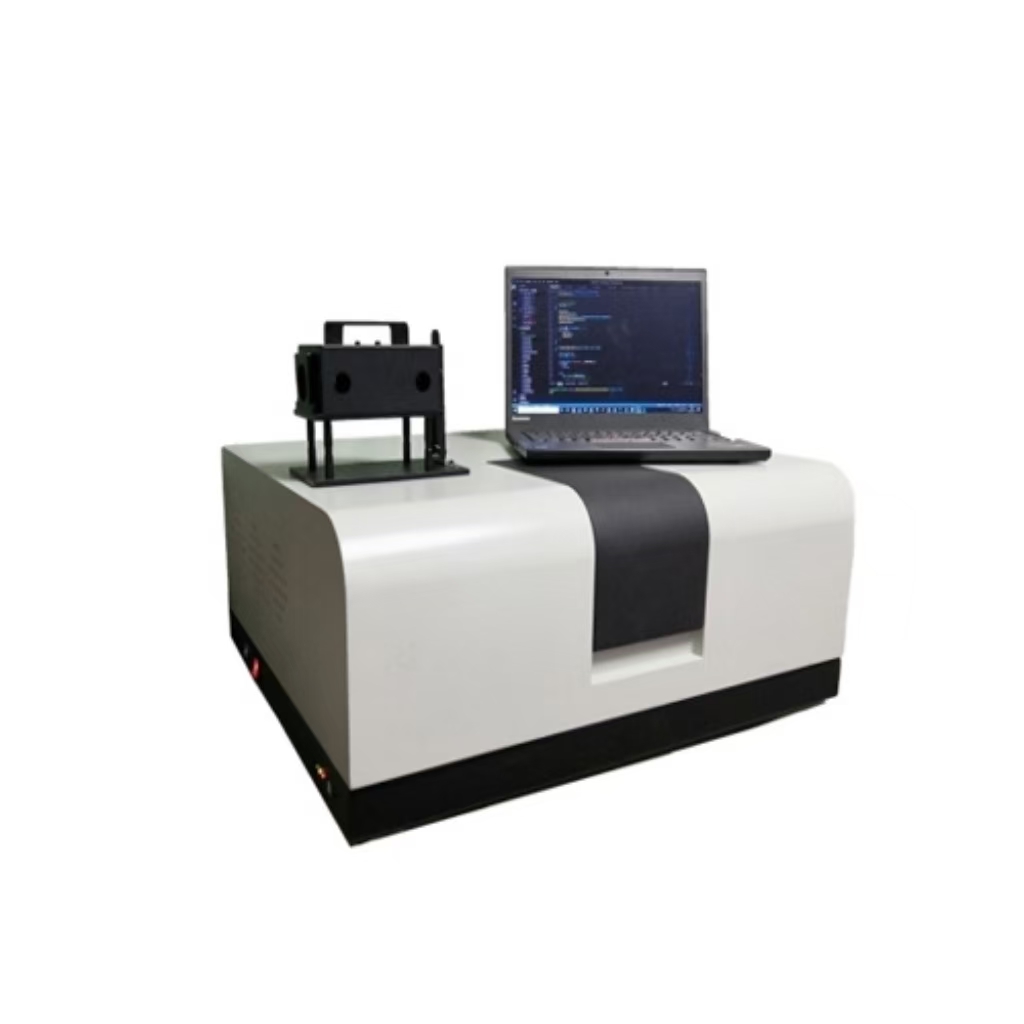
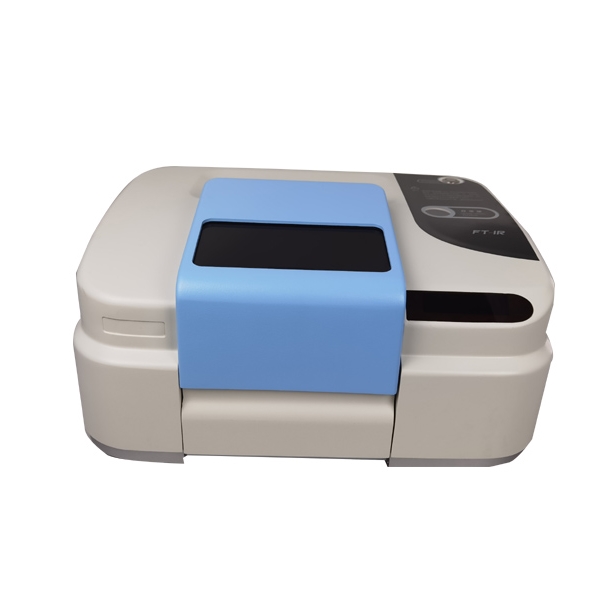
Atomfair SP-582 Spectrometer is a professional instrument specially designed for physics teaching and engineering optics experiments. It adopts a crankshaft positioning system and a continuous zoom handwheel design, supports multiple angle measurement and optical property testing experiments, and can customize configuration parameters to meet different experimental needs.
2. Core Features
-
- The collimator and telescope adopt a crankshaft positioning system with stable and accurate positioning;
-
- The eyepiece system and slit system are equipped with continuous zoom handwheel function, with flexible and convenient operation.
3. Main Experimental Content
-
- Carry out angle measurement in light reflection, refraction, diffraction and interference;
-
- Measure the vertex angle of a triangular prism (low-voltage sodium lamp power supply optional);
-
- Measure the minimum deviation angle of a triangular prism (low-voltage sodium lamp power supply optional);
-
- Measure the grating constant (low-voltage mercury lamp power supply optional);
-
- With various optional experimental devices, a variety of extended experiments can be carried out (such as measurement of refractive index of liquids and solids, measurement of sound velocity, measurement of polarized light, etc.).
4. Specification Parameters (International Standard)
- Angle measurement accuracy: 1>
- Focal length of collimator and telescope system: 170mm
- Light transmission aperture: =30mm (basic type) or =33mm (enhanced type)
- Field of view: 322>
- Focal length of telescope eyepiece: 24.3mm
- Triangular prism angle: 60±5
- Illumination lamp set: Long-life high-brightness green LED, 3V/220V power supply
- Grating: 300L/mm
- Optional accessories: Timed lighting system, ZF2 triangular prism (nD=1.67268, nF-nC=0.02087), polarization system
5. Main Configuration
Spectrometer, hand-held illuminated magnifying glass, grating, parallel flat plate, triangular prism, light source (optional), etc.
Configuration parameters can be customized according to different customer requirements.
If youe interested, have any questions, or have specific customization requirements, please feel free to contact us at inquiry@atomfair.com.
Can the Atomfair SP-582 spectrometer be configured for refractive index measurements of liquids and solids?
Yes, with optional experimental devices, the SP-582 supports extended experiments including measurement of refractive index of liquids and solids. The instrument allows customization of configuration parameters to accommodate different experimental needs, as stated in the product description.
What illumination system does the Atomfair SP-582 spectrometer use, and what optional light sources are available for specific experiments?
The SP-582 uses a long-life high-brightness green LED illumination lamp set with a 3V/220V power supply. For experiments such as measuring prism vertex angle or grating constant, optional low-voltage sodium lamp or low-voltage mercury lamp power supplies are available, as indicated in the product's optional accessories list.
What is the angle measurement capability of the Atomfair SP-582 spectrometer for diffraction or prism experiments?
The SP-582 spectrometer provides angle measurement accuracy of 1 arcminute (specified as '1>' in the international standard specification). This precision, combined with a crankshaft positioning system for the collimator and telescope, supports tasks such as measuring the vertex angle of a 60±5-degree triangular prism and the minimum deviation angle for grating constant determination.
The Atomfair SP-582 Spectrometer is a manually operated optical instrument designed for educational and engineering optics experiments, featuring a crankshaft positioning system for stable alignment and continuous zoom handwheels for flexible adjustment. Its 170mm focal length collimator and telescope, combined with a 300L/mm grating and optional accessories, support a range of angle and optical property measurements, though its performance is constrained by manual operation and the need for optional light sources.
Positive
- Stable crankshaft positioning system: The collimator and telescope use a crankshaft positioning system that ensures stable and accurate angular alignment, which is critical for reproducible measurements in reflection, refraction, and diffraction experiments.
- Continuous zoom handwheel flexibility: The eyepiece and slit systems feature continuous zoom handwheels, allowing smooth, adjustable magnification and slit width control to accommodate various experimental conditions and user preferences.
Trade-offs
- Requires optional light sources: Measurements such as prism vertex angle, minimum deviation, and grating constant require optional low-voltage sodium or mercury lamp power supplies, which are not included in the standard configuration and must be sourced separately.
- Manual operation and adjustment: The instrument relies on manual crankshaft positioning and handwheel adjustments, which may introduce operator-dependent variability and require careful handling to maintain measurement accuracy in high-precision applications.
Every advanced material, component, equipment, and instrument in our catalog is backed by rigorous testing. We maintain strict internal quality management frameworks and align with CE conformity metrics to deliver transparent, reproducible performance data via our public open-science repository.
To request raw batch performance data, submit formal vendor registration paperwork, or execute a fast-turnaround R&D manufacturing loop, contact us at inquiry@atomfair.com.
Item is dispatched under the Atomfair Shipping & Delivery Framework (Free worldwide shipping on orders over $59 USD excl. heavy equipment). Return is governed by the Atomfair Return & Refund Policy (7-day technical return window).