Solid Electrolyte Electrochemical Cell, Two-Electrode SystemProduct Type: Solid electrolyte electrochemical cell
Research-grade laboratory product
|
|||||||||||||||||||||||
|
|||||||||||||||||||||||
|
LABORATORY PROCUREMENT SUPPORT
For model selection, technical compatibility or configuration confirmation, contact our technical sales team.
E-MAIL: inquiry@atomfair.com
|
|||||||||||||||||||||||
|
Manufacturer: Atomfair LLC LLC
Brand: ATOMFAIR®
|
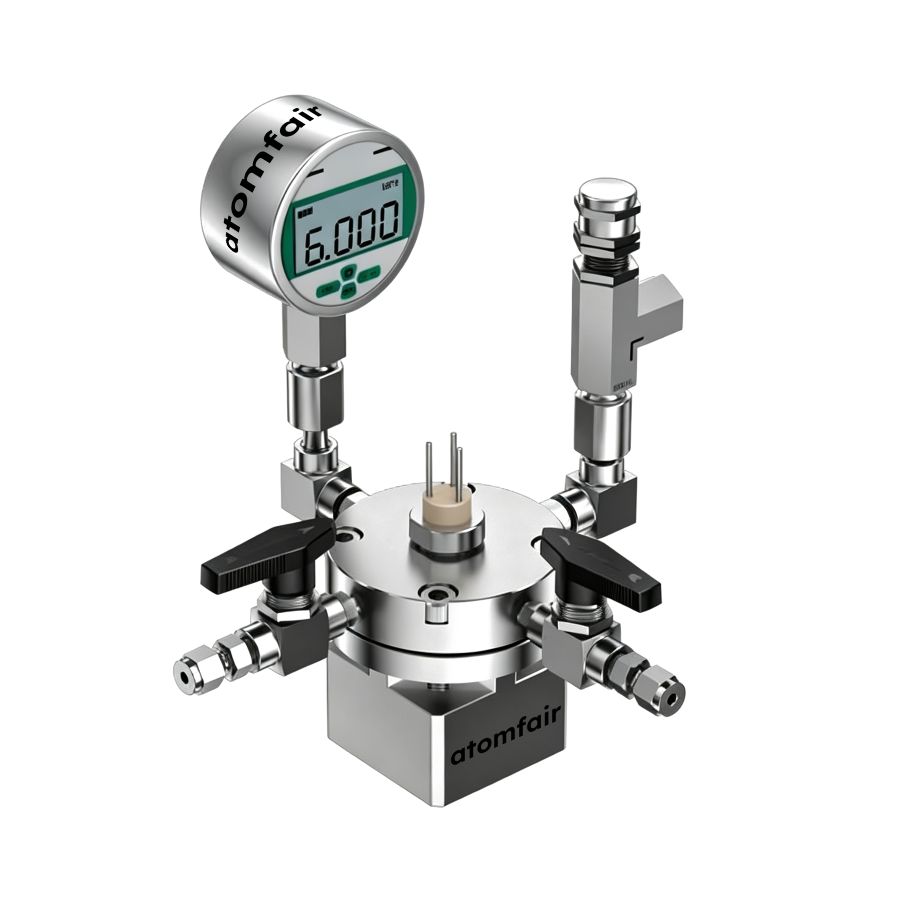
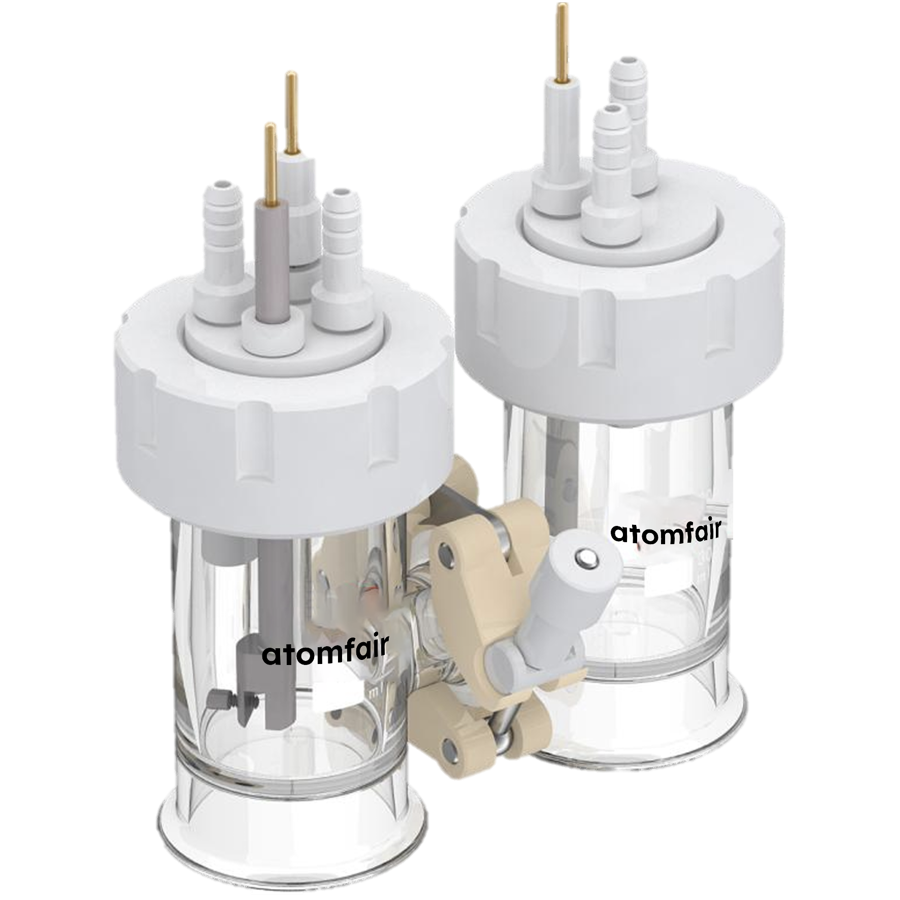
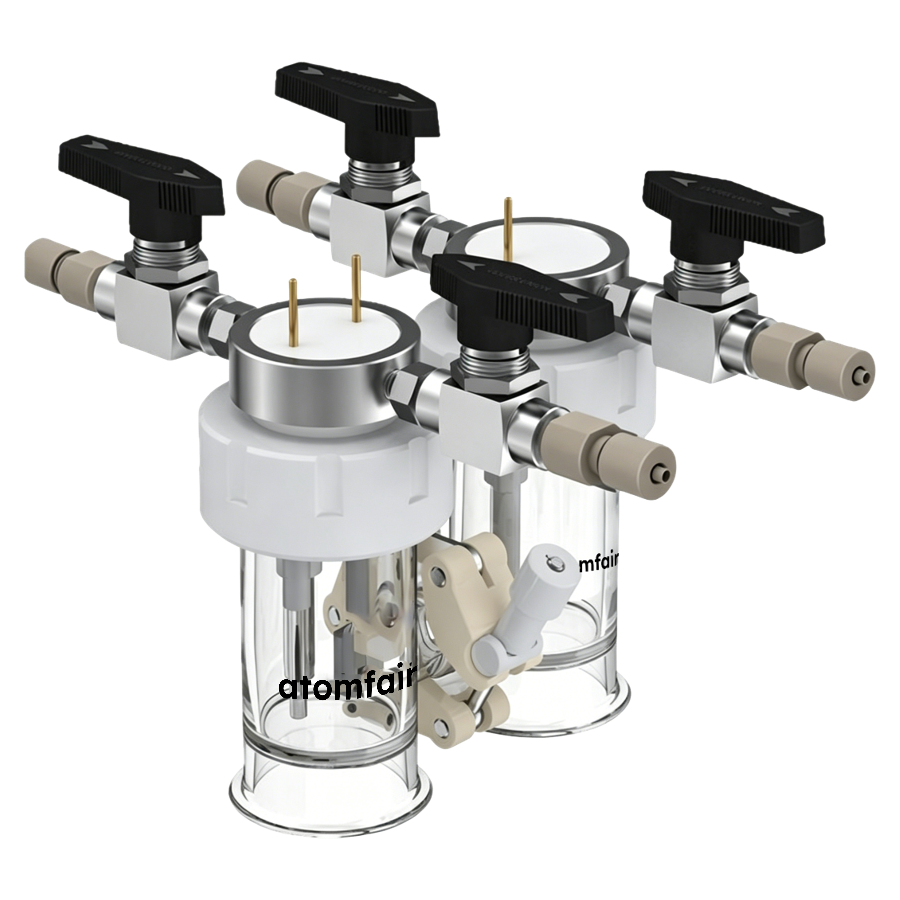
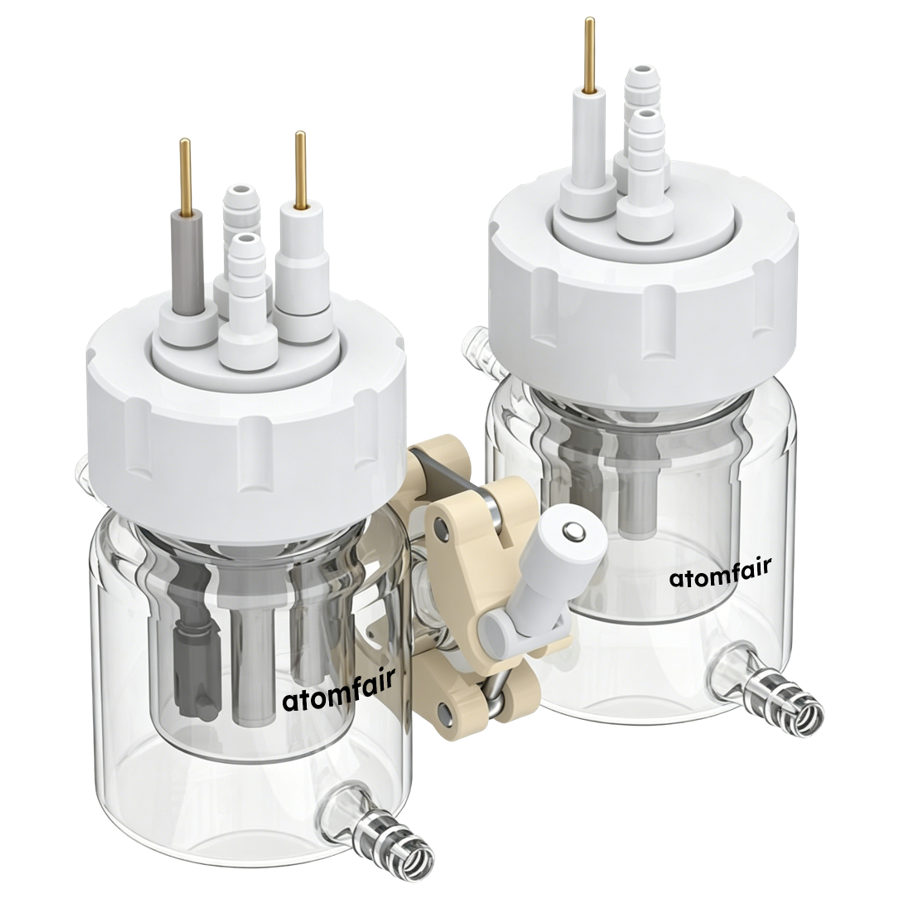
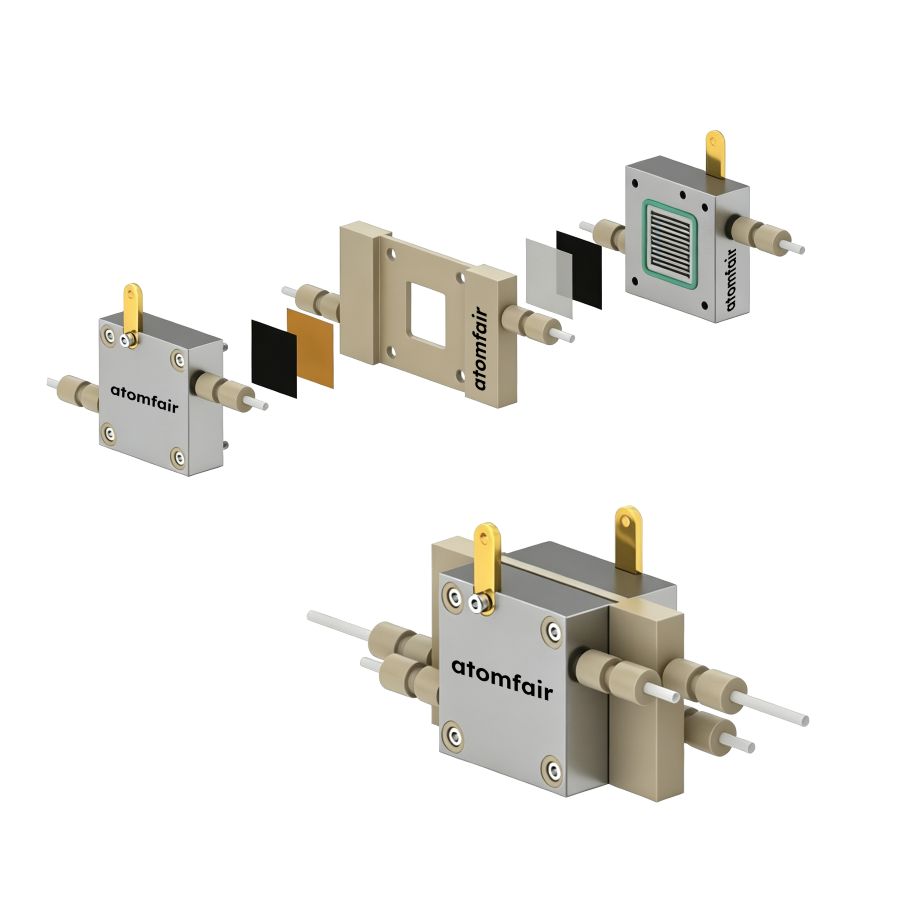
The solid electrolyte electrochemical cell requires compatible electrodes, membranes, windows, and gas diffusion electrodes for proper assembly and operation. It also requires a gas supply for the serpentine channels and a pure water supply to carry away liquid products.
- Accessory Compatibility: Select electrodes, membranes, windows, and gas diffusion electrodes that match the cell's sandwich structure and solid electrolyte dimensions.
- Gas Supply Requirement: Connect a regulated gas supply to the serpentine gas channels to ensure sufficient reactant concentration at the catalyst surface.
- Water Supply Requirement: Introduce pure water through the cell to carry away generated liquid products from the solid electrolyte region.
How does the solid electrolyte configuration in the AF-SEC-2E cell eliminate cation and anion contamination compared to liquid electrolyte systems?
The solid electrolyte layer directly prevents cation and anion introduction from a liquid electrolyte, as the cell uses a 3 mm thick square 4 cm² solid electrolyte hollow layer in a sandwich structure. This eliminates the contamination pathways inherent in liquid electrolyte systems, ensuring pure gas-solid interface reactions.
What electrodes, membranes, and gas diffusion components are required for the two-electrode solid electrolyte cell?
The cell requires separately purchased electrodes, membranes, windows, and gas diffusion electrodes, which must be confirmed during configuration. All accessory components must be compatible with the 20×20 mm standard size, 3 mm thick solid electrolyte layer, and two-electrode sandwich structure with serpentine gas channels on the bipolar plates.
What gas and liquid handling infrastructure is needed to operate the solid electrolyte electrochemical cell?
The cell requires a pure water supply to carry generated liquid products away from the solid electrolyte region, and serpentine gas channels on the inner side of the bipolar plates facilitate reactant gas flow to the catalyst surface. Standard protective packaging is used for delivery, with custom reinforcement available upon request for sensitive transport.
This two-electrode solid electrolyte cell uses a sandwich structure with serpentine gas channels to enhance reactant concentration at the gas-solid interface, while avoiding liquid electrolyte contamination; however, the fixed 3 mm thick, 4 cm2 solid electrolyte layer and need for pure water flow impose specific operational constraints.
Positive
- Eliminates liquid electrolyte contamination: Uses solid electrolyte instead of liquid electrolyte to avoid introduction of cations and anions, improving measurement purity in electrochemical studies.
- Serpentine gas channels enhance reactant concentration: Serpentine gas channels on bipolar plates increase gas reactant concentration at the catalyst surface, improving reaction efficiency.
Trade-offs
- Fixed solid electrolyte geometry: The solid electrolyte layer is a 3 mm thick, 4 cm2 hollow square with a standard 20×20 mm footprint, limiting electrode size and requiring precise configuration matching.
- Requires pure water supply for product removal: Pure water must be continuously supplied to carry generated liquid product away from the solid electrolyte region, adding an infrastructure dependency.
Every advanced material, component, equipment, and instrument in our catalog is backed by rigorous testing. We maintain strict internal quality management frameworks and align with CE conformity metrics to deliver transparent, reproducible performance data via our public open-science repository.
To request raw batch performance data, submit formal vendor registration paperwork, or execute a fast-turnaround R&D manufacturing loop, contact us at inquiry@atomfair.com.
Item is dispatched under the Atomfair Shipping & Delivery Framework (Free worldwide shipping on orders over $59 USD excl. heavy equipment). Return is governed by the Atomfair Return & Refund Policy (7-day technical return window).