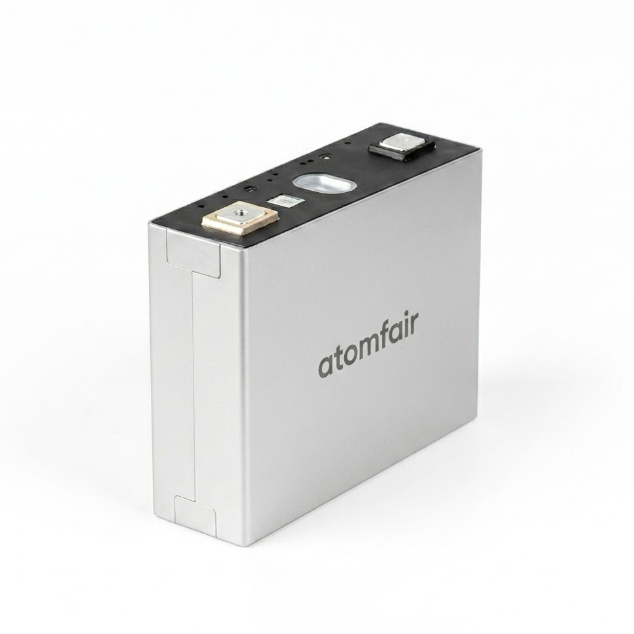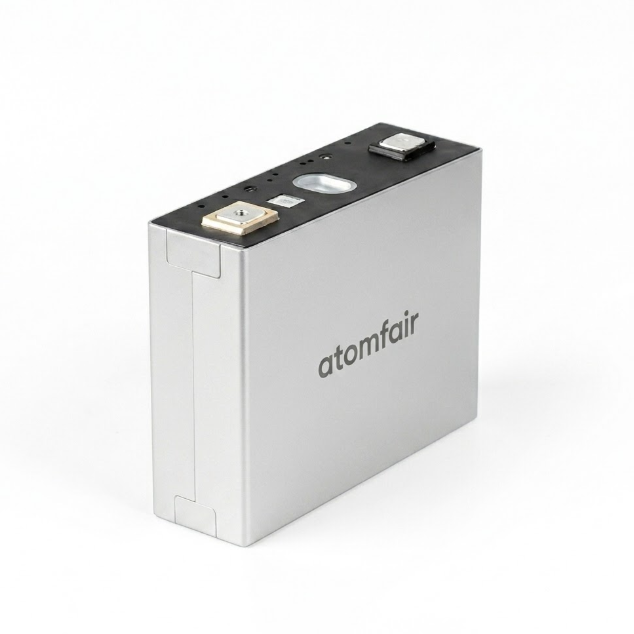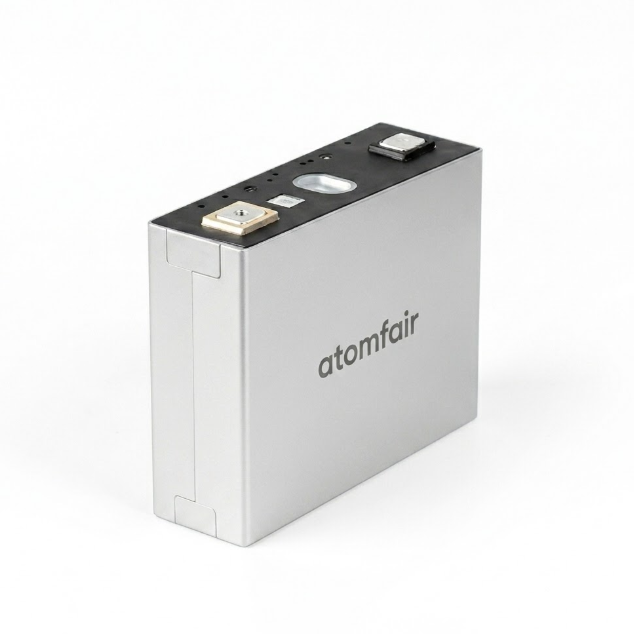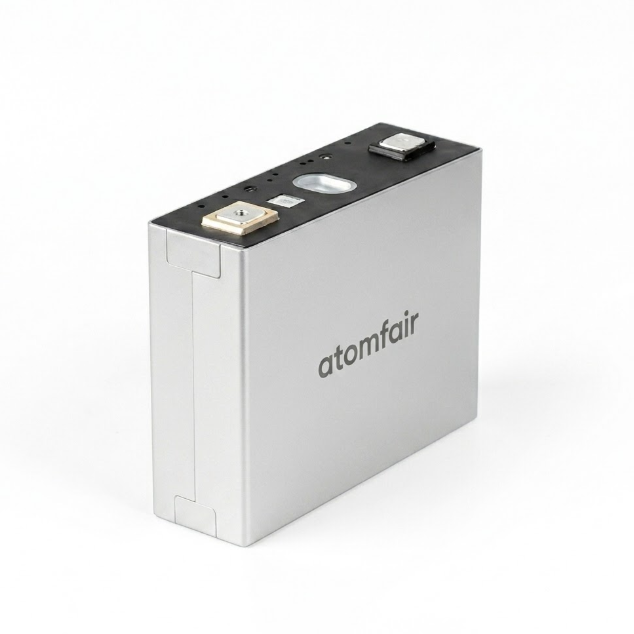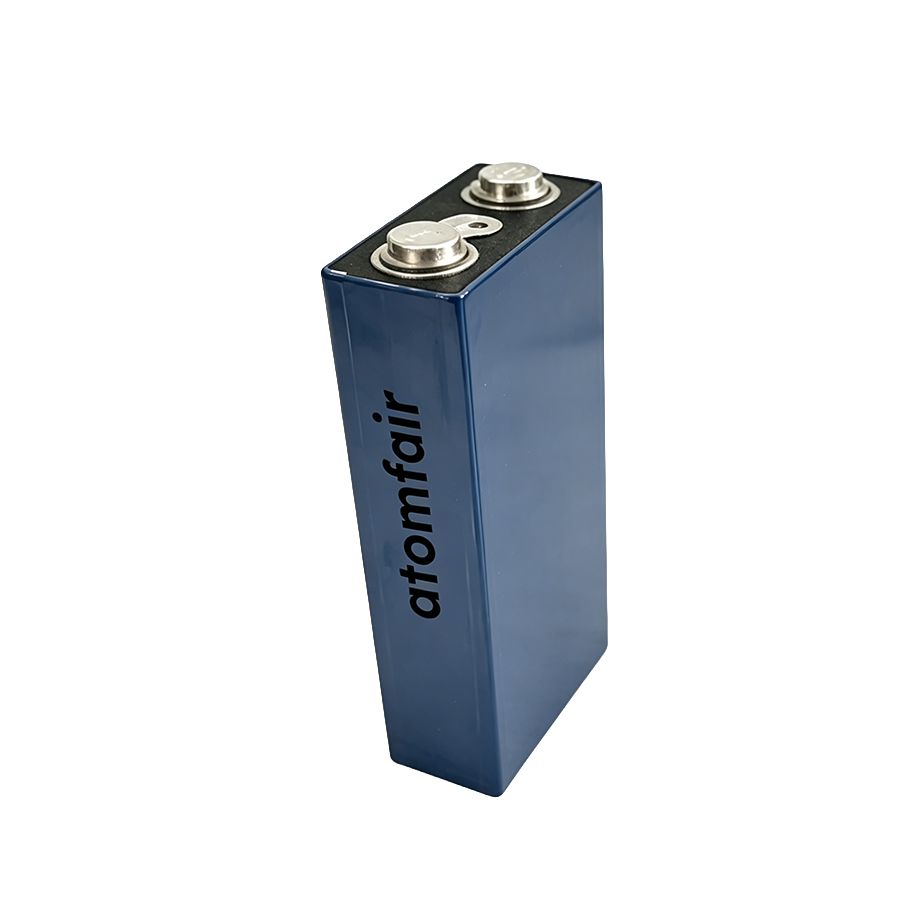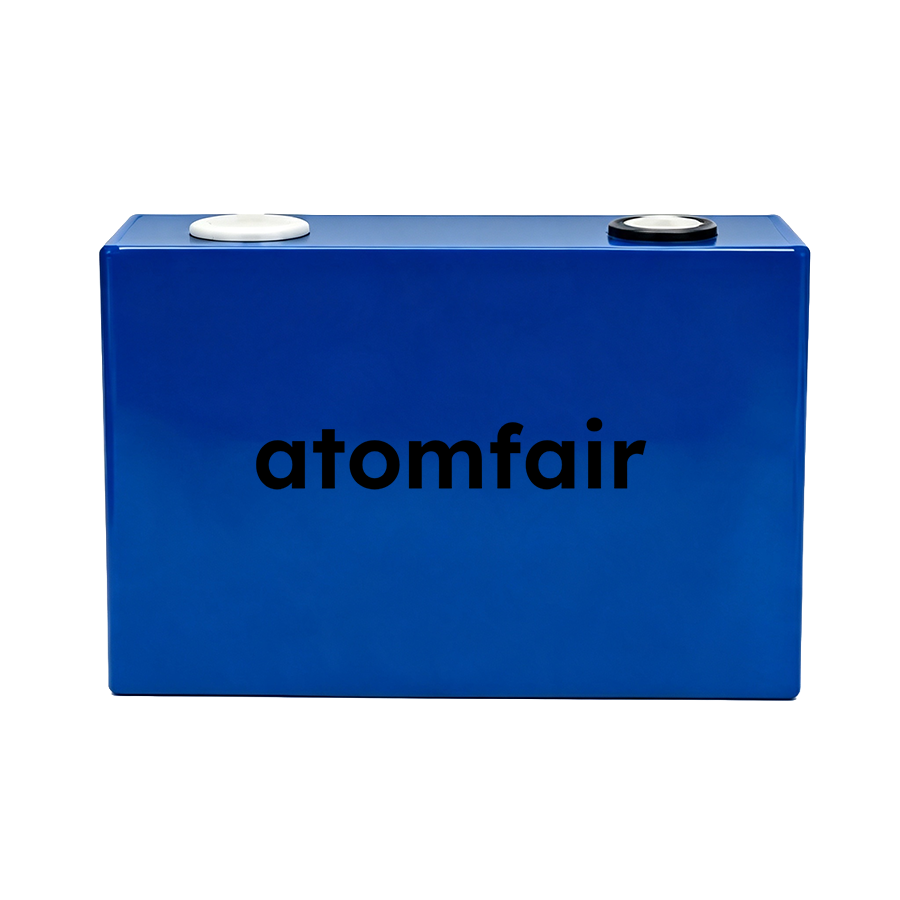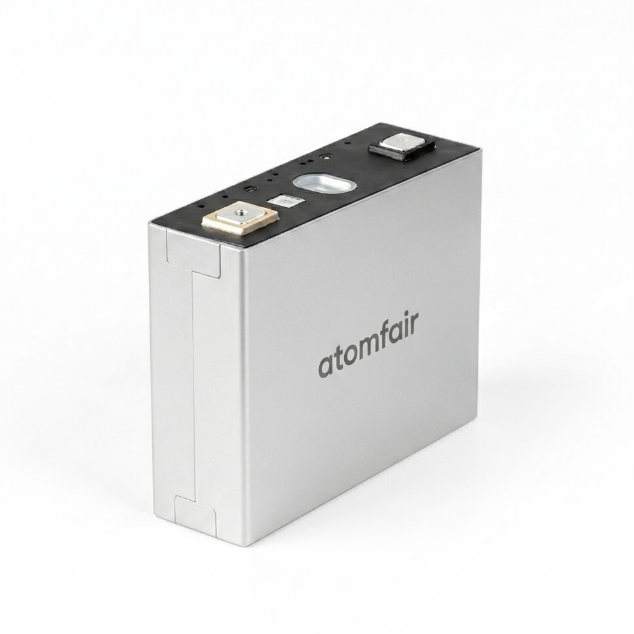
160Ah 2.86 V Sodium-Ion Prismatic Cell | ATOMFAIRCOMMERCIAL GRADE · PRODUCTION
|
|||||||||||||||||||||||||||||||||||||
|
|||||||||||||||||||||||||||||||||||||
|
TAILORED SOLUTIONS FOR RESEARCH
Contact our engineering team for technical support or official institutional quotations.
EMAIL: INQUIRY@ATOMFAIR.COM
|
|||||||||||||||||||||||||||||||||||||
|
MANUFACTURER: ATOMFAIR LLC
BRAND: ATOMFAIR®
|
This cell requires storage at 0°C to 35°C for long-term and -20°C to 45°C for short-term in humidity-controlled vacuum-sealed packaging to prevent moisture ingress. Operation demands a dedicated BMS configured for sodium-ion voltage windows and a consistent clamping force of 300±20 kgf to maintain cycle life and avoid mechanical degradation.
- Storage Temperature and Humidity: Store at 0°C to 35°C for up to one year or -20°C to 45°C for up to one month in a cool, dry environment, keeping cells in original humidity-controlled vacuum-sealed packaging until assembly.
- Clamping Force Requirement: Apply a consistent clamping force of 300±20 kgf across the cell faces during operation to prevent delamination and ensure the specified cycle life of 6000 cycles at 80% capacity retention.
- BMS and Voltage Window: Always pair with a dedicated BMS that monitors and controls voltage within the 1.5V to 3.45V window to avoid over-discharge or over-charge, which can cause irreversible damage.
- Moisture Sensitivity: Keep cells in original humidity-controlled vacuum-sealed packaging with desiccant bag until assembly to prevent moisture-induced degradation of the sodium-ion chemistry.
- Disposal Compliance: Dispose of cells according to local regulations for sodium-based batteries, as they contain reactive materials that require specialized handling.
This procedure describes the safe handling and initial setup of the 160Ah sodium-ion prismatic cell for integration into an energy storage system. Following these steps ensures proper electrical connection, mechanical support, and monitoring to prevent damage and maximize cycle life.
Required Equipment: Multimeter, Clamping fixture (capable of 300±20 kgf), Dedicated BMS for sodium-ion, Battery cycler or charger (0.5P constant power)
- Inspect Packaging
Inspect the vacuum-sealed packaging for damage and confirm the desiccant bag and terminal covers are intact. - Measure Open-Circuit Voltage
Measure the open-circuit voltage of each cell with a multimeter to verify it is within the 1.5V to 3.45V window. - Install in Clamping Fixture
Install the cell into a clamping fixture and apply 300±20 kgf force using manufacturer-approved cell holders and busbars. - Connect BMS
Connect the cell terminals to a dedicated BMS configured for the sodium-ion voltage window and ensure proper communication. - Perform Initial Charge-Discharge Cycle
Charge the cell at 0.5P (225W) constant power to 3.45V cut-off, then discharge at 0.5P to 1.5V cut-off to verify capacity and functionality. - Monitor for Anomalies
Monitor cell temperature and voltage during the first cycle and ensure no abnormal swelling, overheating, or voltage deviation occurs.
How does the cycle life of the ATOMFAIR 160Ah sodium-ion prismatic cell compare at 80% vs 70% capacity retention?
Under standard conditions (25°C, 0.5P/0.5P, 300±20kgf clamping force), the cell delivers ≥6000 cycles at 80% capacity retention and ≥10000 cycles at 70% retention. This trade-off allows system designers to prioritize either longer cycle life with slightly lower usable capacity or higher capacity retention over a shorter operational period.
What are the critical integration requirements for the ATOMFAIR 160Ah sodium-ion cell in a battery system?
The cell must be paired with a dedicated BMS configured for sodium-ion voltage windows (1.5V discharge cutoff, 3.45V charge cutoff). Although compatible with standard lithium-ion assembly equipment, only manufacturer-approved cell holders and busbars should be used. A clamping force of 300±20kgf must be applied during cycling to achieve the stated cycle life, and the cell is optimized for integration with liquid-cooling thermal management systems.
What clamping force is required for the ATOMFAIR 160Ah sodium-ion cell during cycling, and why is it important?
The cell requires a clamping force of 300±20kgf applied during cycling under standard test conditions (25°C, 0.5P/0.5P). This force is specified to maintain proper electrode contact and minimize internal resistance over the cell's lifetime, directly enabling the rated cycle life of ≥6000 cycles at 80% retention. The product specifications explicitly state this requirement for achieving the quoted performance metrics.
The 160Ah sodium-ion prismatic cell offers a cost-effective, long-cycle-life alternative with 6000 cycles at 80% retention and wide discharge temperature range down to -40°C, but requires strict clamping force (300±20kgf) and cannot be charged below 0°C, limiting cold-weather charging scenarios.
Positive
- Ultra-long cycle life at high retention: Achieves ≥6000 cycles at 80% capacity retention and ≥10000 cycles at 70% retention under standard conditions (25°C, 0.5P/0.5P, 300±20kgf clamping), providing decades of reliable service in stationary storage applications.
- Extreme cold discharge capability: Discharge operation from -40°C to 60°C eliminates the need for auxiliary heating in most cold climates, enabling deployment in Arctic or high-altitude regions without thermal management overhead.
Trade-offs
- Clamping force requirement for cycling: The specified cycle life of 6000+ cycles is only guaranteed under 300±20kgf clamping force; without proper mechanical compression, actual cycle life may be significantly reduced.
- No charging below 0°C: Charging is limited to 0°C–60°C. In sub-zero environments, the cell cannot be charged without preheating, which adds infrastructure complexity and energy overhead for cold-climate installations.
Every advanced material, component, equipment, and instrument in our catalog is backed by rigorous testing. We maintain strict internal quality management frameworks and align with CE conformity metrics to deliver transparent, reproducible performance data via our public open-science repository.
To request raw batch performance data, submit formal vendor registration paperwork, or execute a fast-turnaround R&D manufacturing loop, contact us at inquiry@atomfair.com.
Item is dispatched under the Atomfair Shipping & Delivery Framework (Free worldwide shipping on orders over $59 USD excl. heavy equipment). Return is governed by the Atomfair Return & Refund Policy (7-day technical return window).