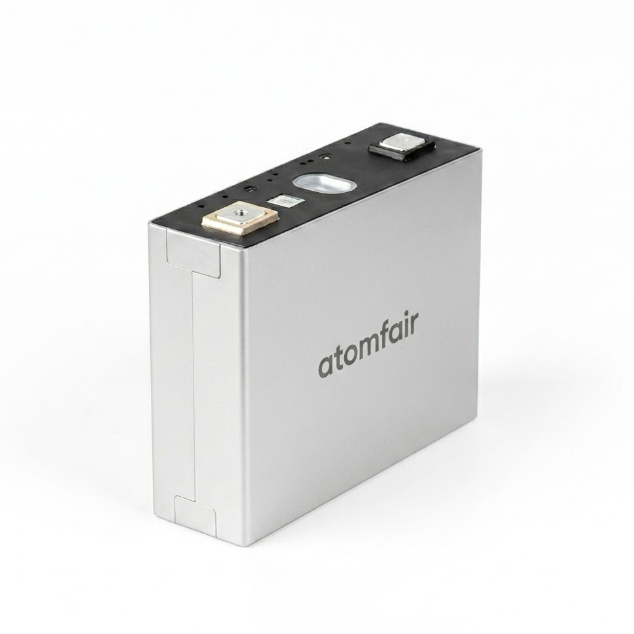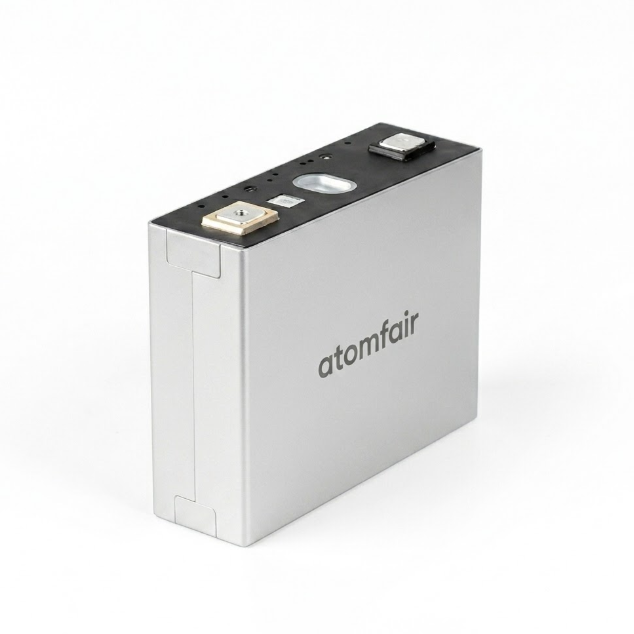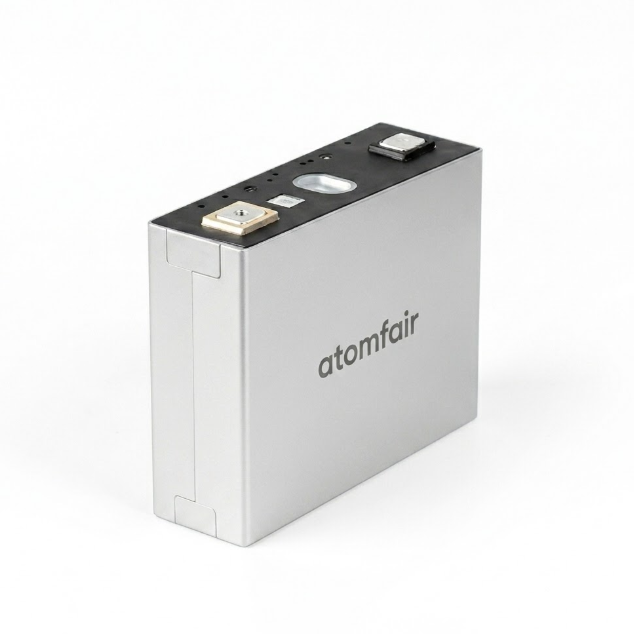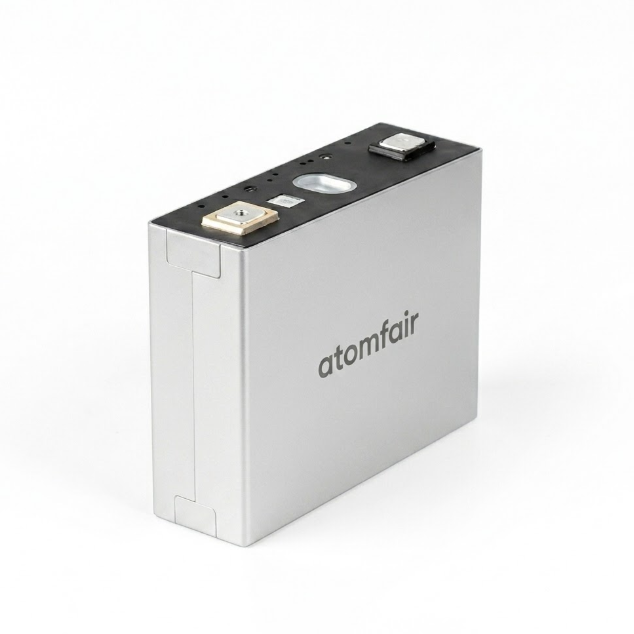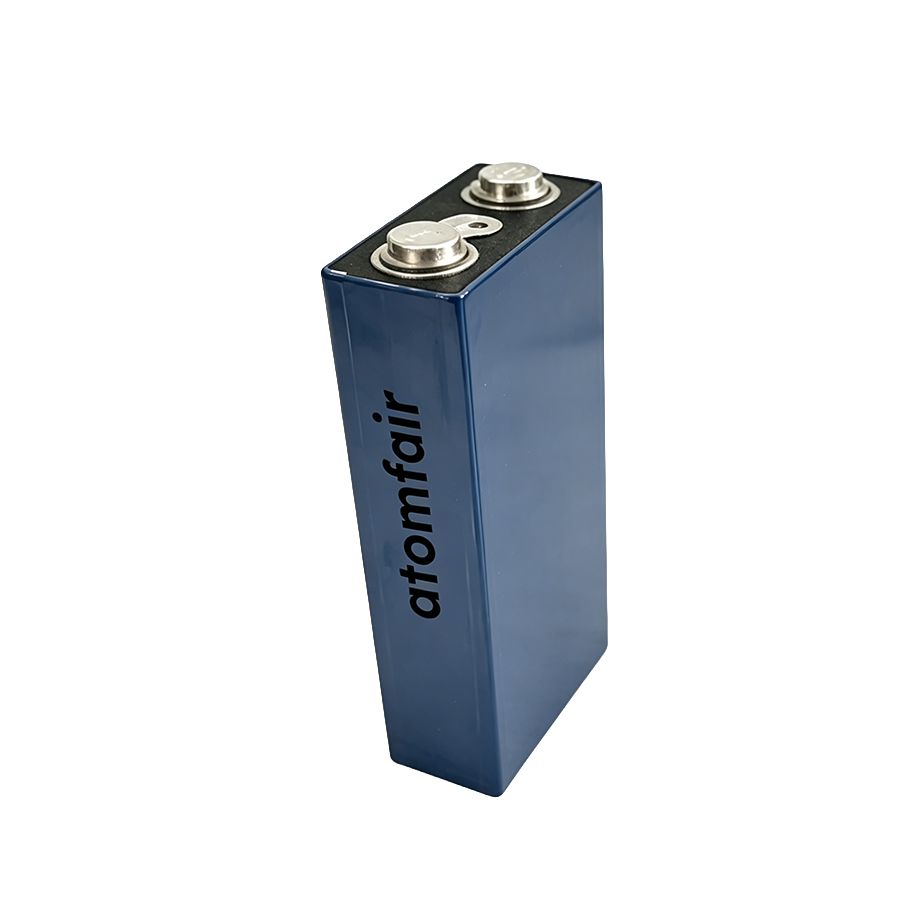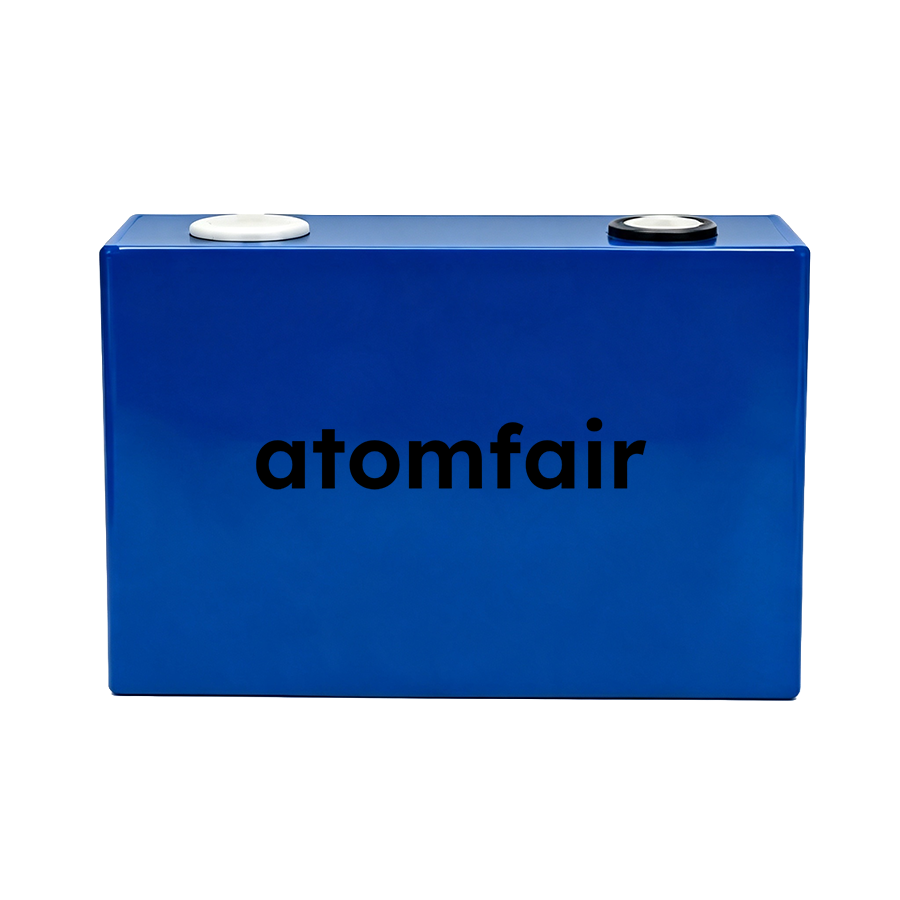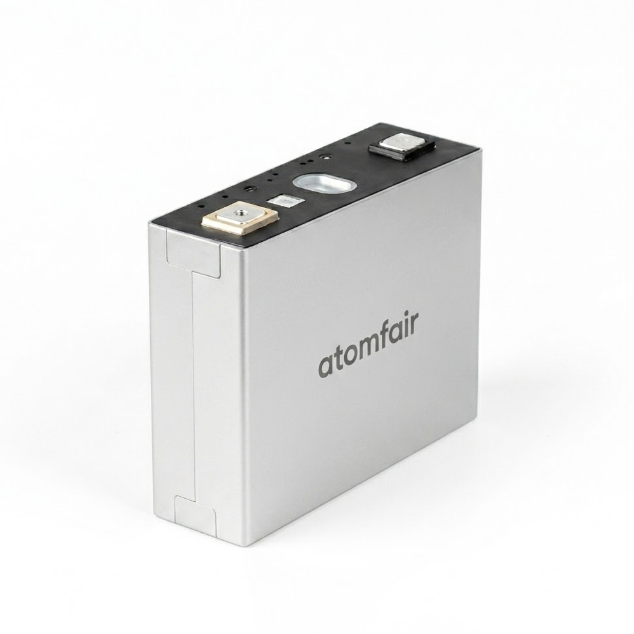
160 Ah 2.9 V Sodium-Ion Prismatic Cell | ATOMFAIRCOMMERCIAL GRADE · PRODUCTION
|
|||||||||||||||||||||
|
|||||||||||||||||||||
|
TAILORED SOLUTIONS FOR RESEARCH
Contact our engineering team for technical support or official institutional quotations.
EMAIL: INQUIRY@ATOMFAIR.COM
|
|||||||||||||||||||||
|
MANUFACTURER: ATOMFAIR LLC
BRAND: ATOMFAIR®
|
The cell requires a dedicated BMS with appropriate voltage windows to prevent damage. Storage must be at moderate state of charge in cool, dry conditions to preserve cycle life and safety.
- BMS Requirement: Pair the cell with a dedicated BMS that supports sodium-ion voltage windows.
- Voltage Limits: Avoid over-discharge beyond the safe lower limit and over-charge beyond the recommended upper limit.
- Storage Conditions: Store cells at a moderate state of charge in a cool, dry environment.
- Assembly Equipment: Use only manufacturer-approved cell holders and busbars for assembly.
- Disposal: Dispose of cells following local regulations for sodium-based batteries.
Follow these steps to safely handle, install, and store the sodium-ion cell. Adherence to these procedures ensures compliance with safety standards and optimal performance.
Required Equipment: Dedicated Battery Management System (BMS), Manufacturer-approved cell holders, Manufacturer-approved busbars
- Pair with BMS
Pair the cell with a dedicated BMS that supports sodium-ion voltage windows. - Maintain voltage limits
Ensure the operating voltage stays within the safe lower and upper limits. - Store appropriately
Store cells at a moderate state of charge in a cool, dry environment. - Use approved hardware
Use only manufacturer-approved cell holders and busbars for assembly. - Dispose properly
Dispose of cells according to local regulations for sodium-based batteries.
What is the expected cycle life and capacity retention of the ATOMFAIR 160Ah sodium-ion prismatic cell at 100% depth of discharge?
The cell delivers >6000 cycles at 25°C with 0.5P/0.5P charge/discharge, 100% DOD, and retains at least 80% of initial capacity. This ensures long-term reliability for daily deep-cycling ESS applications.
Can the ATOMFAIR 160Ah sodium-ion cell be used with existing lithium-ion battery management systems and assembly equipment?
Yes, the cell is compatible with standard lithium-ion assembly equipment, but it requires a dedicated BMS configured for sodium-ion voltage windows. Use only manufacturer-approved cell holders and busbars to ensure proper electrical and mechanical contact.
What safety certifications and storage conditions apply to the 160Ah sodium-ion prismatic cell?
The cell complies with IEC62619, UL1973, and UN38.3 safety standards. For storage, keep at a moderate state of charge in cool, dry conditions. The sodium-ion chemistry offers exceptional thermal stability and intrinsic safety, as stated in the product overview.
The 160 Ah 2.9 V sodium-ion prismatic cell delivers a cost-effective, high-safety energy storage solution with a cycle life exceeding 6000 cycles at 80% capacity retention, but requires a dedicated BMS tailored to sodium-ion voltage windows and careful moisture-controlled storage to maintain performance.
Positive
- Exceptional cycle life: Over 6000 cycles at 100% DOD with 80% capacity retention at 25°C, 0.5P/0.5P, providing long-term deep-cycling durability for grid and commercial ESS.
- High thermal stability and safety: Sodium-ion chemistry delivers intrinsic thermal stability and meets IEC62619, UL1973, and UN38.3 certifications, ensuring reliable operation across -40°C to +60°C.
Trade-offs
- Dedicated BMS required: Must be paired with a BMS supporting sodium-ion voltage windows to prevent over-discharge or over-charge, adding system integration complexity.
- Moisture-sensitive storage conditions: Supplied in humidity-controlled vacuum-sealed packaging; cells must be stored at moderate state of charge in cool, dry conditions to avoid degradation.
Every advanced material, component, equipment, and instrument in our catalog is backed by rigorous testing. We maintain strict internal quality management frameworks and align with CE conformity metrics to deliver transparent, reproducible performance data via our public open-science repository.
To request raw batch performance data, submit formal vendor registration paperwork, or execute a fast-turnaround R&D manufacturing loop, contact us at inquiry@atomfair.com.
Item is dispatched under the Atomfair Shipping & Delivery Framework (Free worldwide shipping on orders over $59 USD excl. heavy equipment). Return is governed by the Atomfair Return & Refund Policy (7-day technical return window).