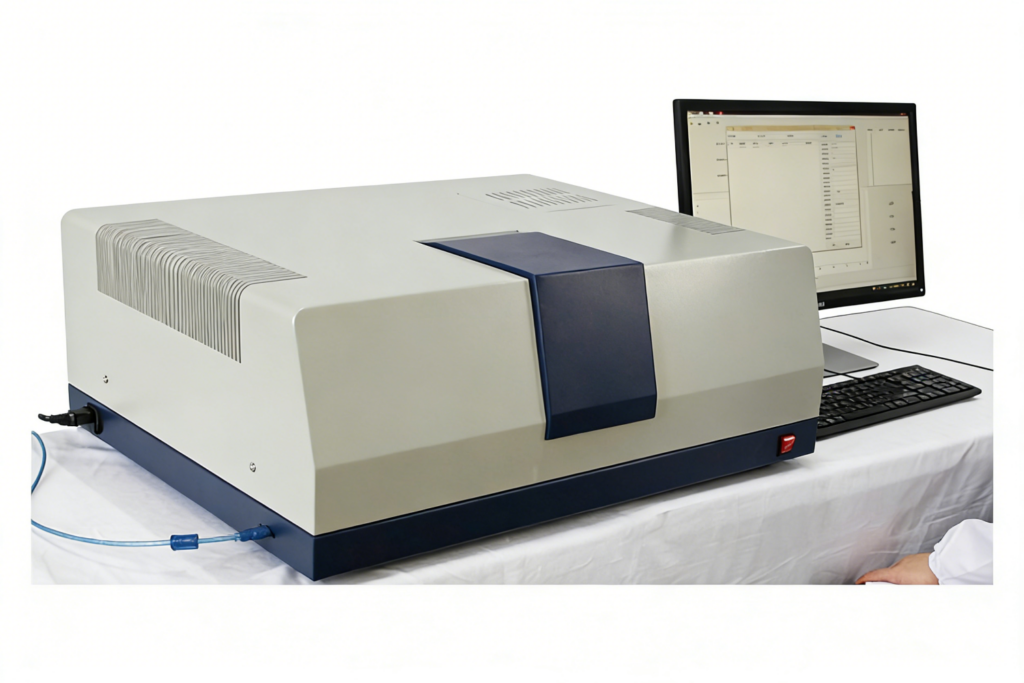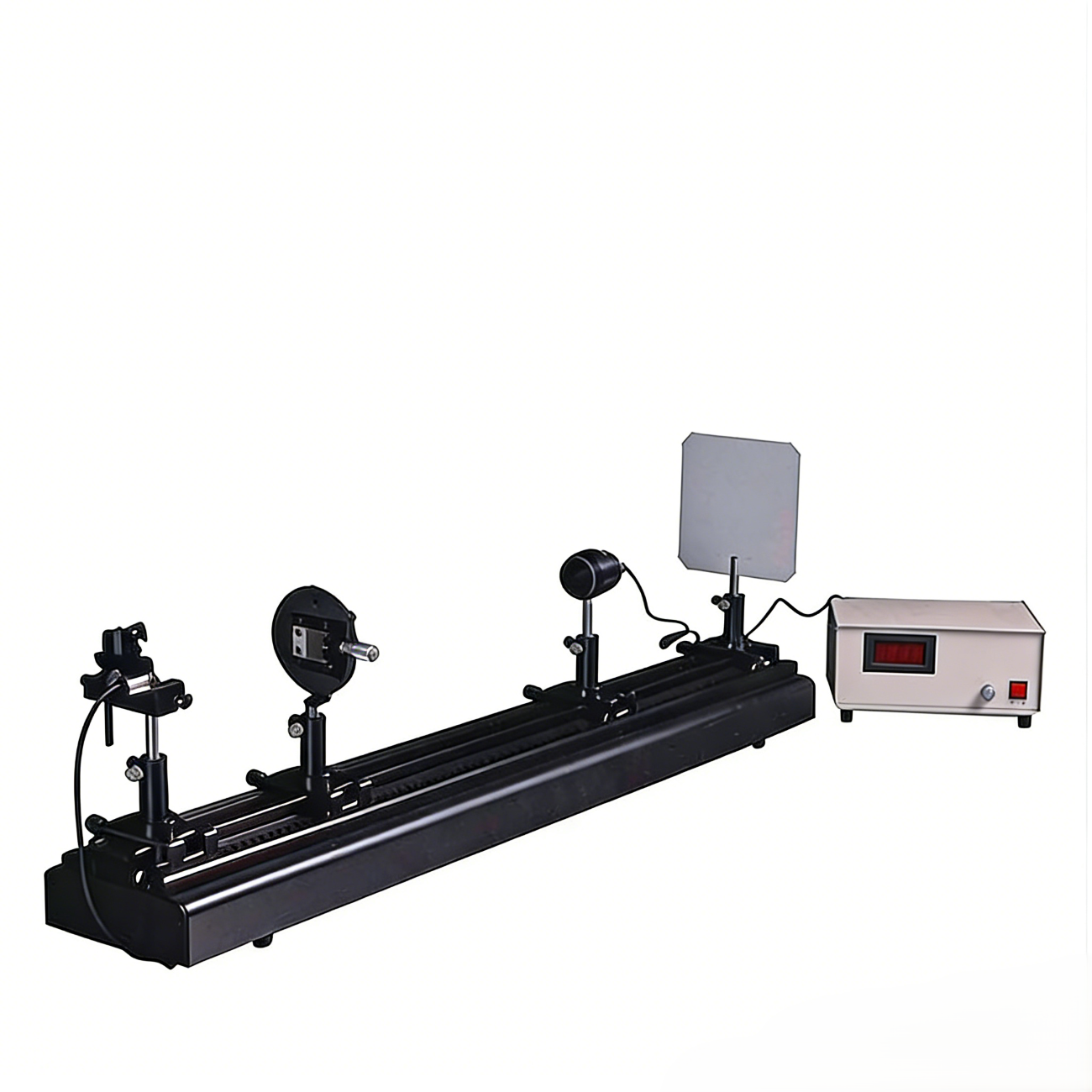
Atomfair-SSDD-739 Single Filament and Single Slit Diffraction Experiment Device
Product Overview
Atomfair-SSDD-739 is a high-performance experimental instrument dedicated to the field of interference, diffraction, and polarization. It integrates advanced optical technology and precise measurement functions, designed to meet the needs of scientific research, laboratory teaching, and academic exploration. With its user-friendly design and reliable performance, this device enables users to conduct in-depth research on optical diffraction phenomena and verify key optical principles with ease.
Key Features
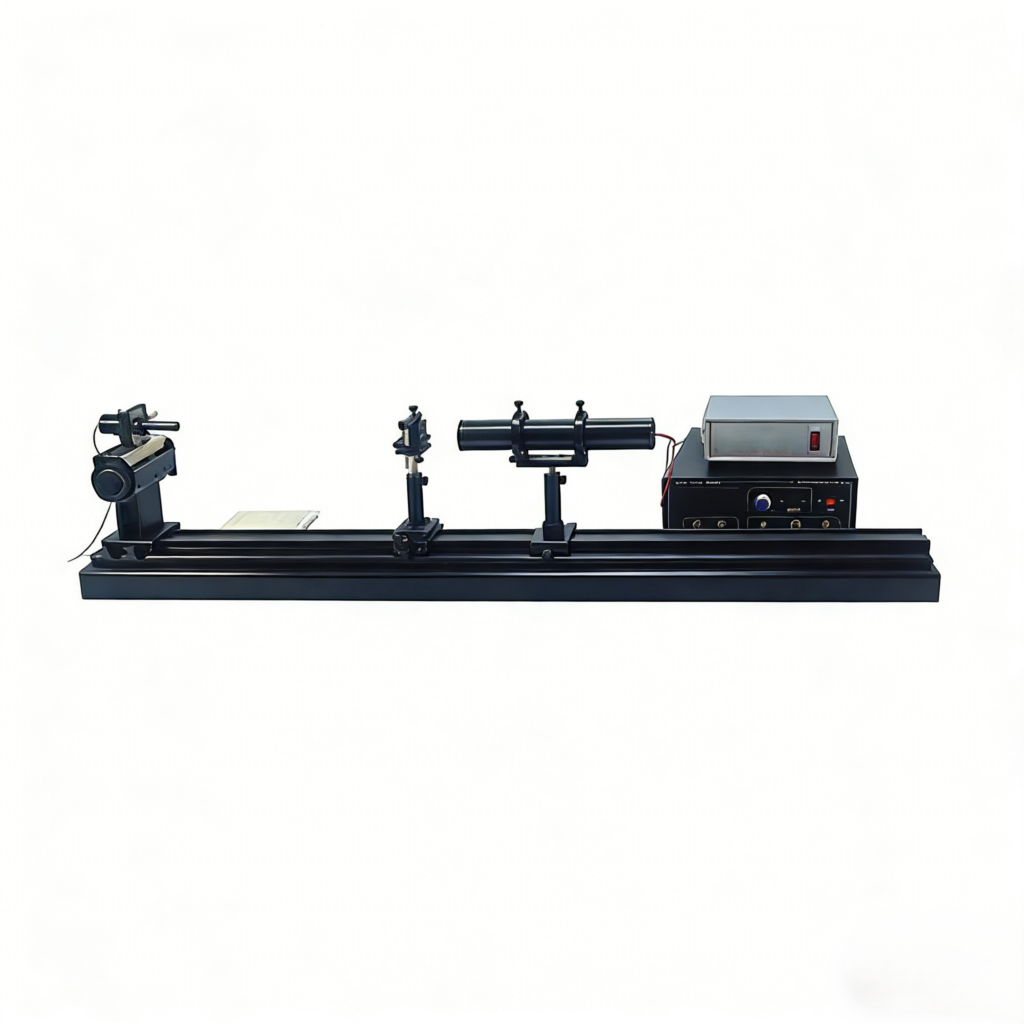
- Equipped with a movable reading photoelectric detector, which can accurately measure the light intensity distribution of light diffraction, providing high-precision experimental data.
- The focal point of the semiconductor laser can be freely adjusted, allowing flexible adaptation to different experimental scenarios and meeting diverse experimental requirements.
- The overall structure is reasonable, with stable components and easy operation, suitable for both professional researchers and students to carry out experimental operations.
Core Experimental Contents
- Observe the diffraction phenomena of single filaments and single slits, and accurately measure the corresponding light intensity distribution data, helping to intuitively understand the characteristics of optical diffraction.
- Verify the correlation between light wavelength, slit width, and light intensity, and deepen the understanding of the influencing factors of diffraction phenomena.
- Assist in understanding the Heisenberg Uncertainty Principle, establishing a connection between optical experiments and quantum mechanics knowledge.
- Verify Babinet’s Principle, enabling in-depth exploration of the internal laws of optical diffraction and enhancing the comprehensiveness of experimental research.
Basic Configuration & Specifications
| No. | Name | Specifications |
|---|---|---|
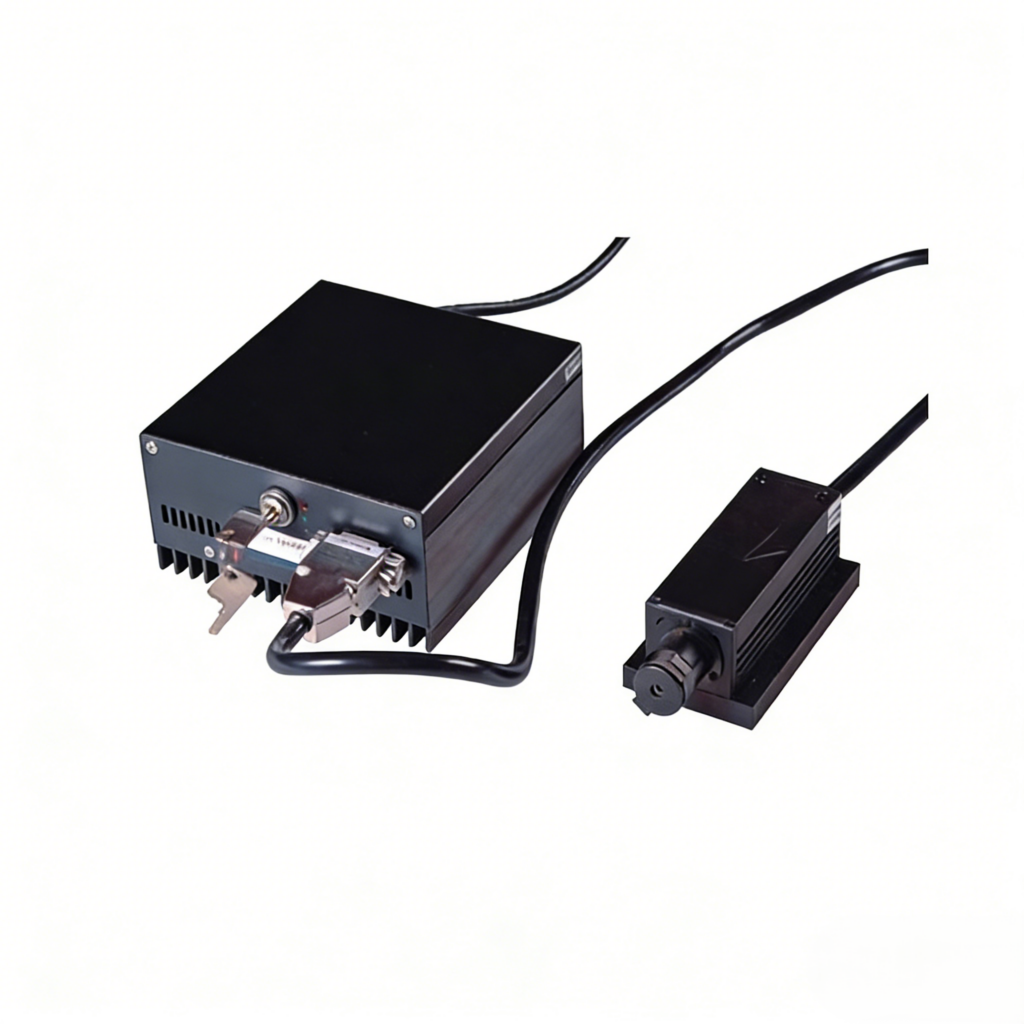
| 1 | Semiconductor Laser | 5mW |
| 2 | Slide Carriage 1 | Standard Type |
| 3 | Slide Carriage 2 | Lateral Adjustment Type |
| 4 | Adjustment Frame | Including lateral movement measuring frame, adjustable slit, and laser frame |
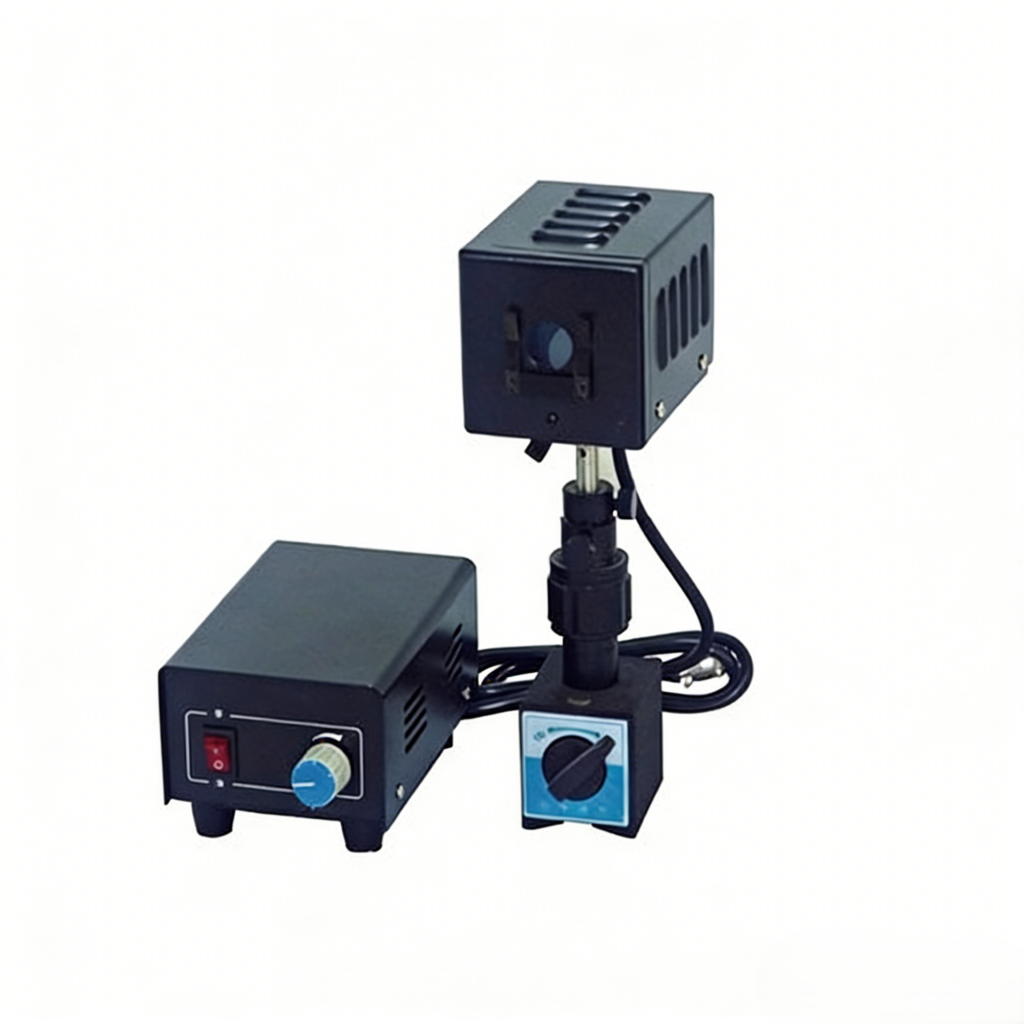
| 5 | Photocurrent Amplifier | Silicon Photocell Material |
| 6 | Other Accessories | White Screen, 1.2m Optical Guide Rail |
Notes
The above configurations and parameters are for reference only. The actual product shall be subject to the packing list. We reserve the right to make minor adjustments to the configuration without prior notice.
If you’re interested, have any questions, or have specific customization requirements, please feel free to contact us at inquiry@atomfair.com.
What is the advantage of the adjustable focal point on the semiconductor laser in the Atomfair-SSDD-739 for single slit diffraction measurements?
The adjustable focal point allows the user to optimize the laser beam divergence and spot size for different experimental setups, ensuring uniform illumination of the slit or filament. This is critical for accurate light intensity distribution measurements, as the 5mW semiconductor laser’s focus can be tuned to match the slit width and distance to the detector, minimizing diffraction pattern distortion and improving data reproducibility.
How does the Atomfair-SSDD-739 support verification of Babinet's Principle using single filament and single slit diffraction?
The device includes dedicated components for both single filament and single slit diffraction experiments, allowing direct comparison of diffraction patterns. According to Babinet's Principle, the diffraction pattern from a single filament (complementary to a slit) should be identical in shape except for the central maximum. By measuring light intensity distributions from both configurations with the movable photoelectric detector, users can experimentally validate this principle as part of the core experimental contents.
What role does the 1.2m optical guide rail play in achieving precise diffraction intensity measurements with the SSD-739?
The 1.2m optical guide rail provides a stable, linear platform for mounting and precisely aligning the laser, slide carriages, adjustment frame, and photodetector. This long rail minimizes vibration and ensures consistent relative positioning of components, which is essential for accurately scanning the diffraction intensity profile across the detector's path. The included lateral adjustment slide carriage further enables fine transverse positioning without disturbing the alignment, directly supporting the high-precision measurement of light distribution required for verifying wavelength-slit width correlations.
The Atomfair-SSDD-739 integrates a 5mW semiconductor laser with a movable photoelectric detector and dual slide carriages on a 1.2m optical rail, enabling quantitative single-slit and single-filament diffraction intensity measurements while supporting verification of Babinet's principle and the Heisenberg uncertainty relation.
Positive
- Movable photoelectric detector: The movable reading photoelectric detector enables accurate measurement of light intensity distribution across the diffraction pattern, providing quantitative data essential for verifying diffraction relationships.
- Adjustable laser focus: The semiconductor laser's focal point can be freely adjusted, allowing adaptation to different experimental geometries and sample configurations without requiring additional optics.
Trade-offs
- Requires dark environment: Accurate photocurrent measurements with the silicon photocell demand a low-ambient-light environment to prevent stray light from corrupting the diffraction intensity readings.
- Manual alignment needed: The lateral adjustment frame and slide carriages require manual positioning and calibration, introducing potential operator-dependent variability in slit alignment and detector scanning.
Every advanced material, component, equipment, and instrument in our catalog is backed by rigorous testing. We maintain strict internal quality management frameworks and align with CE conformity metrics to deliver transparent, reproducible performance data via our public open-science repository.
To request raw batch performance data, submit formal vendor registration paperwork, or execute a fast-turnaround R&D manufacturing loop, contact us at inquiry@atomfair.com.
Item is dispatched under the Atomfair Shipping & Delivery Framework (Free worldwide shipping on orders over $59 USD excl. heavy equipment). Return is governed by the Atomfair Return & Refund Policy (7-day technical return window).