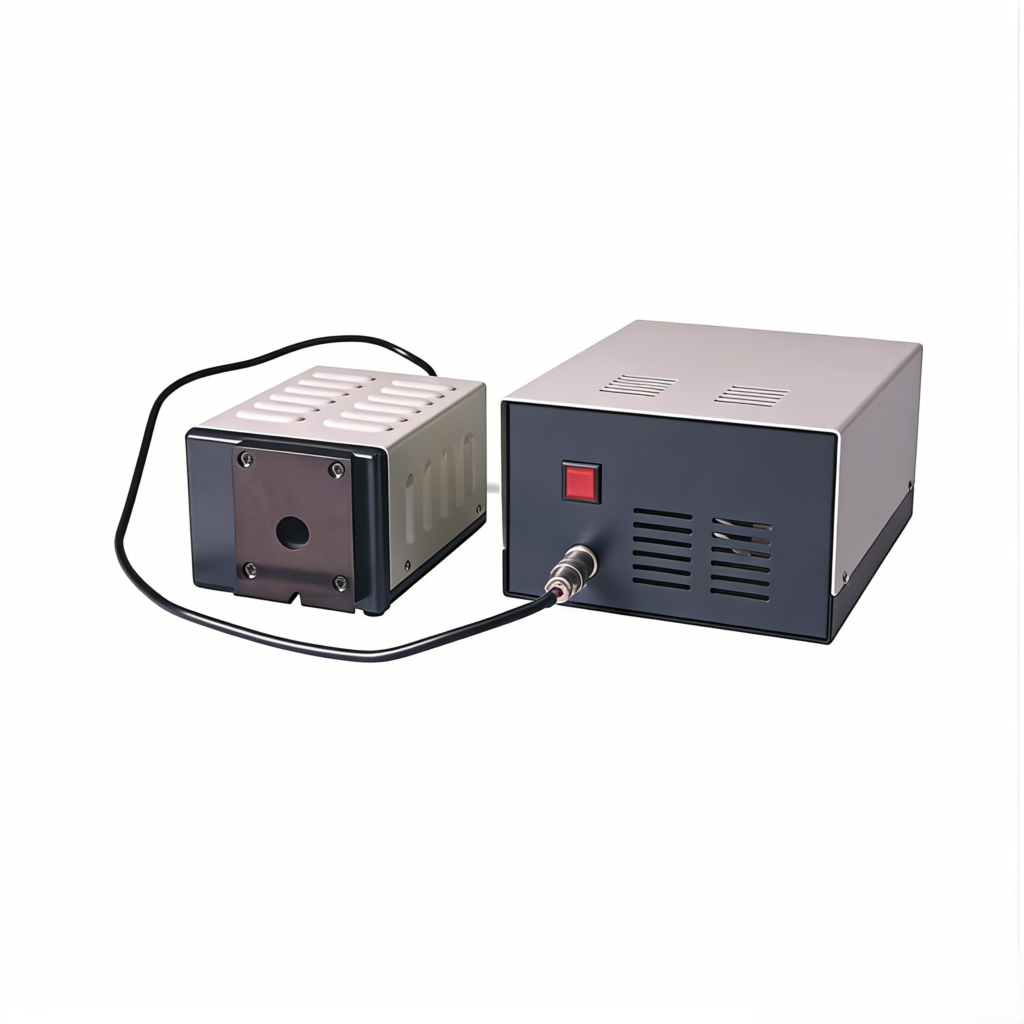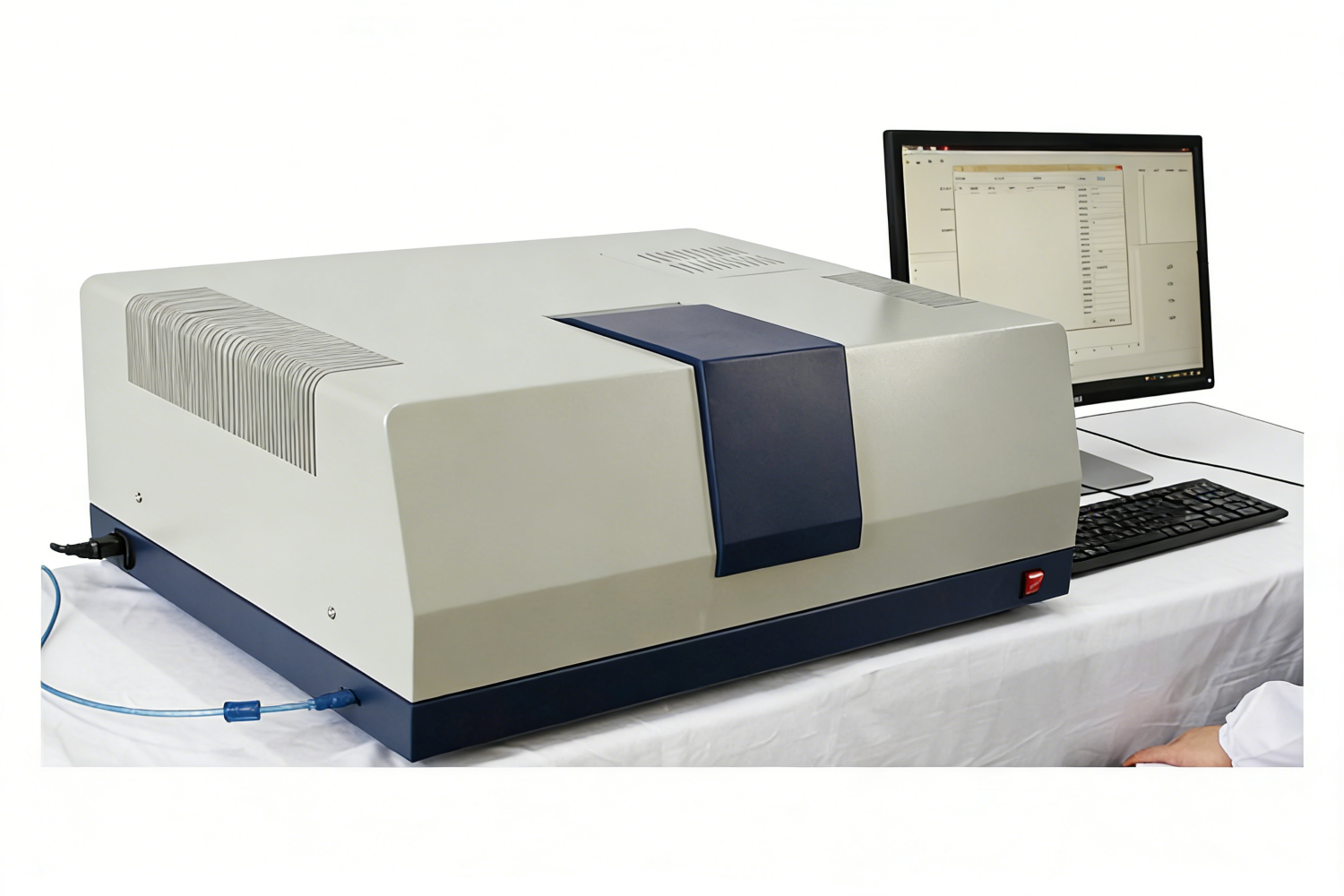
Atomfair-GL-794 Architectural Glass Optical & Thermal Tester
1. Product Overview
Atomfair-GL-794 is a high-performance professional device specially designed for energy-saving testing of architectural glass, with core performance fully complying with the international standard ISO 9050-2003. It can accurately measure key optical and thermal parameters including visible light transmittance, direct solar transmittance, total solar energy transmittance and shading coefficient, suitable for various architectural glass samples of 20-100mm (thickness ≤20mm). The whole machine adopts imported accessories (including light source and dual detectors) with dual-beam optical system, featuring low noise, high precision and strong stability. The automatic operation process simplifies testing steps, widely used in architectural glass production quality control, engineering testing, scientific research experiments and trade compliance testing, providing authoritative data support for glass energy-saving performance evaluation.
2. Core Features
- Accurate detection of full parameters: Focus on the core energy-saving testing needs of architectural glass, one-stop coverage of key parameters such as visible light transmittance and direct solar transmittance, no need for additional equipment, meeting comprehensive testing scenarios.
- Supported by high-end imported configuration: Imported light source with longer service life and better luminous stability; equipped with dual imported detectors for UV/VIS/NIR bands, sensitive to weak signals with low noise and superior detection accuracy.
- High-precision optical design: Dual-beam, dual-grating and dual-detector optical system effectively reduces background interference and improves test accuracy; wavelength accuracy ±0.5nm (UV/VIS), ±2.0nm (NIR), all core indicators reach the international advanced level.
- Fully automatic operation: Support automatic computer control, automatic calibration on startup and automatic completion of data collection and processing; dedicated machine for special use, easy for laboratory management, efficient testing can be completed without professional attendance.
- Fast and efficient data transmission: Equipped with USB2.0 communication interface, single scan only takes 5 minutes with stable and fast data transmission, greatly improving the efficiency of batch sample testing.
- Intelligent software with complete functions: Matching professional testing software, supporting automatic instrument reset, parameter setting, spectral data processing, export data in text/EXCEL format and directly print test reports with convenient operation.
- Wide sample adaptation range: Measurable sample specification is 20-100mm with thickness ≤20mm, compatible with various architectural glass such as ordinary transparent glass, insulating glass and coated glass, meeting the needs of different application scenarios.
- Flexible bandwidth adjustment: UV-VIS band provides 7 gears of bandwidth from 0.1nm to 5.0nm; NIR band supports 0.4-16.0nm automatic/manual adjustment, which can be accurately matched according to sample characteristics with stronger adaptability.
- Rich optional configurations: Standard equipped with basic accessories such as transmission accessory, specular reflection accessory and standard reflector; optional integrating sphere accessory (applicable wavelength 280-2500nm) can be selected on demand to expand the boundary of detection functions.
3. Specification Parameters
| Item | Detailed Parameters |
|---|---|
| Model No. | Atomfair-GL-794 |
| Measurable Sample Specification | 20-100mm, thickness ≤20mm |
| Wavelength Range | 190-3200nm |
| Wavelength Accuracy | UV/VIS: ±0.5nm; NIR: ±2.0nm |
| Wavelength Repeatability | UV/VIS: ≤0.3nm; NIR: ≤1.0nm |
| Transmittance Accuracy | ±0.3%T |
| Transmittance Repeatability | ≤0.2%T |
| Stray Light | ≤0.2%T (220nm) |
| Baseline Flatness | ±0.005A (200-2500nm, after 30 mins warm-up) |
| Spectral Bandwidth | UV-VIS: 0.1nm, 0.2nm, 0.5nm, 1.0nm, 2.0nm, 3.0nm, 5.0nm; NIR: 0.4-16.0nm (Automatic/Manual) |
| Working Mode | Transmission, Reflection |
| Light Source | Imported light source (Long service life, High stability) |
| Detector | Dual imported detectors (Dedicated for UV/VIS/NIR bands) |
| Optical System | Dual-beam, Dual-grating, Dual-detector |
| Communication Interface | USB2.0 |
| Overall Dimension (L×W×H) | 750×600×260mm |
| Sample Chamber Dimension (L×W×H) | 120×240×200mm |
| Weight | 65kg |
| Power Supply | AC220V, 50Hz |
| Software Function | Automatic instrument reset, Parameter setting, Spectral data processing, Data export (Text/EXCEL), Test report printing |
| Standard Accessories | Main unit, Transmission accessory, Specular reflection accessory, Standard reflector, USB cable, Three-core power cord, Cross screwdriver, Program installation disk, User manual, Quick operation guide, Certificate of conformity, Packing list |
| Optional Accessories | Integrating sphere accessory (Applicable wavelength 280-2500nm, measurable sample 20-100mm) |
| Applicable Standard | ISO 9050-2003 |
4. Typical Applications
- Architectural glass manufacturing enterprises: Energy-saving performance testing before product delivery to ensure that parameters such as visible light transmittance and shading coefficient meet international standards, guaranteeing product quality and market competitiveness.
- Engineering testing field: Inspection of glass materials entering the site during building construction to verify whether the glass energy-saving performance meets engineering design requirements and help the acceptance of building energy-saving standards.
- Third-party quality inspection institutions: Supervision and random inspection of architectural glass product quality and compliance testing, issuing test reports complying with international standards to provide authoritative data support for market supervision.
- Research institutes: Accurate measurement of optical and thermal parameters in the R&D process of new energy-saving glass materials to provide data support for formula optimization and technological innovation.
- Glass trade industry: Compliance testing of imported and exported architectural glass products to ensure that product parameters meet international standards of target markets and guarantee the smooth progress of trade.
- Design consulting institutions: Providing optical and thermal parameter data of glass materials in the building energy-saving design stage to optimize building energy-saving schemes and improve the overall energy-saving effect of buildings.
If you’re interested, have any questions, or have specific customization requirements, please feel free to contact us at inquiry@atomfair.com.
The Atomfair-GL-794 requires a 30-minute warm-up to achieve baseline flatness within ±0.005A over 200-2500nm. Sample dimensions must be between 20-100mm with thickness ≤20mm to fit the sample chamber.
- Preheating Requirement: The instrument must be warmed up for at least 30 minutes prior to measurement to achieve baseline flatness within ±0.005A over 200-2500nm.
- Sample Size Constraint: The glass sample must have dimensions between 20-100mm and thickness no greater than 20mm to fit the sample chamber.
- Wavelength Calibration: Wavelength accuracy is maintained at ±0.5nm in the UV/Vis range and ±2.0nm in the NIR range after proper calibration.
- Working Mode Selection: Measurements can be performed in transmission or reflection mode, with an optional integrating sphere accessory for diffuse measurements.
The Atomfair-GL-794 measures optical and thermal parameters of architectural glass samples. Follow these steps to perform a standard measurement.
Required Equipment: Atomfair-GL-794 main unit, Transmission accessory, Specular reflection accessory, Standard reflector
- Warm up instrument
Allow the instrument to warm up for 30 minutes after powering on to stabilize the baseline. - Prepare sample
Place the glass sample in the sample chamber, ensuring dimensions are within 20-100mm and thickness ≤20mm. - Set parameters
Set the working mode (transmission or reflection) and spectral bandwidth via the software interface. - Calibrate instrument
Initiate automatic instrument reset and baseline calibration using the software. - Run measurement
Start the spectral scan, which takes approximately 5 minutes for a full range measurement. - Process data
Use the software to view, export, or print the spectral data and calculated parameters.
How does the stray light specification of ≤0.2%T at 220nm affect the accuracy of solar transmittance measurements for spectrally selective architectural glass?
The Atomfair-GL-794 achieves stray light ≤0.2%T at 220nm, which is critical for accurate solar transmittance measurements because stray light can artificially inflate transmittance values for UV-blocking or spectrally selective coatings. This level meets the requirements of ISO 9050-2003 and ensures that direct solar transmittance and shading coefficient data are reliable for energy performance evaluation.
Can the Atomfair-GL-794 measure full-size architectural glass panels without sample cutting?
No. The sample chamber has internal dimensions of 120×240×200mm, so glass samples must be cut to a maximum size of 100mm in length/width and ≤20mm thickness. The instrument is designed for coupon-scale testing typical of quality control and compliance verification, not for full-pane measurement.
What are the power and warm-up requirements for installing the Atomfair-GL-794 in a research laboratory?
The instrument requires AC220V, 50Hz power supply and weighs 65kg with dimensions 750×600×260mm. A 30-minute warm-up is required to achieve baseline flatness of ±0.005A (200-2500nm). The source does not specify additional environmental controls, but stable power and a vibration-free bench are recommended for optimal optical precision.
The Atomfair-GL-794 is a dual-beam, dual-grating spectrophotometer engineered for ISO 9050-2003 compliance testing of architectural glass, delivering high-accuracy optical and thermal parameters across a 190-3200nm range. Its imported light source and dual detectors ensure low-noise, stable measurements, while the 20-100mm sample chamber and optional integrating sphere extend its utility for diverse glass types and research applications.
Positive
- High-precision dual-beam optics: The dual-beam, dual-grating, dual-detector system minimizes background interference, achieving wavelength accuracy of ±0.5nm (UV/VIS) and ±2.0nm (NIR), with transmittance accuracy of ±0.3%T and repeatability ≤0.2%T, ensuring reliable data for energy-saving glass evaluation.
- Broad spectral and sample versatility: Covering 190-3200nm with adjustable bandwidth (UV-VIS: 0.1-5.0nm; NIR: 0.4-16.0nm) and supporting samples 20-100mm (thickness ≤20mm), the instrument accommodates various glass types including coated and insulating glass, with an optional integrating sphere for expanded measurement capabilities.
Trade-offs
- Requires 30-minute warm-up for baseline stability: Baseline flatness of ±0.005A is specified only after a 30-minute warm-up, meaning users must factor in this stabilization period before achieving optimal measurement accuracy, which may impact workflow scheduling in high-throughput testing environments.
- Sample size and power constraints: The instrument accepts samples only within 20-100mm and thickness ≤20mm, limiting use for larger or thicker glass panels. Additionally, it requires AC220V, 50Hz power, which may not be compatible with all laboratory electrical infrastructures without voltage conversion.
Every advanced material, component, equipment, and instrument in our catalog is backed by rigorous testing. We maintain strict internal quality management frameworks and align with CE conformity metrics to deliver transparent, reproducible performance data via our public open-science repository.
To request raw batch performance data, submit formal vendor registration paperwork, or execute a fast-turnaround R&D manufacturing loop, contact us at inquiry@atomfair.com.
Item is dispatched under the Atomfair Shipping & Delivery Framework (Free worldwide shipping on orders over $59 USD excl. heavy equipment). Return is governed by the Atomfair Return & Refund Policy (7-day technical return window).