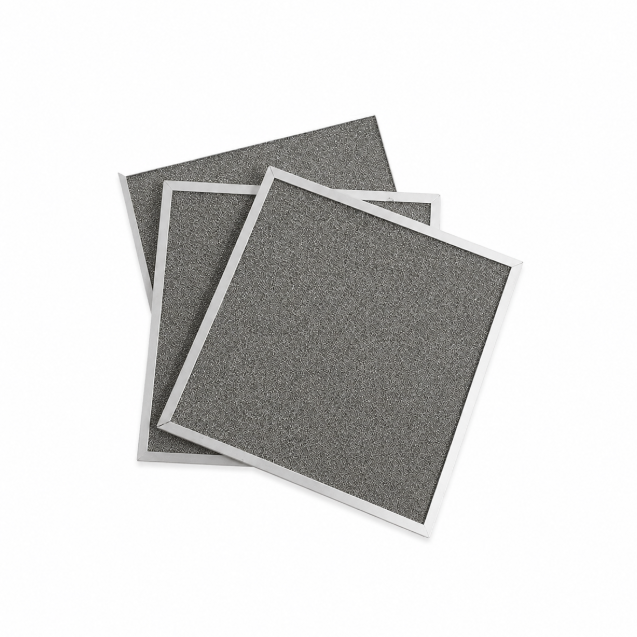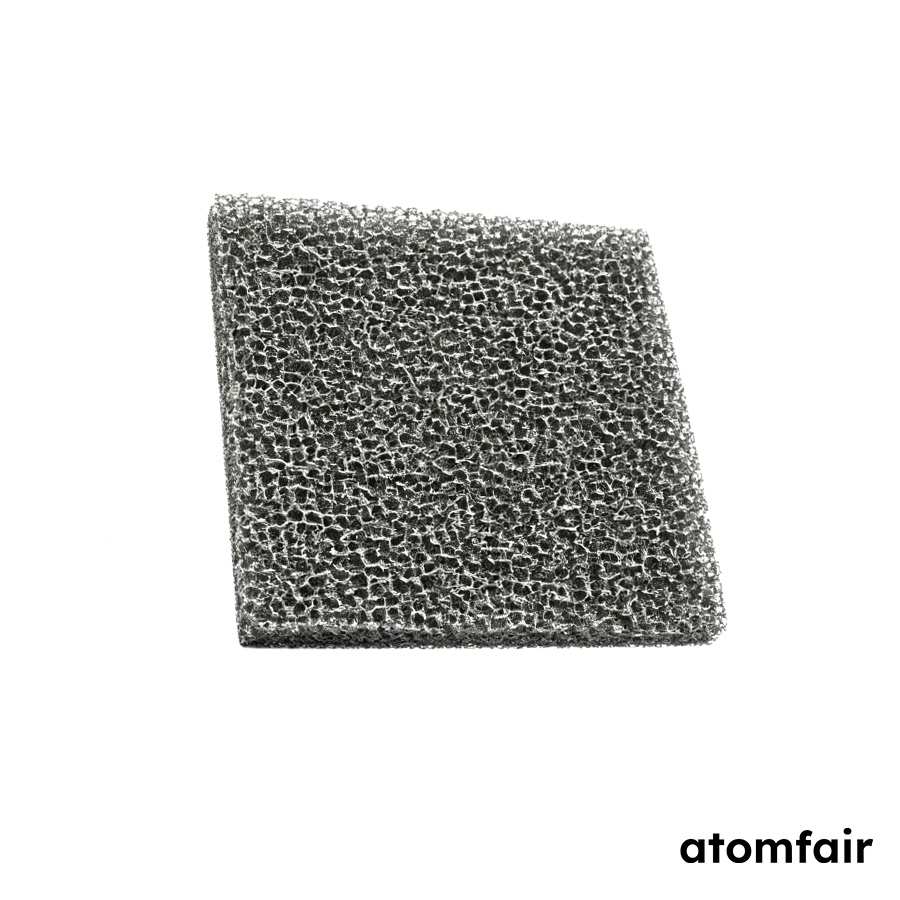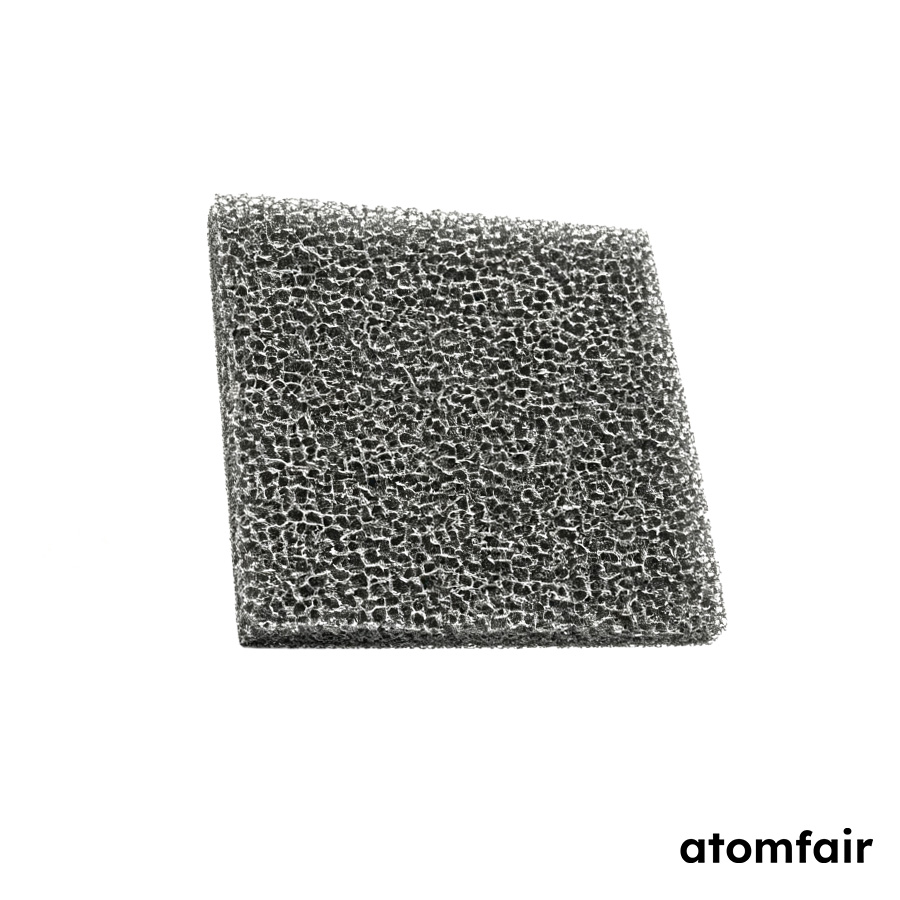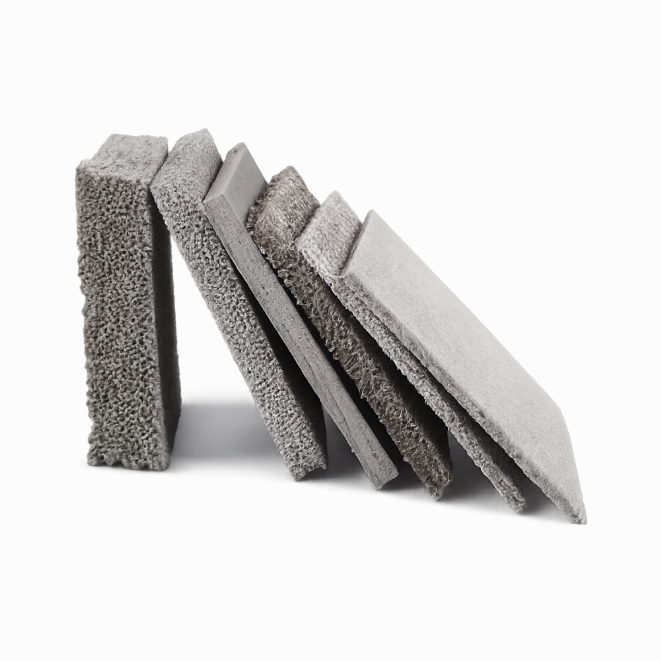
RETICULATED METAL FOAM 30-140 PPI 98% THROUGH-POROSITY ELECTRODE SUBSTRATERESEARCH GRADE MATERIAL
|
|||||||||||||||||||||||||||||
|
|||||||||||||||||||||||||||||
|
TAILORED SOLUTIONS FOR RESEARCH
Contact our engineering team for technical support or official quotations.
EMAIL: inquiry@atomfair.com
|
|||||||||||||||||||||||||||||
|
Manufacturer: Atomfair LLC
Brand: ATOMFAIR®
|
The reticulated metal foam surface is passivated to resist atmospheric oxidation and is vacuum-sealed to maintain integrity during transport. To preserve the 98% through-hole structure, handle only with vacuum pickup tools and store in a desiccator or glovebox immediately after unsealing.
- High-temperature pre-treatment: For applications above 300°C, pre-treat the foam in a reducing atmosphere to remove surface oxides.
- Handling requirement: Use vacuum pickup tools to avoid collapsing edge pores during manual handling.
- Storage requirement: Store the unsealed foam in a desiccator or glovebox immediately to prevent moisture adsorption.
- Packaging protection: The foam is vacuum-sealed between rigid protective plates to prevent mechanical deformation during transit.
- Surface passivation: The passivated surface protects against atmospheric oxidation during storage and handling.
The foam requires careful handling with vacuum pickup tools to avoid structural damage. For high-temperature applications, pre-treatment in a reducing atmosphere is necessary to remove surface oxides.
Required Equipment: Vacuum pickup tool
- Pre-treat for high-temperature use
Pre-treat the foam in a reducing atmosphere to remove surface oxides if the application exceeds 300°C. - Handle with vacuum pickup
Use vacuum pickup tools to transfer the foam sheet to avoid mechanical deformation. - Store after use
Transfer the foam to a desiccator or glovebox immediately after use to prevent moisture adsorption.
What are the key specifications of the reticulated metal foam that make it suitable as an electrode substrate?
The foam features a 98% through-porosity with a pore density of 30–140 PPI, pore sizes from 0.3 mm to 7 mm, and a bulk density of 0.1–2.0 g/cm³. Its interconnected 3D network provides a significantly enhanced specific surface area, ensuring uniform current distribution and catalytic loading for electrode applications.
Can this metal foam be used in Ni-Zn batteries and supercapacitors?
Yes, it is validated for use as an electrode skeleton in Ni-Zn batteries and electric double-layer capacitors. The high through-porosity and specific surface area enhance charge transfer kinetics, making it suitable for cyclic voltammetry and galvanostatic cycling measurements.
What special handling and storage conditions are required for the reticulated metal foam?
The foam is vacuum-sealed and passivated against oxidation; after unsealing, store it in a desiccator or glovebox to prevent moisture adsorption. Manual handling must use vacuum pickup tools; lateral mechanical gripping may collapse edge pores, and for high-temperature applications above 300°C, pre-treatment in a reducing atmosphere is recommended.
This reticulated metal foam with 98% through-porosity and 30–140 PPI pore density provides a high-surface-area conductive substrate optimized for electrochemical research, but requires vacuum pickup handling and reducing atmosphere pre-treatment for high-temperature operation.
Positive
- Maximized Electrochemical Surface Area: The 3D reticulated structure provides a significantly larger specific surface area than flat substrates or meshes, enhancing charge transfer kinetics in cyclic voltammetry and galvanostatic cycling.
- True Open-Cell Permeability: Guaranteeing ≥98% through-porosity, this foam eliminates stagnation zones, ensuring uniform fluid flow and mass transport in flow batteries and catalytic filtration reactors.
Trade-offs
- Requires Reducing Atmosphere Pre-Treatment: For extreme high-temperature electrochemical applications above 300°C, pre-treatment in a reducing atmosphere is recommended to remove surface oxides and maintain performance.
- Delicate Structure Demands Vacuum Handling: Manual handling must use vacuum pickup tools to avoid edge pore collapse; storage in a desiccator or glovebox immediately after unsealing is required to prevent moisture adsorption.
Every advanced material, component, equipment, and instrument in our catalog is backed by rigorous testing. We maintain strict internal quality management frameworks and align with CE conformity metrics to deliver transparent, reproducible performance data via our public open-science repository.
To request raw batch performance data, submit formal vendor registration paperwork, or execute a fast-turnaround R&D manufacturing loop, contact us at inquiry@atomfair.com.
Item is dispatched under the Atomfair Shipping & Delivery Framework (Free worldwide shipping on orders over $59 USD excl. heavy equipment). Return is governed by the Atomfair Return & Refund Policy (7-day technical return window).