|
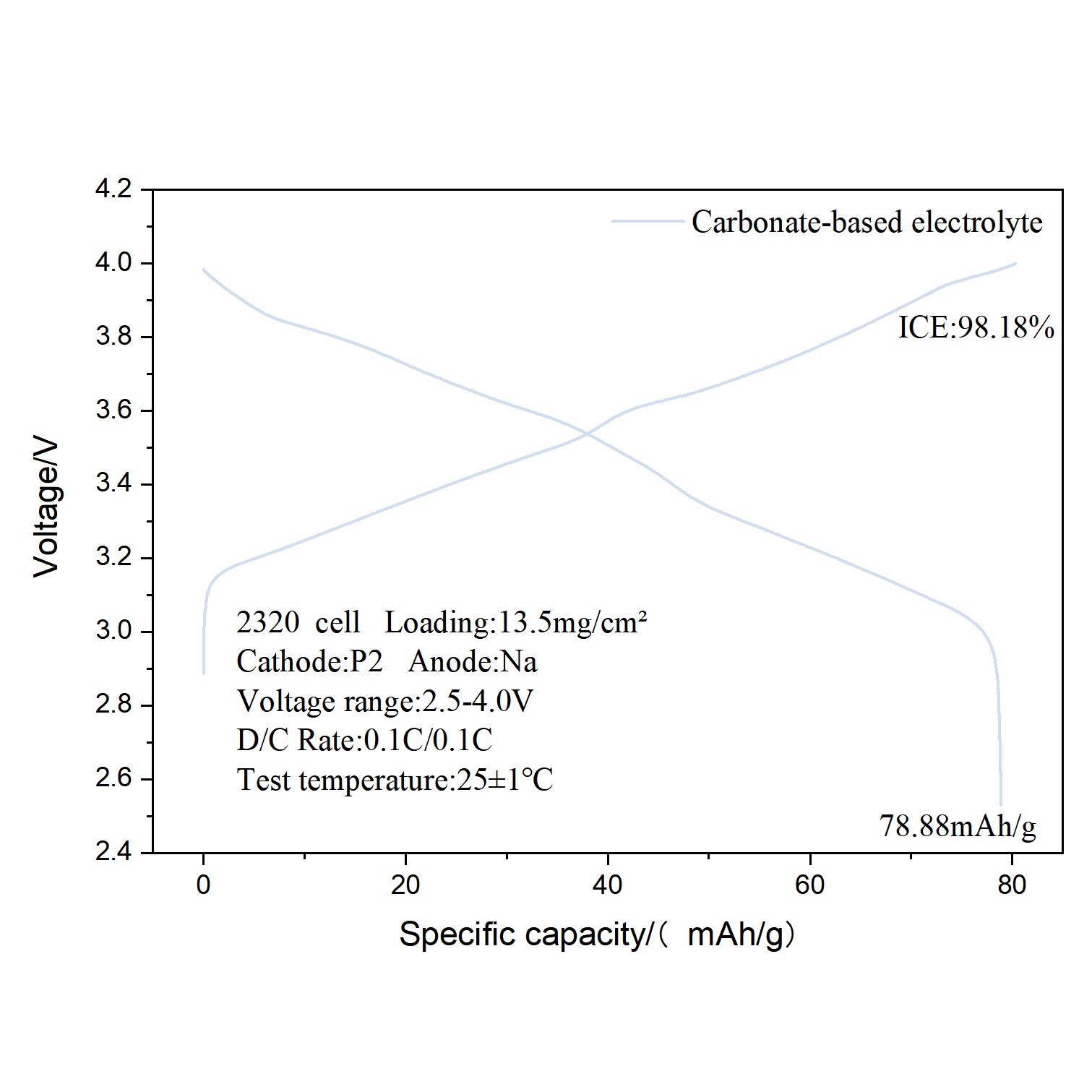
P2-Type NMTO Single-Sided Cathode Sodium Transition-Metal Oxide, 13.5 mg/cm² per side
Single-Sided Cathode Sheet
|
||||||||||||||||||||||||||||||||||||||||||||||
|
P2-Type sodium nickel manganese oxide electrode sheets require moisture-free handling and vacuum drying before use. The recommended protocol specifies 12-hour vacuum baking at 100°C to remove residual moisture and prevent degradation.
- Moisture Sensitivity: The electrode sheets are moisture-sensitive and must be stored in vacuum-sealed packaging until use.
- Vacuum Drying Requirement: A mandatory vacuum drying step at 100°C for 12 hours is required to eliminate residual moisture before thermal validation.
- Phase Contamination Prevention: Vacuum-sealed packaging prevents phase contamination and maintains baseline quality.
- Temperature Constraint: The drying temperature must be strictly maintained at 100°C to avoid degradation.
To prepare the electrode sheets for use, vacuum drying is required to remove moisture. The following steps outline the recommended drying protocol.
Required Equipment: Vacuum oven capable of maintaining 100°C
- Retrieve from Packaging
Retrieve the electrode sheet from the vacuum-sealed packaging. - Place in Vacuum Oven
Place the electrode sheet into a vacuum oven. - Set Drying Conditions
Set the vacuum oven to 100°C and maintain vacuum for 12 hours. - Cool Under Vacuum
Allow the electrode to cool to room temperature under vacuum before removal.
What is the specific capacity and active material loading of the Atomfair S01-NMTO P2-type sodium nickel manganese oxide electrode sheet, and how does the compaction density affect electrochemical performance?
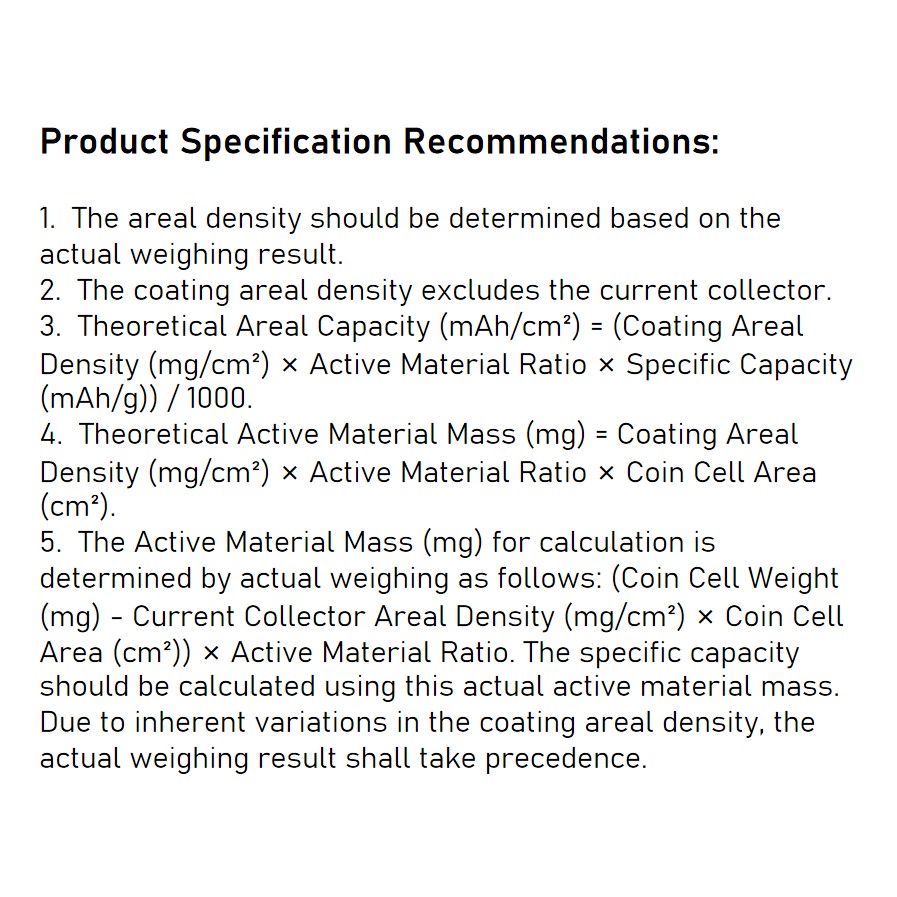
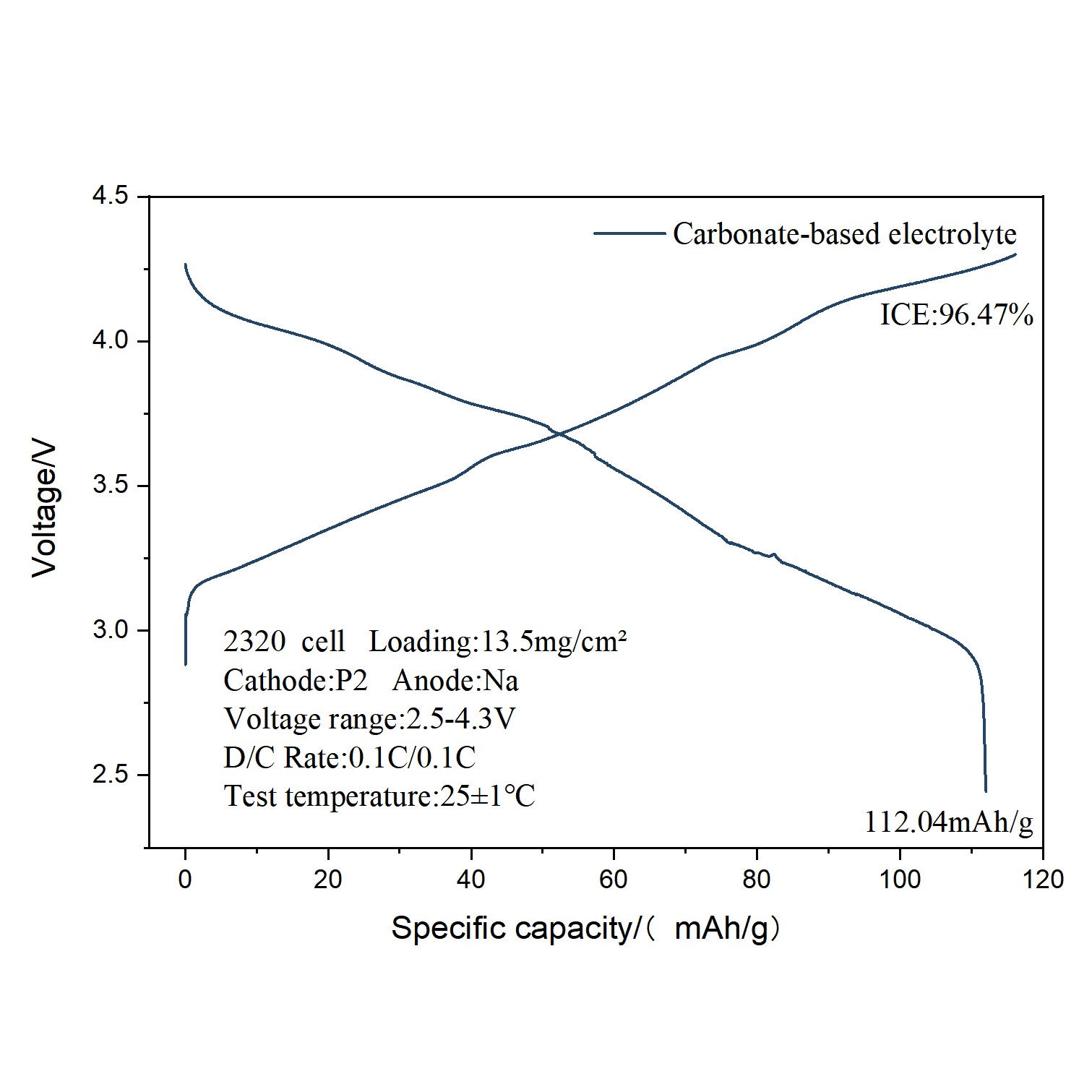
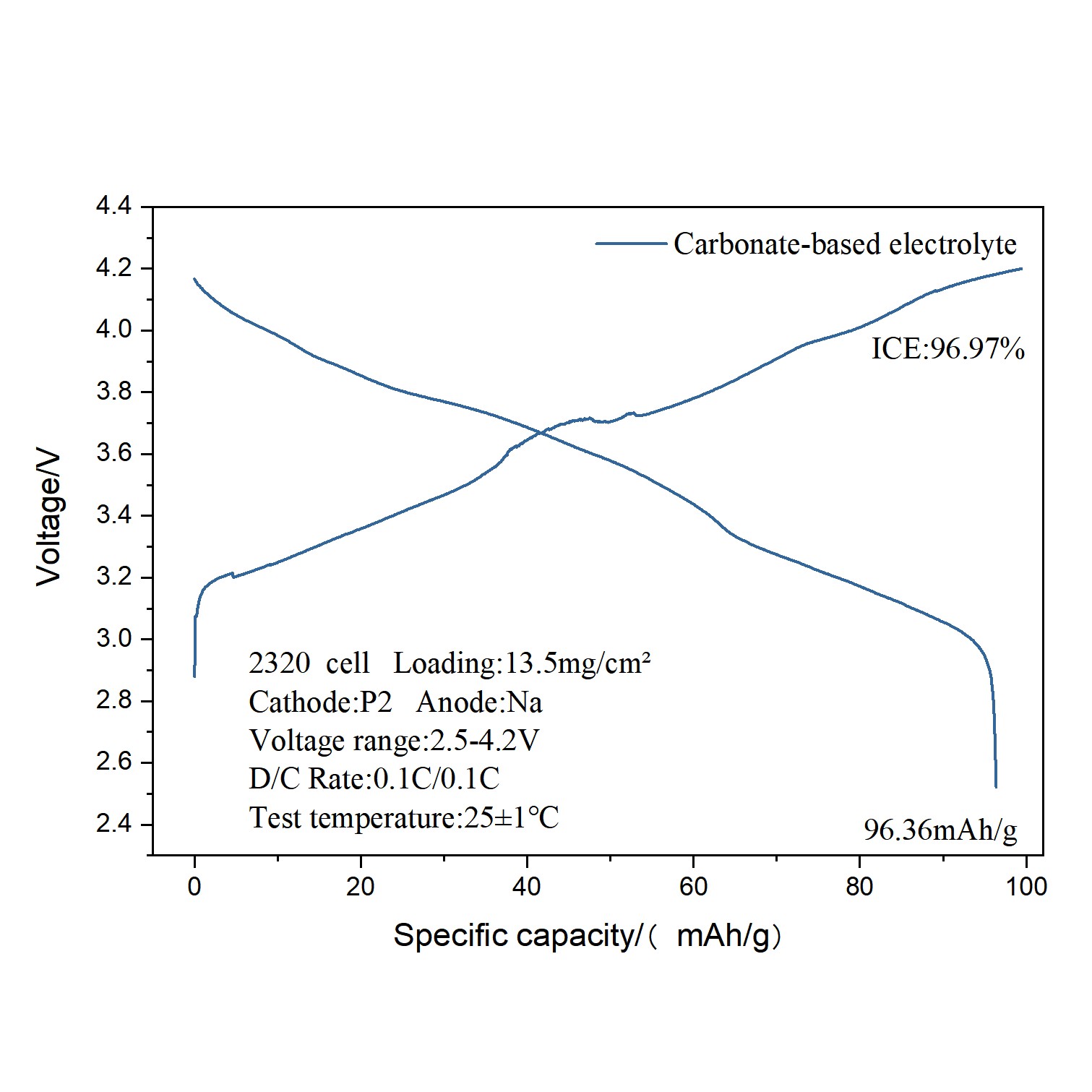
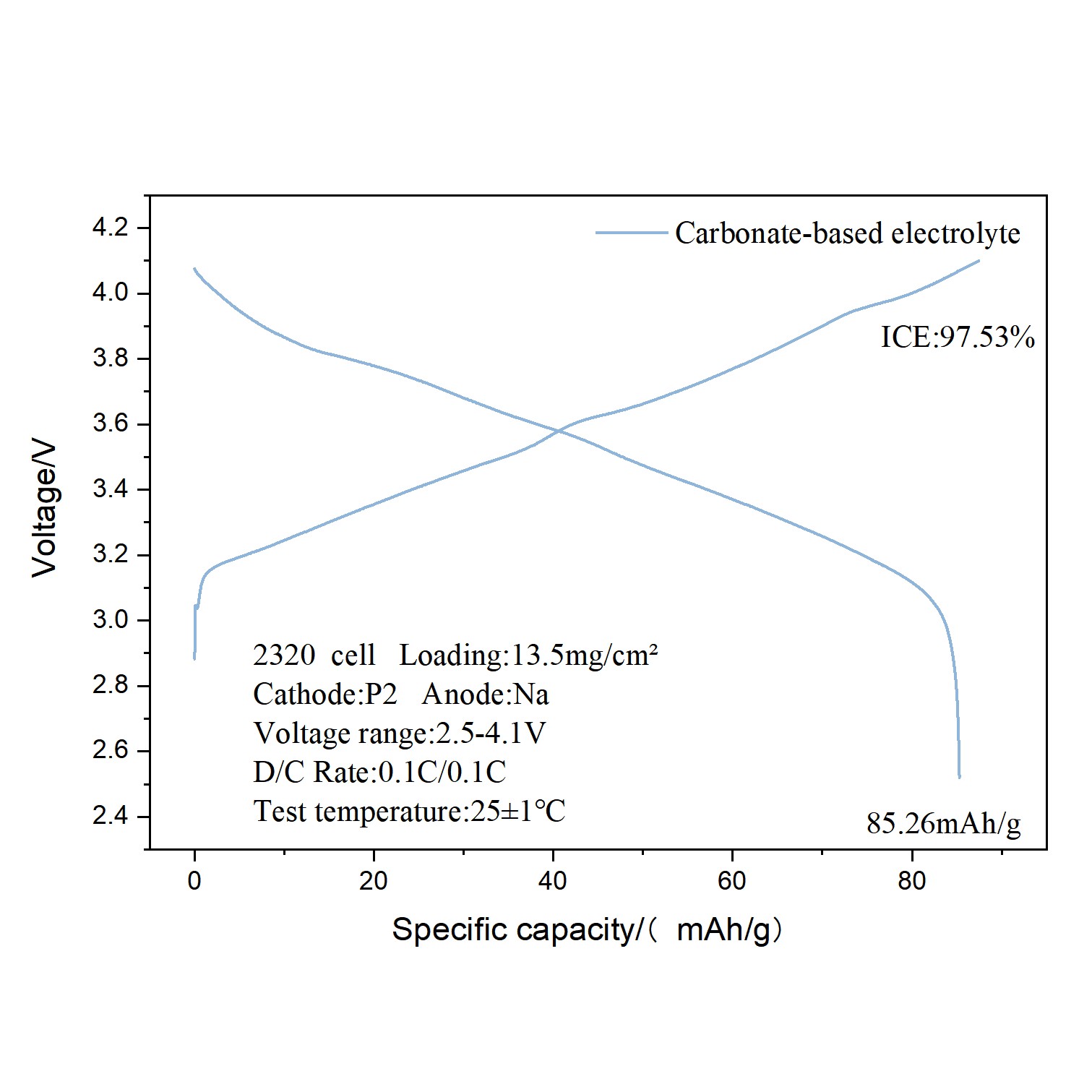
The S01-NMTO electrode sheet delivers a specific capacity of 115 mAh/g with a 93.5% active material ratio and a coating density of 13.5 mg/cm². The compaction density of 2.08 g/cm³ ensures optimal particle contact and structural stability, supporting consistent sodium-ion intercalation during cycling.
What substrate and current collector configuration does the S01-NMTO electrode use, and is it suitable for standard sodium-ion half-cell testing?
The electrode is single-side coated on a carbon-coated aluminum foil substrate with a current collector density of 3.63 mg/cm² and a substrate thickness of 12 + 0.5 + 0.5 μm. This configuration is optimized for half-cell testing and electrolyte validation, providing reliable electrical contact and interface stability as confirmed by the manufacturer's application scope.
What is the recommended pre-drying protocol for the Atomfair S01-NMTO electrode sheet to ensure consistent performance?
The manufacturer recommends baking the electrode sheets under vacuum at 100°C for 12 hours to eliminate residual moisture and prevent degradation before cell assembly. The sheets are vacuum-sealed in packs of 5 to maintain baseline quality and phase purity upon receipt.
The Atomfair S01-NMTO electrode sheet features a 93.5% active material P2-type sodium nickel manganese oxide coating on a carbon-coated aluminum foil current collector, providing high interface stability and uniform mass loading for reproducible sodium-ion battery testing. The single-side coating and mandatory vacuum drying protocol (100°C, 12 hours) are key operational constraints for laboratory deployment.
Positive
- High active material ratio: The 93.50% active material content in the NMTO coating ensures superior sodium-ion intercalation performance and reliable half-cell testing control.
- Carbon-coated foil current collector: The carbon-coated aluminum foil substrate optimizes interface stability and electrical contact, contributing to improved long-term cycle life in sodium-ion cells.
Trade-offs
- Mandatory vacuum baking protocol: The electrode sheets require a 12-hour vacuum drying at 100°C prior to use to eliminate residual moisture, adding time and infrastructure requirements to the experimental workflow.
- Single-side coating limitation: The electrode is single-side coated, which restricts the active material to one side, limiting areal capacity per unit area compared to double-side coated alternatives.
Every advanced material, component, equipment, and instrument in our catalog is backed by rigorous testing. We maintain strict internal quality management frameworks and align with CE conformity metrics to deliver transparent, reproducible performance data via our public open-science repository.
To request raw batch performance data, submit formal vendor registration paperwork, or execute a fast-turnaround R&D manufacturing loop, contact us at inquiry@atomfair.com.
Item is dispatched under the Atomfair Shipping & Delivery Framework (Free worldwide shipping on orders over $59 USD excl. heavy equipment). Return is governed by the Atomfair Return & Refund Policy (7-day technical return window).