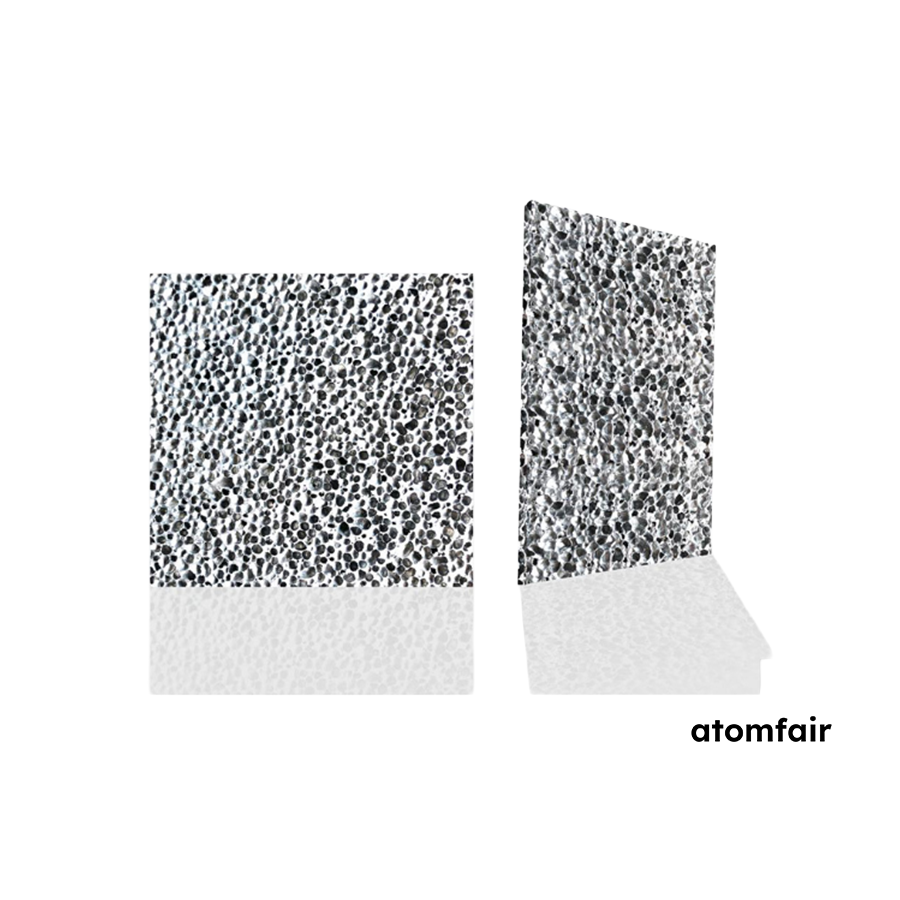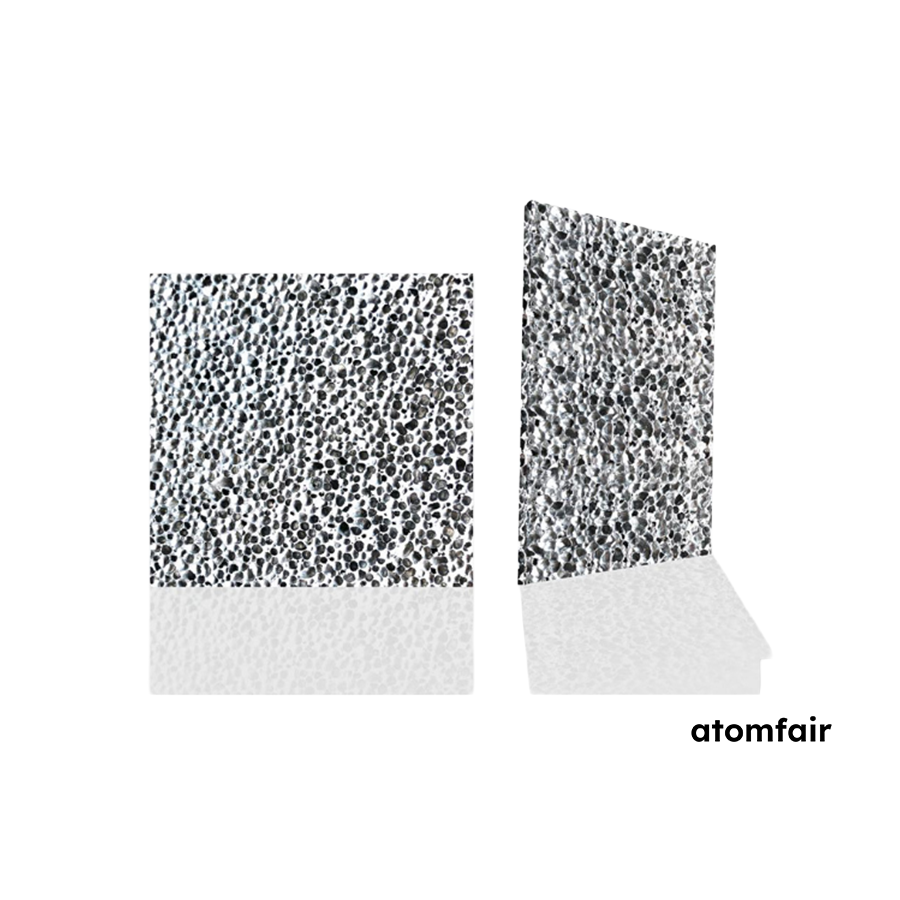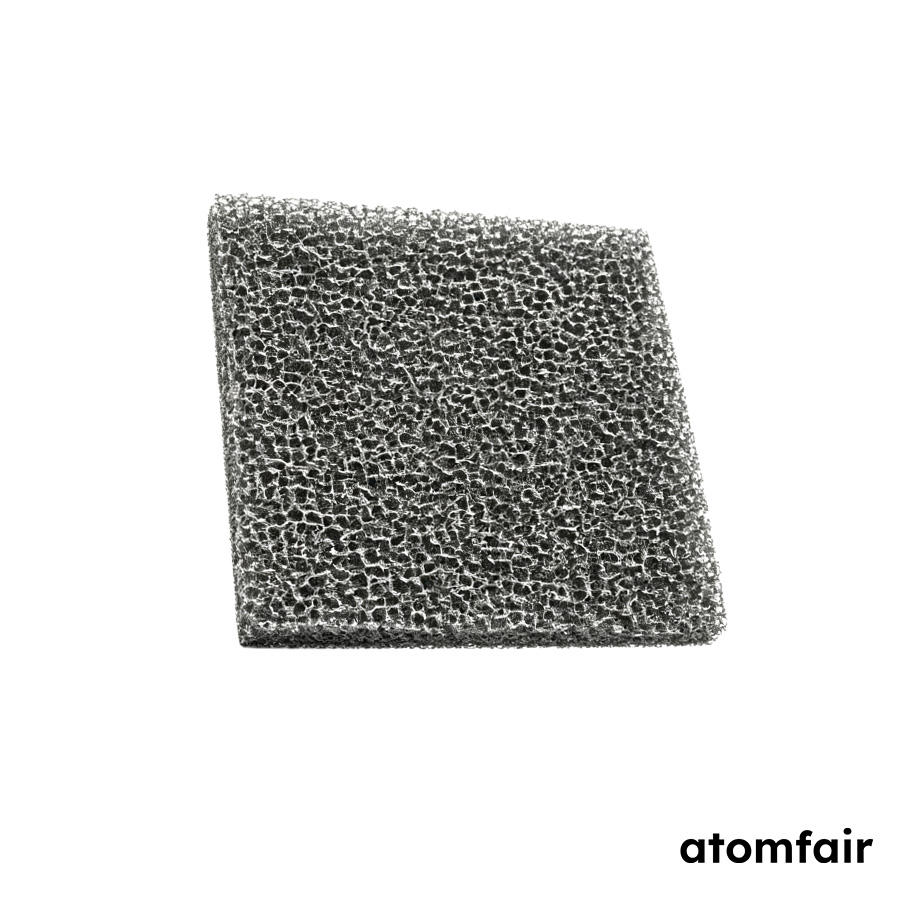
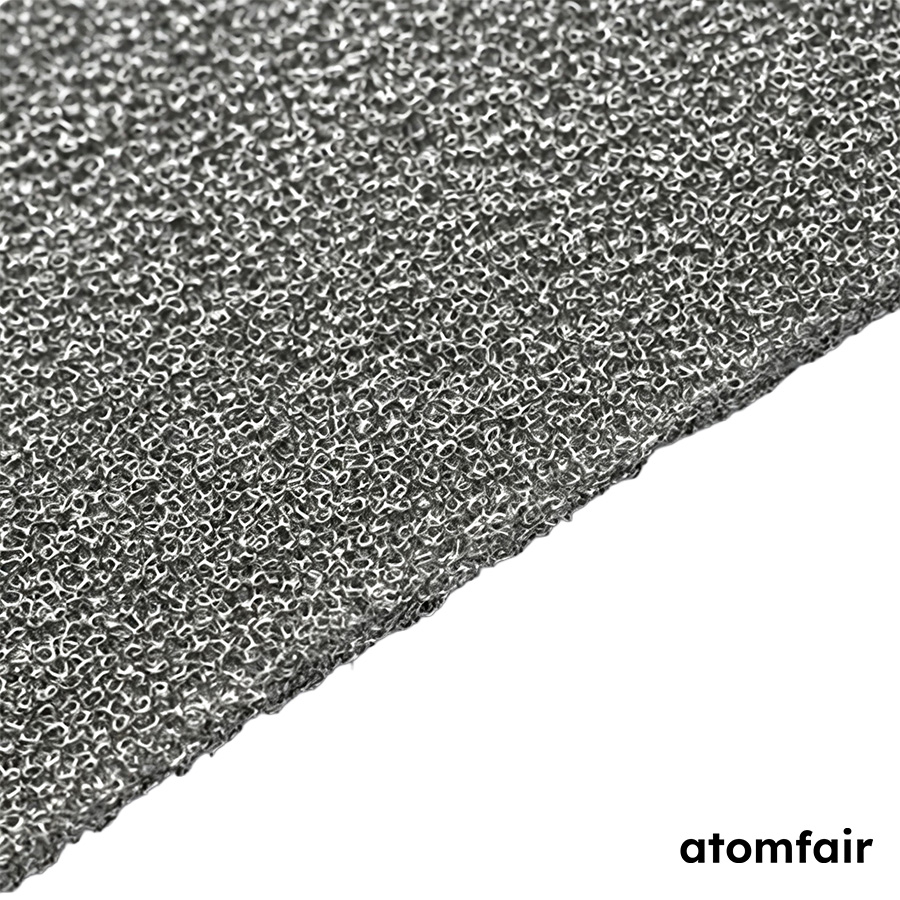
Open-Cell Nickel Foam 60 PPI 200×200×15 mm ATOMFAIR®

Price range: $105.00 through $340.00

Institutional Procurement & Supply Compliance: As a verified US supplier, Atomfair accepts formal institutional Purchase Orders (POs), contract billing schedules, and custom procurement loops for university and national laboratories, and corporate R&D departments globally.

Research-grade open-cell nickel foam, 60 PPI, 200 × 200 × 15 mm, with 60–98% porosity and ≥98% through-pore rate for lab assemblies. Order now.

Laboratory Open-Cell Nickel Foam, 60 PPI, 200 × 200 × 15 mm, 1/5 pcs
Research-grade laboratory product
Product Overview

Open-cell nickel foam with 60 PPI is a lightweight, electrically conductive porous-metal sheet built around a continuous three-dimensional nickel skeleton. In this 200 × 200 × 15 mm format, the approximately 0.42 mm nominal pore pitch creates a regular open network with extensive internal surface exposure, allowing gases, liquids and electrochemical reactants to move through the material instead of remaining confined to the outer faces.

The interconnected framework gives the sheet a useful balance of permeability, formability and structural continuity. It can be cut, bent or bonded into laboratory assemblies while preserving the open pathways needed for filtration, catalytic contact, electrode loading and heat transfer. The nickel matrix also makes the foam relevant where electrical conduction, thermal response, corrosion resistance, acoustic attenuation or electromagnetic shielding must be combined with a low-mass cellular structure.

This specification is suitable for evaluating battery and fuel-cell electrodes, nickel-carbon composite electrode structures, catalyst carriers, exhaust and air-purification media, oil-water separation, industrial filtration, hydrogen electrolysis, electrocatalysis, heat-pipe wicks, condenser structures and distillation packing. Select the PPI, sheet dimensions and thickness around the intended flow, surface-area and integration requirements; choose a 1-piece pack for initial evaluation or a 5-piece pack for repeated trials and small-batch assembly.

Technical Specifications
Parameter Specification / Available Values
Atomfair Model AF-N60-20T15
Material Foamed nickel
Product Form Open-cell nickel foam sheet
Cell Structure Homogeneous three-dimensional open-pore network
Pore Density 60 PPI
Nominal Pore Pitch / Approx. Pore Size 0.42 mm
General Pore-Size Capability 0.1–10 mm (5–120 PPI)
General Pore Count per Linear Inch 5–130
Porosity 60–98%
Through-Pore Rate ≥98%
Bulk Density 0.1–0.8 g/cm³
Specific Gravity 0.2–0.3
Sheet Size 200 × 200 × 15 mm
Thickness 15 mm
General Custom Size Capability Up to 500 × 1000 mm
Tensile Strength 8–50 MPa
Compressive Strength ≥250 kPa
Mechanical Strength ≥2–7 MPa
Listed Temperature Resistance ≥500°C
Listed High-Temperature Capability >1100°C
Heat-Transfer Coefficient >3 W/(m²·K)
Package Options 1 pc; 5 pcs
Typical Applications Battery electrodes, catalyst carriers, filtration and separation media, electrochemical processes, heat-transfer structures, acoustic control, vibration damping and electromagnetic shielding
Key Features and Advantages
  • 60 PPI open-cell structure with an approximately 0.42 mm nominal pore pitch.
  • 200 × 200 mm sheet dimensions with a 15 mm nominal thickness.
  • Homogeneous three-dimensional network with 60–98% stated porosity and at least 98% through-pore rate.
  • Stated bulk-density range of 0.1–0.8 g/cm³ and specific gravity of 0.2–0.3.
  • The listed specific gravity is approximately one-quarter that of water, one-third that of wood, one-tenth that of aluminum and one-thirtieth that of iron.
  • Broad-frequency sound absorption and additional sound-insulation capability after suitable treatment.
  • Listed electromagnetic-wave shielding performance is approximately 90 dB with a relatively thin material section.
  • Can be cut, bent and bonded for downstream fabrication and installation.
  • Stable porous structure supports filtration and steady gas or liquid flow.
  • Thermally conductive network supports rapid heating and heat-transfer applications.
  • Fire-resistant, recyclable metallic structure with listed resistance to high-temperature and acid/alkali conditions.
  • Can be processed for interior decorative and functional surface applications.
  • Available as a single sheet for initial evaluation or a 5-piece pack for repeated trials and small-batch assembly.
Application Scope

Suitable for laboratory and engineering evaluations that require a 60 PPI open nickel network in a 200 × 200 × 15 mm format. Application areas include nickel-metal-hydride, nickel-cadmium and fuel-cell positive and negative electrodes; nickel-carbon composite electrodes for lithium batteries; catalyst and exhaust-purification carriers; air purification, oil-water separation and industrial filtration; hydrogen electrolysis, electrocatalysis and electrochemical metallurgy; infrared-burner surfaces and industrial or domestic drying-heater structures; heat-pipe wicks and condenser heat-transfer media; distillation-tower packing; and functional damping, acoustic, vibration-buffering, electromagnetic-shielding, thermal-insulation and decorative structures.

SELECTION GUIDANCE: Confirm PPI, nominal pore pitch, porosity requirement, through-pore rate, sheet length and width, thickness, bulk-density range, operating environment and required quantity before quotation. Confirm application-critical corrosion, temperature, mechanical and integration requirements before ordering.
HANDLING & INSPECTION: Store the sheets in a clean, dry area and protect the open cellular surface from heavy impact, crushing and contamination. After delivery, check the package condition, sheet dimensions and visible pore structure before cutting, bonding or installing the material.
IMPORTANT NOTICE: Custom dimensions are available upon consultation. For a dimensional feasibility review by e-mail, provide the target length, width, thickness, PPI and estimated quantity.
LABORATORY PROCUREMENT SUPPORT
For PPI selection, sheet-dimension confirmation, package support or application-specific configuration review, contact our technical sales team.
E-MAIL: inquiry@atomfair.com
Manufacturer: Atomfair LLC
Brand: ATOMFAIR®

This document defines the environmental and mechanical constraints for the 60 PPI open-cell nickel foam sheet. It specifies storage conditions and handling precautions to preserve the porous structure and material integrity.

  • Storage Environment: Store the nickel foam sheets in a clean, dry area to prevent contamination and moisture-related degradation.
  • Mechanical Protection: Protect the open cellular surface from heavy impact, crushing, and contamination to avoid structural deformation.
  • Post-Delivery Inspection: Inspect the package condition, sheet dimensions, and visible pore structure before cutting, bonding, or installing the material.

This procedure outlines the steps for receiving, inspecting, and preparing the nickel foam sheet for integration into laboratory assemblies. It covers initial inspection, cutting, and bonding processes.

Required Equipment: Clean, dry storage area, Cutting tool (e.g., scissors or knife), Bonding agent or method

  1. Inspect Delivery
    Inspect the package condition, sheet dimensions, and visible pore structure upon delivery.
  2. Store Properly
    Store the sheet in a clean, dry area, protecting it from heavy impact, crushing, and contamination.
  3. Cut to Size
    Cut the foam to the desired dimensions using a suitable cutting tool.
  4. Bend or Bond
    Bend or bond the cut piece into the required assembly configuration.

How does the 60 PPI pore density balance permeability and mechanical strength for battery electrode applications?

The 60 PPI open-cell structure with an approximately 0.42 mm nominal pore pitch provides a high through-pore rate of at least 98% and porosity ranging from 60–98%, enabling efficient electrolyte flow and reactant transport. At the same time, the nickel foam maintains a tensile strength of 8–50 MPa and compressive strength ≥250 kPa, offering sufficient mechanical integrity for electrode loading, cutting, and handling without collapsing the porous network.

What temperature and chemical compatibility limits apply to this nickel foam for hydrogen electrolysis or electrocatalysis applications?

The nickel foam is rated for continuous temperature resistance ≥500°C and can withstand conditions exceeding 1100°C as listed in the high-temperature capability specification. It is also described as resistant to acid and alkali environments, making it suitable for alkaline electrolysis, electrocatalysis, and other corrosive electrochemical processes where thermal and chemical stability are required.

What storage and handling precautions are necessary to preserve the open-cell structure of this 60 PPI nickel foam sheet?

Store the sheets in a clean, dry area and protect the open cellular surface from heavy impact, crushing, and contamination. After delivery, inspect the package condition, sheet dimensions, and visible pore structure before cutting, bonding, or installing the material to ensure the interconnected network remains intact for filtration, electrode loading, or heat-transfer applications.

This 60 PPI open-cell nickel foam sheet (200×200×15 mm) provides high porosity (60–98%) and ≥98% through-pore rate, making it effective for electrochemical electrode support, filtration, and heat-transfer applications, but its delicate open-cell structure demands careful handling and application-specific validation of corrosion, temperature, and mechanical compatibility.

Positive

  • High porosity and through-pore rate: Porosity of 60–98% with ≥98% through-pore rate ensures extensive internal surface exposure and unimpeded gas/liquid flow, critical for battery electrodes, catalyst carriers, and filtration media.
  • Multifunctional thermal and electrical conductivity: Heat-transfer coefficient >3 W/(m²·K) and electrical conductivity from the nickel matrix support rapid heating, heat-pipe wicks, and electromagnetic shielding (~90 dB) while maintaining low mass (specific gravity 0.2–0.3).

Trade-offs

  • Fragile open-cell structure: The open cellular surface is susceptible to heavy impact, crushing, and contamination; storage in a clean, dry area and careful handling are required to maintain pore integrity and performance.
  • Application-specific validation required: Corrosion resistance, temperature limits, mechanical strength, and integration compatibility must be confirmed for the intended environment, as the foam's performance depends on specific operating conditions (e.g., acid/alkali exposure, high-temperature cycling).

Every advanced material, component, equipment, and instrument in our catalog is backed by rigorous testing. We maintain strict internal quality management frameworks and align with CE conformity metrics to deliver transparent, reproducible performance data via our public open-science repository.

To request raw batch performance data, submit formal vendor registration paperwork, or execute a fast-turnaround R&D manufacturing loop, contact us at inquiry@atomfair.com.

Item is dispatched under the Atomfair Shipping & Delivery Framework (Free worldwide shipping on orders over $59 USD excl. heavy equipment). Return is governed by the Atomfair Return & Refund Policy (7-day technical return window).
Package Quantity

1 pcs, 5 pcs

Related Products