|
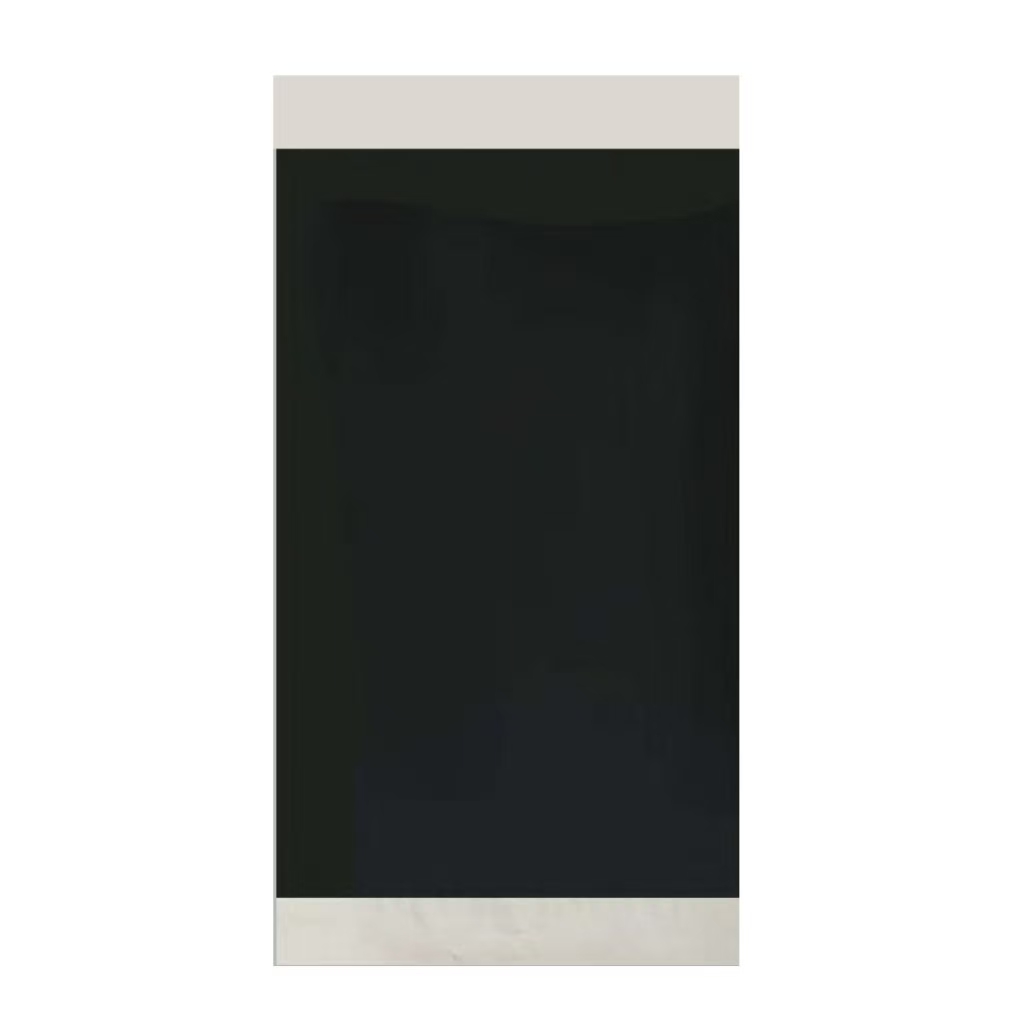
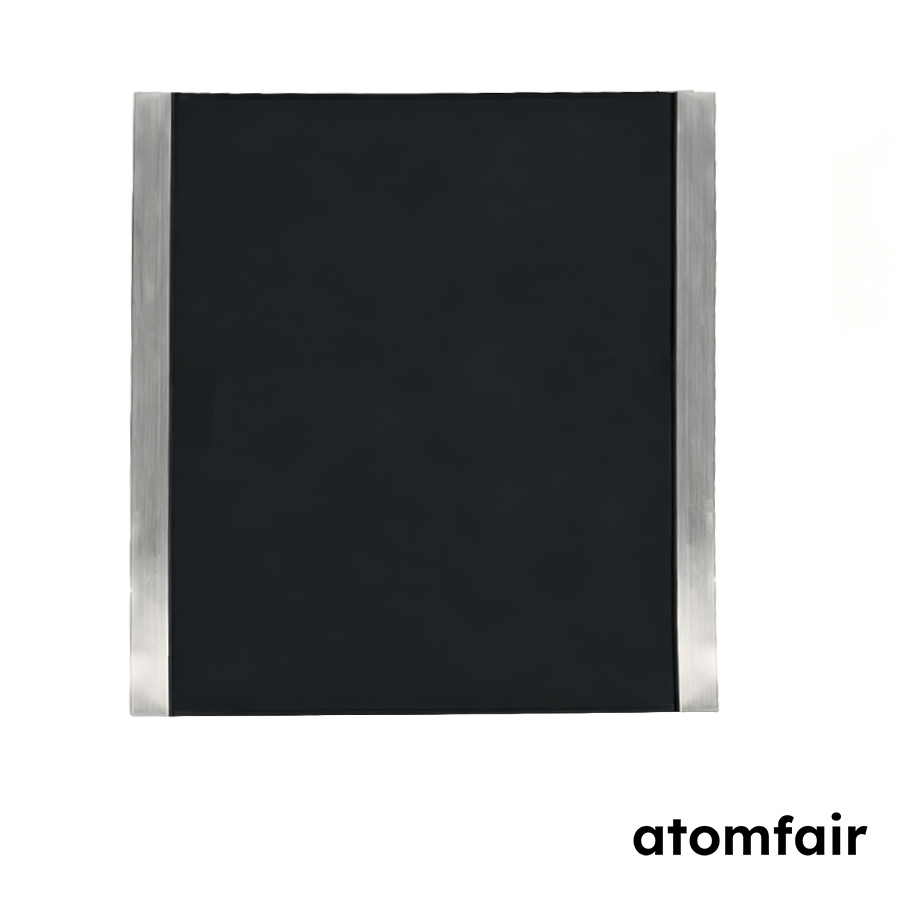
Ni90 High-Nickel NMC Single-Sided Cathode, 28.5 mg/cm² per side
Single-Sided Cathode Sheet
|
||||||||||||||||||||||||||||||||||||||||||||
|
The NI90 electrode sheet is moisture-sensitive and requires vacuum drying before thermal testing. Failure to dry may cause structural degradation and compromised results.
- Moisture Sensitivity: The electrode sheet must be kept dry to prevent moisture contamination.
- Vacuum Drying Requirement: The sheet must be dried under vacuum at 100°C for 12 hours prior to thermal validation testing.
The NI90 electrode sheet must be vacuum-dried at 100°C for 12 hours before thermal validation. This procedure outlines the required steps.
Required Equipment: Vacuum oven
- Load sheets
Place the electrode sheets into the vacuum oven. - Set temperature
Set the oven temperature to 100°C. - Apply vacuum
Evacuate the oven to vacuum. - Maintain conditions
Maintain the vacuum and temperature for 12 hours. - Vent and remove
Vent the oven and remove the dried electrode sheets.
What is the areal capacity of the Atomfair Ni90-S02 electrode sheet based on its specified parameters?
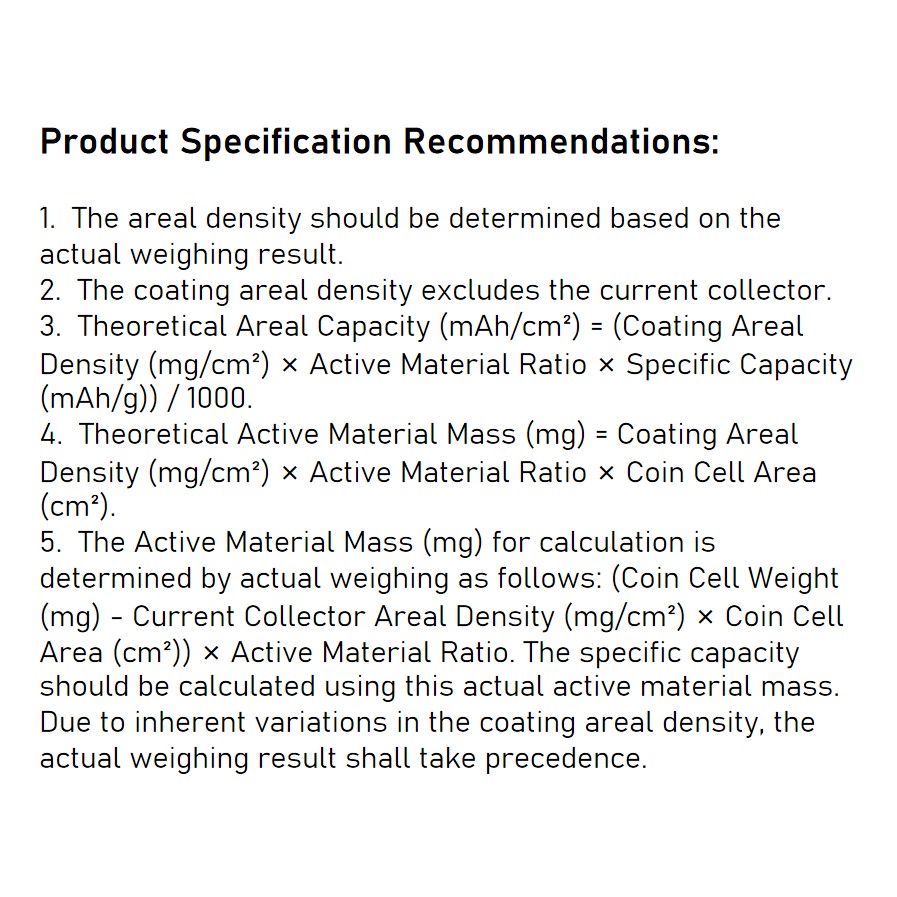
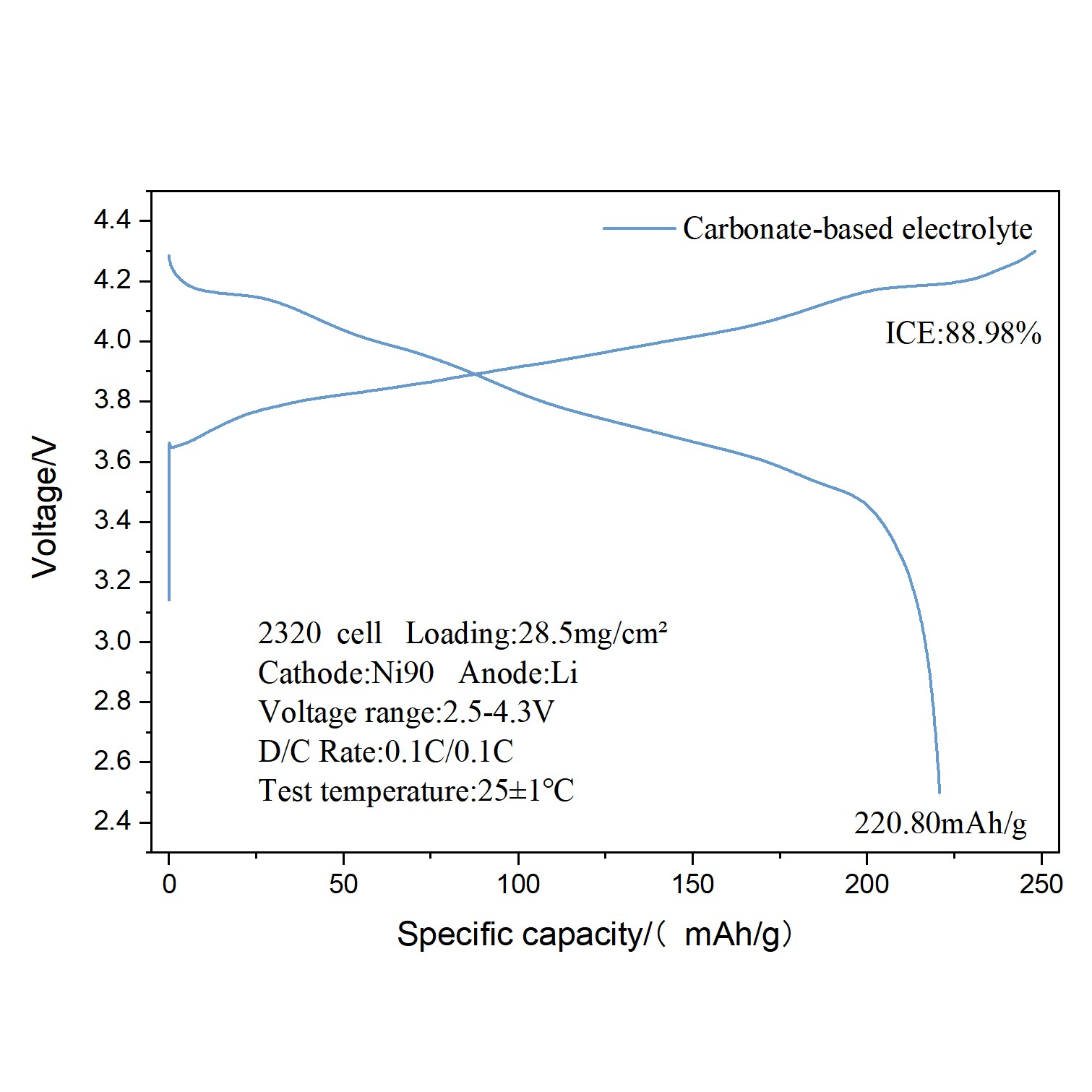
The Ni90-S02 electrode sheet has a specific capacity of 200 mAh/g and a coating density of 28.5 mg/cm², yielding an approximate areal capacity of 5.7 mAh/cm². This value is critical for calculating cell capacity and ensuring consistent baseline performance in R&D testing.
What drying protocol is required for the Ni90-S02 electrode sheet before use?
The manufacturer mandates a vacuum baking at 100°C for 12 hours to remove moisture and prevent structural degradation of the high-nickel cathode material. This protocol is essential for achieving reliable electrochemical results and avoiding contamination during thermal validation testing.
What battery configurations are compatible with the Ni90-S02 single-side coated electrode?
The single-side coated electrode is designed for lithium-ion battery R&D, including half-cell (with lithium metal) and full-cell (with compatible anodes) configurations. The 150×100 mm coating area and 97.4% active material ratio support reproducible electrolyte validation and baseline testing across multiple cell types.
Atomfair Ni90-S02 electrode sheet delivers 97.40% active material purity and uniform 28.5 mg/cm² single-side coating for reproducible R&D testing, but mandates a 12-hour vacuum drying step at 100°C and is limited to single-sided cell configurations.
Positive
- High Active Material Purity: 97.40% active material ratio ensures optimal electrochemical kinetics and consistent half-cell performance during baseline testing.
- Carbon-Coated Aluminum Substrate: Carbon-coated foil enhances electrical connectivity and long-term cycling stability, reducing contact resistance in lab-scale cells.
Trade-offs
- Mandatory Vacuum Drying Protocol: Requires 12-hour vacuum baking at 100°C before use to prevent moisture contamination and structural degradation.
- Single-Sided Coating Constraint: Single-side coated design limits direct application to half-cell or unipolar configurations; full-cell setups may require additional lamination or double-sided electrodes.
Every advanced material, component, equipment, and instrument in our catalog is backed by rigorous testing. We maintain strict internal quality management frameworks and align with CE conformity metrics to deliver transparent, reproducible performance data via our public open-science repository.
To request raw batch performance data, submit formal vendor registration paperwork, or execute a fast-turnaround R&D manufacturing loop, contact us at inquiry@atomfair.com.
Item is dispatched under the Atomfair Shipping & Delivery Framework (Free worldwide shipping on orders over $59 USD excl. heavy equipment). Return is governed by the Atomfair Return & Refund Policy (7-day technical return window).