|
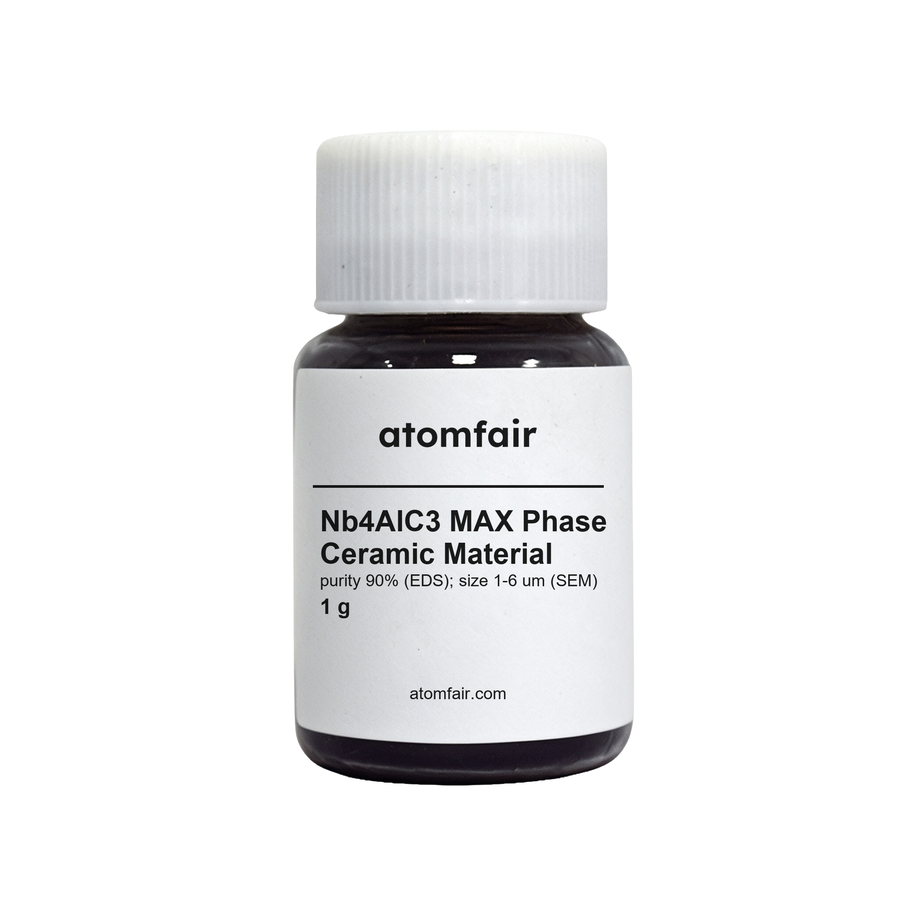
Nb4AlC3 MAX Phase Ceramic Material, 1 g
Product Type: MAX phase ceramic powder
Research-grade laboratory product
|
|||||||||||||||||
|
|||||||||||||||||
|
LABORATORY PROCUREMENT SUPPORT
For material selection, specification confirmation and package-size quotation support, contact our technical sales team.
E-MAIL: inquiry@atomfair.com
|
|||||||||||||||||
|
Manufacturer: Atomfair LLC
Brand: ATOMFAIR®
|
What is the significance of 90% purity measured by EDS for Nb4AlC3 MAX phase ceramic powder?
The purity of 90% is determined by Energy Dispersive X-ray Spectroscopy (EDS), which provides elemental composition analysis. This indicates that the material is predominantly Nb4AlC3 with approximately 10% of secondary phases or impurities. Researchers should evaluate whether this purity level meets the requirements of their specific synthesis or application, as the presence of secondary phases may influence properties such as mechanical strength, oxidation resistance, or electrical conductivity.
What particle size range and measurement method are specified for Nb4AlC3 MAX phase powder?
The particle size is 1–6 µm as measured by Scanning Electron Microscopy (SEM). This quantitative size distribution is critical for processes like powder compaction, sintering, or slurry preparation, where uniformity and flowability directly affect final material quality. SEM also provides morphological information, allowing users to assess particle shape and agglomeration behavior.
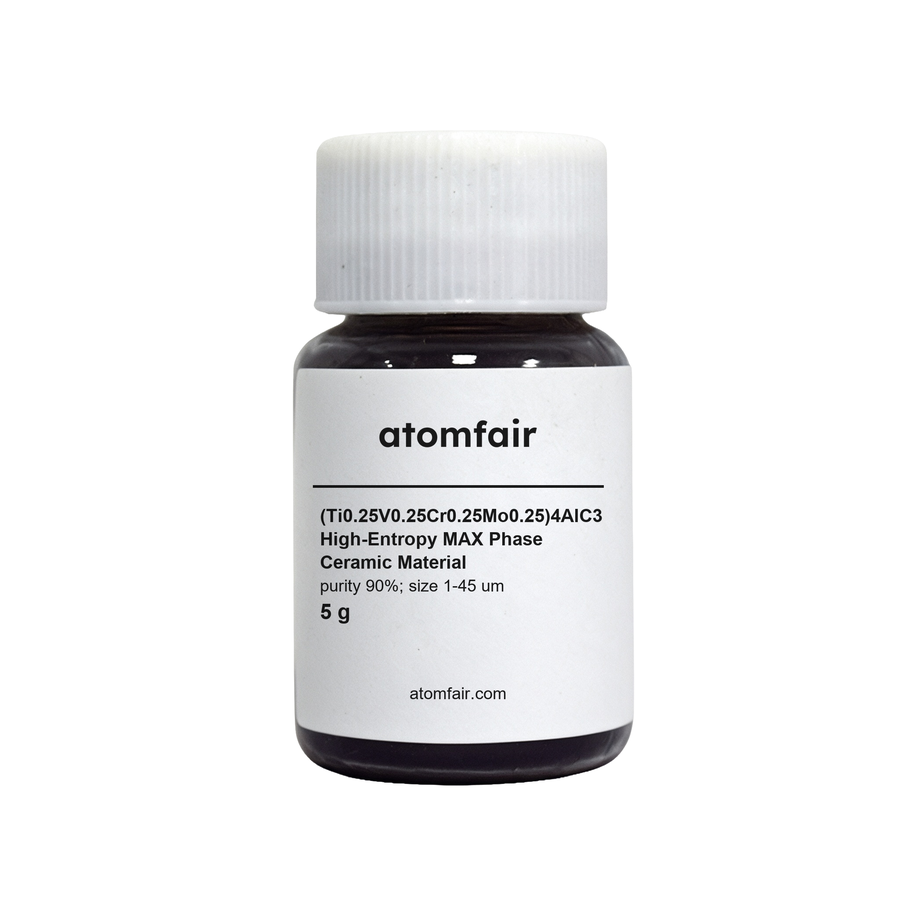
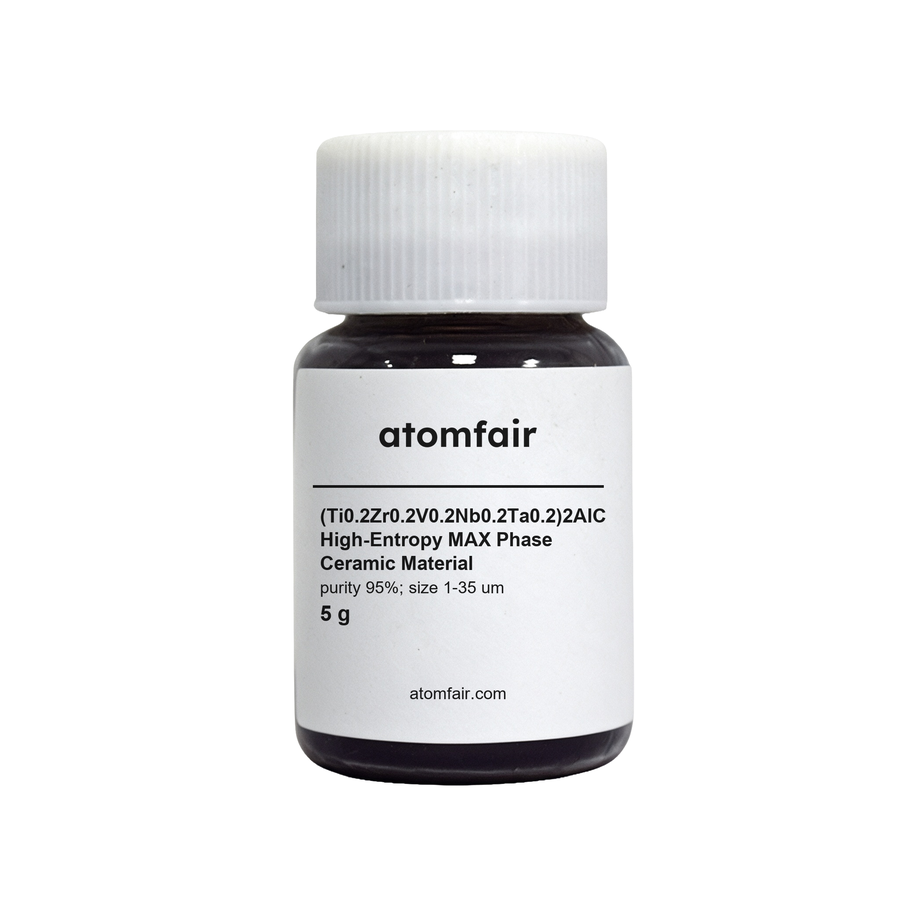
The Nb4AlC3 MAX phase ceramic powder (1 g) is characterized by 90% purity (EDS) and 1-6 µm particle size (SEM), making it suitable for exploratory synthesis and characterization of ternary carbide materials.
Positive
- Controlled particle size 1-6 µm: The specified particle size range of 1-6 µm (SEM) is suitable for powder processing and sintering studies.
- Defined phase purity 90% (EDS): The material is supplied with 90% purity by EDS, providing a consistent baseline for MAX phase research.
Trade-offs
- Purity below 100%: At 90% purity (EDS), the material contains ~10% secondary phases, which may influence experimental outcomes in phase-sensitive studies.
- Broad particle size distribution: The 1-6 µm range indicates a broad distribution, which could affect packing density and uniformity in composite fabrication.
Every advanced material, component, equipment, and instrument in our catalog is backed by rigorous testing. We maintain strict internal quality management frameworks and align with CE conformity metrics to deliver transparent, reproducible performance data via our public open-science repository.
To request raw batch performance data, submit formal vendor registration paperwork, or execute a fast-turnaround R&D manufacturing loop, contact us at inquiry@atomfair.com.
Item is dispatched under the Atomfair Shipping & Delivery Framework (Free worldwide shipping on orders over $59 USD excl. heavy equipment). Return is governed by the Atomfair Return & Refund Policy (7-day technical return window).