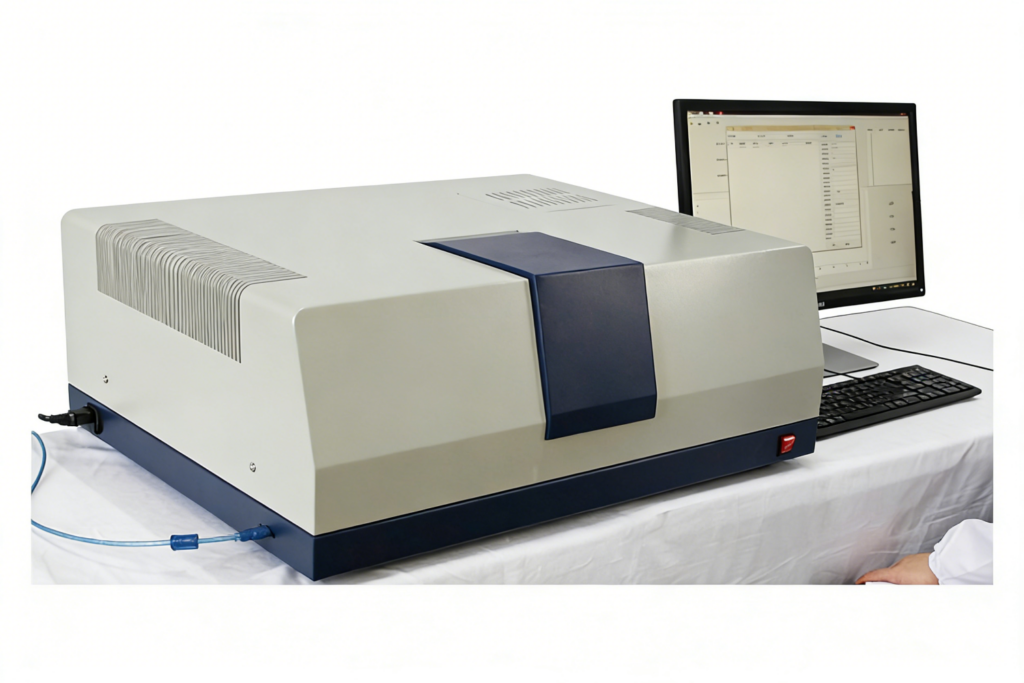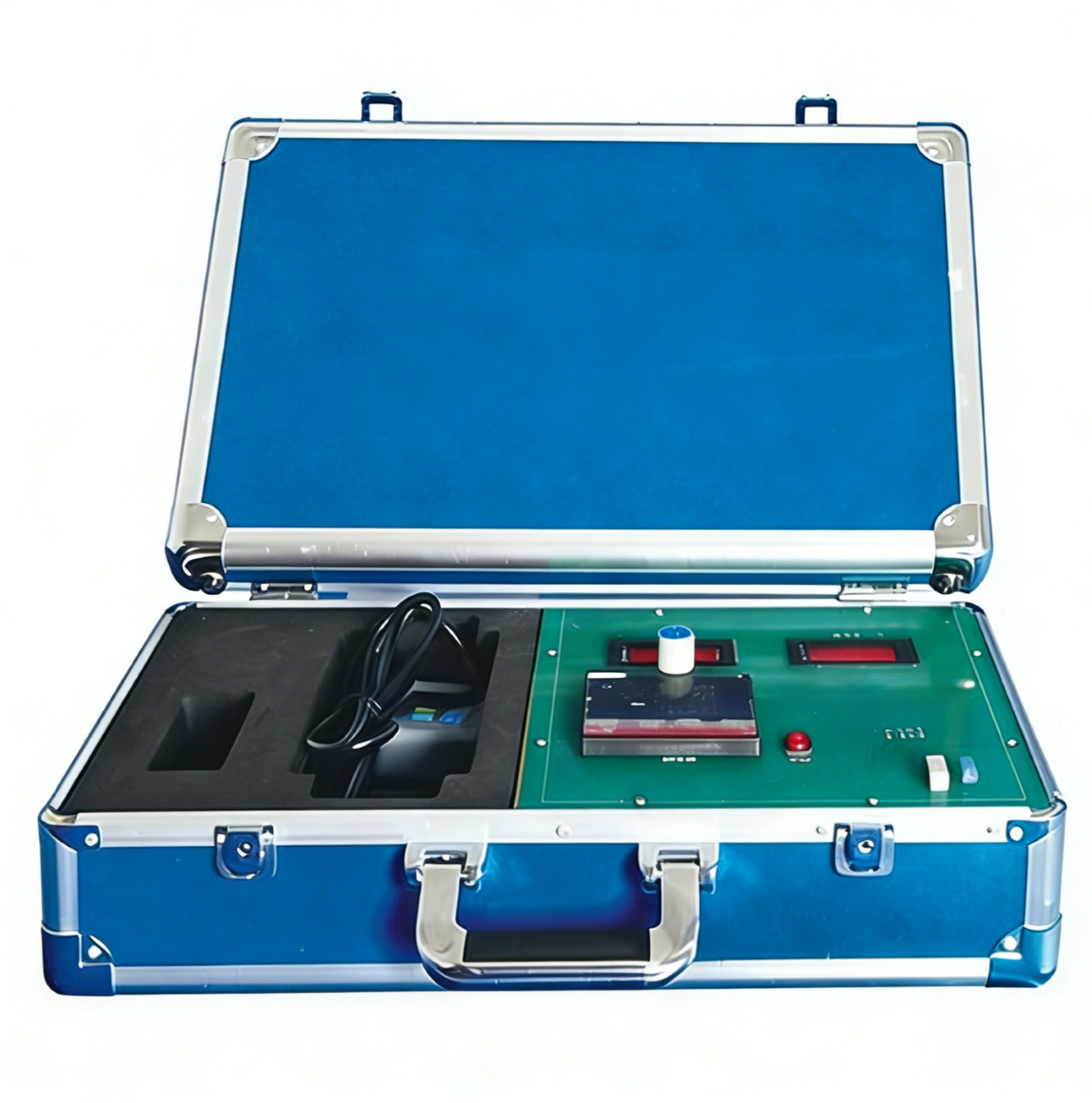
Atomfair LSCT 369 Light Source Characteristic Tester
Product Overview
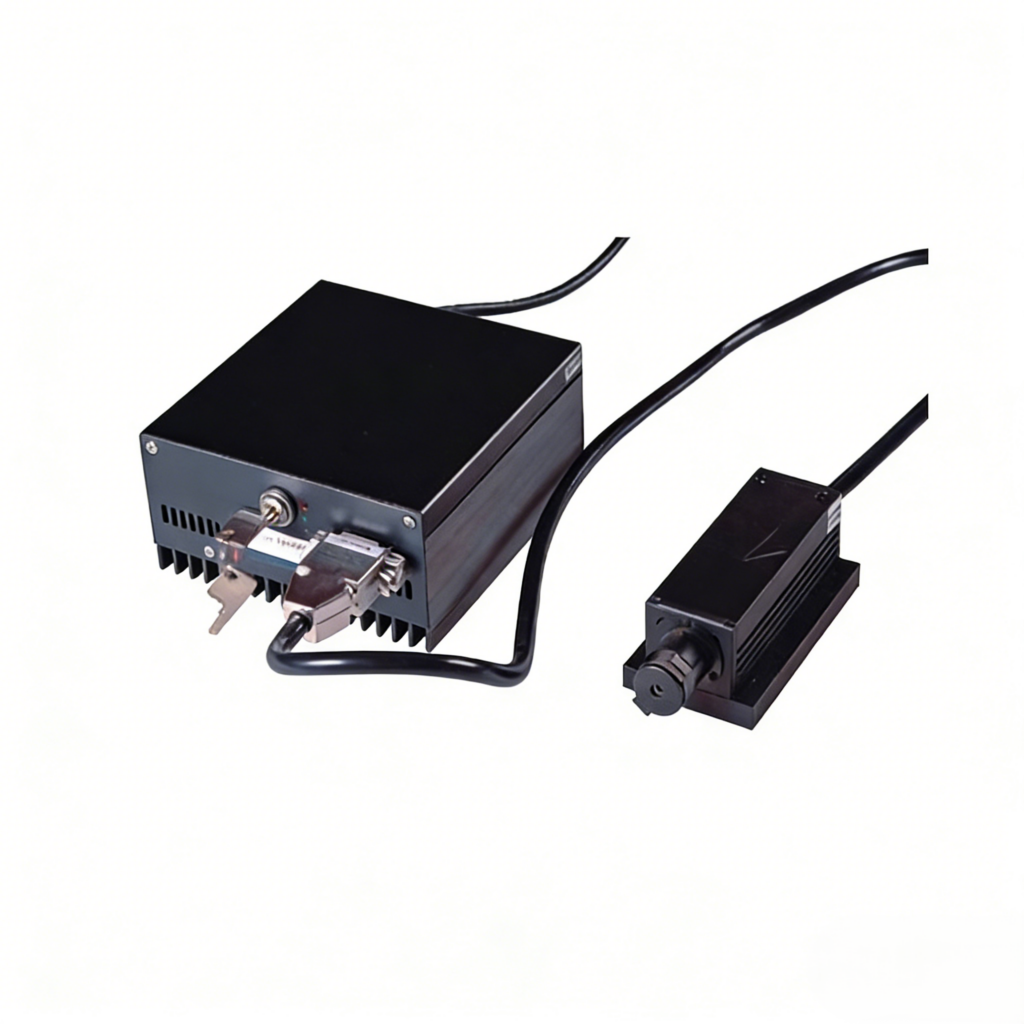
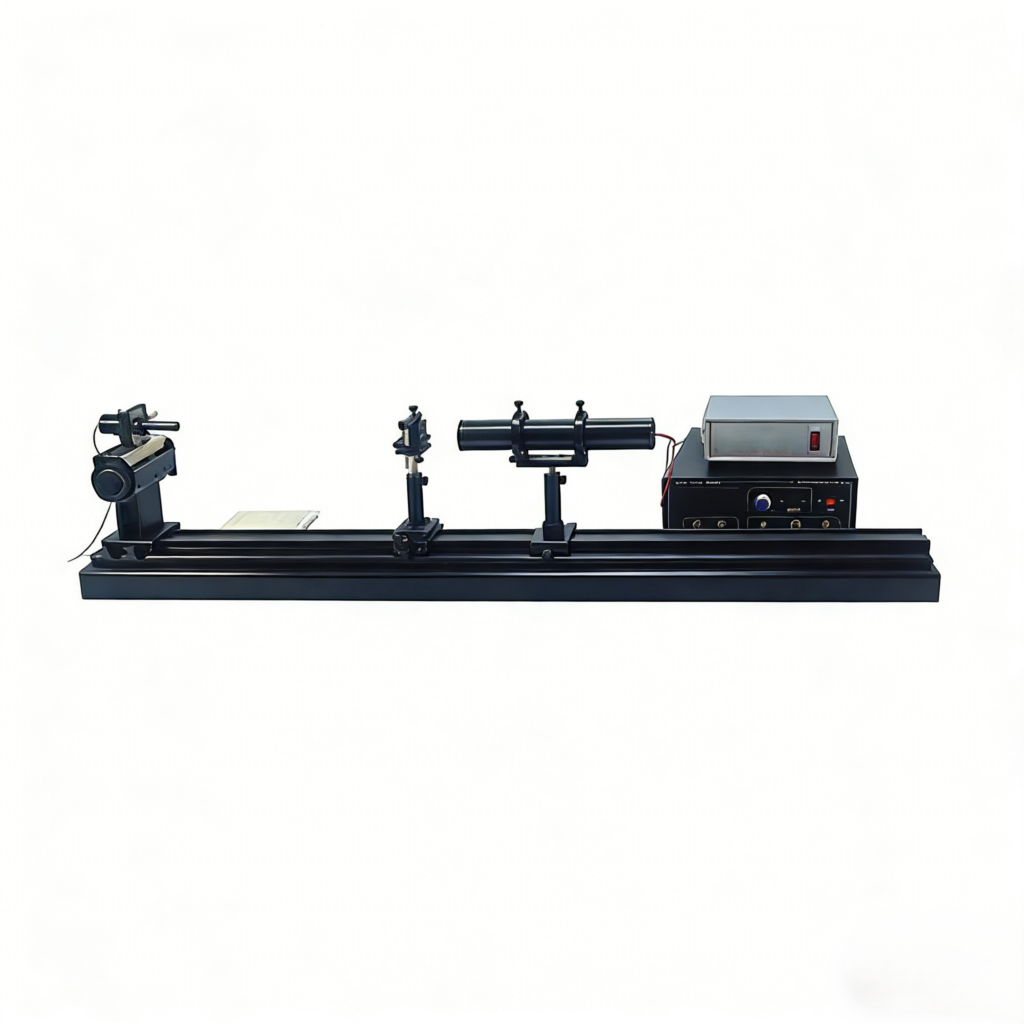
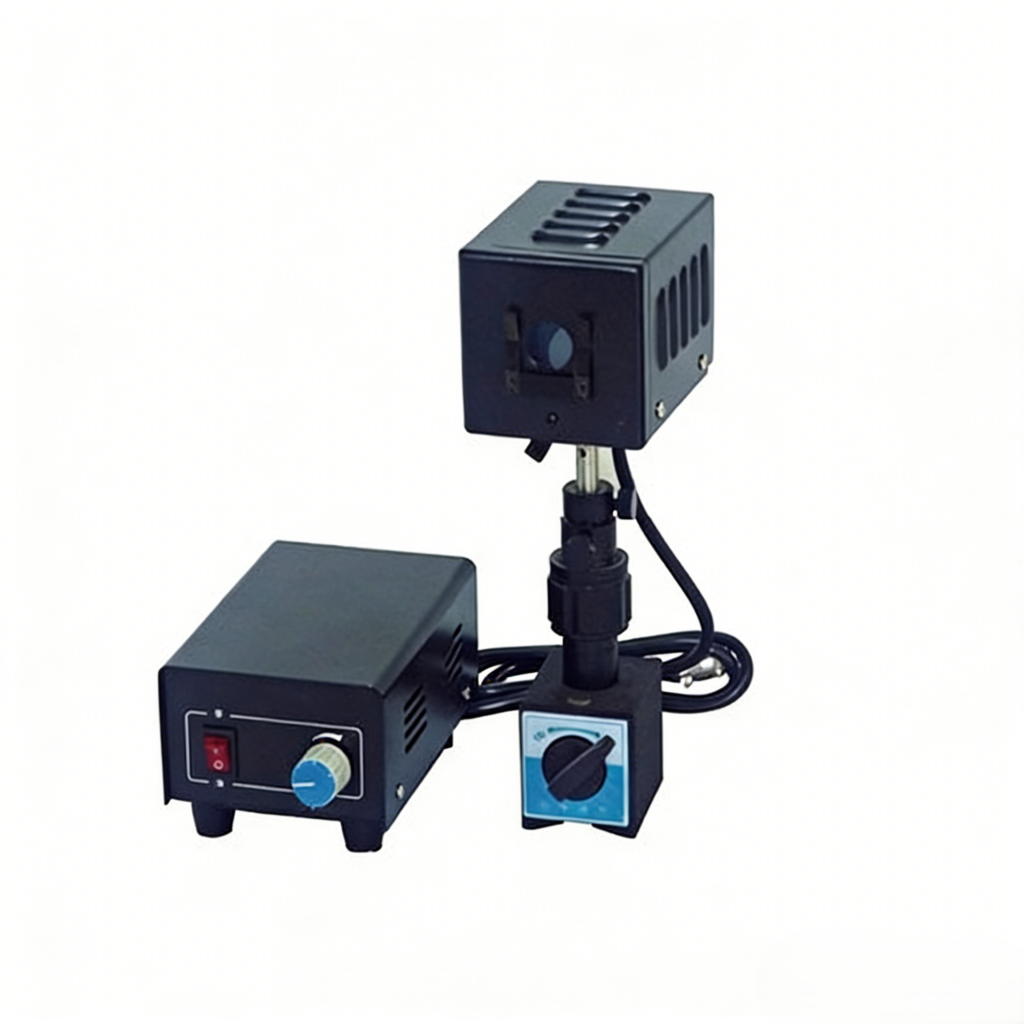
The Atomfair LSCT 369 Light Source Characteristic Tester is a professional optoelectronic testing instrument designed to help users gain an in-depth understanding of the operating characteristics of Light-Emitting Diodes (LED) and Laser Diodes (LD). It accurately captures the working principles of these two types of devices by measuring key parameters, including the threshold current of LD, as well as the output power-current (P-I) characteristic curves and voltage-current (V-I) characteristic curves of both LED and LD. With precise testing capabilities and reliable performance, this instrument is an essential tool for optoelectronic research, laboratory experiments, and educational applications.
Product Category
Optoelectronic Device Characteristic Tester
Experimental Capabilities
- Conduct voltage-current (V-I), power-current (P-I) characteristic tests, and temperature characteristic tests for Laser Diodes (LD) and Light-Emitting Diodes (LED).
- Measure the voltage-current (V-I) characteristic curve of Light-Emitting Diodes (LED).
- Test the output power-current (P-I) characteristic curve of Light-Emitting Diodes (LED).
- Determine the voltage-current (V-I) characteristic curve of Laser Diodes (LD).
- Evaluate the output power-current (P-I) characteristic curve of Laser Diodes (LD).
Key Configurations & Specifications
1. Laser Diode (LD)
| Parameter No. | Parameter Name | Symbol | Test Condition | Minimum Value | Typical Value | Maximum Value | Unit |
|---|---|---|---|---|---|---|---|
| 1 | Rated Power | Pout | Lop = Ith + 20 | 0.2 | – | 1 | mW |
| 2 | Central Wavelength | λ | Continuous Wave (CW) | 1290 | 1310 | 1330 | nm |
| 3 | Spectral Width | λ | Continuous Wave (CW) | – | 2 | 5 | nm |
| 4 | Threshold Current | Ith | Continuous Wave (CW) | – | 10 | 15 | mA |
| 5 | Operating Current | Iop | Continuous Wave (CW) | – | Ith + 10 | – | mA |
| 6 | Detector Current | Im | Continuous Wave (CW) | 100 | – | – | μA |
| 7 | Detector Dark Current | Id | Continuous Wave (CW) | – | – | 0.1 | nA |
2. Light-Emitting Diode (LED)
| Parameter No. | Parameter Name | Symbol | Test Condition | Minimum Value | Typical Value | Maximum Value | Unit |
|---|---|---|---|---|---|---|---|
| 1 | Rated Power | Pout | IF = 60 mA | 10 | – | 100 | μW |
| 2 | Central Wavelength | λ | Continuous Wave (CW) | 1280 | 1310 | 1350 | nm |
| 3 | Spectral Width | λ | Continuous Wave (CW) | – | – | 170 | nm |
| 4 | Operating Voltage | Vop | Continuous Wave (CW) | – | 1.2 | 1.7 | V |
| 5 | Rise/Fall Time | Tr/Tf | Continuous Wave (CW) | – | – | 3 | ns |
3. Temperature Controller
- Measurement Accuracy: ±0.5% Full Scale (F.S) ±1 digit
- Cold Junction Compensation Error: ≤±2 °C
- Measurement Display Range: -1999 ~ 9999
- Alarm Range: Fully adjustable over the entire range
- Relay Output Contact Capacity: 3 A / 220 V resistive load or custom configuration
- Solid-State Relay Output Signal: 12 V + 3 A, 30 mA
- Operating Environment: Temperature 0 ~ 50 °C, relative humidity ≤85% RH
- Power Consumption: ≤4 VA
- Sensor: Pt100 Platinum Resistance
4. Voltmeter
Four Adjustable Ranges: 0-200 mV, 0-2 V, 0-20 V, 0-200 V
5. Physical Dimensions & Weight
- Chassis Dimensions: 514 mm × 314 mm × 140 mm
- Weight: ≤4 Kg
Application Scenarios
Ideal for academic research institutions, universities, technical colleges, and electronics laboratories. It is widely used in optoelectronic technology courses, semiconductor device research projects, and quality inspection of LED/LD components. Whether for student experiments to understand basic optoelectronic principles or professional R&D to optimize device performance, the Atomfair LSCT 369 delivers accurate and reliable test results to support various application needs.
If you’re interested, have any questions, or have specific customization requirements, please feel free to contact us at inquiry@atomfair.com.
Operate only within the specified ambient temperature range of 0-50°C and relative humidity ≤85% RH to prevent component degradation. Do not exceed the relay output contact capacity of 3A at 220V or the voltmeter range limits to avoid electrical damage.
- Environmental constraint: Operate only within the specified ambient temperature range of 0-50°C to ensure measurement accuracy and component longevity.
- Relay output limit: Do not exceed the relay output contact capacity of 3 A at 220 V to prevent damage to the temperature controller.
- Voltmeter range selection: Select the appropriate voltmeter range (0-200 mV, 0-2 V, 0-20 V, or 0-200 V) to avoid overloading the input.
- Pt100 sensor connection: Ensure the Pt100 sensor is properly connected for accurate temperature measurement and control.
This instrument measures V-I and P-I characteristics of LEDs and LDs. Follow these steps to perform a standard characteristic test.
Required Equipment: Atomfair LSCT 369 Light Source Characteristic Tester
- Prepare the device under test
Connect the LED or LD leads to the designated test terminals on the front panel. - Configure measurement parameters
Set the drive current limits and sweep range using the instrument controls. - Initiate the test sweep
Press the start button to begin recording the voltage-current and power-current curves. - Record and analyze results
Read the threshold current and characteristic curves from the display or connected software.
What is the typical threshold current of the laser diode in the Atomfair LSCT 369, and how does it determine the operating current?
The typical threshold current (Ith) for the laser diode is 10 mA, with a maximum of 15 mA under continuous wave operation. The operating current (Iop) is specified as Ith + 10 mA, meaning it is directly dependent on the measured threshold current. This relationship is critical for characterizing LD performance and ensuring proper biasing.
Can the LSCT 369 simultaneously test both LED and LD devices, and what are the distinct measured parameters for each?
Yes, the LSCT 369 is designed to test both Light-Emitting Diodes (LED) and Laser Diodes (LD) through separate measurement protocols. For LD, it measures threshold current, central wavelength (1310 nm typical), spectral width (2 nm typical), and detector parameters. For LED, it measures rated power (10–100 μW at 60 mA), central wavelength (1310 nm typical), spectral width (up to 170 nm), operating voltage (1.2–1.7 V), and rise/fall time (≤3 ns). The instrument captures voltage-current (V-I) and power-current (P-I) characteristic curves for both device types.
What temperature sensor and accuracy does the LSCT 369 use, and what are its environmental operating limits?
The temperature controller uses a Pt100 platinum resistance sensor with a measurement accuracy of ±0.5% full scale (±1 digit) and cold junction compensation error ≤±2 °C. The device operates in an environment of 0–50 °C with relative humidity ≤85% RH, and power consumption is ≤4 VA. The relay output contact capacity is 3 A/220 V resistive load.
The Atomfair LSCT 369 Light Source Characteristic Tester is a benchtop instrument for characterizing LED and LD devices, providing P-I and V-I curve measurements, LD threshold current, and temperature-controlled operation via a Pt100 sensor. Its integrated voltmeter with four switchable ranges and temperature controller supports quantitative optoelectronic testing in research and educational settings.
Positive
- Dual LED/LD characterization: The instrument measures both V-I and P-I characteristic curves for LEDs and LDs, including LD threshold current, enabling comprehensive optoelectronic device evaluation in a single unit.
- Integrated temperature control: A built-in temperature controller with Pt100 sensor and cold junction compensation (≤±2 °C) supports temperature-dependent characteristic testing, with relay and solid-state outputs for external control.
Trade-offs
- Narrow LD wavelength range: The LD central wavelength is specified only for 1290–1330 nm, limiting the instrument to 1310 nm telecom-band lasers and excluding other common LD wavelengths.
- Environmental sensitivity: The temperature controller operates only within 0–50 °C and ≤85% RH, requiring a controlled lab environment to maintain specified accuracy and avoid drift.
Every advanced material, component, equipment, and instrument in our catalog is backed by rigorous testing. We maintain strict internal quality management frameworks and align with CE conformity metrics to deliver transparent, reproducible performance data via our public open-science repository.
To request raw batch performance data, submit formal vendor registration paperwork, or execute a fast-turnaround R&D manufacturing loop, contact us at inquiry@atomfair.com.
Item is dispatched under the Atomfair Shipping & Delivery Framework (Free worldwide shipping on orders over $59 USD excl. heavy equipment). Return is governed by the Atomfair Return & Refund Policy (7-day technical return window).