3.20V 280Ah LFP Prismatic Cell | ATOMFAIRCOMMERCIAL GRADE · PRODUCTION
|
|||||||||||||||||||||||||
|
|||||||||||||||||||||||||
|
TAILORED SOLUTIONS FOR RESEARCH
Contact our engineering team for technical support or official institutional quotations.
EMAIL: INQUIRY@ATOMFAIR.COM
|
|||||||||||||||||||||||||
|
MANUFACTURER: ATOMFAIR LLC
BRAND: ATOMFAIR®
|
This cell requires strict adherence to voltage, temperature, and mechanical safety limits to prevent thermal runaway and electrical hazards. Storage must be in a humidity-controlled environment with proper insulation and short-circuit protection.
- BMS Requirement: Always connect the cell to a battery management system with appropriate overcharge, overdischarge, and overcurrent protection.
- Operating Range: Operate the cell strictly within the manufacturer-recommended voltage and temperature ranges to ensure safe and long-lasting performance.
- Mechanical Integrity: Avoid any mechanical abuse, including crushing, puncturing, or dropping, which can lead to internal short circuits.
- Disposal: Dispose of the cell in accordance with local regulations for lithium-ion batteries to prevent environmental contamination.
Follow these steps to safely initialize and handle the cell before integrating into an energy storage system. Proper conditioning and BMS connection are critical for performance and safety.
Required Equipment: Battery Management System (BMS)
- Inspect Cell
Inspect the cell for any visible damage, deformation, or leakage before handling. - Connect BMS
Connect the cell to a dedicated BMS with appropriate protection functions for overcharge, overdischarge, and short circuit. - Condition Cell
Condition the cell by charging it at a 0.5C rate under standard ambient conditions (25°C, 1 atm) before first use. - Monitor During Charging
Monitor the cell voltage and temperature during initial charging using the BMS to ensure they remain within safe limits. - Store Properly
Store the cell in a humidity-controlled, non-conductive container when not in use to prevent moisture ingress and short circuits.
What is the cycle life retention at 100% depth of discharge for the 3.20V 280Ah LFP prismatic cell?
The ATOMFAIR 3.20V 280Ah LFP prismatic cell achieves ≥8000 cycles at 0.5C/0.5C charge/discharge rates, 100% depth of discharge (DOD), with 70% capacity retention at 25°C. This ultra-long cycle life is specifically designed for daily cycling in energy storage systems (ESS) such as grid-scale storage and renewable integration.
What are the dimensional constraints for integrating this 280Ah prismatic cell into a battery pack?
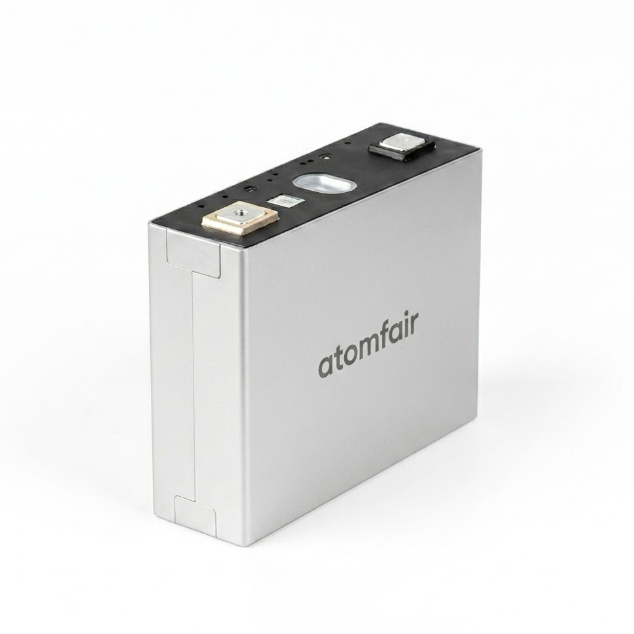
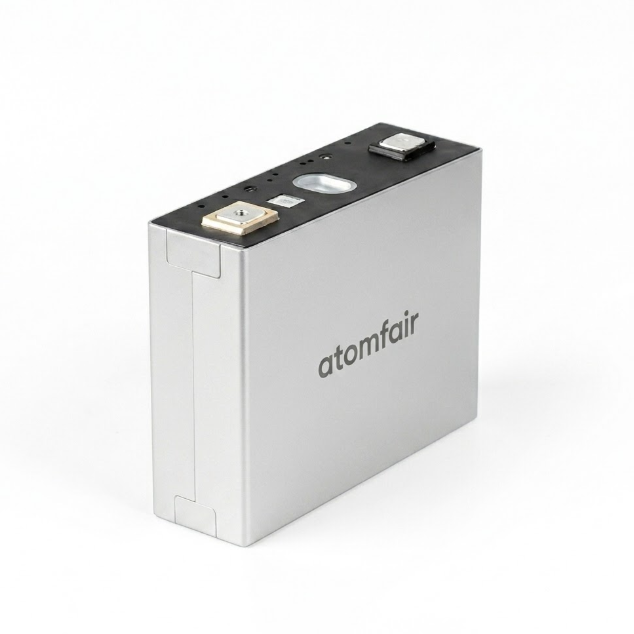
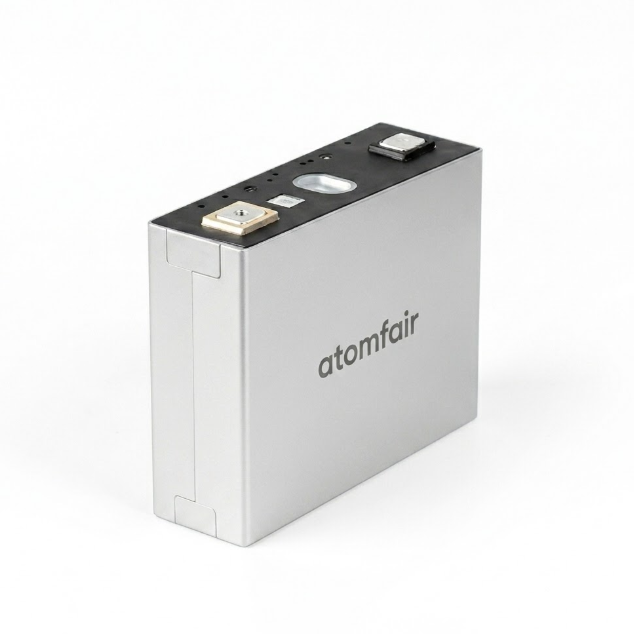
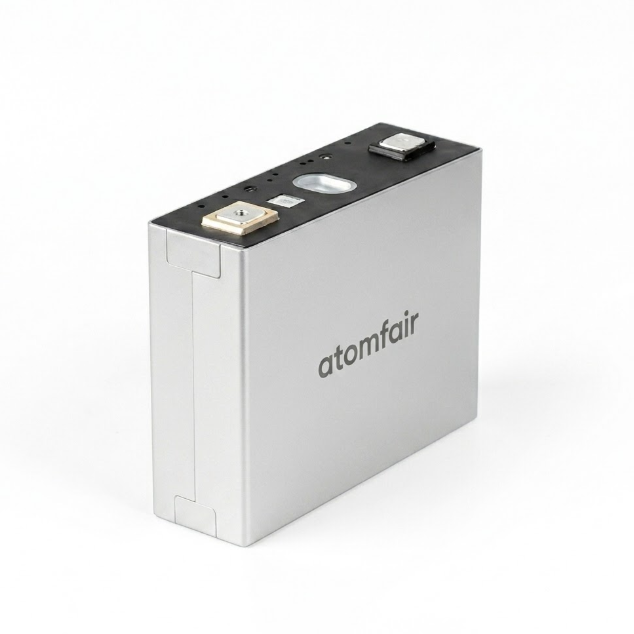
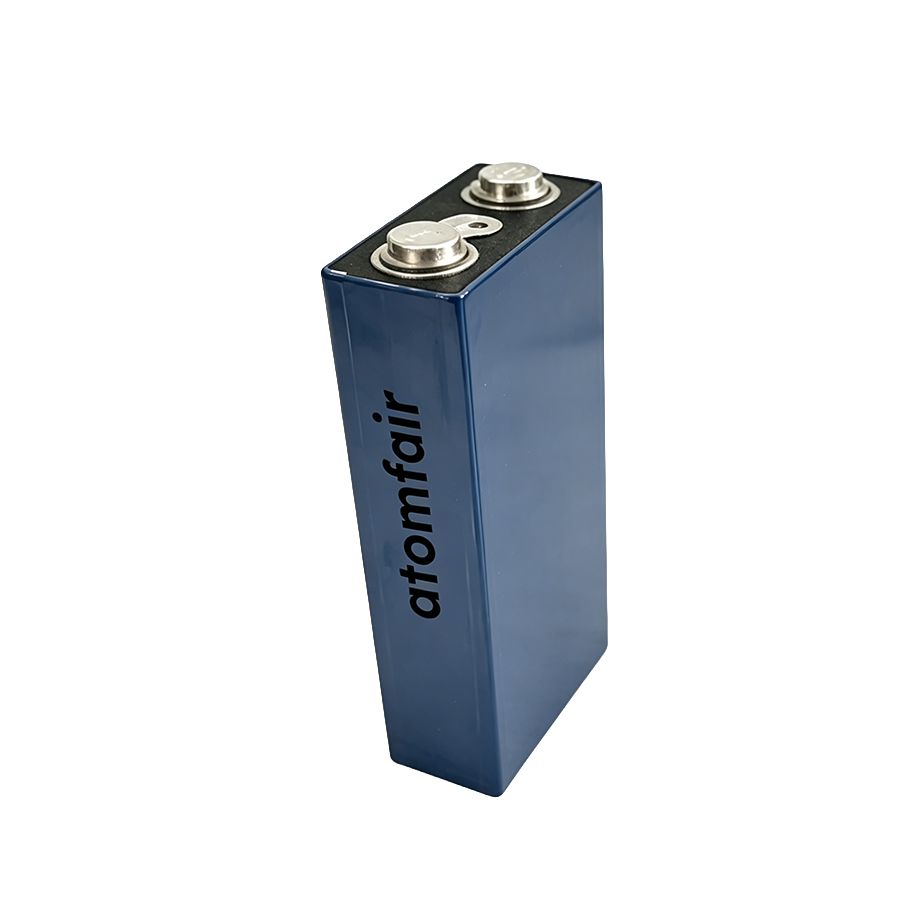
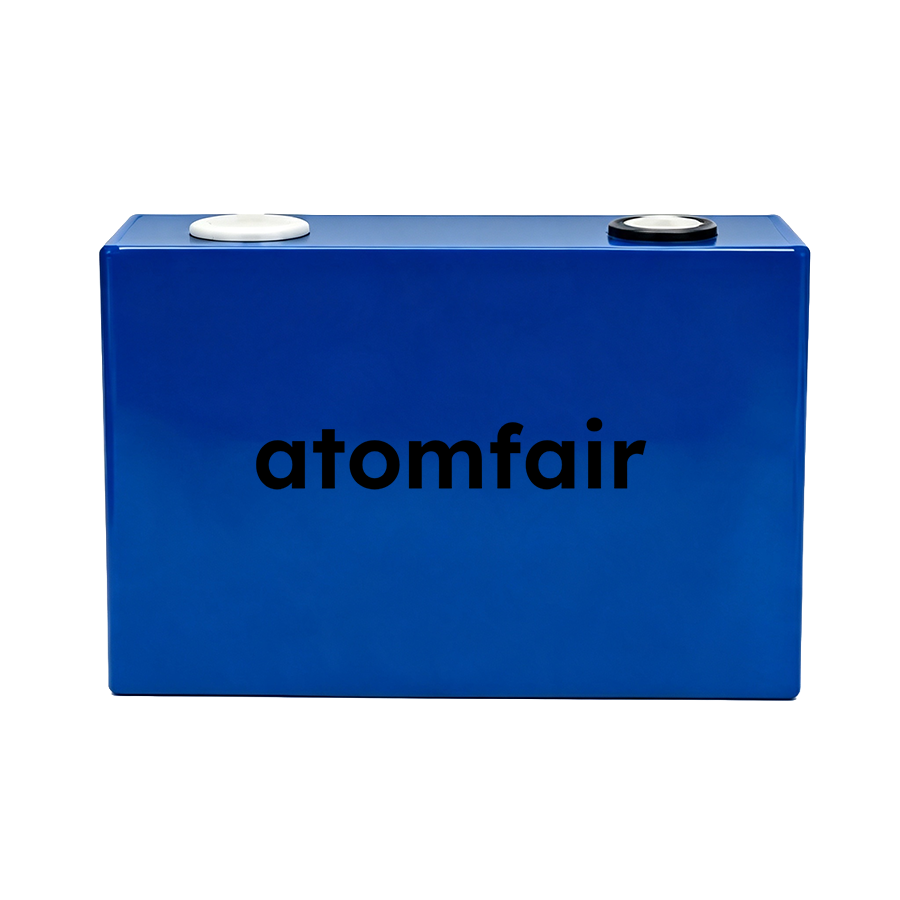
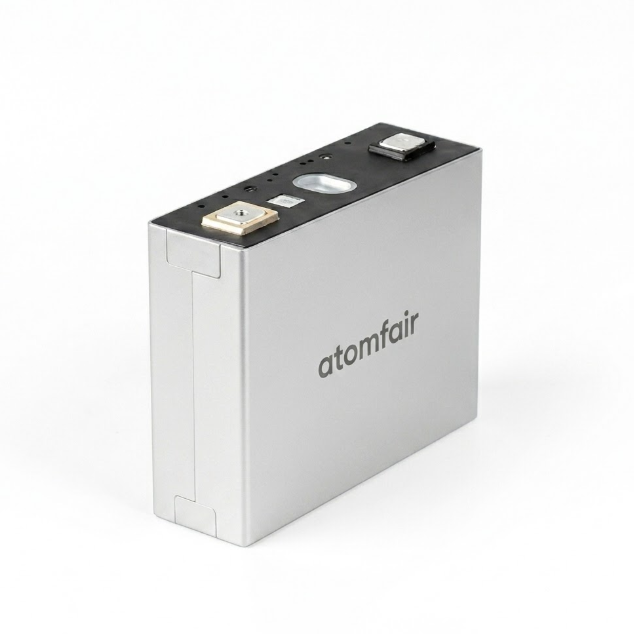
The cell measures 71.8 × 174.2 × 207.1 mm including the terminal, with a weight ≤5.60 kg. Its prismatic aluminum case provides structural rigidity and efficient heat dissipation, enabling straightforward pack assembly. The 162 Wh/kg energy density allows space-efficient ESS layouts, reducing overall system footprint.
What packaging and handling precautions are specified for the ATOMFAIR 280Ah LFP cell?
The cell ships in humidity-controlled vacuum sealed packaging with individual isolation in anti-static foam lined cartons. The manufacturer mandates use of a dedicated BMS with appropriate protection functions, operation within recommended voltage and temperature ranges, and avoidance of mechanical abuse, over-discharge, or short circuits. First-use conditioning under standard ambient conditions is advised.
The ATOMFAIR 3.20V 280Ah LFP prismatic cell offers 162Wh/kg energy density and ≥8000 cycle life at 100% DOD, making it suitable for stationary ESS, but requires a dedicated BMS and strict adherence to operating limits.
Positive
- Ultra-high cycle life: ≥8000 cycles at 0.5C/0.5C, 100% DOD, 70% retention enables long-duration ESS operation with minimal degradation over years of daily cycling.
- High energy density and lightweight: 162Wh/kg weight energy density and ≤5.60kg per cell allow space-efficient battery pack integration for grid-scale and C&I ESS projects.
Trade-offs
- Requires dedicated BMS: A BMS with appropriate protection functions is mandatory to prevent over-discharge, short circuits, and mechanical abuse, adding system complexity.
- Sensitive to operating conditions: Cell must be operated within recommended voltage and temperature ranges and conditioned under standard ambient conditions, limiting deployment in uncontrolled environments.
Every advanced material, component, equipment, and instrument in our catalog is backed by rigorous testing. We maintain strict internal quality management frameworks and align with CE conformity metrics to deliver transparent, reproducible performance data via our public open-science repository.
To request raw batch performance data, submit formal vendor registration paperwork, or execute a fast-turnaround R&D manufacturing loop, contact us at inquiry@atomfair.com.
Item is dispatched under the Atomfair Shipping & Delivery Framework (Free worldwide shipping on orders over $59 USD excl. heavy equipment). Return is governed by the Atomfair Return & Refund Policy (7-day technical return window).