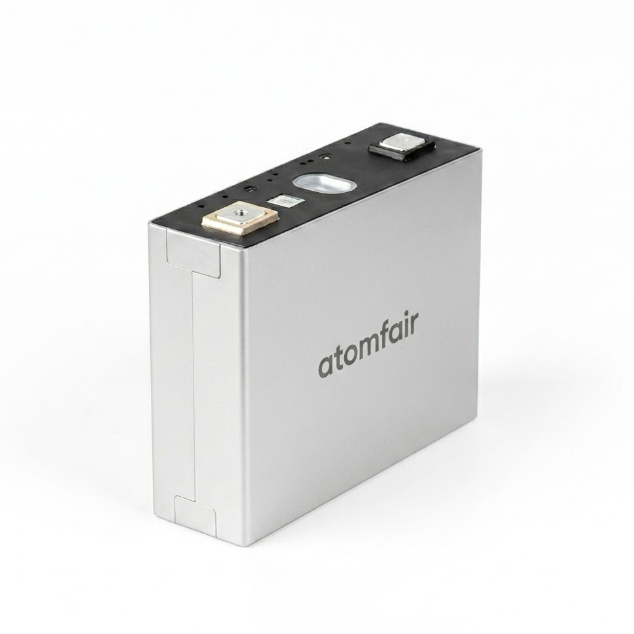
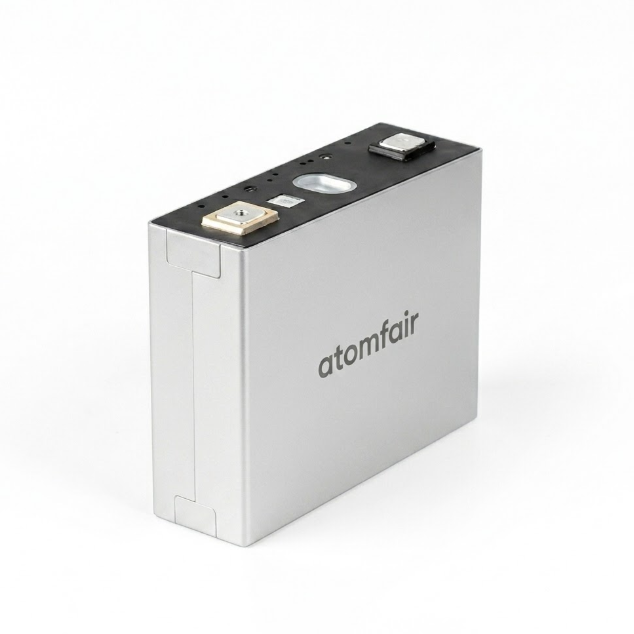
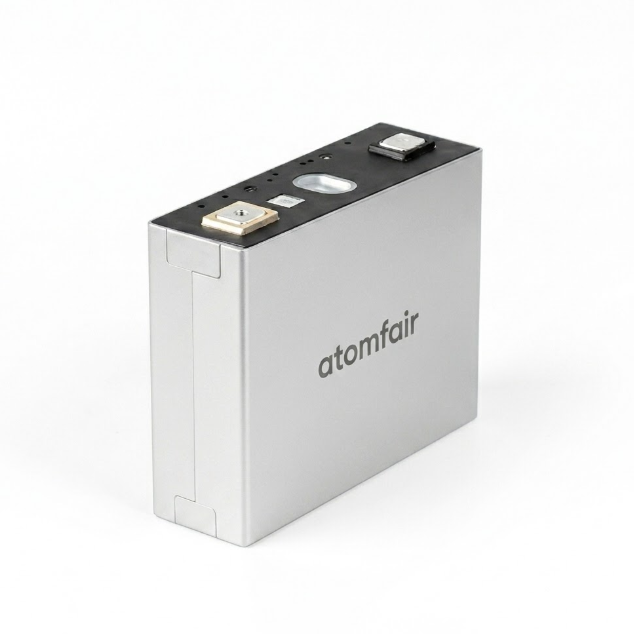
LFP Prismatic Battery Cell Series 3.20V 100Ah

Price range: $153.00 through $156.00

Institutional Procurement & Supply Compliance: As a verified US supplier, Atomfair accepts formal institutional Purchase Orders (POs), contract billing schedules, and custom procurement loops for university and national laboratories, and corporate R&D departments globally.

Commercial-grade LFP prismatic cell series: 3.20V, 100Ah, 1.0C charge/discharge, ≥3000 cycles and 155–160Wh/kg options for ESS backup. Order now.

Description

3.20V 100AH LFP PRISMATIC CELL SERIES | ATOMFAIR

COMMERCIAL GRADE · PRODUCTION

Product Overview

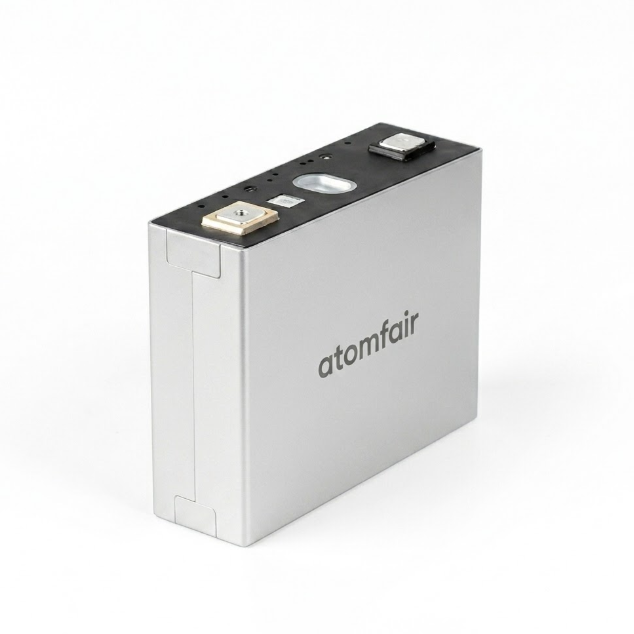
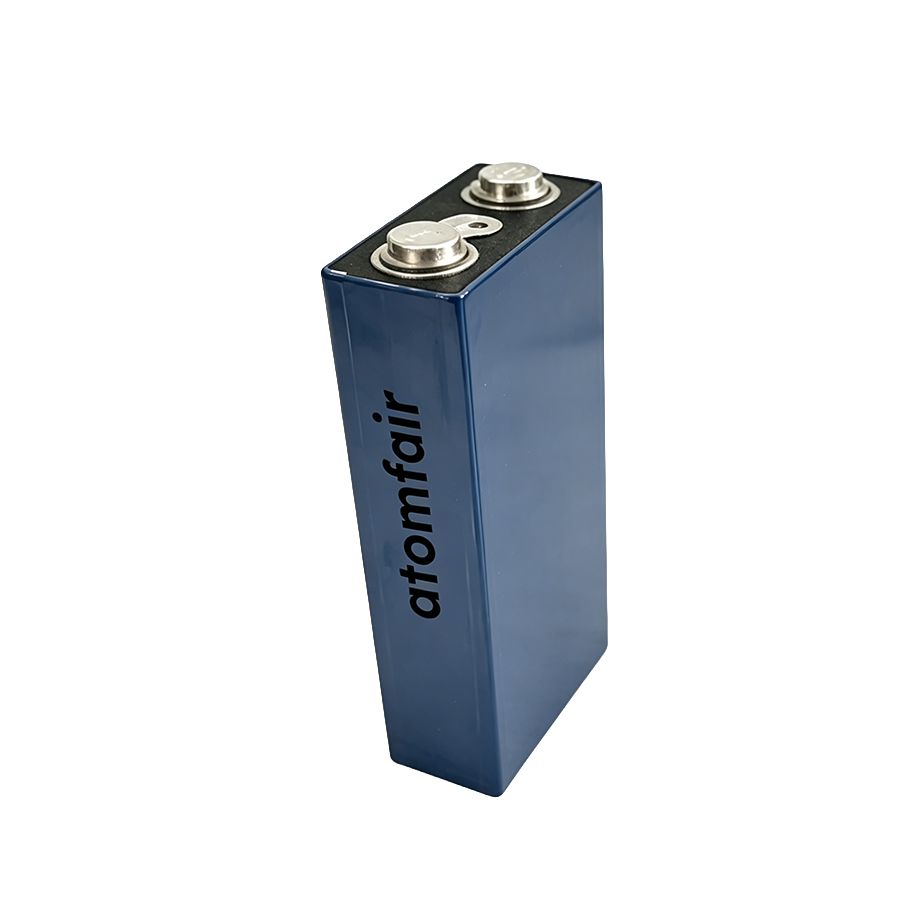
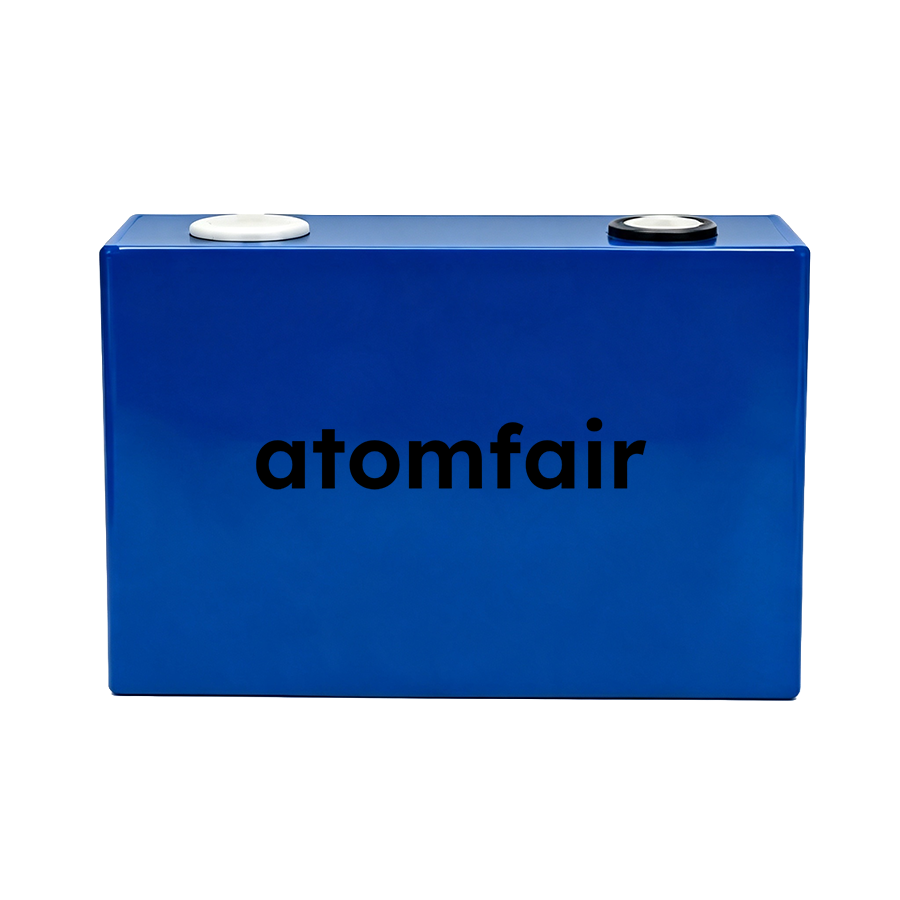
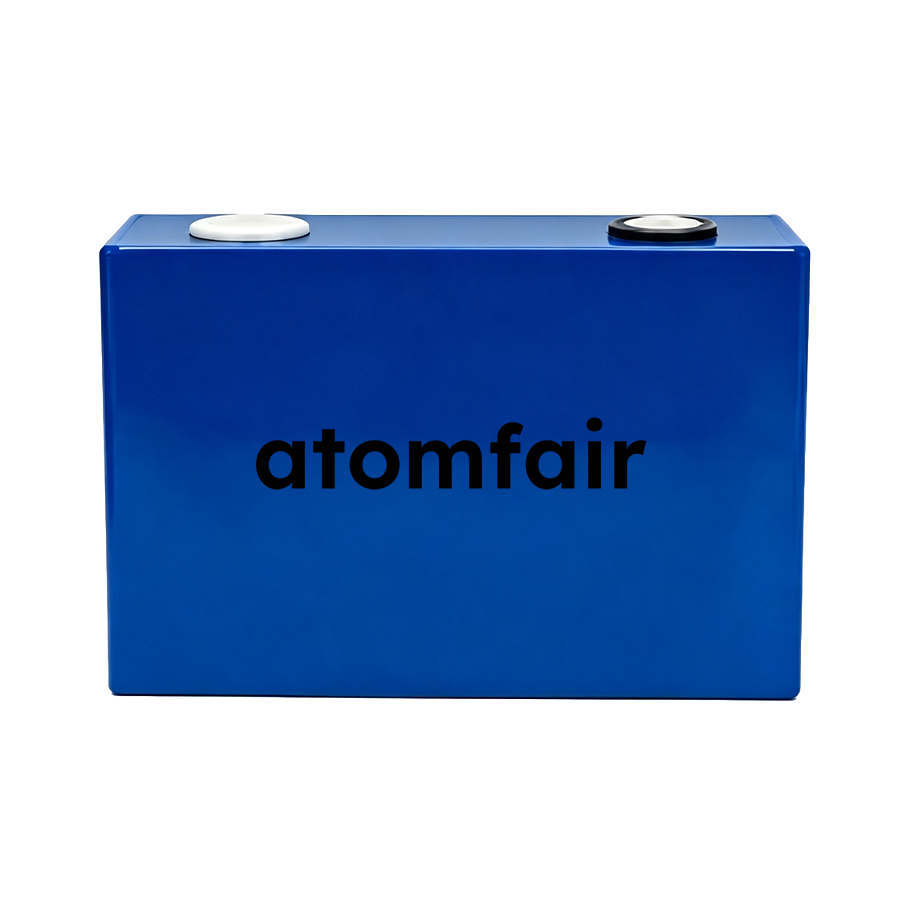
The ATOMFAIR® 3.20V 100Ah LFP Prismatic Cell Series offers two high‑capacity square aluminum case batteries based on safe and durable lithium iron phosphate (LFP) chemistry. Both models are optimized for energy storage systems (ESS) with 1.0C continuous charge/discharge and a cycle life of ≥3000 cycles at 100% DOD (80% retention). The series provides flexible dimensional options: Model A (47.8×174.2×132.3 mm, 160Wh/kg) for higher energy density, and Model B (47.8×174.2×120.3 mm, 155Wh/kg) for a slimmer profile. Ideal for residential, commercial, and industrial stationary storage, backup power, and off‑grid applications. For bulk inquiries or official volume quotations, please contact us via email at inquiry@atomfair.com.

Technical Specifications

PARAMETER MODEL A (AFLPC100160) MODEL B (AFLPC100155)
1. Core Device & Electrochemical Design
Cell Chemistry Lithium Iron Phosphate (LFP) Lithium Iron Phosphate (LFP)
Nominal Voltage 3.20 V 3.20 V
2. Cell Capacity & Kinetic Transport Matrix
Nominal Capacity 100 Ah 100 Ah
Weight Energy Density 160 Wh/kg 155 Wh/kg
Max Continuous Charge Rate 1.0C 1.0C
Max Continuous Discharge Rate 1.0C 1.0C
3. Cycle Life Parameters
Cycle Life (@25°C, 1C/1C, 100% DOD) ≥ 3000 cycles (80% Retention) ≥ 3000 cycles (80% Retention)
4. Physical Package & Mechanical Metrics
Dimensions (mm) with Terminal 47.8 × 174.2 × 132.3 47.8 × 174.2 × 120.3
Weight ≤ 2.25 kg ≤ 2.15 kg
Case Material Square Prismatic Aluminum Casing Square Prismatic Aluminum Casing
Manufacturing Rules Processed under strict thermal stability and premium industrial packaging compliance conditions
Alternative Options Explore our custom multi-cell configuration blueprints. For system enclosures requiring unique physical metrics or project-level volume pricing arrays, please contact our support team.


Key Features & Advantages

  • Long Cycle Life: ≥3000 cycles at 1C/1C, 100% DOD, 80% capacity retention – built for reliable daily cycling in ESS.
  • Dual Form Factors: Choose higher energy density (160Wh/kg, 132.3mm height) or slimmer profile (155Wh/kg, 120.3mm height) to fit different system enclosures.
  • Intrinsic Safety: LFP chemistry delivers exceptional thermal stability and abuse tolerance.
  • Stable 1C Rate: Reliable 1.0C continuous charge and discharge for consistent power delivery.
  • Robust Aluminum Case: Square prismatic design with terminal for easy stacking, structural rigidity, and efficient heat dissipation.

APPLICATION SCOPE: Residential & commercial energy storage systems (ESS), telecom backup power, UPS systems, solar battery banks, off‑grid energy storage networks, and low‑speed electric vehicle auxiliary power architectures.
PACKAGING: Humidity‑controlled vacuum sealed packaging, individual cell separation isolation within premium anti‑static foam lined transport cartons. Custom heavy-duty palletized arrangements available for bulk industrial shipments.
IMPORTANT NOTICE: Always deploy a dedicated battery management system (BMS) with configured over‑discharge, over‑charge, short‑circuit, and automatic cell balancing protection algorithms. Charge strictly within the manufacturer’s recommended voltage window boundaries. Do not exceed the continuous 1.0C rate design limits. Store and operate battery hardware exclusively within recommended thermal spectrums to preserve maximum nominal cycle life.
TAILORED SOLUTIONS FOR RESEARCH
Contact our engineering team for technical support or official institutional quotations.
EMAIL: INQUIRY@ATOMFAIR.COM
Manufacturer: Atomfair LLC
Brand: ATOMFAIR®

Store cells in a humidity-controlled environment using vacuum-sealed packaging to prevent moisture ingress. Always deploy a dedicated BMS with over-discharge, over-charge, short-circuit, and cell balancing protection, and operate within the recommended voltage and temperature limits to preserve cycle life.

  • BMS Requirement: Deploy a dedicated BMS with over-discharge, over-charge, short-circuit, and automatic cell balancing protection algorithms.
  • Charge Voltage Window: Charge strictly within the manufacturer’s recommended voltage window boundaries to prevent under- or over-voltage damage.
  • Discharge Rate Limit: Do not exceed the continuous 1.0C rate design limits for either charge or discharge operations.
  • Thermal Operation Range: Store and operate the cells exclusively within the recommended thermal spectrum to preserve maximum nominal cycle life.
  • Packaging Integrity: Maintain humidity-controlled vacuum sealed packaging with individual cell isolation within anti-static foam lined cartons until deployment.

Inspect the cell packaging for damage before opening and verify the BMS configuration is active. Set charge parameters to the manufacturer's voltage window and current limit, then connect cells in the intended configuration while monitoring temperature during initial cycling.

Required Equipment: Battery Management System (BMS) with configured protection algorithms, Constant current/constant voltage (CC/CV) charger, Temperature monitoring device (thermocouple or infrared sensor)

  1. Inspect Packaging
    Inspect the cell packaging for damage, moisture ingress, or physical deformation before opening the vacuum-sealed carton.
  2. Verify BMS Configuration
    Verify that the BMS is configured with over-discharge, over-charge, short-circuit, and automatic cell balancing protection enabled.
  3. Set Charge Parameters
    Set the charger to maintain the voltage within the manufacturer’s recommended window and limit the current to 1.0C maximum.
  4. Connect Cells
    Connect the cells in the intended series or parallel configuration using appropriate busbars and confirmed torque specifications.
  5. Monitor Initial Cycling
    Monitor the cell temperature during the first charge-discharge cycle to confirm operation within the recommended thermal spectrum.

What is the cycle life trade-off between the two ATOMFAIR 3.20V 100Ah LFP prismatic cell models at 100% DOD?

Both Model A (AFLPC100160) and Model B (AFLPC100155) deliver ≥3000 cycles at 1C/1C, 100% DOD with 80% capacity retention, so there is no cycle life trade-off between the two. The primary difference is energy density versus physical height: Model A achieves 160 Wh/kg with a 132.3 mm height, while Model B offers 155 Wh/kg with a slimmer 120.3 mm profile, allowing system designers to prioritize either volumetric energy or enclosure fit.

Can the ATOMFAIR 3.20V 100Ah LFP prismatic cells be integrated into an existing 48V battery bank without modifying the BMS?

Integration into a 48V bank requires a dedicated BMS with over-discharge, over-charge, short-circuit, and automatic cell balancing protection, as stated in the operational notice. The cells are designed for ESS applications and can be series-connected to reach 48V nominal (15 cells in series), but the existing BMS must be configured for LFP chemistry and support the 1.0C continuous rate limits of these cells. Always verify voltage window compatibility with the manufacturer’s recommended boundaries.

What are the storage and handling requirements for the ATOMFAIR LFP prismatic cells to prevent capacity degradation?

The cells are shipped in humidity-controlled vacuum sealed packaging with individual cell separation in anti-static foam lined cartons to prevent moisture ingress and physical damage. For long-term storage, operate and store the batteries exclusively within the manufacturer’s recommended thermal spectrum to preserve nominal cycle life. Do not exceed the continuous 1.0C charge or discharge rate design limits, and always use a configured BMS to avoid over-discharge or over-charge conditions that accelerate degradation.

This 3.20V 100Ah LFP prismatic cell series offers two dimensional configurations (160Wh/kg and 155Wh/kg) with ≥3000 cycle life at 100% DOD, but requires strict BMS integration and thermal management for safe operation.

Positive

  • Long cycle life at 100% DOD: Guarantees ≥3000 cycles at 1C/1C and 100% depth of discharge with 80% capacity retention, enabling reliable daily cycling in stationary energy storage applications.
  • Dual form factor flexibility: Offers a choice between higher energy density (160 Wh/kg, 132.3 mm height) or a slimmer profile (155 Wh/kg, 120.3 mm height) to accommodate varied system enclosure constraints without compromising core capacity.

Trade-offs

  • Mandatory BMS deployment: Requires a dedicated battery management system with over-discharge, over-charge, short-circuit, and cell balancing algorithms to operate safely; adds system complexity and cost.
  • Strict thermal and rate limits: Must be charged/discharged within the manufacturer's recommended thermal spectrum and must not exceed the 1.0C continuous rate; exceeding these limits will degrade cycle life and compromise safety.

Every advanced material, component, equipment, and instrument in our catalog is backed by rigorous testing. We maintain strict internal quality management frameworks and align with CE conformity metrics to deliver transparent, reproducible performance data via our public open-science repository.

To request raw batch performance data, submit formal vendor registration paperwork, or execute a fast-turnaround R&D manufacturing loop, contact us at inquiry@atomfair.com.

Item is dispatched under the Atomfair Shipping & Delivery Framework (Free worldwide shipping on orders over $59 USD excl. heavy equipment). Return is governed by the Atomfair Return & Refund Policy (7-day technical return window).
Additional information

Model

AFLPC100160, AFLPC100155