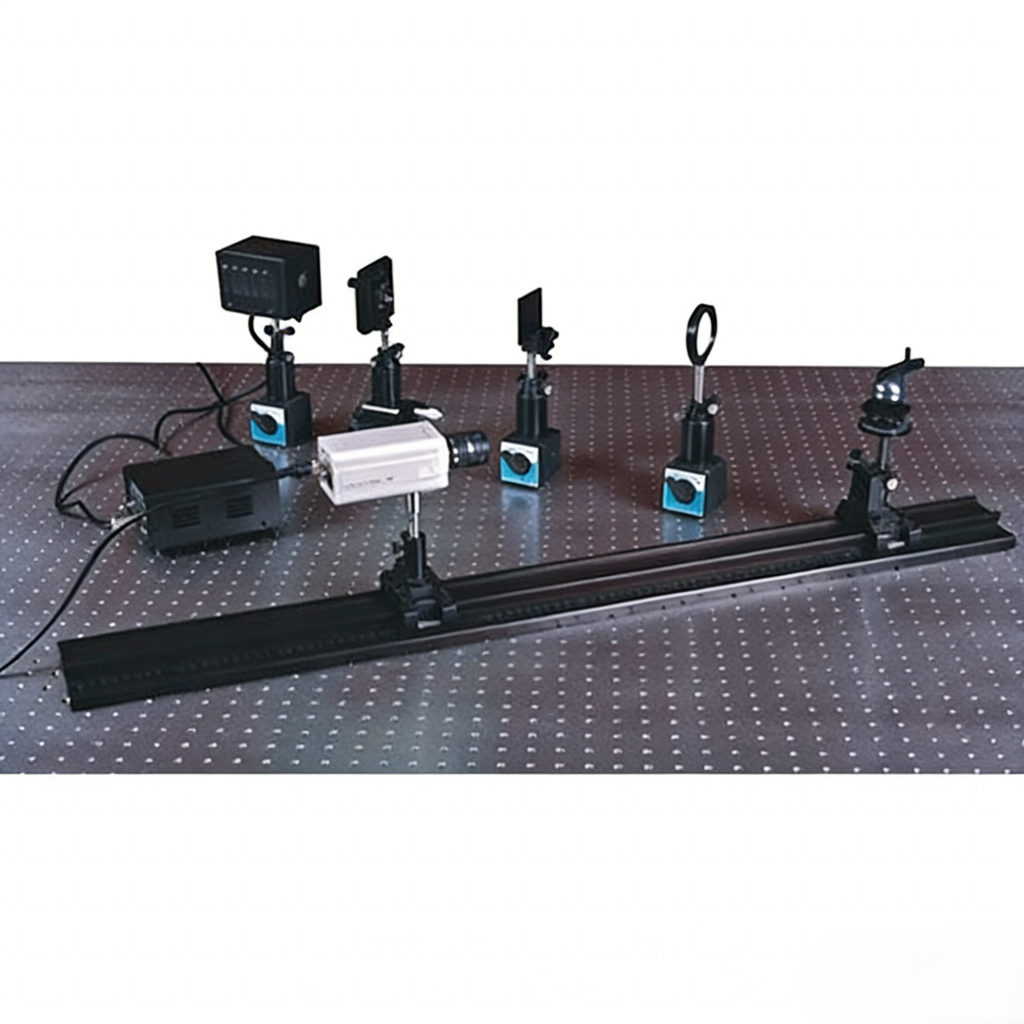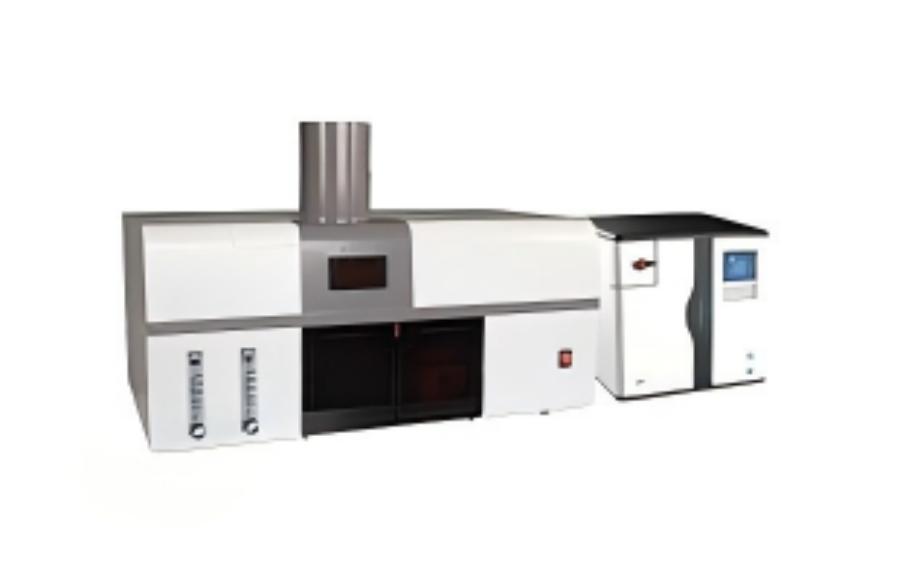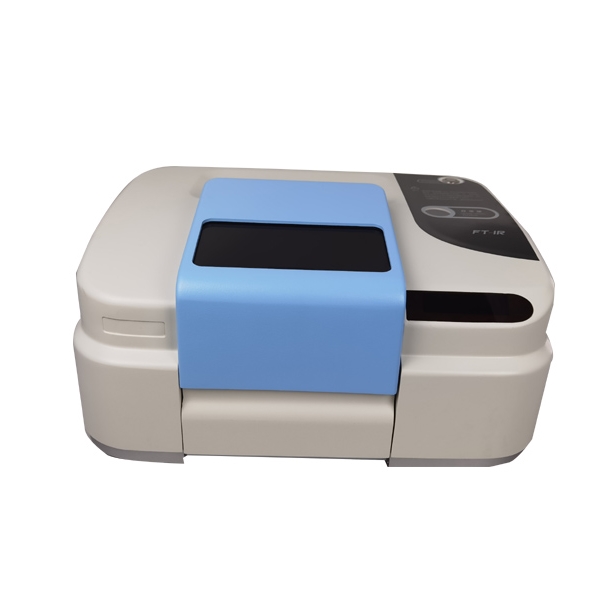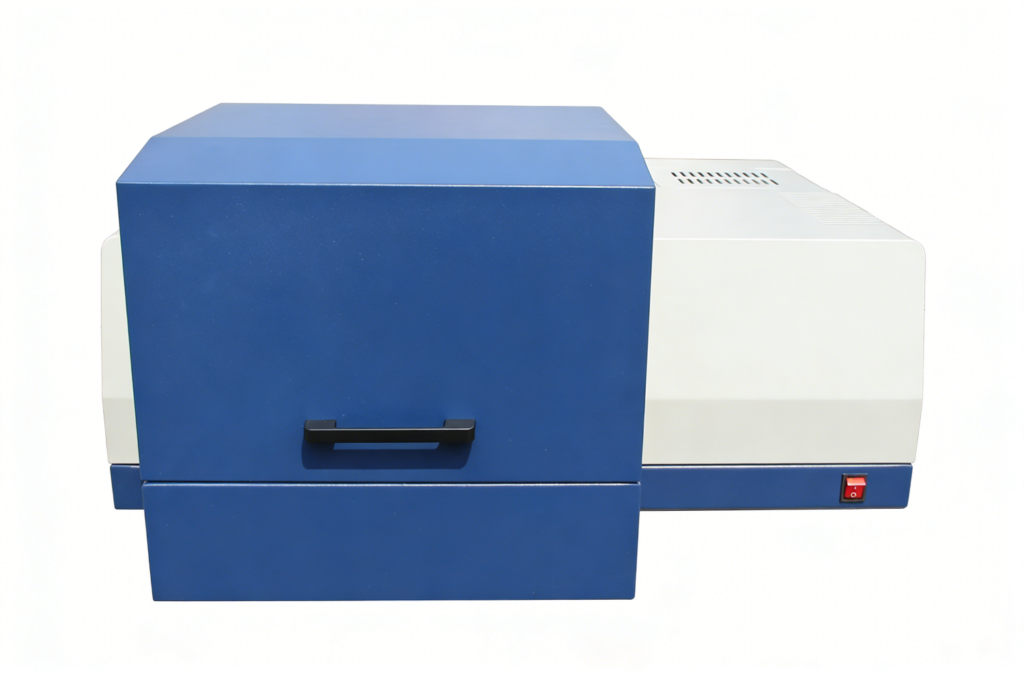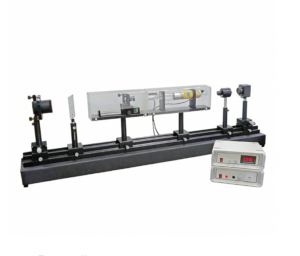
Atomfair HeNe-LT-573 He-Ne Laser Principle & Technology Comprehensive Experiment Device
1. Product Overview
Atomfair HeNe-LT-573 He-Ne Laser Principle & Technology Comprehensive Experiment Device is a comprehensive experimental instrument developed in accordance with syllabus requirements and combined with relevant textbooks of “Laser Principles”. Through this device, users can master the adjustment method of He-Ne lasers, deeply understand the basic principles, structure of lasers and core characteristics of output lasers, suitable for the needs of laser principle and technology related courses in physics teaching.
2. Core Features
-
- Aligned with teaching syllabuses and professional textbooks, with highly targeted experimental design to help deeply integrate theory with practice;
-
- Rich and comprehensive experimental content, covering core modules such as laser adjustment, characteristic measurement, and beam transformation;
-
- Equipped with a complete set of professional optical and electronic components, combined with special software to ensure experimental accuracy and operability.
3. Main Experimental Content
-
- Observation and adjustment of He-Ne laser resonant cavity;
-
- Measurement of He-Ne laser power stability;
-
- Measurement of He-Ne laser divergence angle;
-
- Observation and measurement of He-Ne laser modes;
-
- Measurement of He-Ne laser polarization characteristics;
-
- Measurement of He-Ne laser Gaussian beam parameters and Gaussian transformation;
-
- He-Ne laser transverse mode transformation and beam measurement;
-
- Gaussian beam transformation and measurement;
-
- Laser resonant cavity design;
-
- Observation of laser longitudinal mode orthogonal polarization theory and mode competition;
-
- Transformation of Gaussian beams using ABCD second-order matrix theory.
4. Core Knowledge Points
-
- Basic principles and structural composition of He-Ne lasers;
-
- Working mechanism and adjustment principles of laser resonant cavities;
-
- Theories related to core parameters such as laser power stability, divergence angle, and polarization characteristics;
-
- Characteristics, parameter measurement and transformation principles of Gaussian beams;
-
- Theories related to laser modes (transverse mode, longitudinal mode) and mode competition mechanisms;
-
- Application of ABCD second-order matrix theory in Gaussian beam transformation.
5. Specification Parameters (International Standard)
-
- Core light source: Half-cavity He-Ne laser, complying with safety and performance standards for teaching-level laser equipment;
-
- Measurement accuracy: Measurement errors of power, divergence angle, beam parameters, etc. are controlled within the allowable range of teaching experiments;
-
- Component compatibility: Strong adaptability between optical components and electronic equipment, complying with international general optical experiment interface standards;
-
- Software functions: Spot analysis software is matched with CMOS digital camera to support accurate collection and analysis of experimental data.
6. Main Configuration
Atomfair HeNe-LT-573 main unit (half-cavity He-Ne laser), F-P confocal spherical scanning interferometer components, optical components (resonant cavity mirror, polarizer, Gaussian beam transformation lens), WGN-2 laser power indicator, STG-1 sawtooth wave generator, photoelectric receiver, CMOS digital camera (including supporting software), spot analysis software.
7. Customization Services
Configuration parameters related to experimental content expansion, component upgrade or software function optimization can be customized according to the curriculum settings, teaching priorities and experimental needs of institutions.
If youe interested, have any questions, or have specific customization requirements, please feel free to contact us at inquiry@atomfair.com.
The device contains a half-cavity He-Ne laser that emits visible optical radiation. Operation requires compliance with teaching-level laser safety standards and avoidance of direct eye exposure.
- Safety Compliance: The He-Ne laser complies with safety and performance standards for teaching-level laser equipment.
This guide provides steps for conducting key experiments using the HeNe-LT-573 device. The experiments cover laser adjustment, characteristic measurement, and beam transformation as outlined in the syllabus.
Required Equipment: WGN-2 Laser Power Indicator, F-P Confocal Spherical Scanning Interferometer, CMOS Digital Camera with Spot Analysis Software, Polarizer
- Adjust the resonant cavity
Adjust the resonant cavity mirror positions to establish laser oscillation. - Measure power stability
Measure the laser output power stability using the WGN-2 laser power indicator. - Measure divergence angle
Determine the laser divergence angle using the CMOS camera and spot analysis software. - Observe laser modes
Observe and measure the laser modes using the F-P confocal spherical scanning interferometer. - Measure polarization
Measure the laser polarization characteristics by inserting the polarizer into the beam path.
How does the HeNe-LT-573 enable measurement of longitudinal mode competition and polarization in He-Ne lasers?
The HeNe-LT-573 includes an F-P confocal spherical scanning interferometer for high-resolution mode analysis and a polarizer for polarization characterization. These components allow users to observe orthogonal polarization modes and mode competition phenomena in the half-cavity He-Ne laser, as part of the experimental curriculum.
What optical interface standards are used in the HeNe-LT-573 to ensure component compatibility?
The HeNe-LT-573 complies with international general optical experiment interface standards, ensuring strong adaptability between optical components and electronic equipment. All included optical and electronic components, such as the resonant cavity mirror, polarizer, and WGN-2 laser power indicator, are designed to interface seamlessly using these standard mounts and connectors.
How does the HeNe-LT-573's CMOS camera and spot analysis software support Gaussian beam characterization?
The HeNe-LT-573 is equipped with a CMOS digital camera and dedicated spot analysis software. The camera captures beam profiles, and the software performs accurate collection and analysis of experimental data, including spot size, shape, and position. This enables precise measurement of Gaussian beam parameters and transformation experiments using ABCD matrix theory.
The Atomfair HeNe-LT-573 is a comprehensive teaching platform for He-Ne laser principles, integrating a half-cavity laser source, F-P interferometer, and CMOS-based spot analysis software to support a wide range of experiments from resonator adjustment to Gaussian beam transformation. Its design aligns with academic syllabi, providing a complete optical and electronic setup for hands-on learning in laser physics.
Positive
- Comprehensive experiment coverage: Supports 11 distinct experiments including resonator adjustment, power stability, divergence angle, mode analysis, polarization, and Gaussian beam transformation, making it a versatile platform for laser physics courses.
- Integrated measurement and analysis: Includes a CMOS digital camera with spot analysis software and a WGN-2 power indicator, enabling accurate data collection and quantitative analysis of beam parameters and mode structures.
Trade-offs
- Requires precise optical alignment: The half-cavity He-Ne laser and F-P interferometer demand careful manual alignment and adjustment, which may be time-consuming and require instructor supervision in a teaching lab environment.
- Teaching-level accuracy limits: Measurement errors are specified only within the allowable range for teaching experiments, which may not meet the precision requirements for advanced research or metrology applications.
Every advanced material, component, equipment, and instrument in our catalog is backed by rigorous testing. We maintain strict internal quality management frameworks and align with CE conformity metrics to deliver transparent, reproducible performance data via our public open-science repository.
To request raw batch performance data, submit formal vendor registration paperwork, or execute a fast-turnaround R&D manufacturing loop, contact us at inquiry@atomfair.com.
Item is dispatched under the Atomfair Shipping & Delivery Framework (Free worldwide shipping on orders over $59 USD excl. heavy equipment). Return is governed by the Atomfair Return & Refund Policy (7-day technical return window).