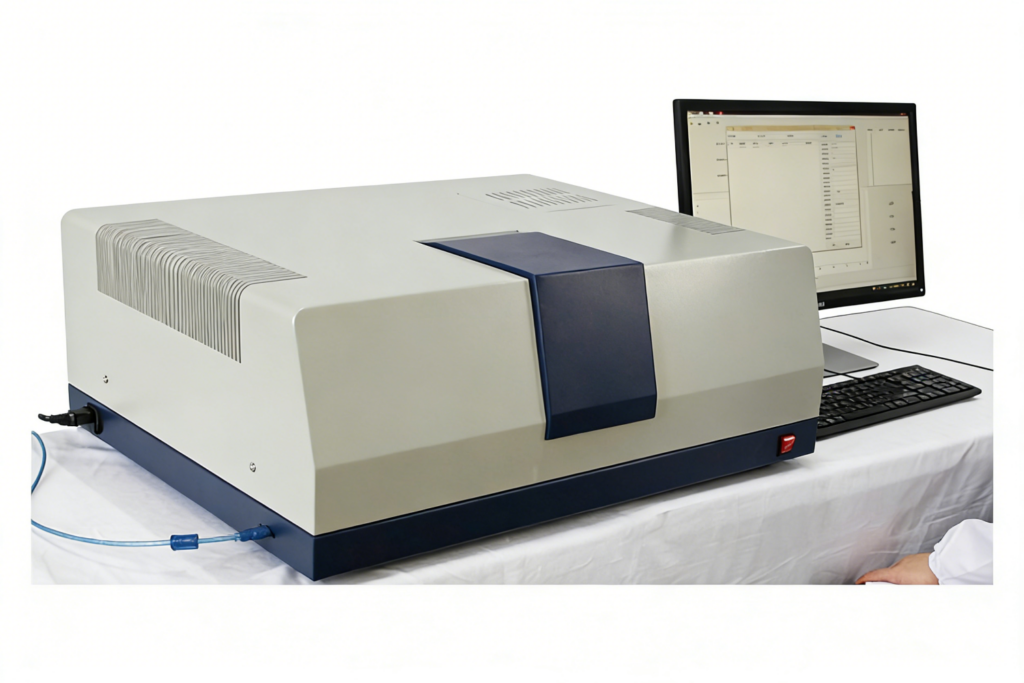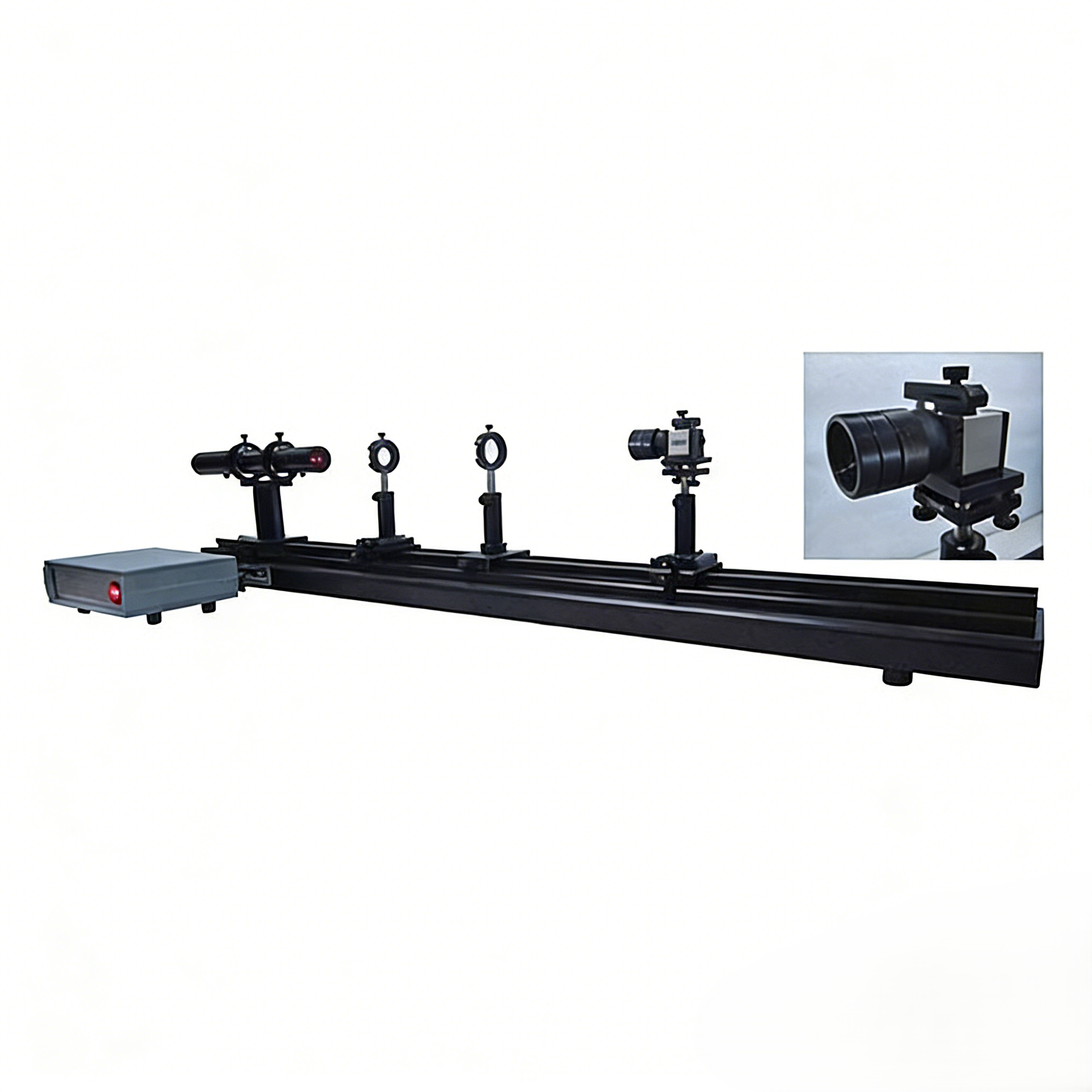
Atomfair GBM-739 Gaussian Beam Parameter Measurement and Lens Transformation Experiment System
Product Overview
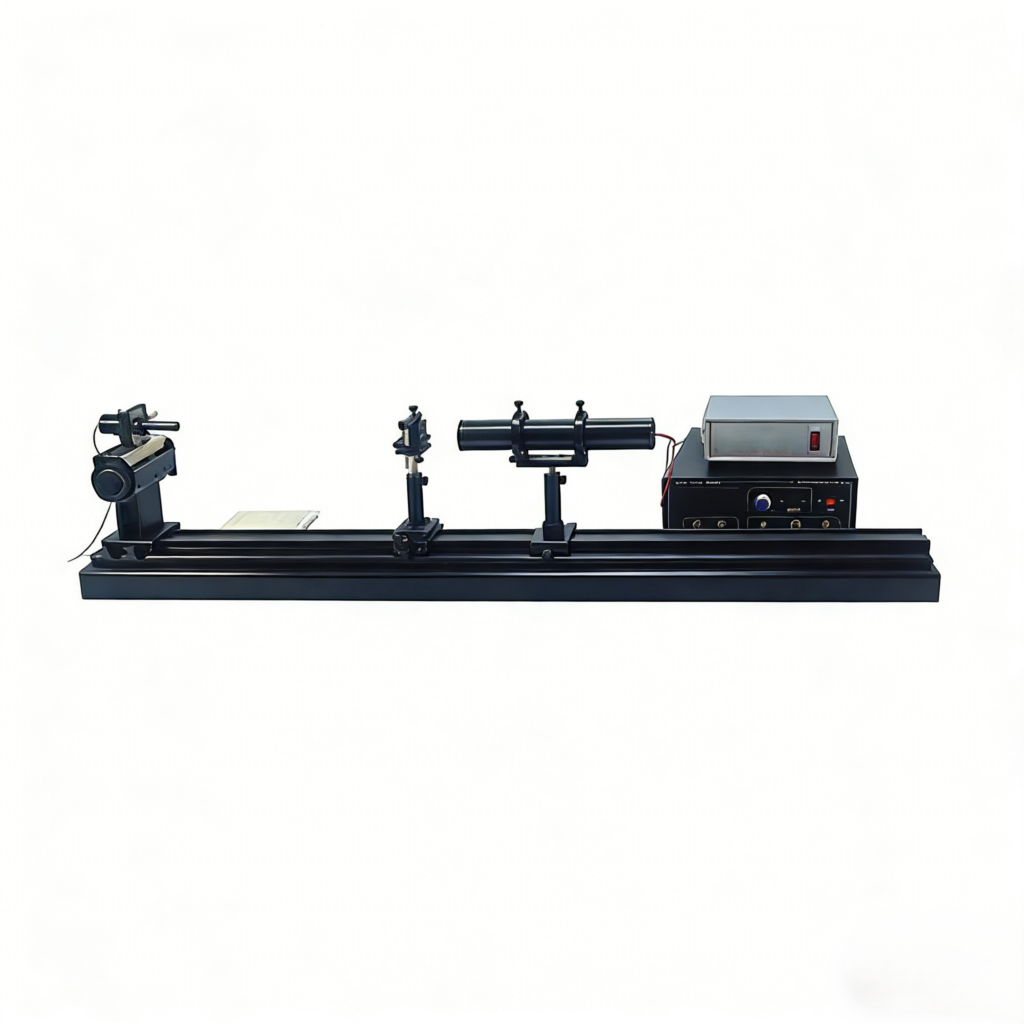
The Atomfair GBM-739 is a high-performance experimental system categorized under optoelectronics and laser technology. It is specifically designed to meet the needs of optical professional experimental teaching and general-purpose light spot measurement. Focusing on the research of Gaussian beam characteristic parameters, as well as the transmission and transformation properties of Gaussian beams through thin lenses, this system also enables the evaluation and measurement of beam quality, making it an indispensable tool for both academic and practical applications.
Core Configurations & Technical Specifications (International Standards)
Standard Configurations
| No. | Name | Specifications |
|---|---|---|
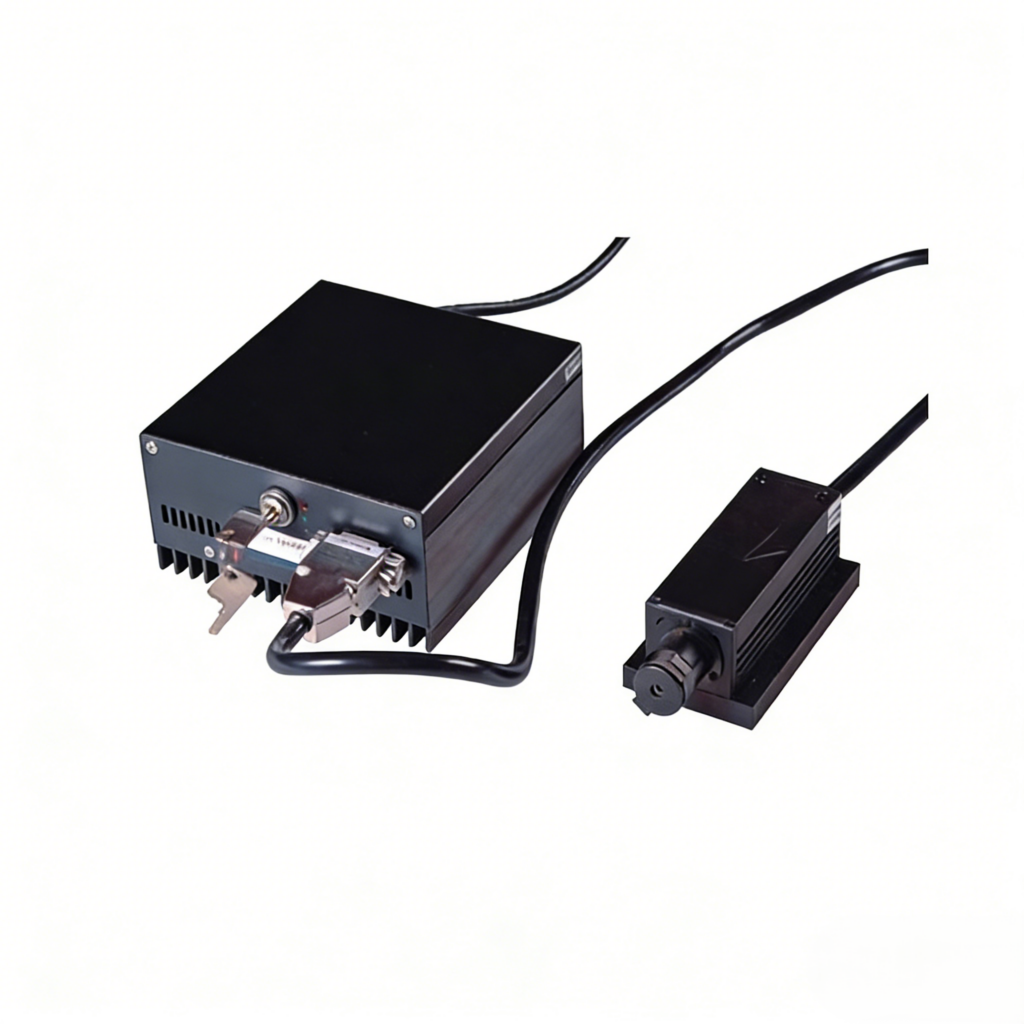
| 1 | Light Source | He-Ne Laser, Wavelength 632.8nm, Output Power >1.5mW |
| 2 | Optical Bench | Hard Aluminum Profile Guide Rail, Length 1.2m |
| 3 | Photoelectric Detector | Imported Industrial Black and White CCD Camera, 1/3° CCD, Resolution 1024×768, Pixel Size 4.65μm |
| 4 | Lenses | Focal Lengths f=45mm, f=50mm, f=75mm, f=100mm (1 piece each) |
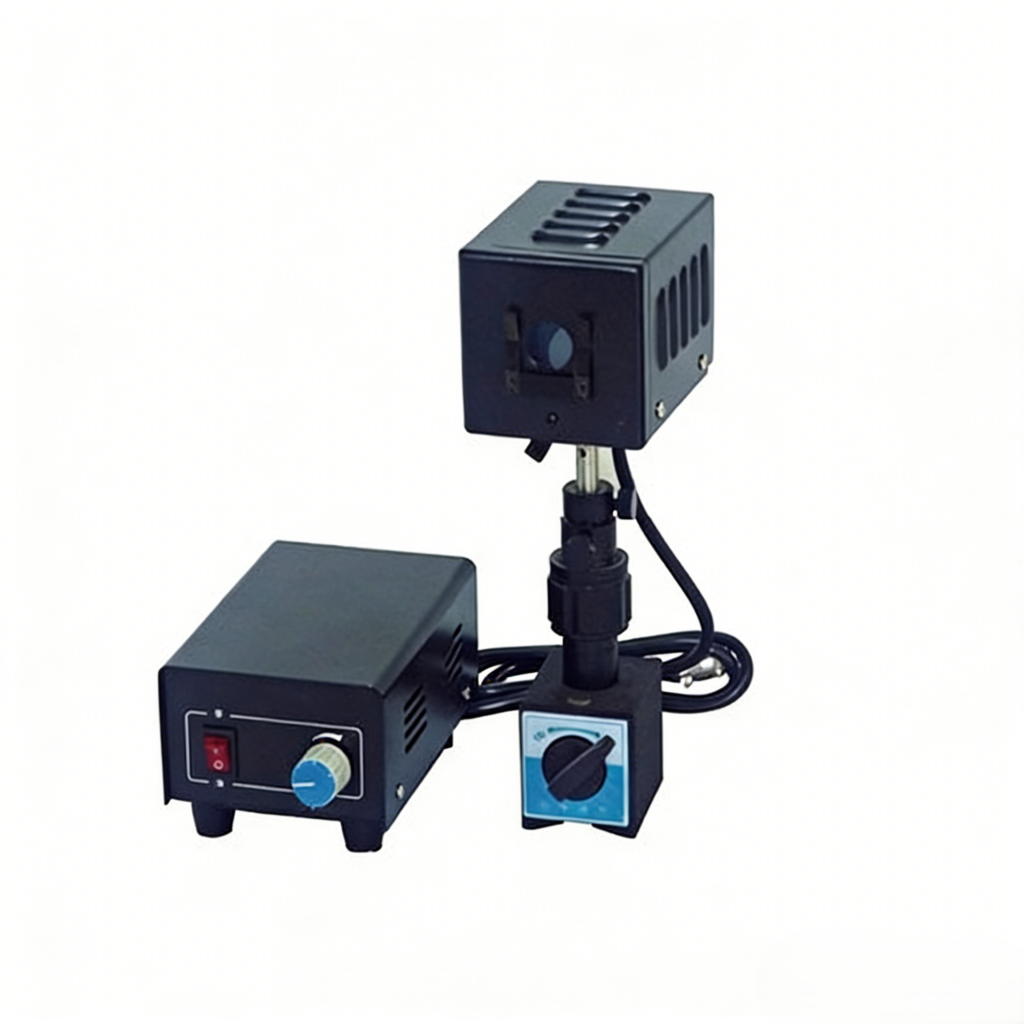
| 5 | Other Accessories | 3 Sets of Attenuator Systems |
Note: The above configurations and parameters are for reference only. Please refer to the product packing list for the exact specifications. Minor changes may be made without prior notice.
Optional Configurations
| No. | Name | Specifications |
|---|---|---|
| 1 | Computer | 2.5G Dual-Core Processor, 200G Hard Disk, 3G Memory, Independent Graphics Card |
| 2 | Display | LCD Monitor |
| 3 | Printer | Standard Configuration Printer |
Key Product Features
- As part of the laser principle series experimental equipment, it perfectly aligns with the core requirements of optoelectronic information laboratory construction.
- The experimental system adopts a streamlined design concept, simplifying the operation process with higher convenience and lowering the threshold for experimental operations.
- Equipped with a German-imported industrial CCD camera, it boasts higher sensitivity and a wider dynamic range, ensuring the accuracy of detection data.
- Comes with a dedicated software development kit (SDK), supporting customers to conduct secondary development based on the CCD camera, expand new experimental projects, and enhance the reusability value of the equipment.
Core Experimental Contents
- Gaussian Beam Parameter Measurement Experiment: Precisely measures key parameters such as spot diameter, divergence angle, and waist radius, and presents energy distribution graphs.
- Gaussian Beam Transformation and Parameter Measurement: Conducts in-depth research on the transmission and transformation laws of Gaussian beams through thin lenses, and simultaneously completes the accurate measurement of relevant parameters.
System Working Principle
This system constructs an integrated light spot measurement system with CCD as the spot detector, combined with a computer and specialized measurement software. After attenuation treatment, the laser beam directly irradiates the CCD, ensuring that the size and shape of the image collected by the CCD are completely consistent with the cross-section of the incident laser beam (quantitatively presented by pixel size). After optimizing operations such as smoothing and grayscale calibration on the collected images, the calibrated digital image signals are selected for analysis and calculation to finally obtain various key parameters of the laser beam accurately. Meanwhile, the system can measure the beam quality factor through the hyperbolic fitting method, featuring a simple optical path structure, high measurement efficiency, and excellent precision.
If you’re interested, have any questions, or have specific customization requirements, please feel free to contact us at inquiry@atomfair.com.
What is the measurement accuracy of the Atomfair GBM-739 for Gaussian beam parameters?
The system does not specify an absolute accuracy figure, but its precision is determined by the CCD camera's pixel size of 4.65 μm and the software's smoothing and grayscale calibration. The use of a German-imported industrial CCD with 1024×768 resolution ensures high sensitivity and dynamic range, enabling accurate spot diameter, divergence angle, and waist radius measurements.
The Atomfair GBM-739 integrates a 632.8nm He-Ne laser, a 1.2m optical rail, and a German-imported CCD camera with 4.65μm pixels to enable quantitative Gaussian beam parameter measurement and thin-lens transformation studies. Its software SDK supports secondary development, while the hyperbolic fitting method for beam quality factor measurement provides a streamlined, high-precision optical path suitable for academic optoelectronics laboratories.
Positive
- High-sensitivity CCD detection: The German-imported industrial CCD camera (1024×768, 4.65μm pixels) provides high sensitivity and wide dynamic range, ensuring accurate spot size and energy distribution measurements.
- SDK-enabled extensibility: The included software development kit allows users to perform secondary development on the CCD camera, enabling custom experimental projects and enhancing long-term equipment reusability.
Trade-offs
- Requires external computer: The system depends on a separate computer (optional configuration) to run measurement software and process CCD data, adding infrastructure requirements for laboratory deployment.
- Laser attenuation mandatory: The laser beam must pass through attenuator systems before reaching the CCD to prevent sensor saturation or damage, requiring careful alignment and handling during setup.
Every advanced material, component, equipment, and instrument in our catalog is backed by rigorous testing. We maintain strict internal quality management frameworks and align with CE conformity metrics to deliver transparent, reproducible performance data via our public open-science repository.
To request raw batch performance data, submit formal vendor registration paperwork, or execute a fast-turnaround R&D manufacturing loop, contact us at inquiry@atomfair.com.
Item is dispatched under the Atomfair Shipping & Delivery Framework (Free worldwide shipping on orders over $59 USD excl. heavy equipment). Return is governed by the Atomfair Return & Refund Policy (7-day technical return window).