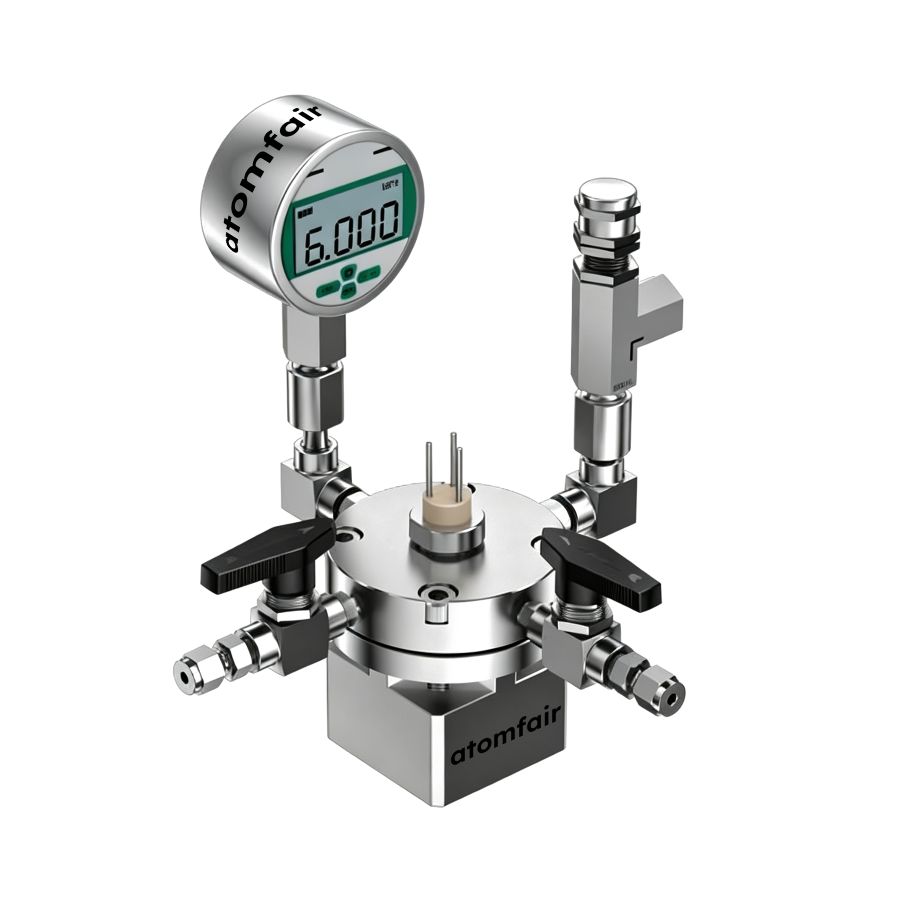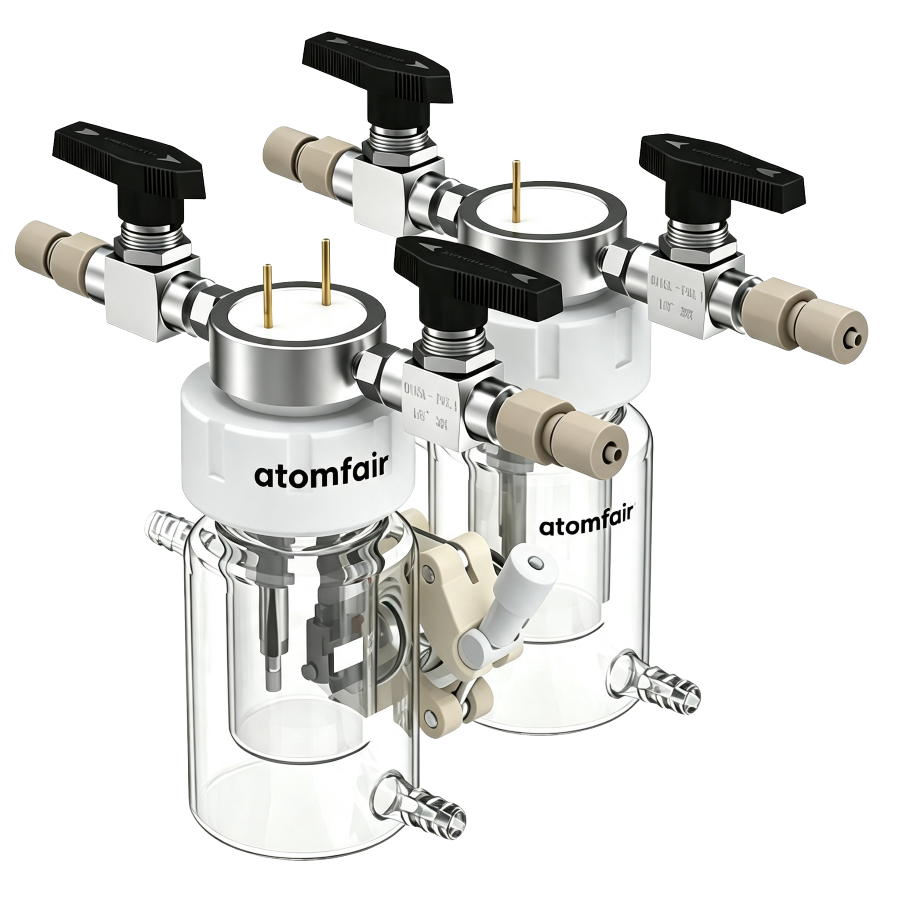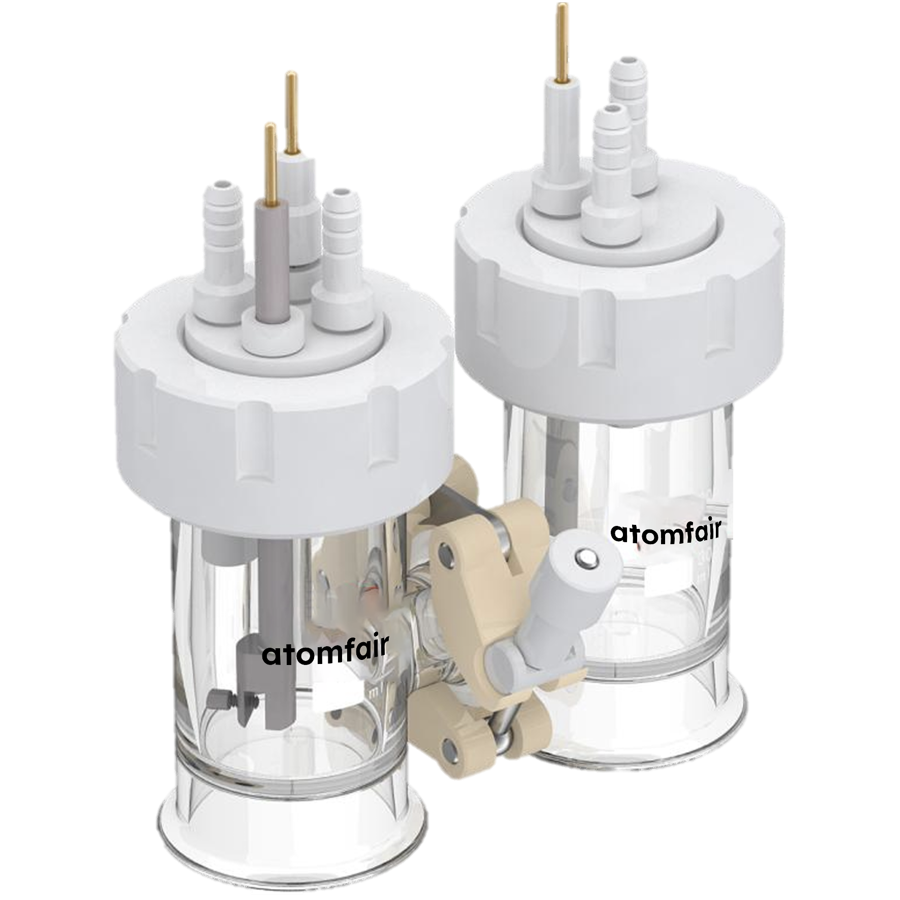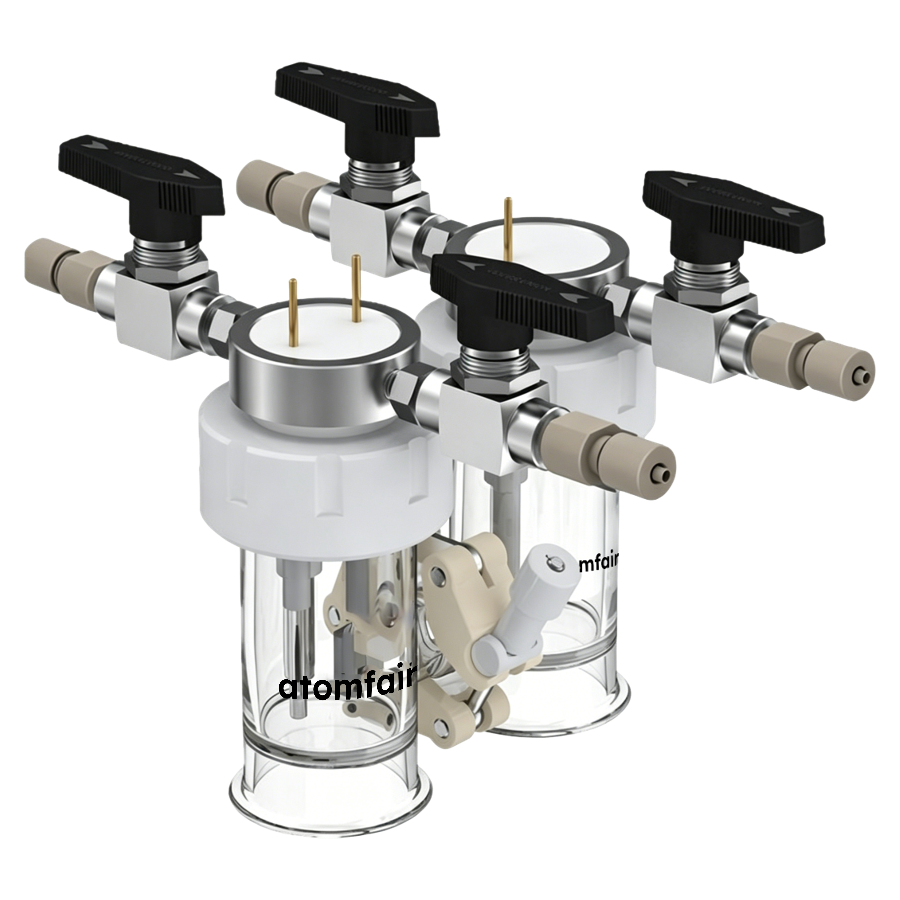
Advanced Gas Diffusion Electrolysis Cell with Observation WindowProduct Type: Gas diffusion electrolysis cell
Research-grade laboratory product
|
|||||||||||||||||||||||||||||
|
|||||||||||||||||||||||||||||
|
LABORATORY PROCUREMENT SUPPORT
For model selection, technical compatibility or configuration confirmation, contact our technical sales team.
E-MAIL: inquiry@atomfair.com
|
|||||||||||||||||||||||||||||
|
Manufacturer: Atomfair LLC LLC
Brand: ATOMFAIR®
|
The cell must be configured with a specified electrode gap of 3 mm or 7 mm to match the experimental setup. All additional components such as electrodes, membranes, and windows must be confirmed separately before ordering.
- Electrode Gap Selection: Select the electrode gap (3 mm or 7 mm) to determine the inter-electrode distance for the experiment.
- Accessory Confirmation: Confirm all required electrodes, membranes, gas diffusion electrodes, and windows with the selected configuration.
- Customization Constraints: Specify non-standard electrode sizes or window materials during inquiry to ensure compatibility.
How does the electrode gap selection (3 mm vs 7 mm) affect mass transport and ohmic drop in the AF-GDE-ADVW gas diffusion electrolysis cell?
The 3 mm gap minimizes electrolyte resistance and ohmic drop, which is advantageous for high-current-density operation, while the 7 mm gap provides a larger inter-electrode volume, favoring controlled gas transport and reduced product crossover in studies such as CO2 reduction. The PEEK body and 1 cm² reaction area are common to both configurations, and the high-purity quartz window enables direct observation of the electrode–electrolyte interface. The appropriate choice depends on whether mass transport or ohmic compensation is the priority in your electrochemical measurement.
Can the AF-GDE-ADVW be integrated with standard potentiostats and flow systems using the 5×20 mm chamber geometry?
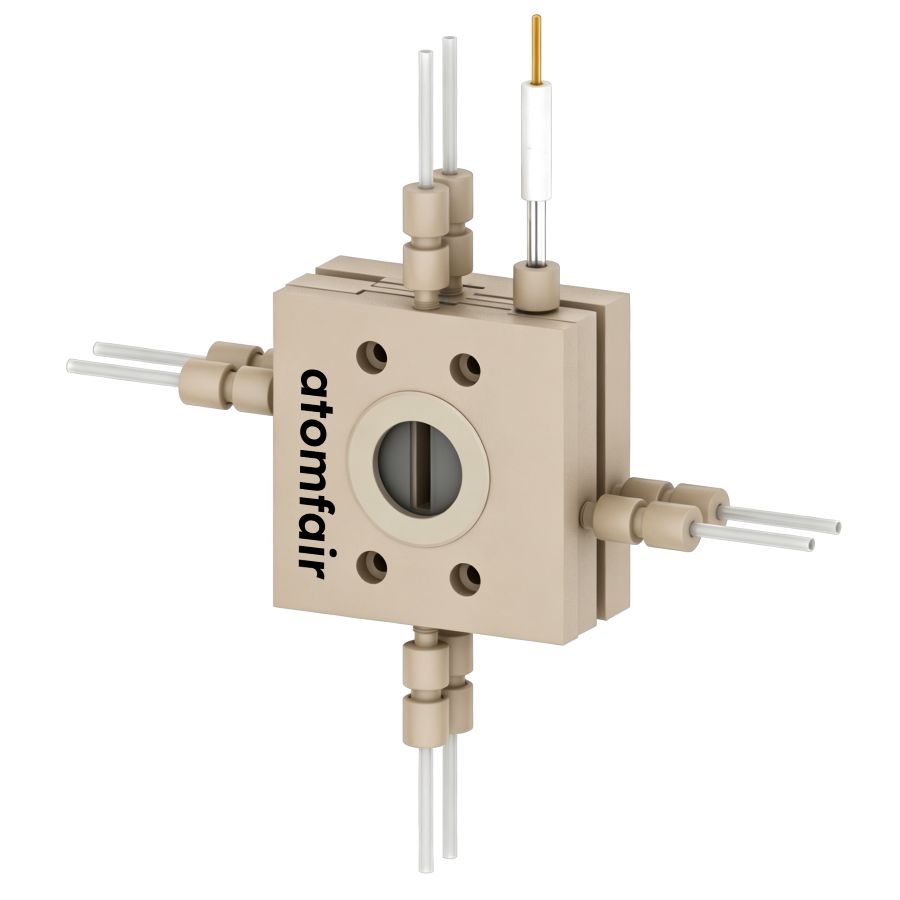
Yes, the AF-GDE-ADVW is designed as a classic three-chamber gas diffusion electrolysis cell with a 5×20 mm chamber and 1 cm² reaction area, making it compatible with standard lab-scale potentiostats and peristaltic or syringe pump flow circuits. The PEEK body is chemically resistant to common aqueous electrolytes and organic solvents used in electrocatalysis. The observation window is a high-purity quartz plate, which maintains optical clarity for operando spectroscopy (e.g., Raman or IR). No additional adapter should be needed for most commercial flow controllers.
What are the safety and handling requirements for the high-purity quartz observation window in the AF-GDE-ADVW?
The high-purity quartz observation window is chemically resistant and supports UV–vis transmission but is brittle; it must be handled with care to avoid scratching or cracking during assembly or cleaning. The window should be cleaned with soft, lint-free wipes and non-abrasive solvents only. The cell is supplied with standard protective packaging, and custom reinforcement is available upon request. The electrode gap selector is buyer-facing, so manual adjustment is straightforward, but tightening torque on the window retaining screws should be moderate to avoid quartz fracture.
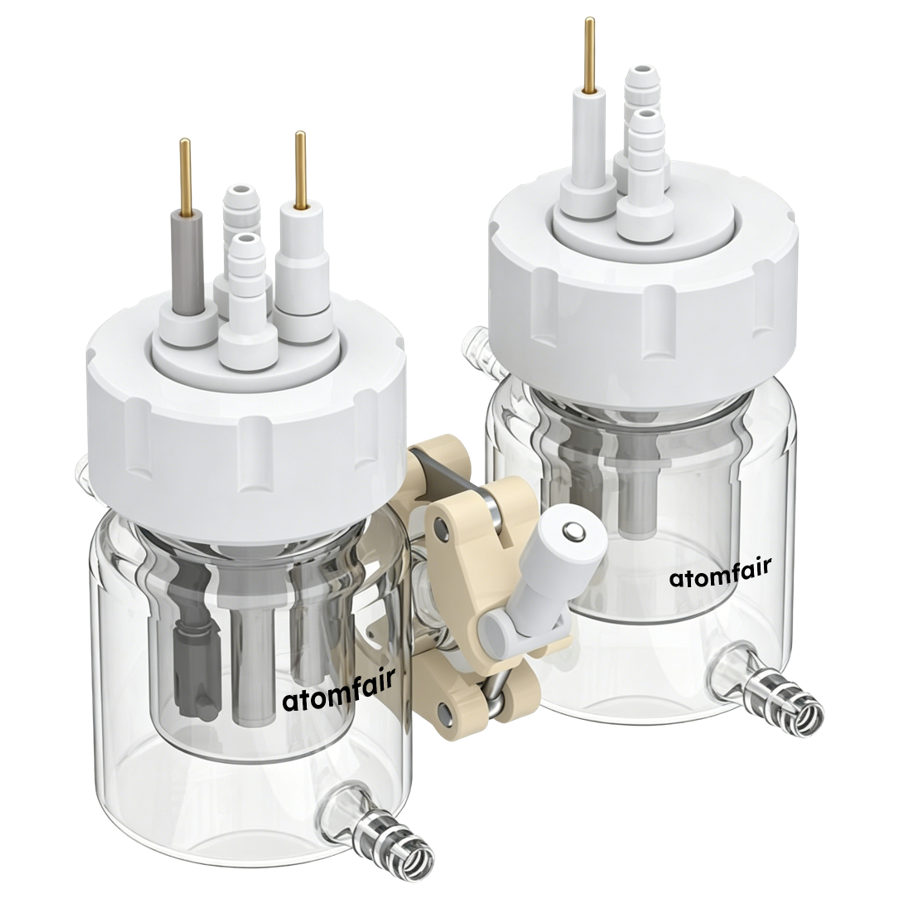
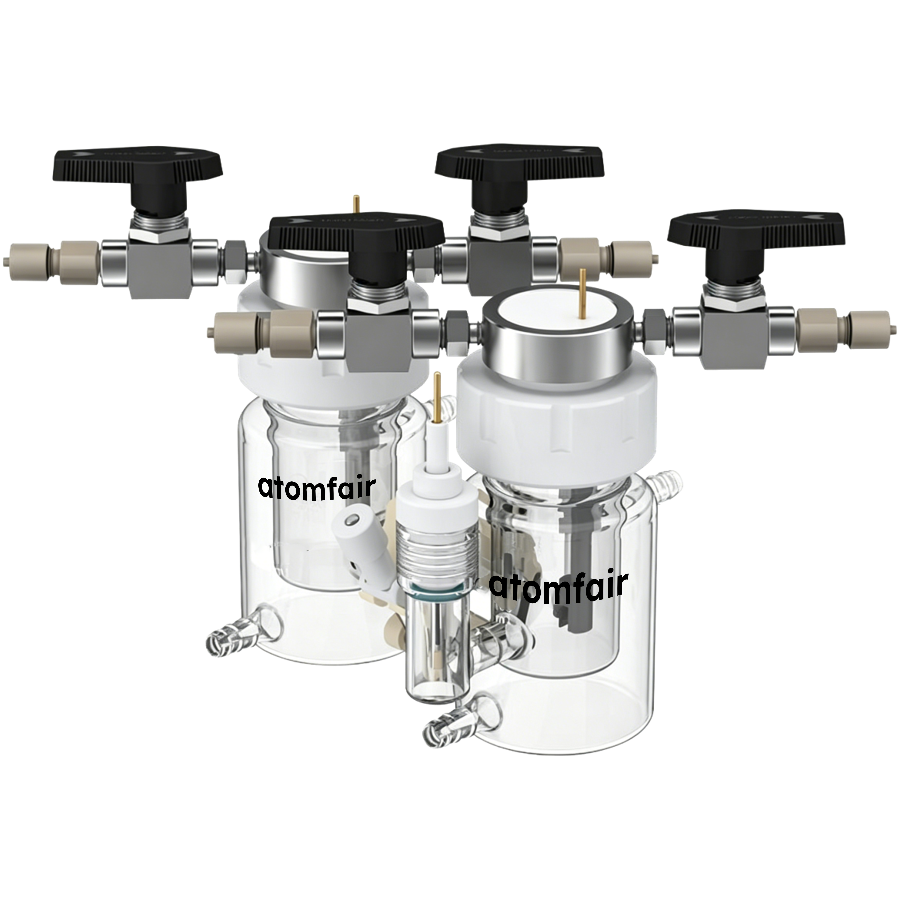
This gas diffusion electrolysis cell (AF-GDE-ADVW) integrates a PEEK body, 1 cm² reaction area, and a high-purity quartz observation window with two user-selectable electrode gaps (3 mm and 7 mm), enabling in-situ optical monitoring and controlled inter-electrode distance for research electrochemical workflows.
Positive
- High-purity quartz observation window: The high-purity quartz plate enables direct visual monitoring of the electrode surface and gas evolution during electrolysis, facilitating mechanistic studies and process optimization.
- Selectable electrode gap (3 mm or 7 mm): The two discrete electrode gap options allow the user to adjust the inter-electrode distance to balance ohmic drop and mass transport characteristics for different reaction conditions.
Trade-offs
- Limited electrode gap flexibility: The electrode gap is fixed to either 3 mm or 7 mm at the time of configuration, preventing in-situ adjustment during an experiment.
- Separate electrode and membrane procurement: The cell does not include electrodes, membranes, or gas diffusion electrodes, requiring the user to source these components separately for operation.
Every advanced material, component, equipment, and instrument in our catalog is backed by rigorous testing. We maintain strict internal quality management frameworks and align with CE conformity metrics to deliver transparent, reproducible performance data via our public open-science repository.
To request raw batch performance data, submit formal vendor registration paperwork, or execute a fast-turnaround R&D manufacturing loop, contact us at inquiry@atomfair.com.
Item is dispatched under the Atomfair Shipping & Delivery Framework (Free worldwide shipping on orders over $59 USD excl. heavy equipment). Return is governed by the Atomfair Return & Refund Policy (7-day technical return window).