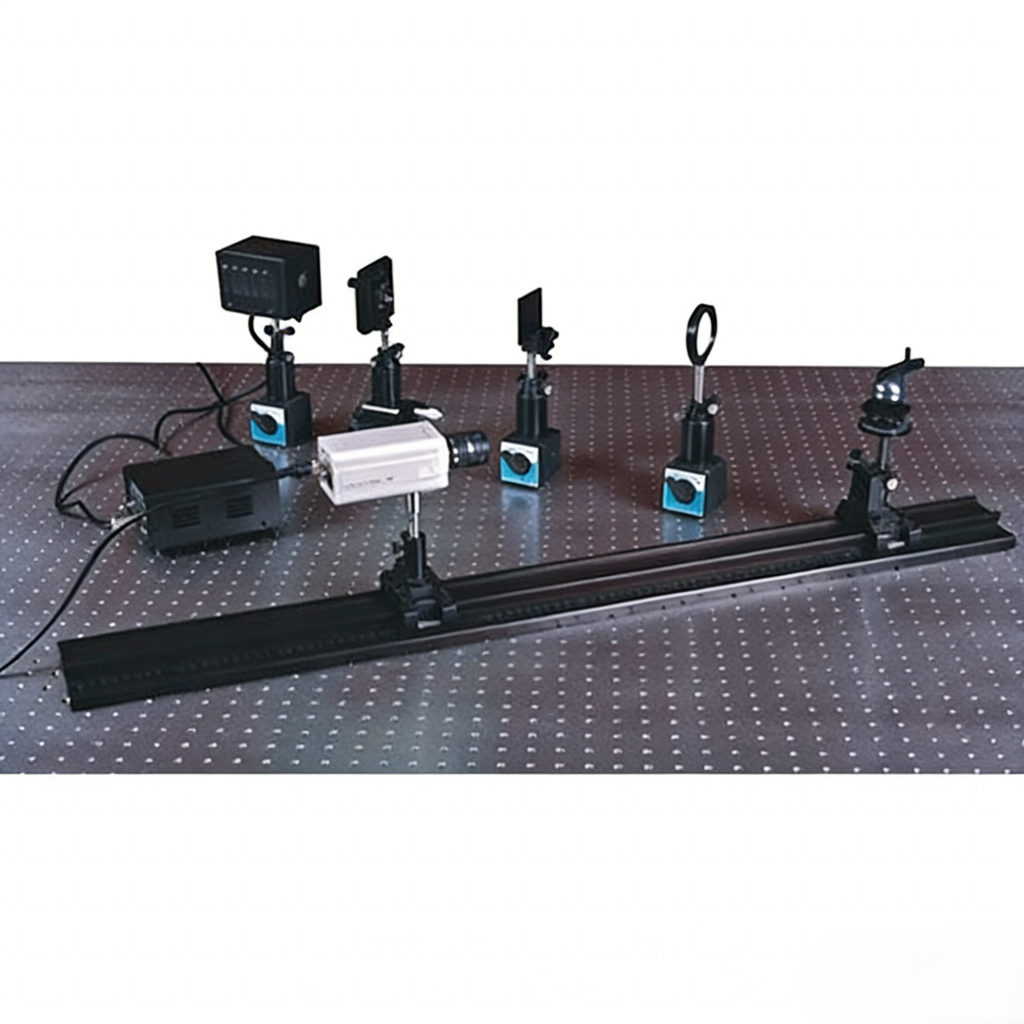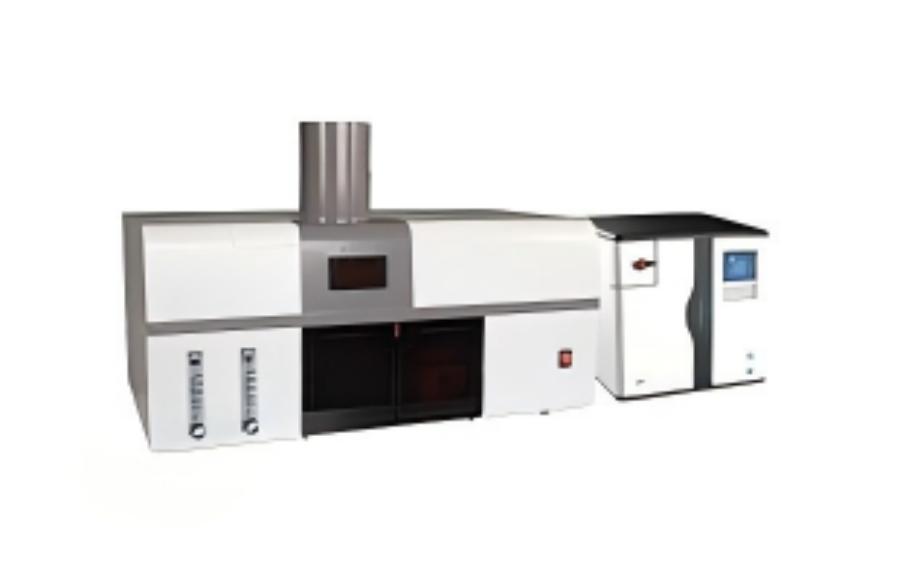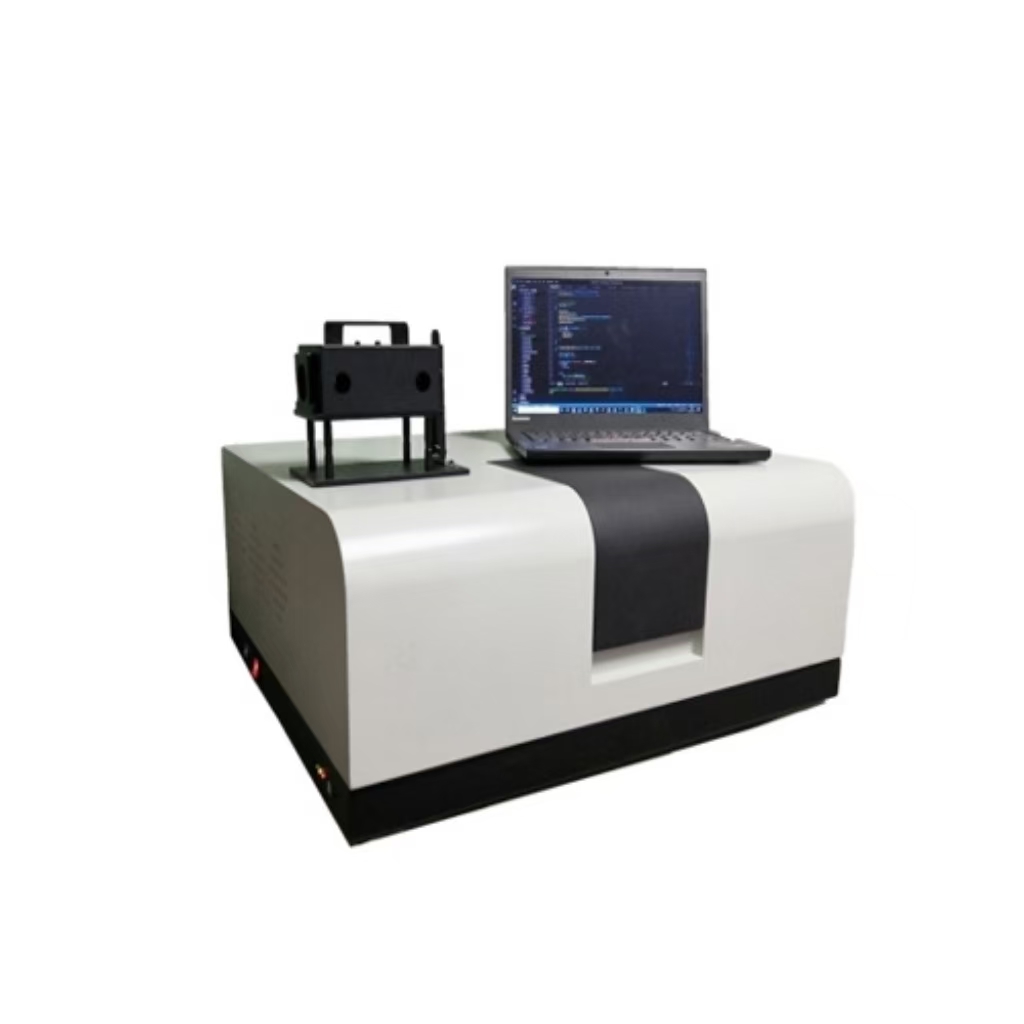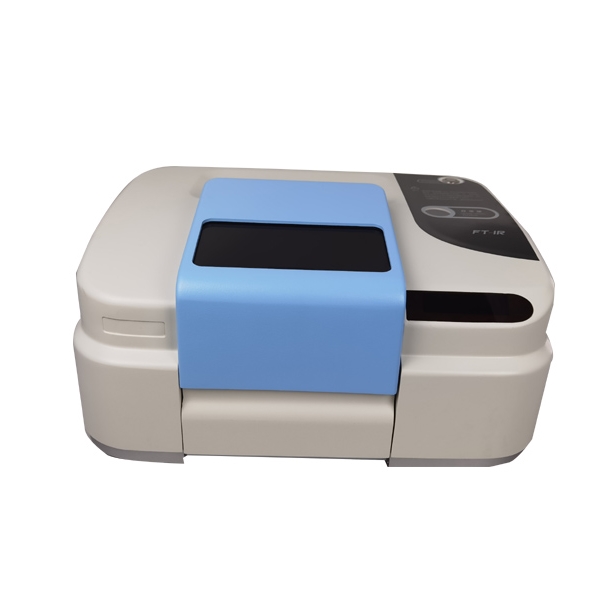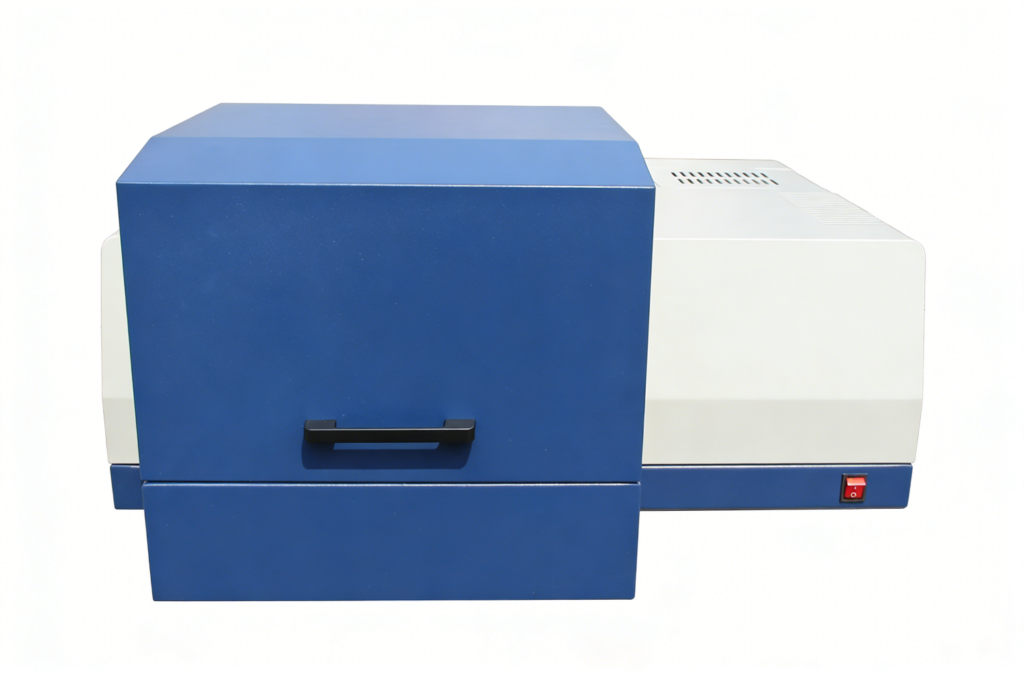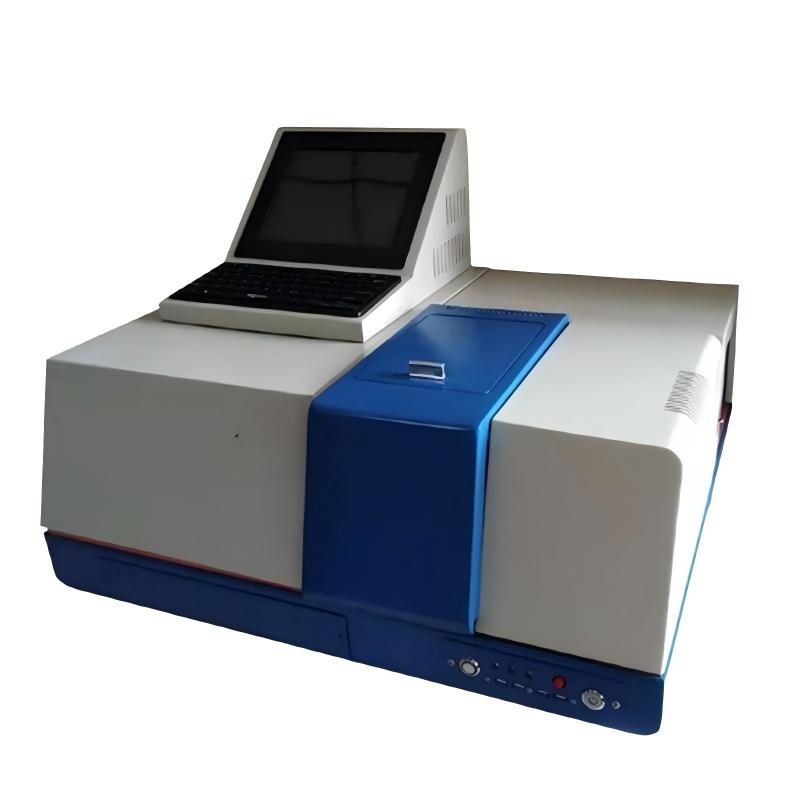
Atomfair Free Silica Tester
Product Overview
Atomfair Free Silica Tester is a high-precision professional testing equipment developed in accordance with international general standards, specifically designed for the production environment of electric power, coal, metallurgy and other industries as well as occupational health testing scenarios, focusing on the accurate quantitative analysis of free silica (α-quartz) content in respirable dust. Based on the core technology of infrared spectrophotometry, the equipment optimizes the optical system and data processing algorithm, avoiding the drawbacks of traditional testing methods such as complex operation, long cycle and large error, supports batch testing and intelligent analysis, with easy operation and reliable data, providing professional technical support for dust hazard prevention and occupational health protection.
Core Functions
- Precise Quantitative Detection: Accurately identify free silica through infrared characteristic absorption spectrum, combined with peak area quantitative algorithm, the detection accuracy meets international general standards;
- Comprehensive Data Processing: Support baseline calibration, spectrum smoothing, peak shape analysis, data accumulation and other functions, can complete %T & ABS conversion to ensure accurate analysis results;
- Efficient Report Management: Quickly generate test reports complying with international specifications, support storage, export and sharing of spectral data and result files for easy filing and traceability;
- Stable Data Transmission: Equipped with USB2.0 interface, compatible with multiple versions of Windows systems, realizing fast export of test data and secondary analysis on computer.
Technical Parameters (International Standard)
| Item | Specification |
|---|---|
| Wavelength Range | 2.5-25μm (Wave Number Range: 4000-400cm⁻¹) |
| Wave Number Accuracy | ≤±2cm⁻¹ in 2000-400cm⁻¹ range; ≤±4cm⁻¹ in 4000-2000cm⁻¹ range |
| Scan Function | Full-wavelength continuous scanning, five adjustable gears of slit program |
| Stray Light | ≤0.5%T in 4000-650cm⁻¹ range; ≤1%T in 650-400cm⁻¹ range |
| Transmittance Accuracy | ≤±0.2%T (Excluding noise level) |
| Sample Requirement | Particle size less than 8μm after grinding, dry and free of impurities |
| System Configuration | Built-in high-performance computer, equipped with Windows XP operating system, Chinese intelligent operation platform |
| Data Interface | USB2.0 (compatible with 3.0) |
| Core Components | Imported infrared light source, high-sensitivity detector, precision interferometer |
Product Features
- Excellent Detection Performance: Core optical components are imported, wave number accuracy and transmittance accuracy reach international advanced levels, can accurately identify three crystal forms of free silica;
- Easy to Operate: The Chinese operation interface is intuitive and easy to understand, with built-in operation guidelines, no complex professional training required, and operators in industrial scenarios can get started quickly;
- Strong Environmental Adaptability: The equipment has a rugged structure, and the moving parts adopt electromagnetic drive and precision guide rail design, adapting to multi-scenario testing needs such as workshops and laboratories;
- Stable & Reliable Operation: Optimized optical system and sealing design reduce environmental interference, the light source and detector have a long service life, ensuring long-term continuous detection accuracy;
- International Standard Adaptation: Fully follows international general testing logic and technical specifications, no national standard-related expressions, and the test results can be adapted to global multi-region usage scenarios.
Supporting Accessories
Powder tablet press, tablet mold, agate mortar, infrared oven, potassium bromide (KBr) spectral pure reagent, explosion-proof dust sampler, one-hundred-thousandth electronic balance (0.01mg), high-temperature electric furnace, α-SiO₂ standard (purity above 99%), 200-mesh dust sieve
If you’re interested, have any questions, or have specific customization requirements, please feel free to contact us at inquiry@atomfair.com.
This instrument requires a controlled environment with stable temperature and humidity to maintain optical alignment and measurement accuracy. The sample must be prepared to a particle size below 8 μm, dry and free of impurities, to ensure reliable quantitative analysis.
- Sample Preparation Constraint: Grind the sample to a particle size of less than 8 μm and ensure it is dry and free of impurities before analysis.
- Environmental Stability Constraint: Operate the instrument in a stable environment with controlled temperature and humidity to minimize interference with the optical system.
- Data Integrity Constraint: Perform baseline calibration and spectrum smoothing before each measurement to ensure accurate peak area quantification.
This procedure outlines the steps to prepare and analyze a sample for free silica content using infrared spectrophotometry. Follow the sequence to ensure accurate and reproducible results.
Required Equipment: Agate mortar, 200-mesh dust sieve, Infrared oven, One-hundred-thousandth electronic balance (0.01mg)
- Prepare the sample
Grind the dust sample in an agate mortar until it passes through a 200-mesh sieve, ensuring a particle size below 8 μm. - Dry the sample
Dry the ground sample in an infrared oven to remove all moisture, as required for accurate analysis. - Weigh the sample
Weigh the dried sample using a 0.01 mg electronic balance to obtain the precise mass needed for the KBr pellet. - Prepare the pellet
Mix the weighed sample with spectral pure KBr and press the mixture into a transparent pellet using the tablet press and mold. - Load and measure
Place the pellet in the sample holder and initiate the FTIR scan to collect the infrared spectrum. - Analyze the data
Use the built-in software to perform baseline correction, peak area integration, and quantify the free silica content.
How does the Atomfair Free Silica Tester ensure accurate quantification of α-quartz in respirable dust?
The tester uses infrared spectrophotometry with a wavelength range of 2.5–25 μm (4000–400 cm⁻¹) and a peak area quantitative algorithm to specifically identify free silica via its characteristic absorption spectrum. It achieves wave number accuracy of ≤±2 cm⁻¹ in the 2000–400 cm⁻¹ range and ≤±4 cm⁻¹ in the 4000–2000 cm⁻¹ range, with stray light limited to ≤0.5%T (4000–650 cm⁻¹) and ≤1%T (650–400 cm⁻¹), and transmittance accuracy of ≤±0.2%T, enabling reliable quantification of all three crystal forms of free silica.
What sample preparation and purity constraints are required for the Free Silica Tester?
Samples must be ground to a particle size less than 8 μm, dried, and free of impurities. The standard preparation involves using the provided agate mortar, infrared oven, 200-mesh dust sieve, and potassium bromide (KBr) spectral pure reagent to form pellets with a powder tablet press. The instrument requires an α-SiO₂ standard with purity above 99% for calibration.
What environmental and operational infrastructure is needed for stable long-term operation of the Free Silica Tester?
The instrument features a rugged structure with electromagnetic drive and precision guide rail design, along with an optimized optical system and sealing to reduce environmental interference. It is built for workshops and laboratories, operating on a built-in Windows XP system with a USB2.0 interface for data export. The imported infrared light source and high-sensitivity detector ensure long-term continuous detection accuracy with minimal maintenance.
The Atomfair Free Silica Tester is an infrared spectrophotometry-based system for quantitative α-quartz analysis in respirable dust, delivering ±0.2%T transmittance accuracy and 4000-400 cm⁻¹ spectral coverage. Its batch-processing capability and USB2.0 data export suit occupational health monitoring, though it requires strict sample preparation (particle size <8 μm, dry, impurity-free) and a Windows XP-based platform.
Positive
- High-precision infrared quantitative analysis: Utilizes infrared characteristic absorption and peak area algorithm to identify free silica (α-quartz) with transmittance accuracy ≤±0.2%T and wavenumber accuracy ≤±2 cm⁻¹ (2000-400 cm⁻¹), meeting international general standards for respirable dust analysis.
- Robust batch testing and data management: Supports baseline calibration, spectrum smoothing, peak shape analysis, and %T/ABS conversion, with USB2.0 data export and report generation for efficient multi-sample occupational health screening and traceability.
Trade-offs
- Strict sample preparation required: Samples must be ground to particle size <8 μm, dried, and free of impurities; failure to meet these conditions compromises quantitative accuracy, requiring additional milling and drying infrastructure.
- Legacy operating system dependency: The built-in computer runs Windows XP, which may pose compatibility and security challenges in modern IT environments, potentially requiring isolated network or virtualized operation.
Every advanced material, component, equipment, and instrument in our catalog is backed by rigorous testing. We maintain strict internal quality management frameworks and align with CE conformity metrics to deliver transparent, reproducible performance data via our public open-science repository.
To request raw batch performance data, submit formal vendor registration paperwork, or execute a fast-turnaround R&D manufacturing loop, contact us at inquiry@atomfair.com.
Item is dispatched under the Atomfair Shipping & Delivery Framework (Free worldwide shipping on orders over $59 USD excl. heavy equipment). Return is governed by the Atomfair Return & Refund Policy (7-day technical return window).