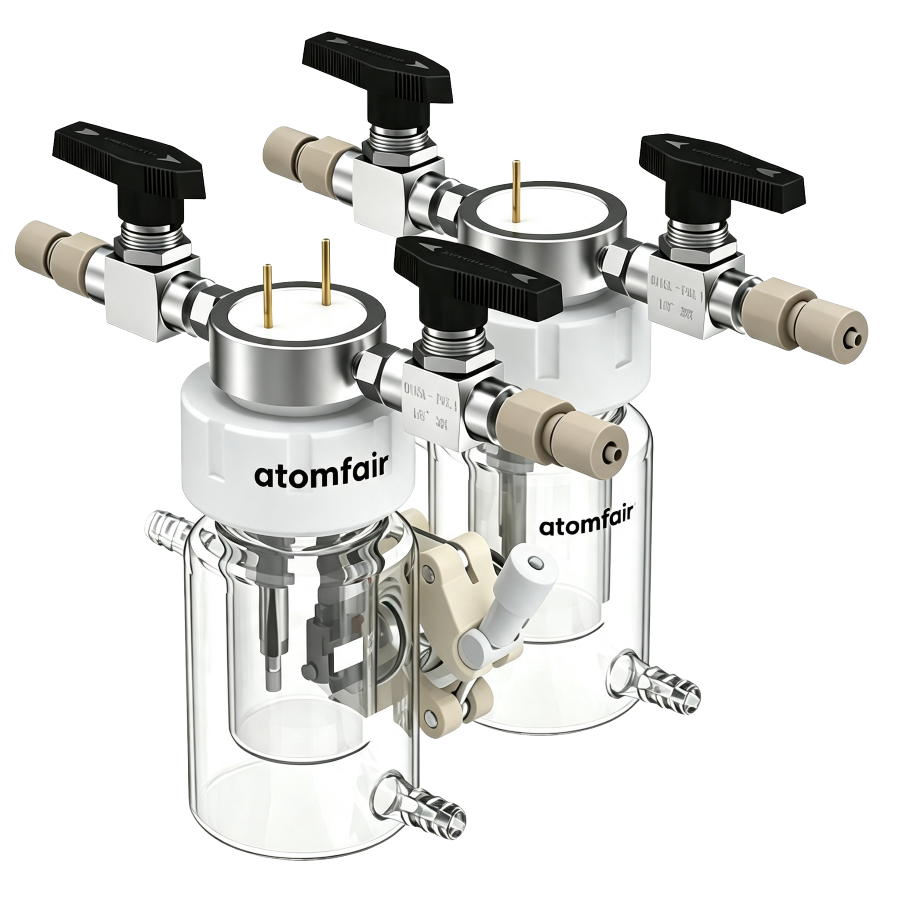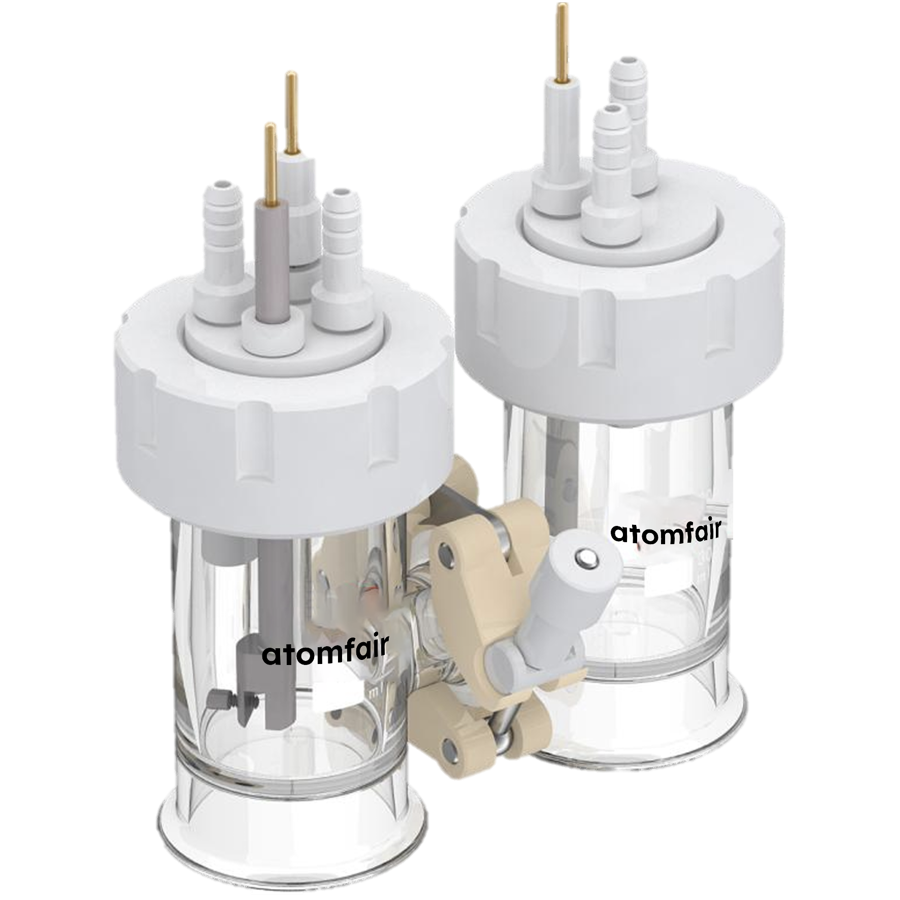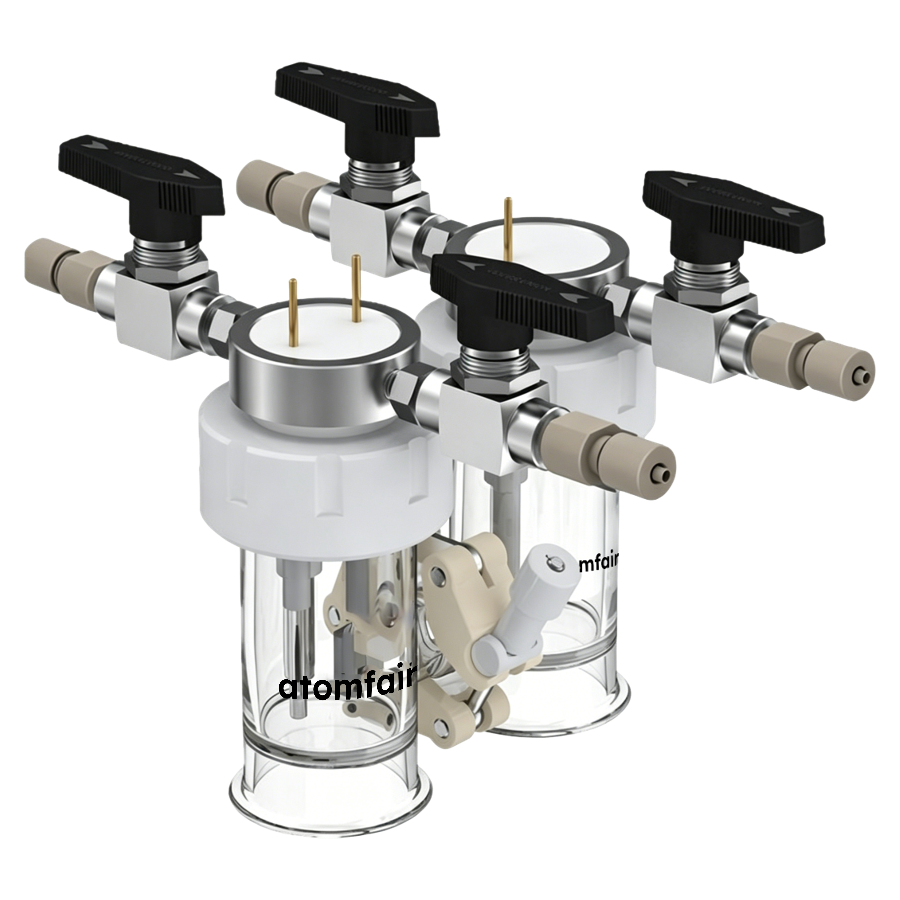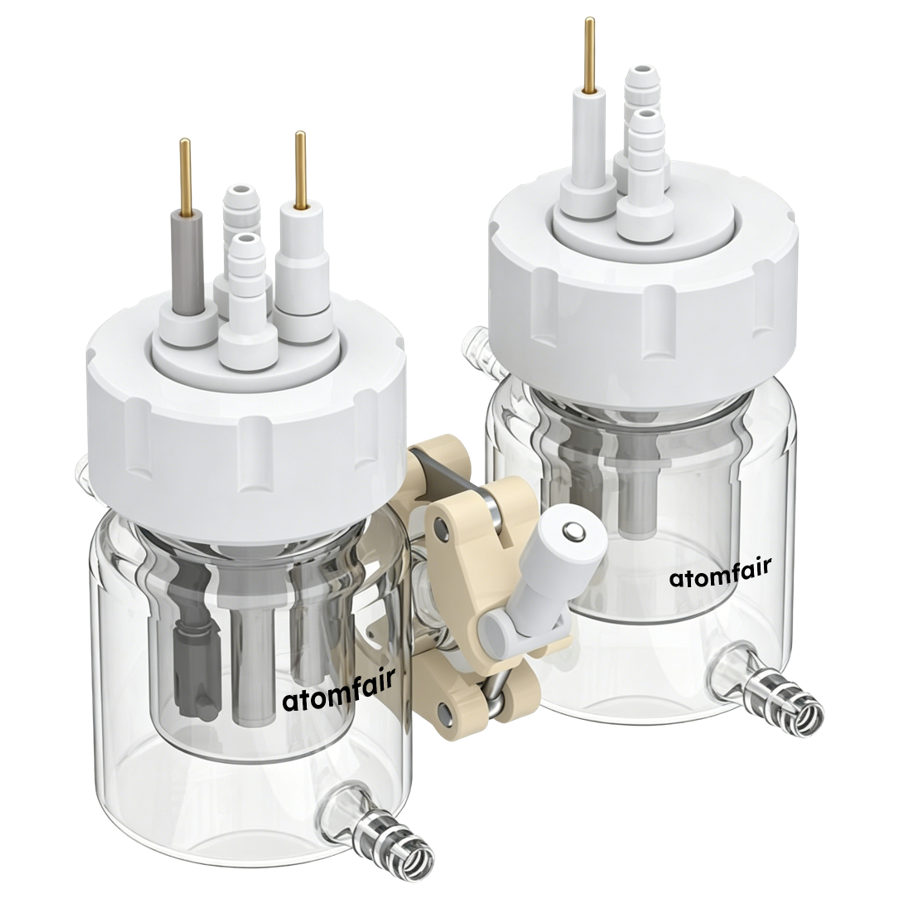
Flat-Plate Corrosion Test Cell, Single-Layer | ATOMFAIRProduct Type: Electrochemical cell
Research-grade laboratory product
|
|||||||||||||||||||||||
|
|||||||||||||||||||||||
|
LABORATORY PROCUREMENT SUPPORT
For model selection, accessory matching, platform compatibility or configuration confirmation, contact our technical sales team.
E-MAIL: inquiry@atomfair.com
|
|||||||||||||||||||||||
|
Manufacturer: Atomfair LLC
Brand: ATOMFAIR®
|
Manufacturer: Atomfair LLC
Brand: ATOMFAIR®
This electrochemical cell requires careful O-ring seal verification and periodic inspection of the gold-plated contact surface to maintain experimental integrity. Electrolyte compatibility must be considered, particularly chloride avoidance via saturated KNO₃ salt bridge filling, and aggressive chemical environments may necessitate the full PTFE version.
- O-Ring Seal Integrity: Verify the O-ring seal integrity before each sample installation to prevent electrolyte leakage and maintain semi-sealed conditions.
- Gold-Plated Contact Maintenance: Inspect the gold-plated copper contact surface periodically for corrosion or wear to ensure reliable electrical conductivity.
- Electrolyte Compatibility: For chloride-avoidance corrosion tests, fill the salt bridge with saturated potassium nitrate solution to prevent chloride ion contamination.
- Material Compatibility: For aggressive chemical environments, consider using the full PTFE version of the cell to avoid glass or metal corrosion.
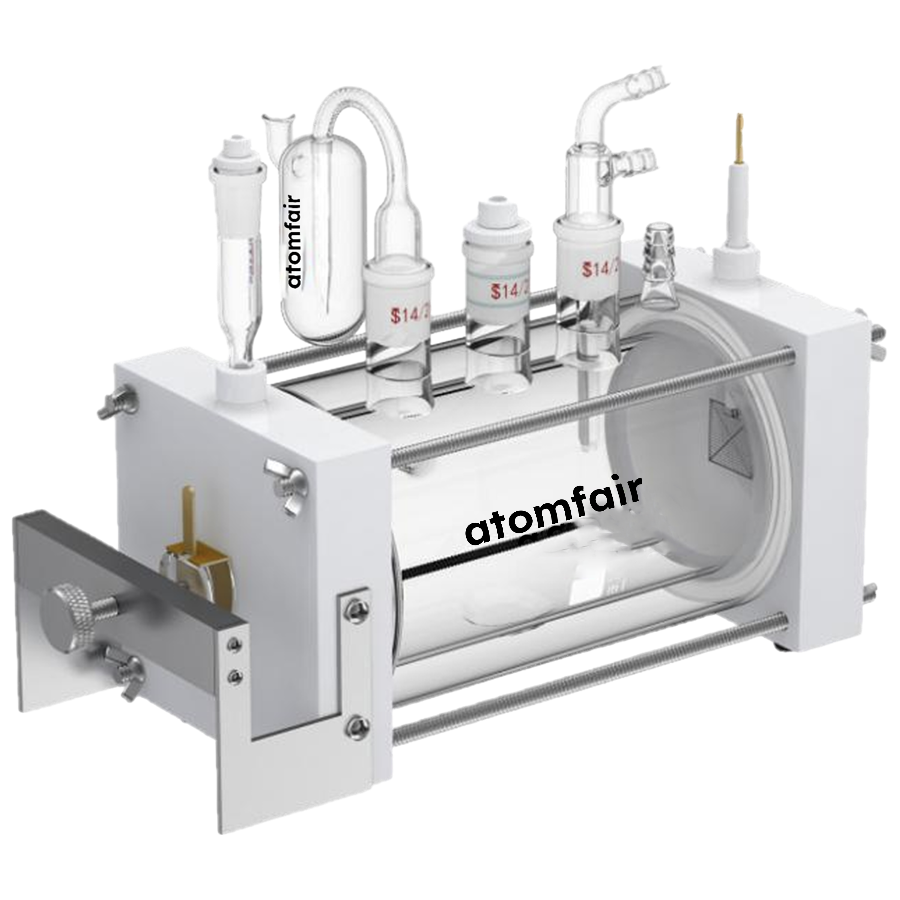
- Magnetic Stirring Integration: Place a magnetic stirrer bar in the designated area beneath the cylindrical body to enhance mass transport and diffusion during experiments.
This procedure outlines the key steps for preparing and using the single-layer flat-plate corrosion test cell for three-electrode electrochemical measurements. Proper seal verification, contact inspection, and electrolyte handling are critical for reliable results.
Required Equipment: Gold-plated copper sheet, Salt bridge with saturated KNO₃ solution, Platinum mesh counter electrode, Magnetic stirrer bar
- Verify O-ring seal
Verify the O-ring seal integrity on the side-wall opening before installing the working electrode to ensure a leak-free semi-sealed system. - Inspect contact surface
Inspect the gold-plated copper contact surface for any signs of corrosion or damage to guarantee reliable electrical connection. - Prepare salt bridge
Fill the salt bridge with saturated potassium nitrate solution if the corrosion test requires chloride ion avoidance. - Install working electrode
Install the flat sheet working electrode into the fixation bracket using the tool-free mechanism and secure it against the O-ring. - Connect electrodes
Connect the gold-plated copper sheet to the working electrode, insert the platinum mesh counter electrode, and place the salt bridge for the reference electrode. - Fill cell with electrolyte
Fill the cell body with the appropriate electrolyte solution, ensuring the working electrode surface is fully immersed. - Place stirrer bar
Place a magnetic stirrer bar in the designated area beneath the cylindrical body and activate stirring to enhance mass transport.
What is the standard exposed working electrode area on the flat-plate corrosion test cell and can it be customized?
The standard fixed-area circular opening on the side wall is 1 cm², defined by an O-ring seal. Custom sizes are available upon request, making the cell adaptable to specific electrode geometries or applications requiring different exposed areas.
How is the reference electrode connected and what precautions are needed for chloride-sensitive corrosion experiments?
The reference electrode is connected via a dedicated salt bridge. For corrosion tests that must avoid chloride ion contamination, the salt bridge should be filled with saturated potassium nitrate (KNO₃) solution instead of typical KCl or NaCl filling solutions, as explicitly noted in the product instructions.
What materials of construction are in contact with the electrolyte and are they suitable for aggressive chemical environments?
The cell body is high-borosilicate glass, the sample fixation bracket is 316F stainless steel, and the working electrode electrical connection uses a gold-plated copper sheet. For highly aggressive environments, a full PTFE version (500 mL) is also available, providing broader chemical inertness while the standard configuration is already chemically resistant for most corrosive studies.
This single-layer flat-plate corrosion test cell from ATOMFAIR offers a semi-sealed, three-electrode configuration with high-borosilicate glass and gold-plated copper contact for reliable corrosion testing of flat sheet samples, though it requires periodic O-ring and contact maintenance and may not be suitable for aggressive environments without the PTFE alternative.
Positive
- Gold-plated copper connection: Direct compression contact via gold-plated copper sheet provides excellent corrosion resistance and reliable electrical conductivity for consistent electrochemical measurements.
- High-borosilicate glass construction: The cell body is fabricated from high-borosilicate glass, offering excellent chemical resistance and thermal stability across a wide range of corrosive environments.
Trade-offs
- O-ring seal maintenance required: The O-ring seal must be verified before each use to maintain semi-sealed integrity; periodic inspection is necessary to prevent leakage during experiments.
- Chemical compatibility limitations: For aggressive chemical environments, the standard glass/316F stainless steel construction may be insufficient; the manufacturer recommends the full PTFE version for such applications.
Every advanced material, component, equipment, and instrument in our catalog is backed by rigorous testing. We maintain strict internal quality management frameworks and align with CE conformity metrics to deliver transparent, reproducible performance data via our public open-science repository.
To request raw batch performance data, submit formal vendor registration paperwork, or execute a fast-turnaround R&D manufacturing loop, contact us at inquiry@atomfair.com.
Item is dispatched under the Atomfair Shipping & Delivery Framework (Free worldwide shipping on orders over $59 USD excl. heavy equipment). Return is governed by the Atomfair Return & Refund Policy (7-day technical return window).