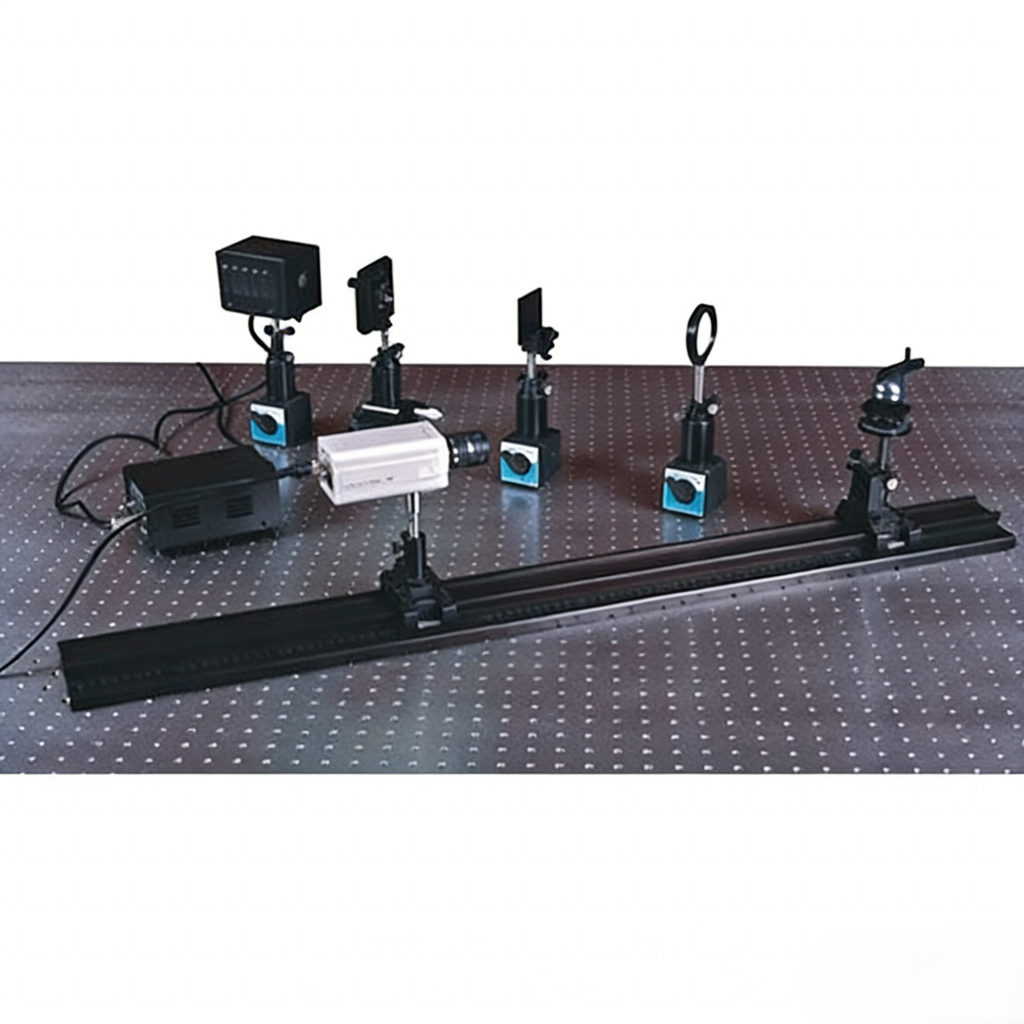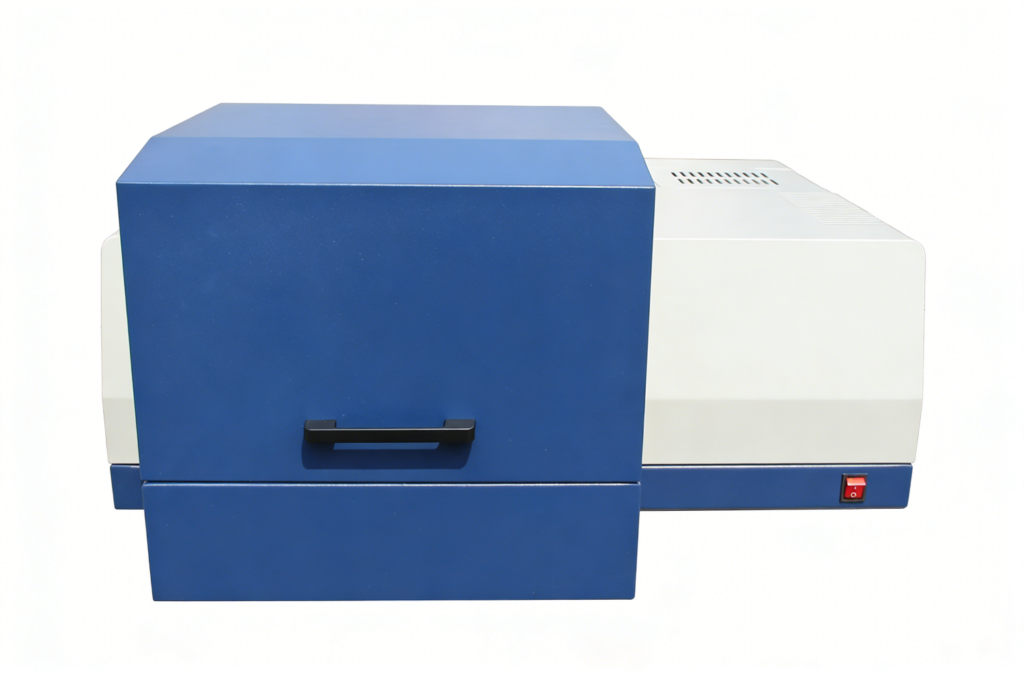
Atomfair Series Spectroscope Analyzer Product Information
Product Overview
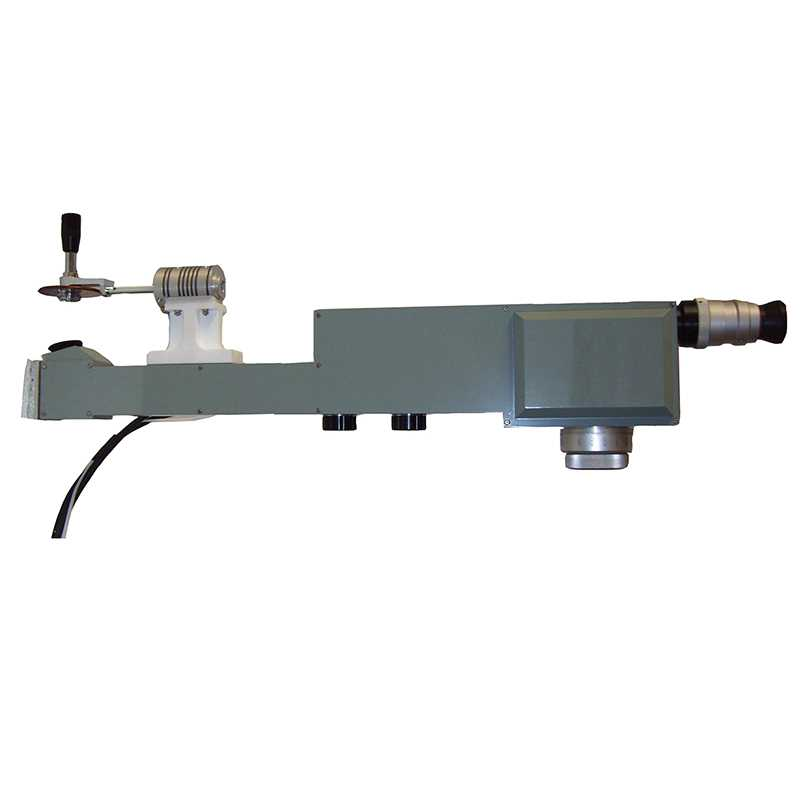
This series of spectroscope analyzers (including desktop and portable types) is suitable for analyzing ferrous metal elements on the work site. It is an ideal non-destructive testing equipment for quickly identifying metal grades, distinguishing mixed materials, and determining element types. The equipment features a compact structure and easy operation, which can meet the testing needs of multiple scenarios on site and indoors, and is widely used in metal material testing in various industrial fields.
I. Core Applications
1. Accurate Identification of Alloy Elements in Metals
– Elements in steel: Cr (Chromium), W (Tungsten), Mn (Manganese), V (Vanadium), Mo (Molybdenum), Ni (Nickel), Co (Cobalt), Ti (Titanium), Al (Aluminum), Nb (Niobium), Zr (Zirconium), Si (Silicon), Cu (Copper), etc.
– Elements in copper alloys: Zn (Zinc), Ag (Silver), Ni (Nickel), Mn (Manganese), Fe (Iron), Pb (Lead), Sn (Tin), Al (Aluminum), Be (Beryllium), Si (Silicon), etc.
– Elements in aluminum alloys: Mg (Magnesium), Cu (Copper), Mn (Manganese), Fe (Iron), Si (Silicon), Sn (Tin), etc.
2. Rapid Identification of Metal Grades
It can quickly identify the grades of alloy steel, stainless steel and other metals within 1 minute. Typical identifiable grades include 304, 321, 316, 16Mn, 15CrMo, 12Cr1MoV, etc.
3. Efficient Distinction of Mixed Metal Materials
It can quickly identify and distinguish alloy steel mixed with other metal materials, avoiding production or use risks caused by material confusion.
4. Wide Application Fields
Chemical machinery and equipment manufacturing, aerospace industry, power plants, boiler industry, heat treatment plants, valve and pipe fitting production, bolt smelting, stainless steel manufacturing, general machinery manufacturing and scrap recycling sites, etc.
II. Main Technical Parameters
– Spectral range: 390~700nm
– Visual resolution: 0.05 – 0.11nm
– Distinguishable line pairs: Fe 613.66nm & 613.77nm; Fe 487.13nm & 487.21nm; Mn 467.59nm & 467.64nm
– Dispersion element: Grating is used as the main dispersion element (bright and clear spectral lines, high resolution); 2 matching ZF1 prisms (1 piece: apex angle 60°, base length 50mm, height 30mm; 1 piece: apex angle 30°, base length 25mm, height 30mm)
– Collimating objective focal length: f=D/f×260mm=1:8.7
– Overall dimensions: 625×180×190 mm
– Weight: Main unit 4.3kg (total weight including instrument case and spare parts 11kg)
– Adaptable scenarios: Compact structure, easy to carry, supporting both on-site and indoor testing environments
III. Standard Configuration
– Core equipment: 1 spectroscope
– Spare parts: 2 pieces of protective glass; Disc electrodes (1 piece of copper, 2 pieces of iron); Rod electrodes (1 piece of copper, 1 piece of iron)
– Technical documents: 1 copy of Spectroscopic Analysis Method and Marking; 1 copy of Instrument User Manual; 1 copy of Packing List; 1 Certificate of Conformity
– Accessory box: 1 portable AC arc generator
IV. Optional Accessories
– Rod electrodes: Copper (10 pieces/box), Iron (10 pieces/box)
– Disc electrodes: Copper (10 pieces/box), Iron (10 pieces/box)
– Protective glass: 20 pieces/box
– Fuse: 5A (10 pieces/box), 10A (10 pieces/box)
If you’re interested, have any questions, or have specific customization requirements, please feel free to contact us at inquiry@atomfair.com.
What spectral range and resolution does the Atomfair Series Spectroscope Analyzer offer for ferrous metal analysis?
The Atomfair Series Spectroscope Analyzer covers a spectral range of 390–700 nm with a visual resolution of 0.05–0.11 nm. It can resolve closely spaced line pairs such as Fe 613.66 nm and 613.77 nm, Fe 487.13 nm and 487.21 nm, and Mn 467.59 nm and 467.64 nm, enabling precise non-destructive analysis of ferrous metals.
Can this spectroscope analyzer identify specific metal grades such as 304 stainless steel or 16Mn?
Yes, the instrument can rapidly identify grades of alloy steel and stainless steel within one minute, including 304, 321, 316, 16Mn, 15CrMo, and 12Cr1MoV. It also distinguishes mixed materials and determines elemental composition for steel, copper alloys, and aluminum alloys.
Is the Atomfair Series Spectroscope Analyzer portable for on-site testing, and what are its physical specifications?
The analyzer has a compact structure (625 × 180 × 190 mm) with a main unit weight of 4.3 kg and a total system weight of 11 kg, including the instrument case and spare parts. It is designed for both on-site and indoor use and comes standard with a portable AC arc generator, making it suitable for field deployment in industries such as chemical machinery, aerospace, and power plants.
The Atomfair Series Spectroscope Analyzer (SKU AFMSYLPM668) is a compact, grating-based optical emission spectrometer designed for on-site ferrous metal grade identification and mixed-material sorting, with a spectral range of 390–700 nm and a visual resolution of 0.05–0.11 nm. Its portable form factor (4.3 kg main unit) and included AC arc generator support rapid, non-destructive testing in both field and laboratory environments, though its manual, qualitative operation and reliance on consumable electrodes require operator expertise and careful sample preparation.
Positive
- High-resolution grating optics: The instrument uses a grating as the primary dispersion element with a visual resolution of 0.05–0.11 nm, enabling clear separation of closely spaced spectral lines such as Fe 613.66/613.77 nm and Mn 467.59/467.64 nm, which is critical for accurate alloy identification.
- Portable and field-deployable design: With a main unit weight of 4.3 kg and compact dimensions of 625×180×190 mm, the analyzer is designed for on-site use, supporting rapid metal grade identification within 1 minute in scenarios like scrap recycling and boiler maintenance, without requiring laboratory infrastructure.
Trade-offs
- Manual qualitative analysis: The spectroscope requires visual interpretation of spectral lines rather than automated quantitative readouts, demanding operator expertise in spectroscopy to identify elements and grades accurately, which may limit usability for untrained personnel.
- Consumable electrode dependency: Operation requires consumable copper and iron electrodes (rod or disc type) and protective glass, which must be regularly replaced, adding recurring supply costs and requiring inventory management for continuous field use.
Every advanced material, component, equipment, and instrument in our catalog is backed by rigorous testing. We maintain strict internal quality management frameworks and align with CE conformity metrics to deliver transparent, reproducible performance data via our public open-science repository.
To request raw batch performance data, submit formal vendor registration paperwork, or execute a fast-turnaround R&D manufacturing loop, contact us at inquiry@atomfair.com.
Item is dispatched under the Atomfair Shipping & Delivery Framework (Free worldwide shipping on orders over $59 USD excl. heavy equipment). Return is governed by the Atomfair Return & Refund Policy (7-day technical return window).