Double-Window H-Type Replaceable-Membrane Photoelectrochemical Cell, Absolute Sealing, Double-Layer | ATOMFAIRProduct Type: Electrochemical cell
Research-grade laboratory product
|
|||||||||||||||||||||||||||||||||||
|
|||||||||||||||||||||||||||||||||||
|
LABORATORY PROCUREMENT SUPPORT
For model selection, accessory matching, platform compatibility or configuration confirmation, contact our technical sales team.
E-MAIL: inquiry@atomfair.com
|
|||||||||||||||||||||||||||||||||||
|
Manufacturer: Atomfair LLC
Brand: ATOMFAIR®
|
Manufacturer: Atomfair LLC
Brand: ATOMFAIR®
The double-layer water jacket configuration prohibits pressurization due to thinner inner glass wall. Electrodes must be custom-matched to the cell, and the ion-exchange membrane is user-supplied.
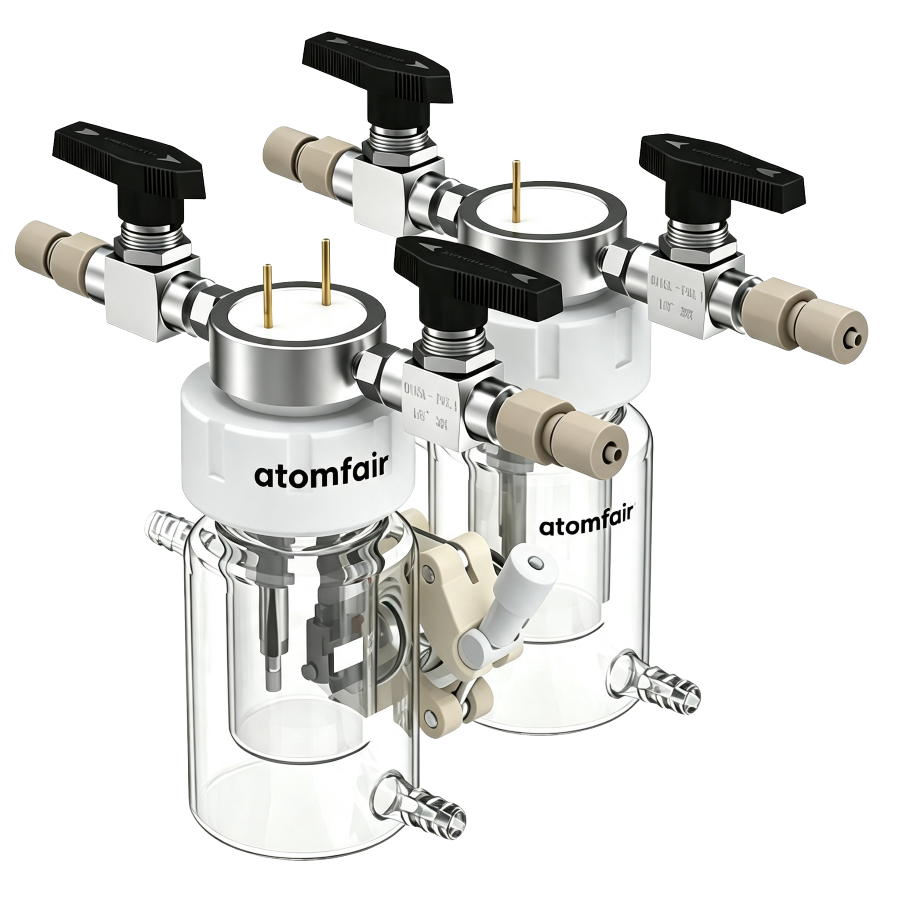
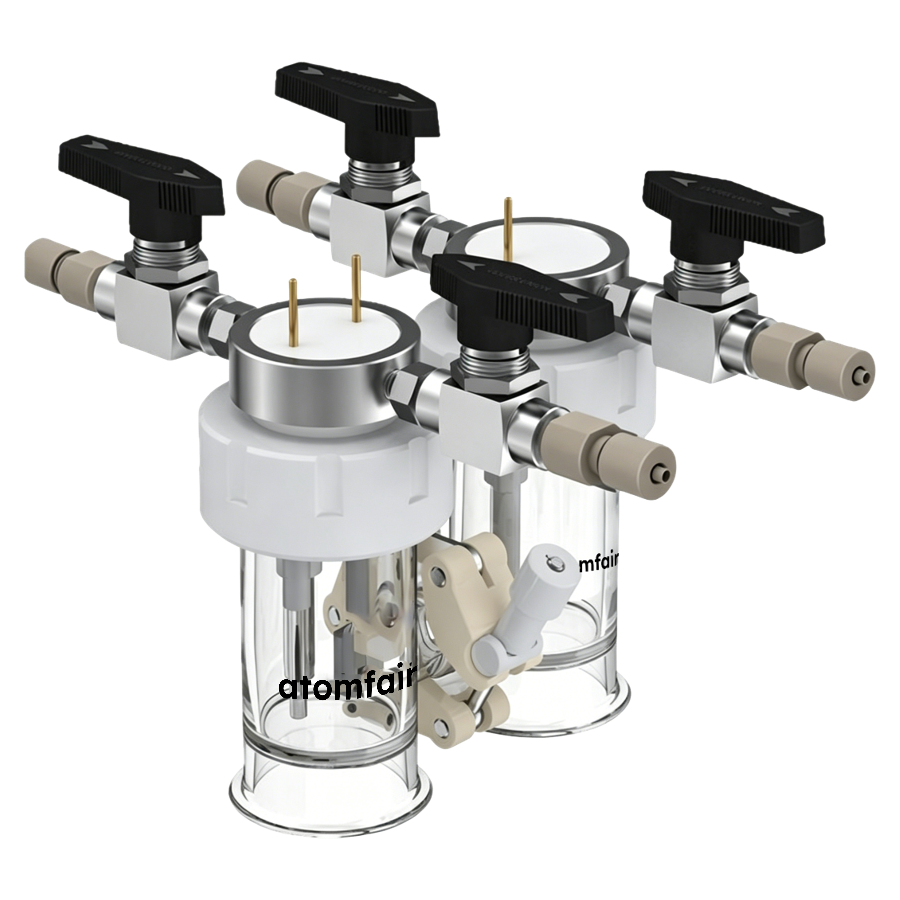
- Vacuum and Sealing Constraints: Absolute sealing via built-in electrode jacks enables vacuum below -100 kPa, but valves are not included and must be provided externally.
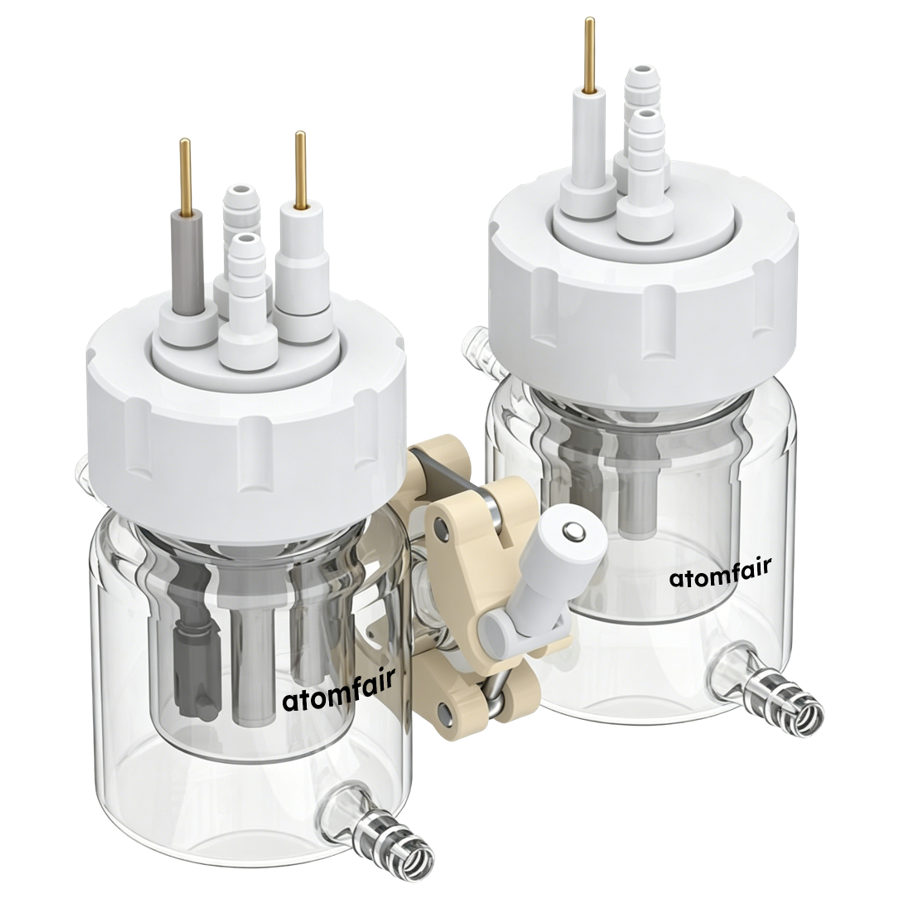
- Temperature Control Constraint: The integrated water bath jacket requires connection to an external thermostatic circulator and must be leak-checked before operation.
- Quartz Window Handling Constraint: Quartz windows (>95% transmittance) are fragile and must be inspected for cracks prior to assembly to prevent optical degradation or leakage.
- Membrane Compatibility Constraint: The cell is designed for user-supplied ion-exchange membranes; compatibility with the intended electrolyte and reaction conditions must be verified independently.
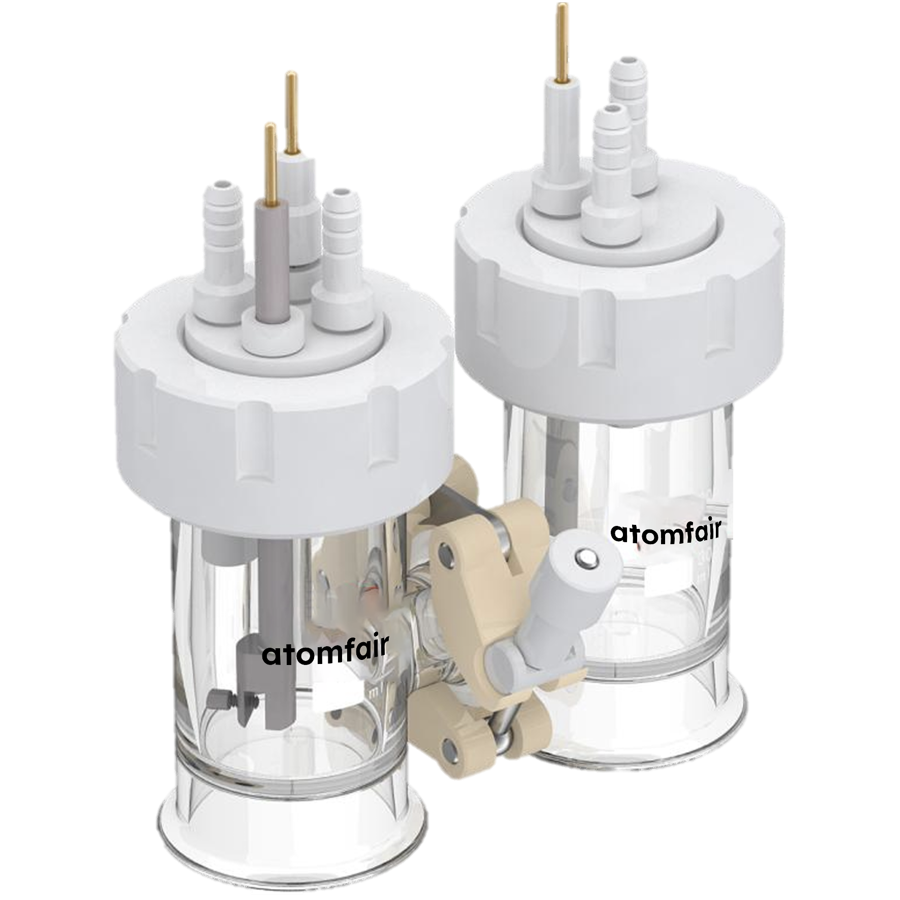
- Electrode Matching Constraint: Working and reference electrodes share the same compartment to minimize iR drop, but electrodes are not included and must be custom-matched to the cell geometry.
Assemble the cell with the user-supplied membrane and custom-matched electrodes, then establish vacuum and temperature control. All steps assume the user has the required external equipment (vacuum pump, thermostatic bath, electrodes, membrane).
Required Equipment: Thermostatic water bath circulator, Vacuum pump (capable of < -100 kPa), Custom-matched electrode assembly, User-supplied ion-exchange membrane
- Inspect quartz windows
Inspect both quartz windows for cracks or scratches and clean them with lint-free optics wipes before mounting. - Install the membrane
Place the user-supplied ion-exchange membrane between the cathode and anode chambers and secure the locking ring assemblies. - Connect the water jacket
Connect the thermostatic water bath to the double-layer jacket inlet and outlet, then verify there are no leaks by circulating water at the intended temperature. - Insert electrodes and seal
Insert the custom-matched working, reference, and counter electrodes into the electrode jacks and rotate the PTFE core to align the working electrode with the quartz window. - Apply vacuum
Connect an external vacuum pump to the cell valve port (valve not included) and evacuate the cell to below -100 kPa for anaerobic operation.
Can the double-layer photoelectrochemical cell withstand external pressurization?
No, the double-layer configuration cannot be pressurized due to the thinner inner glass wall. The cell is designed for ambient pressure or vacuum operation down to below -100 kPa (using user-supplied valves). For pressurization requirements, consider the standard single-layer version.
What type of electrodes are compatible with this H-type photoelectrochemical cell?
Electrodes must be custom-matched with the cell. The built-in electrode jacks provide complete sealing for anaerobic experiments, and the working and reference electrodes share the same compartment to minimize iR drop. Contact the manufacturer to configure electrode geometry and connectors specific to your three-electrode system.
Does the photoelectrochemical cell include the ion-exchange membrane and valves?
No, the ion-exchange membrane must be supplied by the user to separate the cathode and anode chambers. Valves for vacuum operation (below -100 kPa) are also not included. These components must be sourced separately. The cell is specifically designed for membrane-based studies such as CO2/N2 reduction and electrosynthesis.
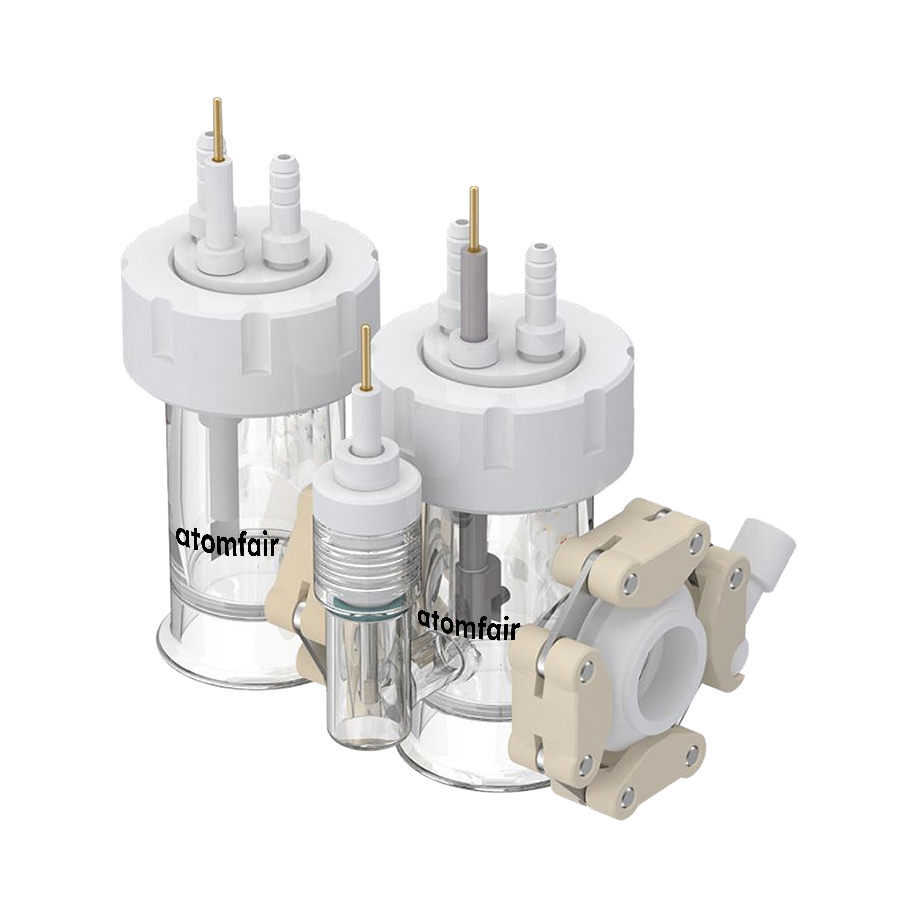
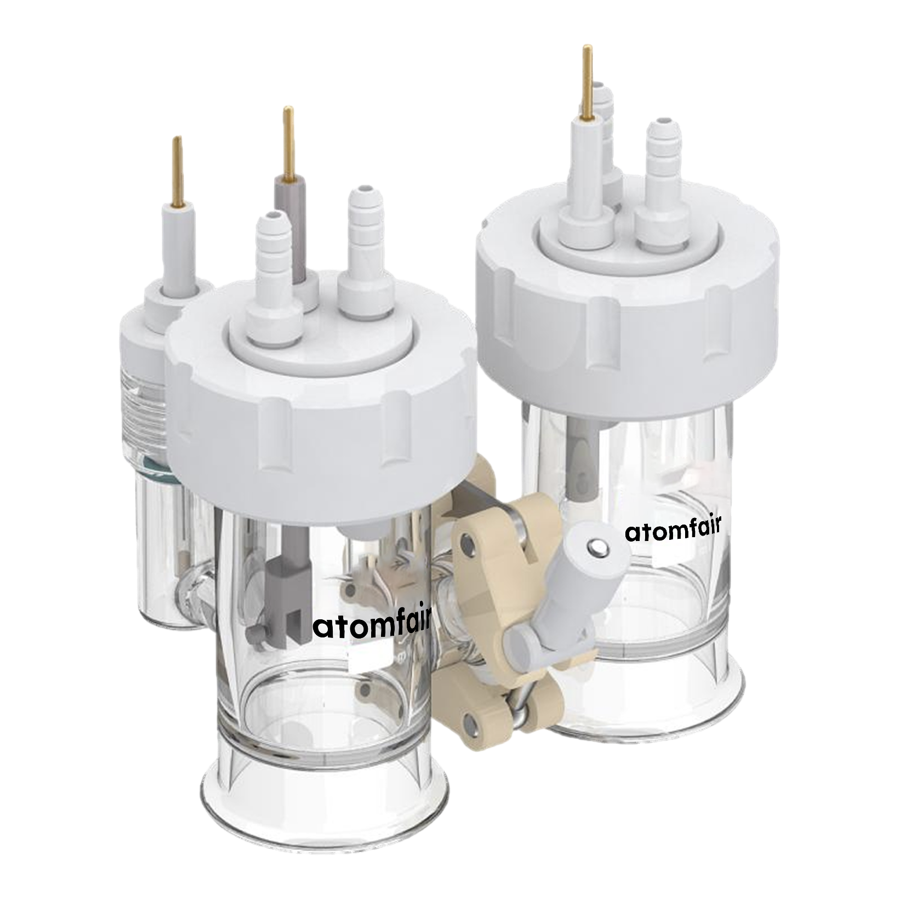
The ATOMFAIR Double-Layer Absolute Sealing Double-Window H-Type Replaceable-Membrane Photoelectrochemical Cell provides absolute sealing for anaerobic photoelectrochemistry, dual quartz windows with >95% transmittance, and a thermostatic water jacket for temperature control. However, the double-layer design precludes pressurization, and electrodes must be custom-matched.
Positive
- Absolute sealing for anaerobic experiments: Built-in electrode jacks provide complete sealing integrity, enabling rigorous anaerobic photoelectrochemical studies.
- Dual quartz windows >95% transmittance: High optical transparency facilitates superior light access for photoelectrochemical measurements.
Trade-offs
- Double-layer cannot be pressurized: The double-layer configuration uses a thinner inner glass wall, making it unsuitable for pressurized operation.
- Electrodes must be custom-matched: The cell requires custom-matched electrodes, which must be sourced separately and verified for compatibility.
Every advanced material, component, equipment, and instrument in our catalog is backed by rigorous testing. We maintain strict internal quality management frameworks and align with CE conformity metrics to deliver transparent, reproducible performance data via our public open-science repository.
To request raw batch performance data, submit formal vendor registration paperwork, or execute a fast-turnaround R&D manufacturing loop, contact us at inquiry@atomfair.com.
Item is dispatched under the Atomfair Shipping & Delivery Framework (Free worldwide shipping on orders over $59 USD excl. heavy equipment). Return is governed by the Atomfair Return & Refund Policy (7-day technical return window).