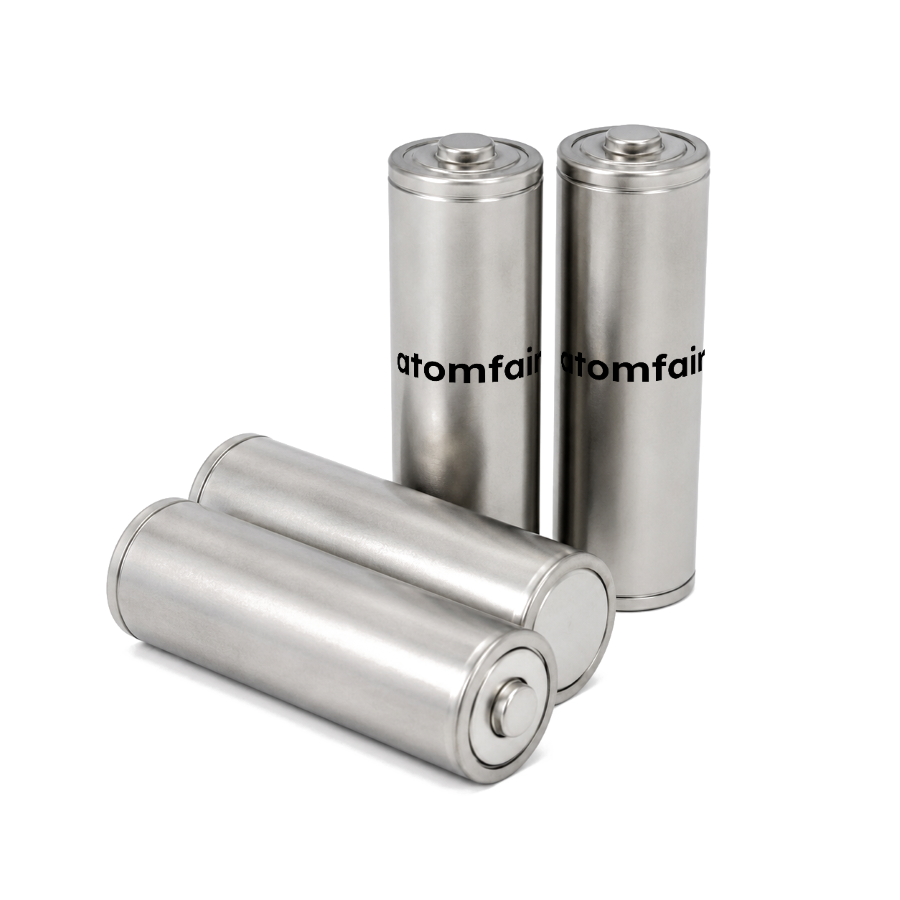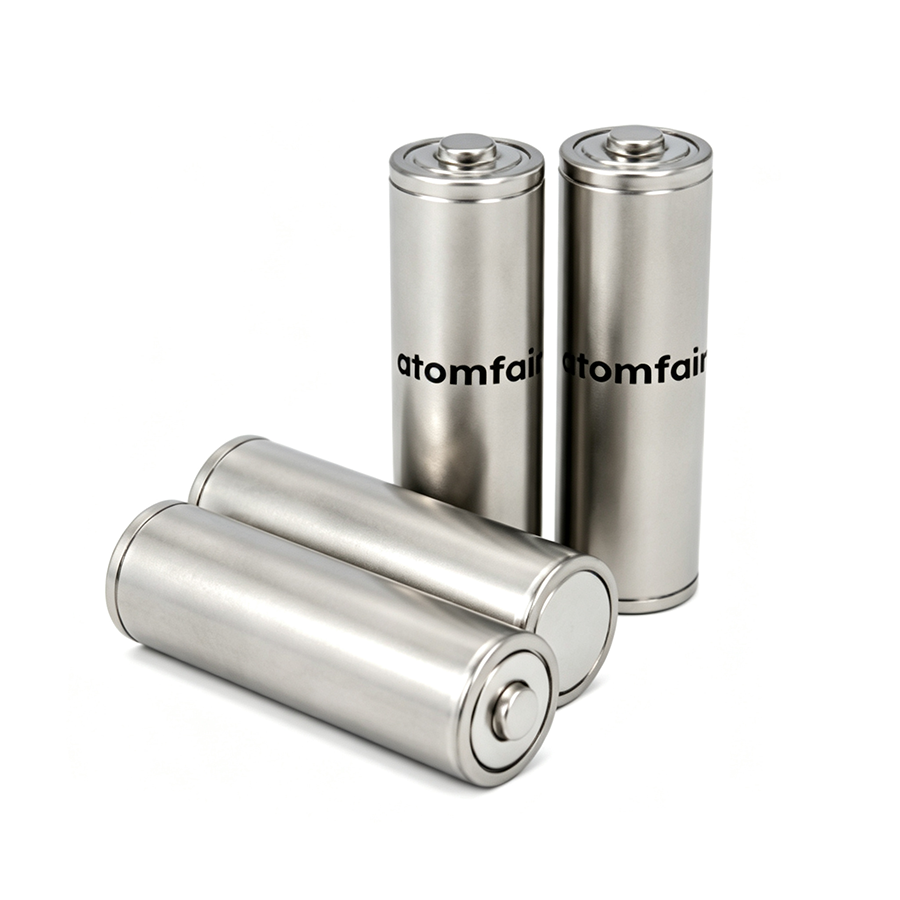
Custom Dry Cylindrical Cell LFP/NMC No ElectrolyteRESEARCH & PROTOTYPING GRADE
|
||||||||||||||||||||||||
|
||||||||||||||||||||||||
Related Products |
||||||||||||||||||||||||
|
||||||||||||||||||||||||
|
TAILORED SOLUTIONS FOR INNOVATION
Contact our engineering team for technical support or custom capacity inquiries.
EMAIL: inquiry@atomfair.com
|
||||||||||||||||||||||||
|
Manufacturer: Atomfair LLC
Brand: ATOMFAIR®
|
||||||||||||||||||||||||
This dry cylindrical cell must be stored in a cool, dry environment away from direct sunlight and moisture to prevent electrode degradation. The cell requires electrolyte filling under inert atmosphere conditions prior to electrical activation.
- Moisture Sensitivity: Electrode materials LFP and NMC absorb moisture rapidly, necessitating glovebox handling during electrolyte filling.
- Storage Conditions: Store the dry cell in an anhydrous environment at temperatures below 30°C to maintain extended shelf life without electrochemical degradation.
- Electrolyte Compatibility: Select an electrolyte formulation compatible with the chosen cathode chemistry to avoid side reactions and capacity fade.
- Safety Precautions: Use appropriate PPE including nitrile gloves and safety goggles to prevent skin contact with active material dust.
- Sealing Requirement: After electrolyte filling, immediately seal the cell to prevent electrolyte evaporation and contamination.
How does the dry cylindrical cell's extended shelf life under dry conditions trade off against the need to precisely control the electrolyte filling process to achieve rated capacity?
The dry format extends shelf life by preventing electrochemical degradation during storage, but the user must perform electrolyte filling, which introduces variability. The cell's capacity is customizable based on chemistry and application, but achieving rated performance requires careful selection of electrolyte type, volume, and wetting procedure. Improper filling can result in lower initial capacity compared to pre-filled cells that are optimized at the factory.
What are the constraints when integrating this dry cylindrical cell into existing battery test fixtures that typically accommodate standard 18650 or 21700 form factors?
The dry cell's physical dimensions are tailored to specific project requirements, so they may not conform to standard cylindrical cell sizes. To integrate into standard test fixtures, the user must specify dimensions that match existing hardware, or custom fixturing may be required. The electrolyte-free format also means no liquid is present during handling, but if the fixture requires sealed cells, external ports may be needed for post-assembly filling.
What specific handling and infrastructure requirements are needed to safely fill this dry cylindrical cell with electrolyte in a laboratory setting?
Handling requires appropriate PPE (gloves, safety glasses) due to electrolyte toxicity and flammability. Filling should be performed in a controlled atmosphere environment such as a dry room or glovebox with low humidity (<1% RH) to prevent moisture contamination, as the cell is sensitive to moisture during storage. The dry cell eliminates leakage risks during transport and pre-fill handling, simplifying logistics compared to pre-filled cells.
This dry cylindrical cell battery platform offers researchers the flexibility to integrate proprietary electrolytes or pursue solid-state configurations, but requires the end user to perform electrolyte filling and adhere to strict storage and handling protocols.
Positive
- Dry Cell Safety and Handling Advantage: The dry cylindrical format eliminates leakage risks and enhances safety during handling and transit, making it suitable for laboratory environments where electrolyte spillage is a concern.
- Extended Shelf Life Stability: The absence of electrolyte prevents electrochemical degradation during storage, enabling long-term shelf life without capacity fade.
Trade-offs
- Electrolyte Filling Required by End User: As a dry cell without pre-filled electrolyte, the end user must perform electrolyte filling or integrate solid-state electrolyte, requiring appropriate laboratory infrastructure and expertise.
- Sensitive Storage and Handling Conditions: The product requires storage in a cool, dry place away from direct sunlight and moisture, and handling mandates the use of appropriate personal protective equipment.
Every advanced material, component, equipment, and instrument in our catalog is backed by rigorous testing. We maintain strict internal quality management frameworks and align with CE conformity metrics to deliver transparent, reproducible performance data via our public open-science repository.
To request raw batch performance data, submit formal vendor registration paperwork, or execute a fast-turnaround R&D manufacturing loop, contact us at inquiry@atomfair.com.
Item is dispatched under the Atomfair Shipping & Delivery Framework (Free worldwide shipping on orders over $59 USD excl. heavy equipment). Return is governed by the Atomfair Return & Refund Policy (7-day technical return window).