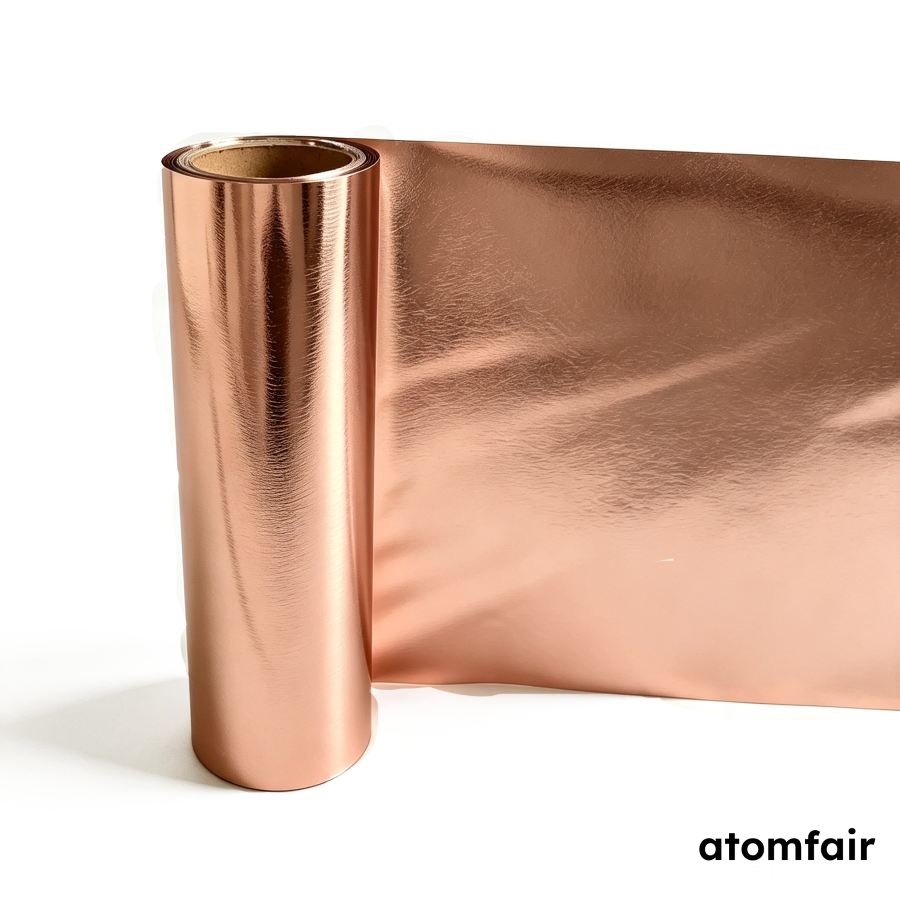
Single-Sided Composite Aluminum Foil Current CollectorProduct Type: Composite aluminum foil current collector
Research-grade laboratory product
|
|||||||||||||||||||||||||||||||||||
|
|||||||||||||||||||||||||||||||||||
|
LABORATORY PROCUREMENT SUPPORT
For model selection, accessory matching, platform compatibility or configuration confirmation, contact our technical sales team.
E-MAIL: inquiry@atomfair.com
|
|||||||||||||||||||||||||||||||||||
|
Manufacturer: Atomfair LLC
Brand: ATOMFAIR®
|
This composite current collector requires careful handling to maintain interlayer adhesion and electrolyte compatibility. The polymer functional layer imposes thermal and voltage limits to prevent delamination or circuit failure.
- Electrolyte Compatibility: Immersion in 1 mol/L LiPF6 electrolyte at 60°C for 7 days must not cause delamination, corrosion, or resistance change exceeding 5%.
- Thermal Shutdown: The polymer layer melts between 120°C and 280°C, breaking the circuit to provide thermal shutdown protection.
- Thermal Shrinkage: Heating at 150°C for 30 minutes causes longitudinal shrinkage ≤0.9% and transverse shrinkage ≤0.7%.
- Interlayer Adhesion: Interlayer peel strength must be at least 1.2 N/mm to prevent delamination during processing.
- Oxidation Potential: The collector's oxidation potential is ≥4.8 V vs Li/Li+, limiting upper voltage in battery operation.
What is the trade-off between the thermal shutdown temperature range (120–280°C) and the mechanical properties of this single-sided composite aluminum foil current collector?
The polymer functional layer provides thermal shutdown between 120–280°C, but the mechanical properties remain robust: longitudinal tensile strength ≥165 MPa, elongation ≥6%, and interlayer peel strength ≥1.2 N/mm. The polymer layer's melting does not compromise the aluminum foil's structural integrity, but the shutdown is irreversible; the foil can still function as a current collector after shutdown but with increased resistance.
Is this single-sided composite aluminum foil current collector compatible with high-voltage cathode materials given its oxidation potential?
Yes, with an oxidation potential ≥4.8 V vs Li/Li+, this collector is suitable for high-voltage cathode systems such as NMC or LCO. Additionally, it withstands 60°C immersion in 1 mol/L LiPF6 electrolyte for 7 days without delamination or corrosion, with resistance change ≤5%, confirming compatibility with standard lithium-ion battery electrolytes.
What storage and handling precautions are required to preserve the thermal shutdown function of this composite foil?
Store in a dry environment at temperatures below 120°C to avoid premature activation of the polymer thermal shutdown layer. The polymer layer melts between 120–280°C, so exposure to high temperatures during processing or storage must be avoided. The foil can be handled using standard techniques for thin aluminum foils, but avoid excessive bending or scratching that could damage the polymer layer.
This single-sided composite aluminum foil current collector uses a ≥4 μm aluminum substrate with a 3 μm polymer functional layer, delivering thermal shutdown capability (120-280 °C) and verified electrolyte stability (60 °C, 7 days in 1 M LiPF6). With an oxidation potential ≥4.8 V vs Li/Li⁺ and low surface resistance (≤0.05 ohm/sq), it is suited for high-voltage battery research, though the single-sided coating and thermal shrinkage at 150 °C necessitate careful process integration.
Positive
- Thermal shutdown safety feature: The 3 μm polymer layer melts between 120-280 °C, breaking electrical contact to prevent thermal runaway in battery cells.
- Electrolyte stability under high temperature: Withstands 60 °C immersion in 1 mol/L LiPF6 for 7 days with no delamination or corrosion and resistance change ≤5%, ensuring long-term reliability in liquid electrolyte environments.
Trade-offs
- Single-sided polymer coating: Only one side of the aluminum foil carries the polymer functional layer, limiting use to single-sided electrode architectures and requiring orientation control during cell assembly.
- Thermal shrinkage at elevated temperature: At 150 °C for 30 minutes, machine-direction shrinkage is ≤0.9% and transverse-direction shrinkage ≤0.7%, which may cause dimensional changes during high-temperature drying or processing steps.
Every advanced material, component, equipment, and instrument in our catalog is backed by rigorous testing. We maintain strict internal quality management frameworks and align with CE conformity metrics to deliver transparent, reproducible performance data via our public open-science repository.
To request raw batch performance data, submit formal vendor registration paperwork, or execute a fast-turnaround R&D manufacturing loop, contact us at inquiry@atomfair.com.
Item is dispatched under the Atomfair Shipping & Delivery Framework (Free worldwide shipping on orders over $59 USD excl. heavy equipment). Return is governed by the Atomfair Return & Refund Policy (7-day technical return window).