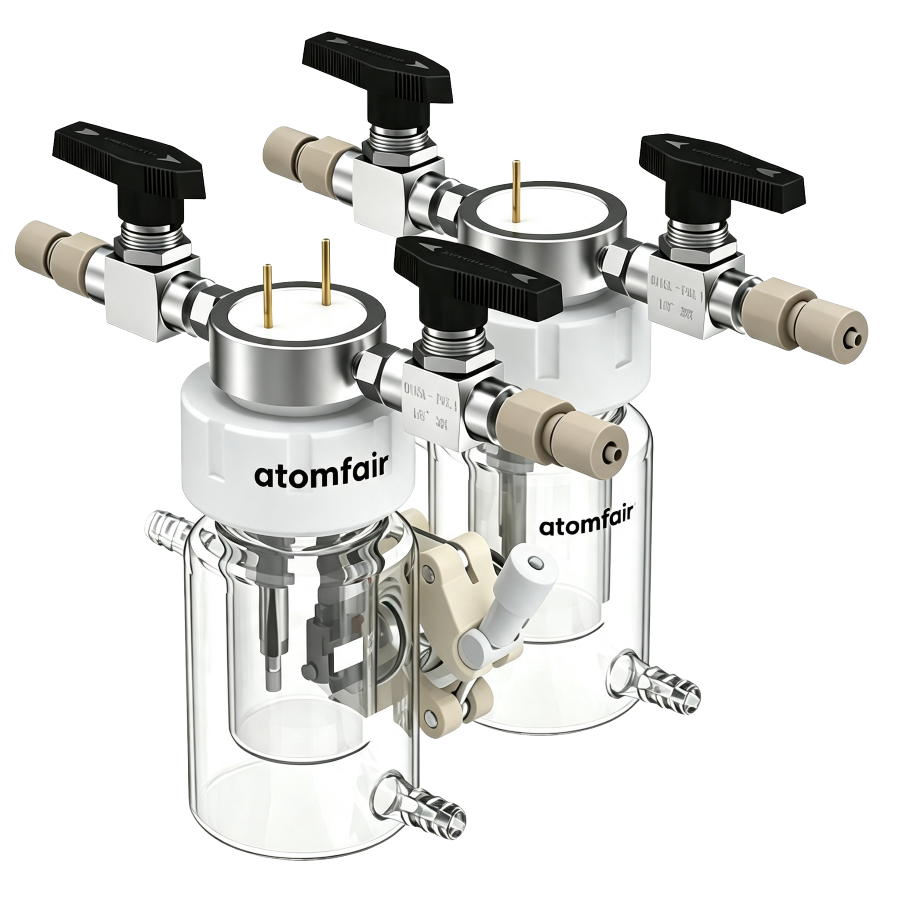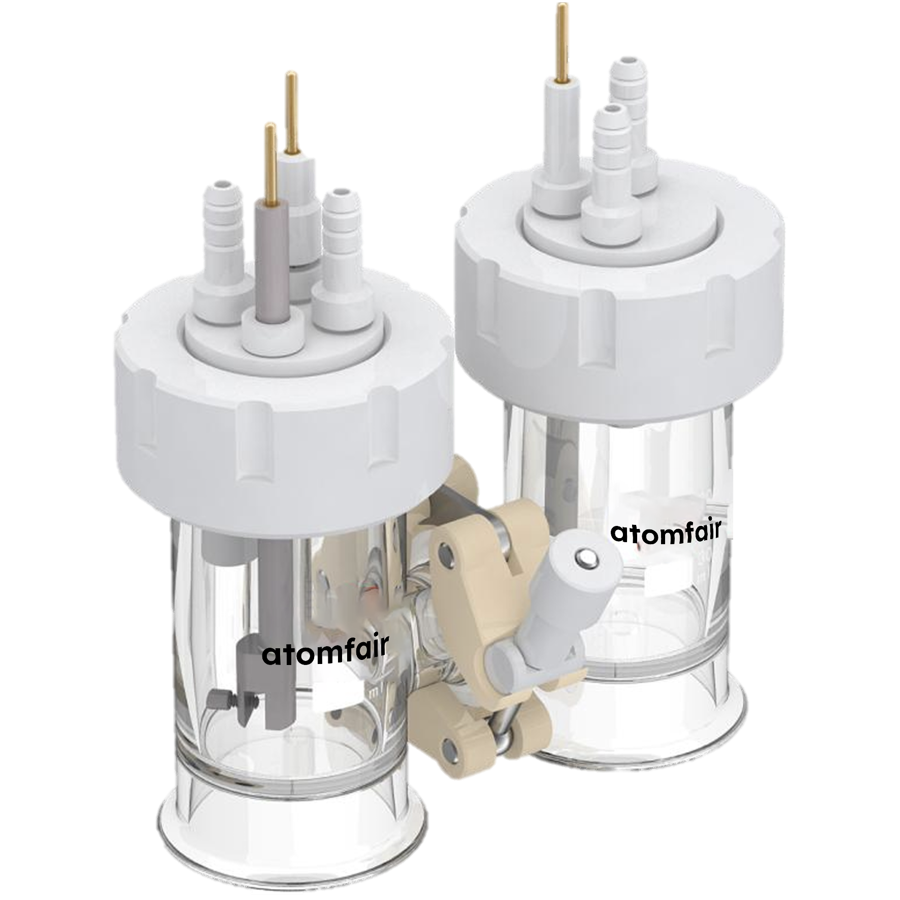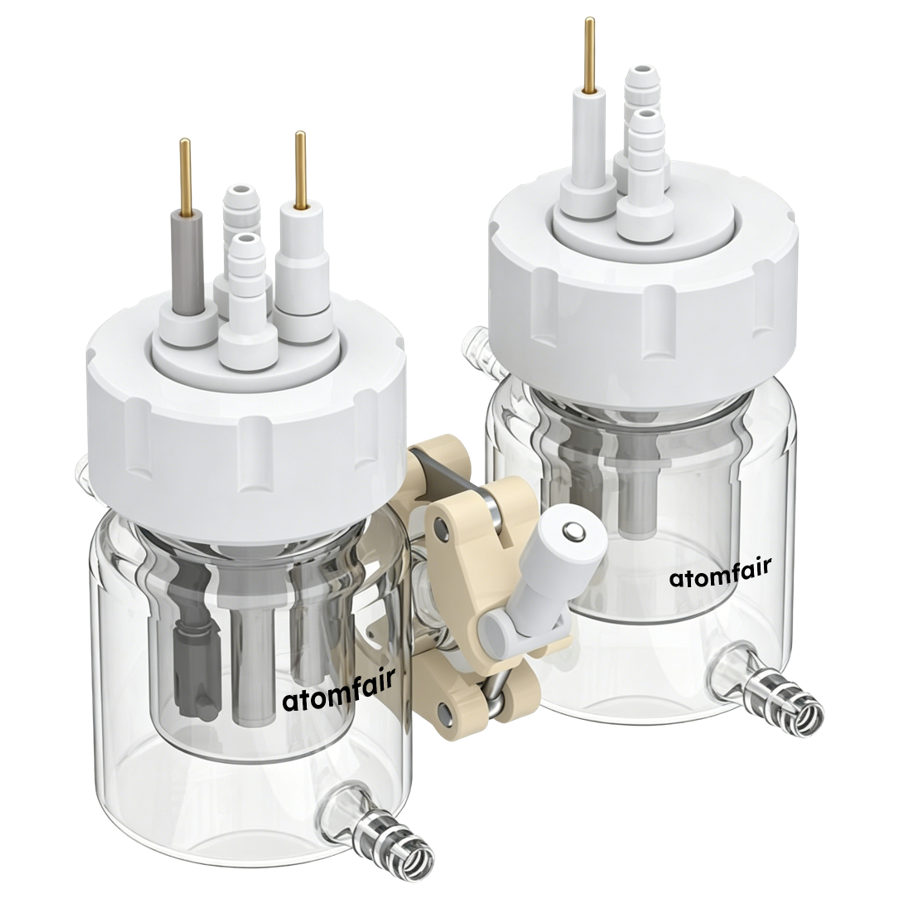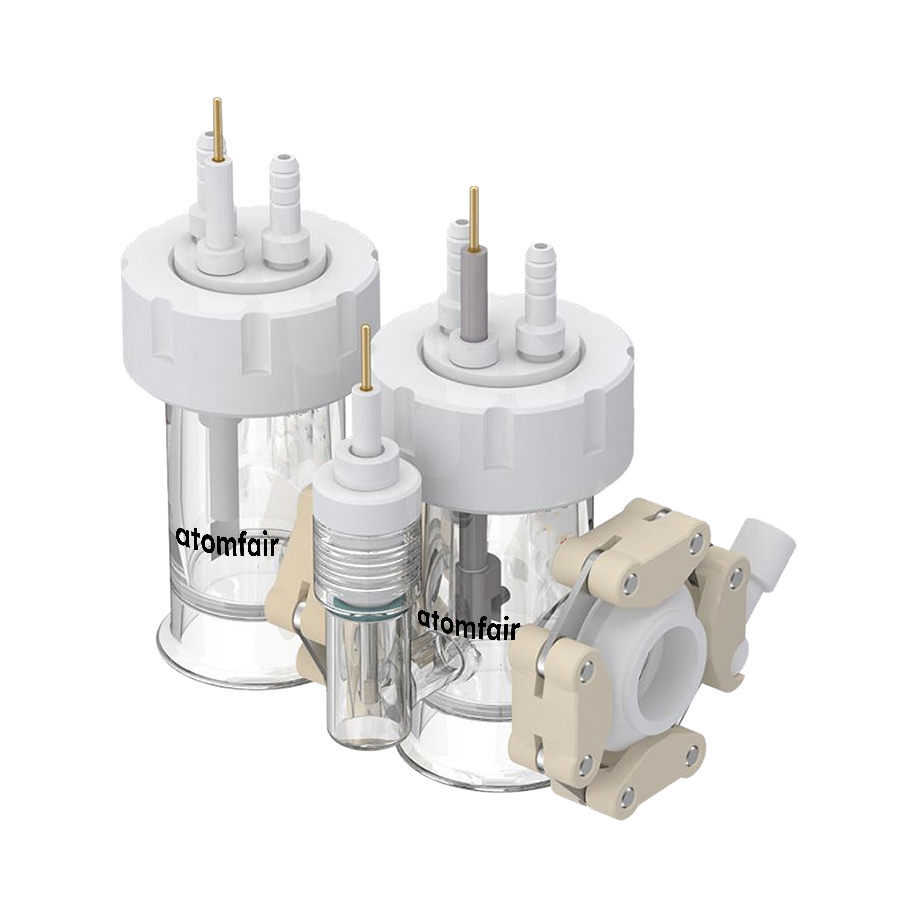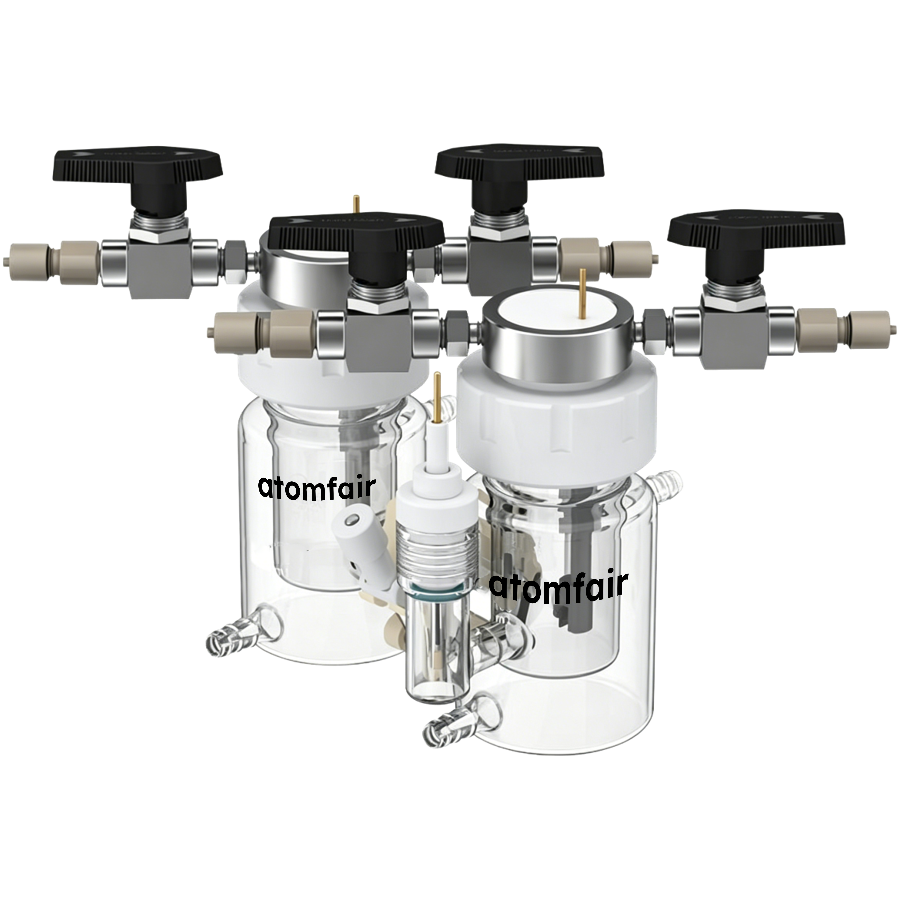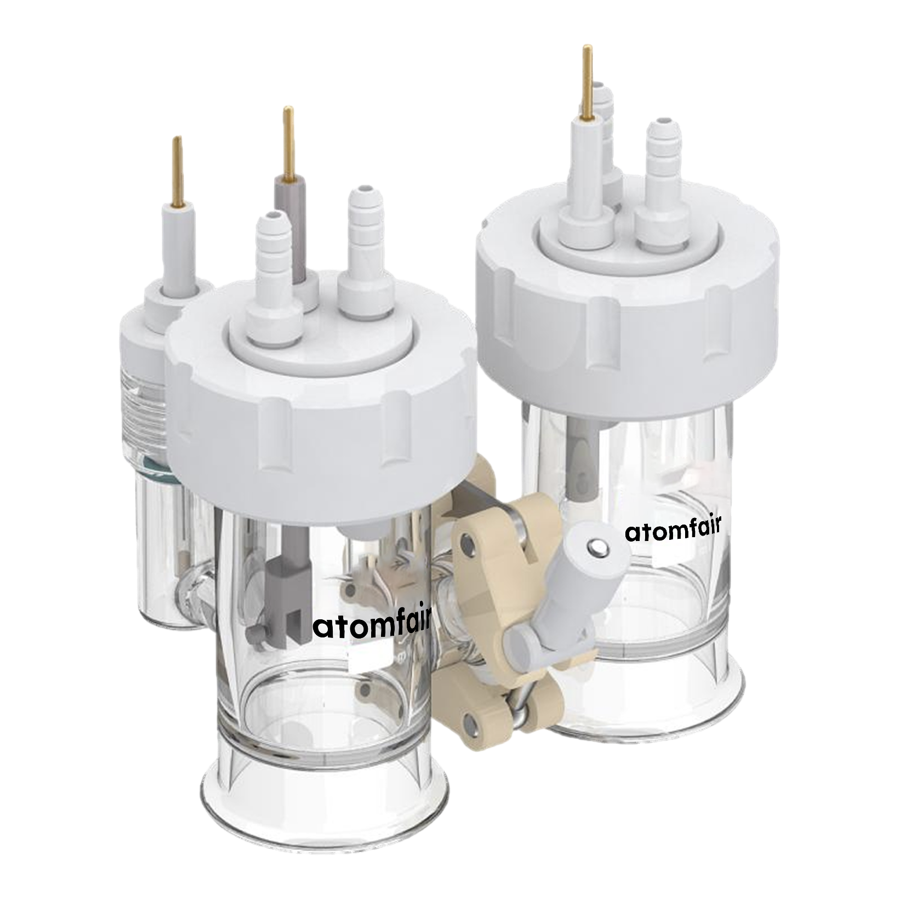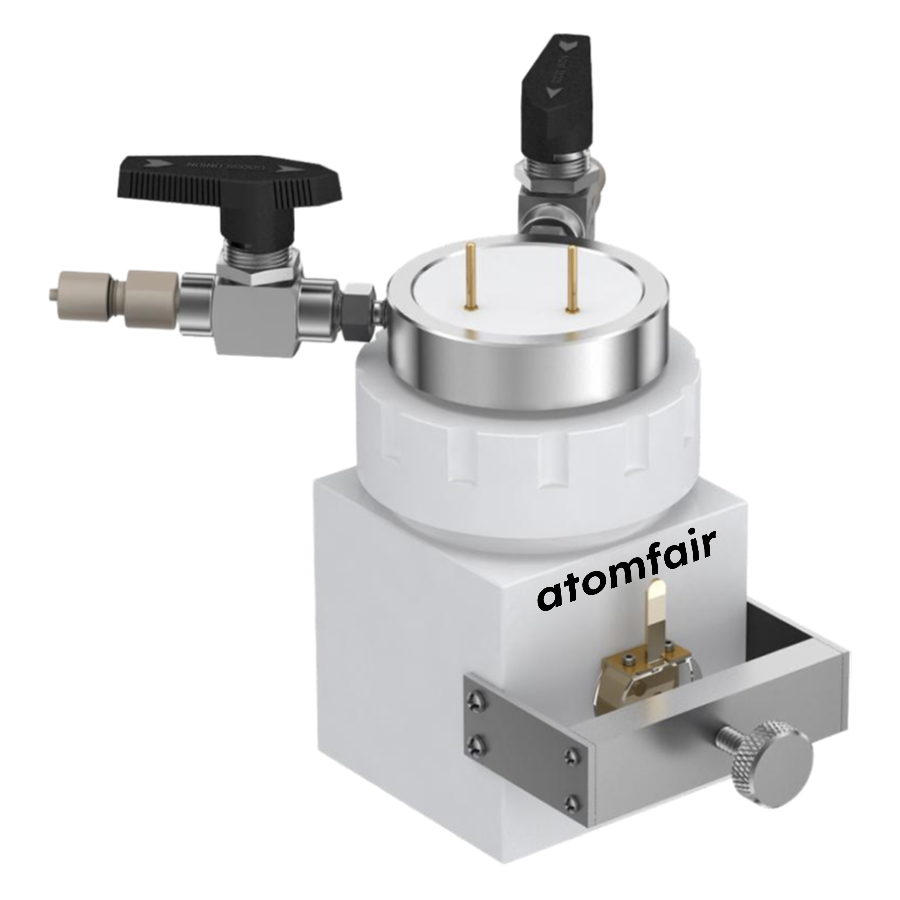
Bracket-Type Single-Chamber PTFE Photoelectrochemical Cell, Absolute Sealing | ATOMFAIRProduct Type: Electrochemical cell
Research-grade laboratory product
|
|||||||||||||||||||||||||||||||||||
|
|||||||||||||||||||||||||||||||||||
|
LABORATORY PROCUREMENT SUPPORT
For model selection, accessory matching, platform compatibility or configuration confirmation, contact our technical sales team.
E-MAIL: inquiry@atomfair.com
|
|||||||||||||||||||||||||||||||||||
|
Manufacturer: Atomfair LLC
Brand: ATOMFAIR®
|
Manufacturer: Atomfair LLC
Brand: ATOMFAIR®
This photoelectrochemical cell requires careful sealing and electrode alignment to maintain anaerobic conditions. Chemical compatibility with PTFE and quartz must be verified, and the quartz window must be handled with care to avoid breakage.
- Sample Mounting and Sealing: Ensure the working sample fully covers the fixed-area opening and tighten the rear screw only enough to achieve a seal without damaging the sample.
- Electrode Alignment: Rotate the PTFE inner core to align the electrodes parallel to the quartz window for optimal illumination.
- Gas Purging: Use the sub-surface sparger to purge the electrolyte with inert gas before and during anaerobic experiments.
- Quartz Window Handling: Handle the removable quartz window with care to avoid scratches or breakage, and replace it if damaged.
- Chemical Compatibility: Verify that all electrolytes and chemicals are compatible with PTFE and quartz to prevent degradation or contamination.
This procedure describes the assembly and sealing of the photoelectrochemical cell for anaerobic experiments. Proper alignment and torque control are critical to avoid sample damage and maintain gas-tight integrity.
Required Equipment: PTFE cell body with quartz window, Rear screw compression mechanism, Electrode alignment core, Gas sparger
- Inspect components
Inspect the PTFE body and quartz window for any damage or debris before assembly. - Mount working electrode
Mount the working electrode sample onto the fixed-area opening and secure it by tightening the rear screw until a seal is achieved. - Insert and align electrodes
Insert the reference and counter electrodes through the lid jacks and rotate the PTFE core to align them parallel to the window. - Purge with inert gas
Connect the gas line to the sub-surface sparger and purge the cell with inert gas for at least 10 minutes to remove oxygen. - Fill with electrolyte
Fill the cell with the desired electrolyte through the appropriate port, ensuring no air bubbles remain. - Verify sealing
Verify the absolute sealing of all electrode connections and the lid before starting the experiment. - Clean after use
After use, carefully remove the electrodes and sample, and clean the PTFE body and quartz window with compatible solvents.
What working electrode sample sizes are compatible with this PTFE photoelectrochemical cell?
The cell uses a fixed-area opening, standard 1 cm², which is customizable upon request. Non-standard samples are accommodated via a holder-type mounting with rear screw compression sealing. Ensure the sample fully covers the fixed-area opening for proper sealing; do not overtighten the rear screw to avoid sample damage.
Can I use standard off-the-shelf electrodes with this Atomfair photoelectrochemical cell?
No. Electrodes must be custom-ordered as matched sets with this specific cell model to ensure proper sealing via the built-in jacks on the lid. The lid integrates electrode jacks for complete internal electrode integration and absolute sealing, making electrode connection geometry model-specific.
What precautions are necessary when using the quartz window and gas purging in this sealed photoelectrochemical cell?
The quartz window is removable and provides >95% light transmittance; handle with care to avoid breakage. For anaerobic experiments, ensure proper sealing before gas or vacuum operation. Use the sub-surface sparger for gas purging, and do not overtighten the rear screw to avoid damage to the working electrode sample.
The ATOMFAIR Absolute Sealing Bracket-Type Single-Chamber PTFE Photoelectrochemical Cell offers a chemically inert PTFE body with a >95% transmittance quartz window and absolute sealing via built-in electrode jacks for anaerobic photoelectrochemical experiments, but requires custom-matched electrodes and precise sample mounting to ensure proper sealing.
Positive
- Full PTFE Chemical Inertness: The PTFE body provides excellent resistance to aggressive electrolytes and harsh conditions, enabling use in corrosive environments for photoelectrochemical studies.
- Absolute Sealing for Anaerobic Experiments: Built-in electrode jacks and rear screw compression provide complete sealing integrity, supporting anaerobic experiments and gas-sensitive photoelectrochemistry without leaks.
Trade-offs
- Custom Electrode Matching Required: Electrodes must be custom-ordered as matched sets with this cell model, adding procurement lead time and limiting off-the-shelf compatibility.
- Precise Sample Mounting Sensitivity: The working electrode sample must fully cover the fixed-area opening for proper sealing, and the rear screw must not be overtightened to avoid sample damage, requiring careful handling.
Every advanced material, component, equipment, and instrument in our catalog is backed by rigorous testing. We maintain strict internal quality management frameworks and align with CE conformity metrics to deliver transparent, reproducible performance data via our public open-science repository.
To request raw batch performance data, submit formal vendor registration paperwork, or execute a fast-turnaround R&D manufacturing loop, contact us at inquiry@atomfair.com.
Item is dispatched under the Atomfair Shipping & Delivery Framework (Free worldwide shipping on orders over $59 USD excl. heavy equipment). Return is governed by the Atomfair Return & Refund Policy (7-day technical return window).