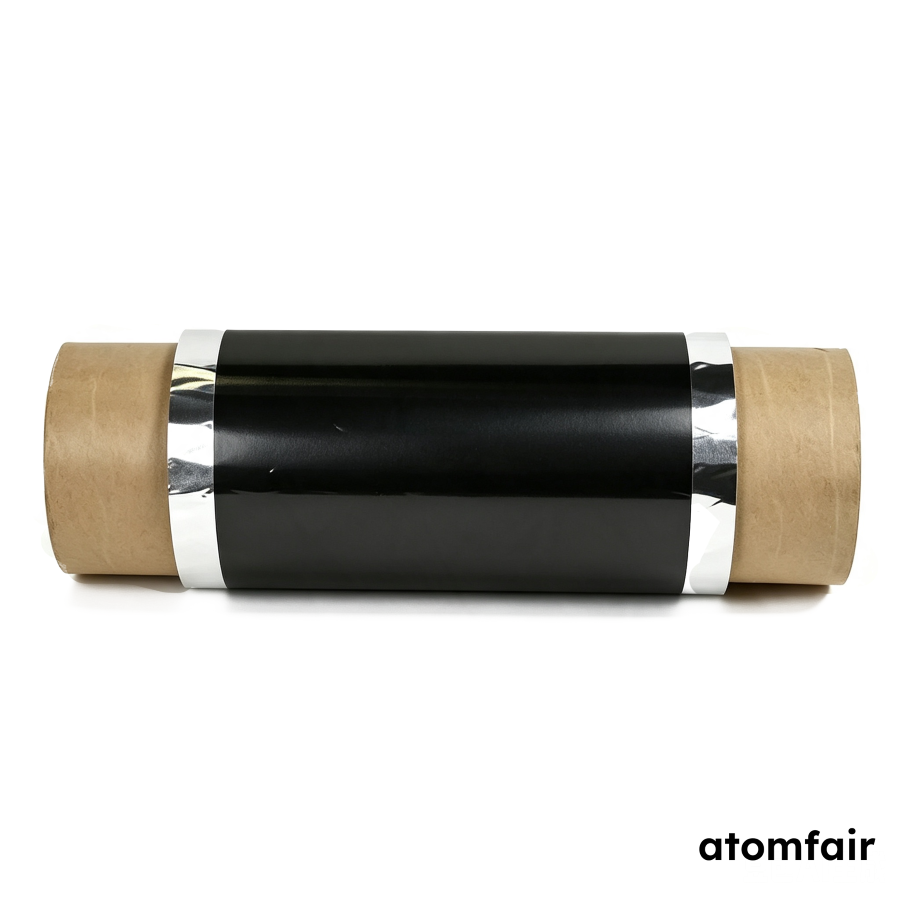
Battery-Grade Carbon-Coated Aluminum FoilProduct Type: Carbon-coated aluminum foil current collector
Research-grade laboratory product
|
|||||||||||||||||||||||||||||||||||||
|
|||||||||||||||||||||||||||||||||||||
|
LABORATORY PROCUREMENT SUPPORT
For model selection, accessory matching, platform compatibility or configuration confirmation, contact our technical sales team.
E-MAIL: inquiry@atomfair.com
|
|||||||||||||||||||||||||||||||||||||
|
Manufacturer: Atomfair LLC
Brand: ATOMFAIR®
|
The carbon coating must exhibit no delamination after a 3M tape pull test and withstand 200 cotton-swab cycles without exposing the aluminum foil. The coating surface must achieve a wetting value of at least 30 and a surface resistance no greater than 5 milliohm.
- Coating Adhesion: The carbon coating must remain intact and show no change after a 3M tape pull test.
- Solvent Resistance: The coating must withstand 200 cotton-swab cycles with a compatible solvent without exposing the underlying aluminum foil.
- Surface Wetting: The coating surface must exhibit a wetting value of at least 30 to ensure proper electrolyte wetting.
- Surface Resistance: The surface resistance must not exceed 5 milliohm to minimize electrical losses.
- Coating Thickness: The carbon coating thickness must be at least 1 micrometer to provide adequate conductive pathways.
What is the measured surface resistance on the carbon layer compared to the aluminum foil, and how does that affect battery performance?
The measured surface resistance is 1 milliohm on the carbon layer and 2 milliohm on the aluminum foil, both within the specification of ≤5 milliohm. This low resistance minimizes interfacial contact resistance between the current collector and the electrode coating, improving rate capability and reducing ohmic losses in the battery.
How does the water-based carbon coating perform under solvent exposure typical in electrode slurry preparation?
The carbon coating exhibits solvent resistance of 200 cotton-swab cycles without exposing the underlying aluminum foil, indicating strong compatibility with common organic solvents used in electrode slurry processing. Additionally, the coating adhesion passes a 3M tape pull test with no change, ensuring coating integrity during calendering and cell assembly.
What is the minimum aluminum purity specification and why is it critical for battery applications?
The aluminum purity is specified at ≥99.0% with a measured value of ≥99.5%. High purity is essential to minimize corrosion and pitting in the electrochemical environment, especially at high potentials, and to ensure consistent electrical conductivity across the current collector.
Battery-grade carbon-coated aluminum foil current collector with measured aluminum purity ≥99.5%, carbon coating adhesion passing 3M tape pull, and surface resistance measured at 2 milliohm on foil and 1 milliohm on carbon layer, meeting specifications for laboratory battery research.
Positive
- Robust carbon coating adhesion: Carbon coating exhibits no change after 3M tape pull test, indicating strong mechanical bonding to the aluminum substrate.
- Low surface resistance: Measured surface resistance is 2 milliohm on aluminum foil and 1 milliohm on carbon layer, well within the ≤5 milliohm specification, supporting efficient electron transport.
Trade-offs
- Customization required before ordering: Base foil thickness, coating side, carbon coating thickness, coating width, and surface resistance target must be confirmed with the manufacturer for quotation, adding lead time and specification complexity.
- Coating width constrained by die size: Coating width is determined by the die; common widths are 170 mm and 230 mm, which may require custom tooling for non-standard widths.
Every advanced material, component, equipment, and instrument in our catalog is backed by rigorous testing. We maintain strict internal quality management frameworks and align with CE conformity metrics to deliver transparent, reproducible performance data via our public open-science repository.
To request raw batch performance data, submit formal vendor registration paperwork, or execute a fast-turnaround R&D manufacturing loop, contact us at inquiry@atomfair.com.
Item is dispatched under the Atomfair Shipping & Delivery Framework (Free worldwide shipping on orders over $59 USD excl. heavy equipment). Return is governed by the Atomfair Return & Refund Policy (7-day technical return window).