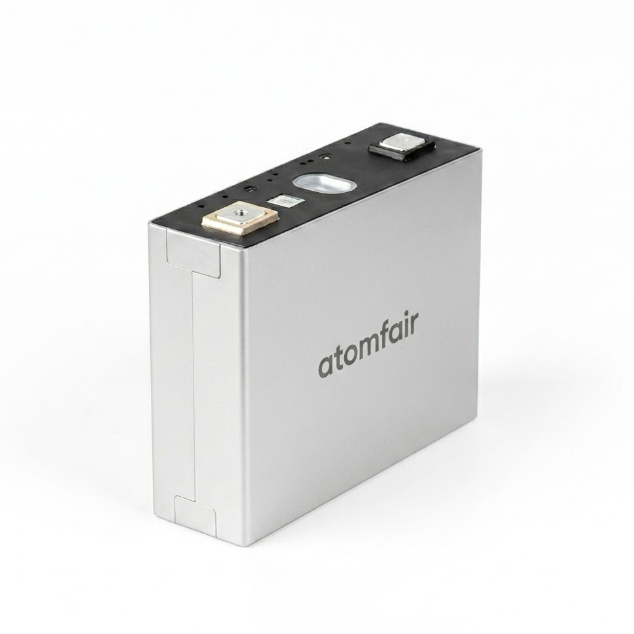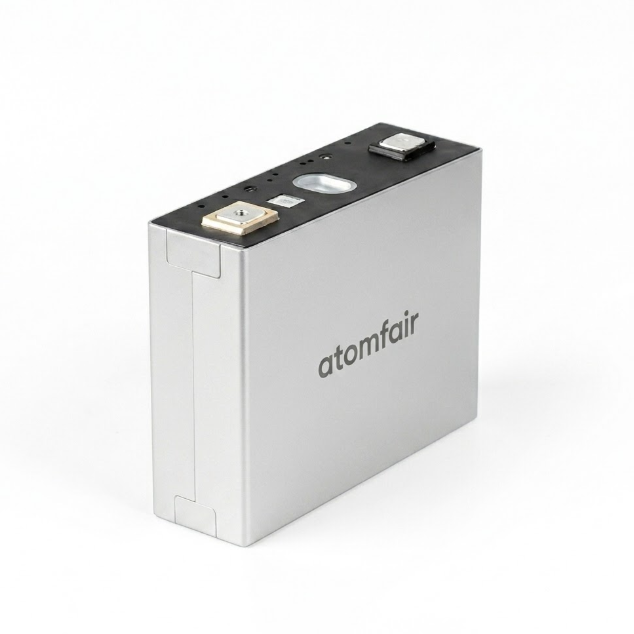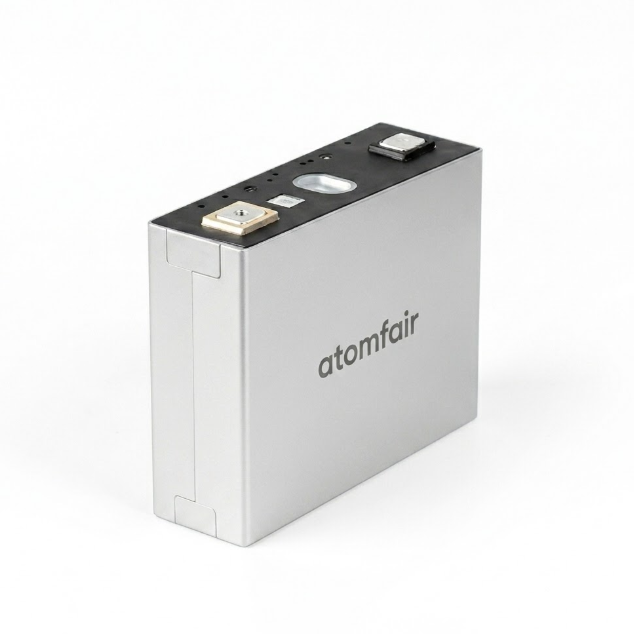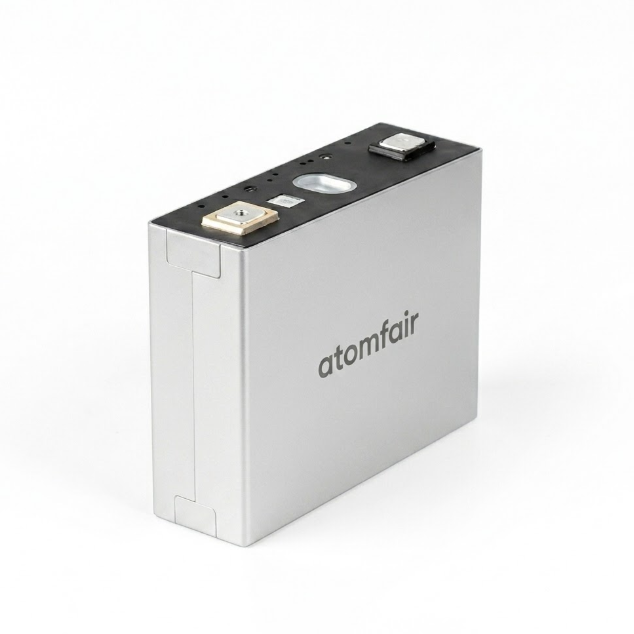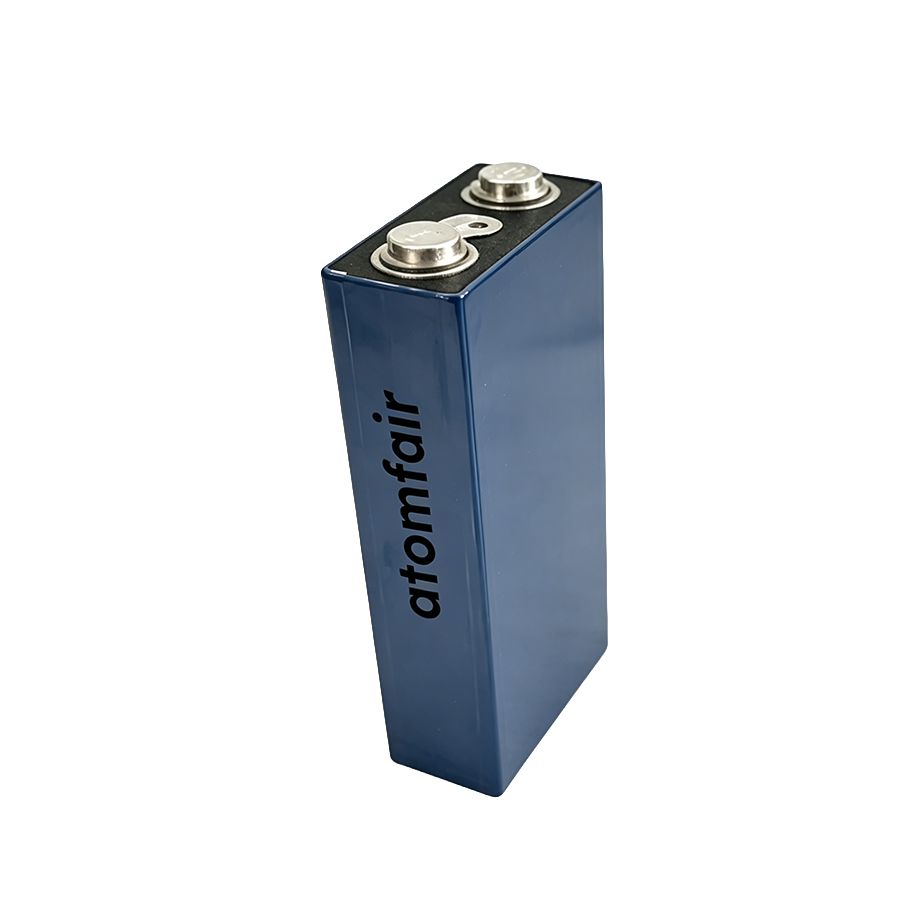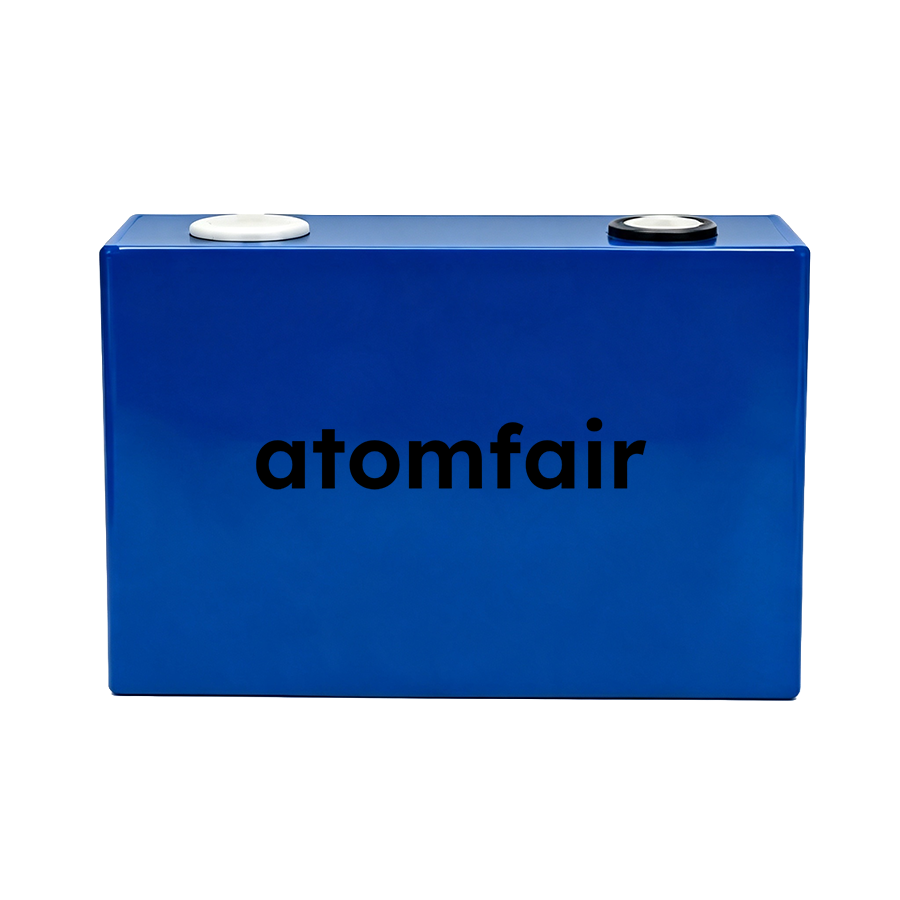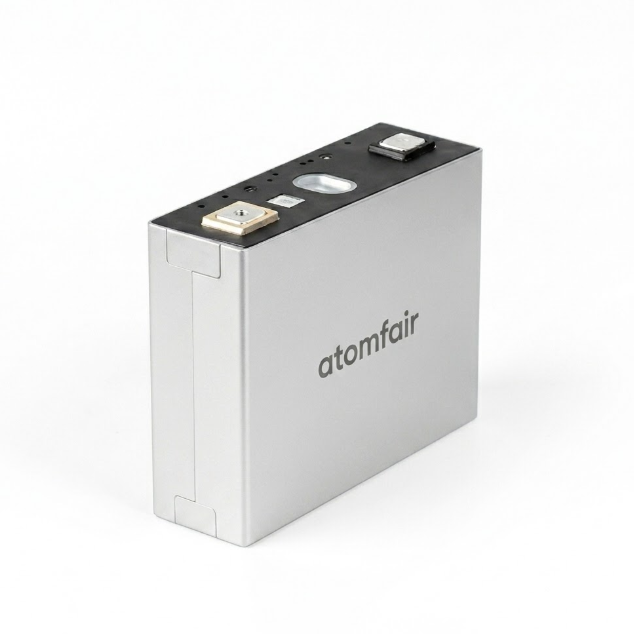
50Ah 2.86V Sodium-Ion Prismatic Cell | ATOMFAIRCOMMERCIAL GRADE · PRODUCTION
|
|||||||||||||||||||||||||||||||||||||||||
|
|||||||||||||||||||||||||||||||||||||||||
|
TAILORED SOLUTIONS FOR RESEARCH
Contact our engineering team for technical support or official institutional quotations.
EMAIL: INQUIRY@ATOMFAIR.COM
|
|||||||||||||||||||||||||||||||||||||||||
|
MANUFACTURER: ATOMFAIR LLC
BRAND: ATOMFAIR®
|
This document outlines the critical storage, handling, and safety constraints for the ATOMFAIR 50Ah sodium-ion prismatic cell. Adherence to these constraints prevents cell degradation, thermal runaway, and ensures safe operation.
- Storage Conditions: Store cells at 15°C to 35°C and 65%±20% RH to maintain electrochemical stability.
- Voltage Limits: Never discharge below 1.5V or charge above 3.45V per cell to avoid irreversible damage or safety hazards.
- BMS Requirement: Always pair the cell with a dedicated BMS configured for the sodium-ion voltage window of 1.5V to 3.45V.
- Hardware Compatibility: Use only manufacturer-approved cell holders and busbars to ensure proper electrical and mechanical contact.
- Disposal: Dispose of end-of-life cells according to local regulations for sodium-based batteries.
This guide provides the essential steps for safely handling and installing the ATOMFAIR 50Ah sodium-ion prismatic cell. Follow these steps to ensure proper integration and avoid damage or safety incidents.
Required Equipment: Battery Management System (BMS) configured for sodium-ion, Manufacturer-approved cell holders, Manufacturer-approved busbars
- Inspect Packaging
Inspect the cell packaging for damage and verify that the cell is received in humidity-controlled vacuum sealed packaging. - Configure BMS
Set up the BMS with voltage limits of 1.5V minimum and 3.45V maximum per cell. - Install Cell
Install the cell using only manufacturer-approved holders and busbars, ensuring secure electrical connections. - Store Unused Cells
Store unused cells at 15°C to 35°C in a dry environment with 65%±20% relative humidity.
What is the maximum continuous discharge current of the ATOMFAIR 50Ah sodium-ion prismatic cell and how does it affect thermal management?
The cell supports up to 8C continuous discharge, equating to 400A, and a 10C pulse discharge for 30 seconds at 25°C, 100% SOC. With an internal resistance of ≤0.5mΩ, heat generation is minimized, and the wide discharge temperature range of -40°C to 60°C enables high-rate operation without auxiliary heating.
Does the ATOMFAIR 50Ah sodium-ion cell require a dedicated BMS and what voltage thresholds must be set?
Yes, a dedicated BMS supporting sodium-ion voltage windows of 1.5V to 3.45V per cell is required. The cell has a nominal voltage of 2.86V, a charge voltage of 3.45V, and a discharge cut-off of 1.5V. Over-discharge below 1.5V and over-charge above 3.45V must be avoided, as stated in the product notice.
What are the recommended storage conditions and packaging requirements for the ATOMFAIR 50Ah sodium-ion prismatic cell?
Store at 15°C to 35°C. The cell is shipped in humidity-controlled vacuum sealed packaging with anti-static foam lined cartons, individual cell isolation, terminal covers, and a desiccant bag. Custom palletized packaging for bulk orders is available upon request.
The ATOMFAIR 50Ah sodium-ion prismatic cell offers high-rate discharge up to 8C continuous and wide temperature operation from -40°C to 60°C, but requires careful BMS integration and controlled storage conditions to maintain performance and safety.
Positive
- High-rate discharge capability: Supports up to 8C continuous discharge and 10C pulse for 30 seconds at 100% SOC (25°C), enabling high-power applications such as low-speed EVs and UPS systems.
- Extreme temperature tolerance: Discharge range from -40°C to 60°C without auxiliary heating, with charge from 0°C to 55°C, ensuring reliable performance in harsh climates.
Trade-offs
- Requires dedicated BMS: Must operate within 1.5V–3.45V per cell; over-discharge below 1.5V or over-charge above 3.45V can cause irreversible damage. A BMS with appropriate sodium-ion voltage windows is mandatory.
- Environmental storage sensitivity: Recommended storage at 15°C–35°C and 65%±20% RH; deviation from these conditions may degrade cell performance or lifetime. Humidity-controlled packaging is required for long-term storage.
Every advanced material, component, equipment, and instrument in our catalog is backed by rigorous testing. We maintain strict internal quality management frameworks and align with CE conformity metrics to deliver transparent, reproducible performance data via our public open-science repository.
To request raw batch performance data, submit formal vendor registration paperwork, or execute a fast-turnaround R&D manufacturing loop, contact us at inquiry@atomfair.com.
Item is dispatched under the Atomfair Shipping & Delivery Framework (Free worldwide shipping on orders over $59 USD excl. heavy equipment). Return is governed by the Atomfair Return & Refund Policy (7-day technical return window).