
MXene Materials
MXene Materials are advanced two-dimensional nanomaterials composed primarily of transition-metal carbides, nitrides, and carbonitrides. Their layered structure, high surface area, electrical conductivity, and tunable surface chemistry make them valuable for research in energy storage, conductive composites, sensing, catalysis, electromagnetic shielding, flexible electronics, and functional coatings.
This category covers MXene materials with different chemical compositions, layer structures, flake sizes, purity grades, and material forms. Options may include powders, nanosheets, dispersions, slurries, conductive inks, and other formats suitable for materials research, formulation development, and device fabrication.
Select MXene materials according to the intended application, processing route, required material form, and key characteristics such as composition, layer number, lateral size, surface chemistry, and packaging requirement.
Show More: MXene Materials
MXene Chemical Compositions
MXene composition has a direct influence on electrical conductivity, surface activity, stability, wettability, electrochemical behavior, and compatibility with other materials. Different transition-metal systems can be selected for different research objectives.
| Material Family | Typical MXene Systems | Selection Considerations |
|---|---|---|
| Titanium-based MXenes | Ti₃C₂Tₓ, Ti₂C, Ti₃CN | Widely used for conductive films, electrodes, composites, sensors, and general MXene research. |
| Vanadium-based MXenes | V₂C | Suitable for composition-specific electrochemical, sensing, and functional-material studies. |
| Niobium-based MXenes | Nb₂C | Useful for energy-storage, electronic, and surface-functionalization research. |
| Molybdenum-based MXenes | Mo₂C, Mo₂TiC₂, Mo₂Ti₂C₃ | Appropriate for advanced electrode, catalytic, and two-dimensional-material screening. |
| Other transition-metal MXenes | Composition-dependent | Selected according to the required chemistry, structure, and application target. |
In materials such as Ti₃C₂Tₓ, the “Tₓ” notation refers to surface terminations. Surface chemistry can vary with synthesis and post-treatment, so customers working on performance-sensitive applications should review the available characterization information before selection.
Material Forms and Processing Options
MXene form affects dispersion, film formation, composite preparation, storage, and processing behavior. Choose the format that best matches the intended workflow.
| Material Form | Typical Applications |
|---|---|
| Multilayer MXene powder | Material storage, further delamination, composite preparation, electrode formulation, and bulk processing. |
| Few-layer or nanosheet material | Thin films, sensing, interface engineering, two-dimensional-material studies, and conductive networks. |
| MXene nanoflakes | Conductive coatings, functional membranes, electromagnetic shielding, and composite fillers. |
| MXene dispersions | Coating, spraying, printing, dipping, casting, and solution-based processing. |
| MXene slurries and conductive inks | Flexible electronics, printed electronics, electrode manufacturing, and continuous film formation. |
| Surface-modified MXenes | Improved dispersion, interfacial bonding, environmental stability, or application-specific functionality. |
Powders, dispersions, and inks are different material formats. Before purchase, confirm whether self-dispersion is required, along with the preferred solvent, concentration, processing method, and storage conditions.
Key Selection Factors
| Factor | Why It Matters |
|---|---|
| Chemical composition | Defines the transition-metal system and influences material behavior in different applications. |
| Layer structure | Multilayer, few-layer, single-layer, and delaminated materials can perform differently during processing and use. |
| Flake size and thickness | Affects film quality, dispersion behavior, conductive pathways, composite interfaces, and surface exposure. |
| Purity and characterization | Important for comparing material consistency, impurities, and application suitability. |
| Surface chemistry | Can influence wettability, reactivity, dispersion stability, and compatibility with matrices or binders. |
| Material form | Choose powder, nanosheet, dispersion, slurry, or ink according to dry or solution-based processing needs. |
| Packaging and storage | Select an appropriate quantity and confirm handling requirements for moisture, oxygen, temperature, and shelf-life considerations. |
Applications of MXene Materials
Energy Storage
MXenes are used in research on supercapacitors, battery electrodes, conductive additives, hybrid electrodes, and electrochemical interfaces.
Conductive Composites
MXene materials can be combined with polymers, ceramics, carbon materials, or other functional components to create conductive and multifunctional composite systems.
Sensors and Flexible Electronics
MXenes are suitable for pressure, strain, gas, humidity, chemical, and biosensing research, as well as flexible conductive films and wearable electronic devices.
Functional Films and Coatings
MXene materials can be used for conductive coatings, antistatic surfaces, functional thin films, interface modification, and microfabrication studies.
EMI Shielding and Microwave Absorption
MXene-based materials are widely investigated for electromagnetic interference shielding, microwave absorption, and electronic-device protection.
Catalysis and Environmental Materials
MXenes can serve as functional two-dimensional platforms for catalytic studies, membrane research, adsorption, separation, and water-treatment applications.
Frequently Asked Questions
What forms of MXene materials are available?
MXene materials are commonly supplied as multilayer powders, few-layer nanosheets, delaminated materials, dispersions, slurries, and conductive inks. The best format depends on the intended processing route.
How do I choose the right MXene material?
Start with the application, then compare chemical composition, layer structure, flake size, purity, surface chemistry, and material form. A powder for composite preparation may not be the best choice for printed-film fabrication.
What is the difference between multilayer and few-layer MXene?
Multilayer MXene consists of stacked sheets and is often selected for storage, bulk processing, and further delamination. Few-layer or delaminated MXene exposes more surface area and is often preferred for films, sensing, interfaces, and solution processing.
Can MXene powder be used directly?
MXene powder can be used for mixing, pressing, composite preparation, or further dispersion. For coating, spraying, or printing, a suitable dispersion system may be required.
Are MXene materials suitable for battery and supercapacitor research?
Yes. MXenes are widely studied for electrodes, conductive networks, composite electrodes, and interfacial engineering. Performance depends on the material composition, structure, surface chemistry, electrode formulation, and test conditions.
Can MXene be used for sensors and flexible electronics?
Yes. Its conductivity, layered structure, and surface activity make MXene useful for flexible conductive films and research on pressure, strain, gas, humidity, chemical, and biosensors.
Which parameters matter most for an MXene dispersion?
Key parameters include solvent type, concentration, flake size, layer structure, dispersion stability, viscosity, storage conditions, and compatibility with the intended coating or printing process.
Do MXene materials require special storage?
Some MXene materials may be sensitive to moisture, oxygen, temperature, or long-term exposure. Follow the storage guidance provided for the selected material and minimize unnecessary exposure after opening.
Showing 65–70 of 70 results
-
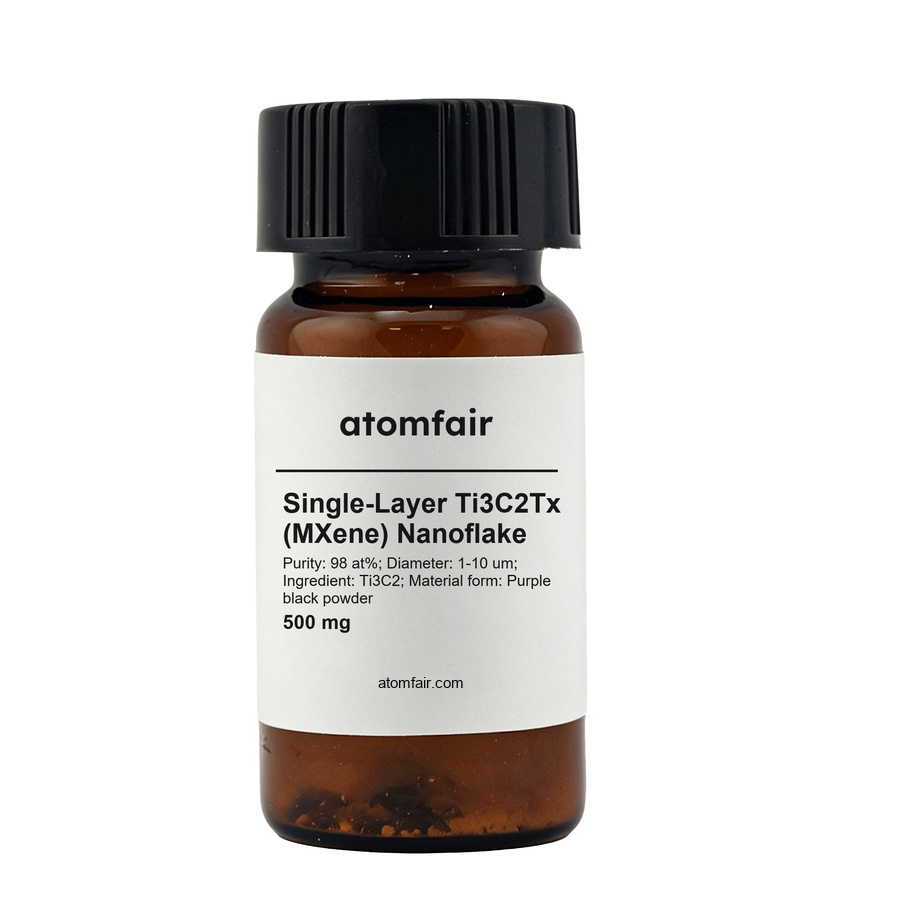
Single-Layer Ti3C2Tx MXene Nanoflake 98 at% ATOMFAIR®
$811.00 -
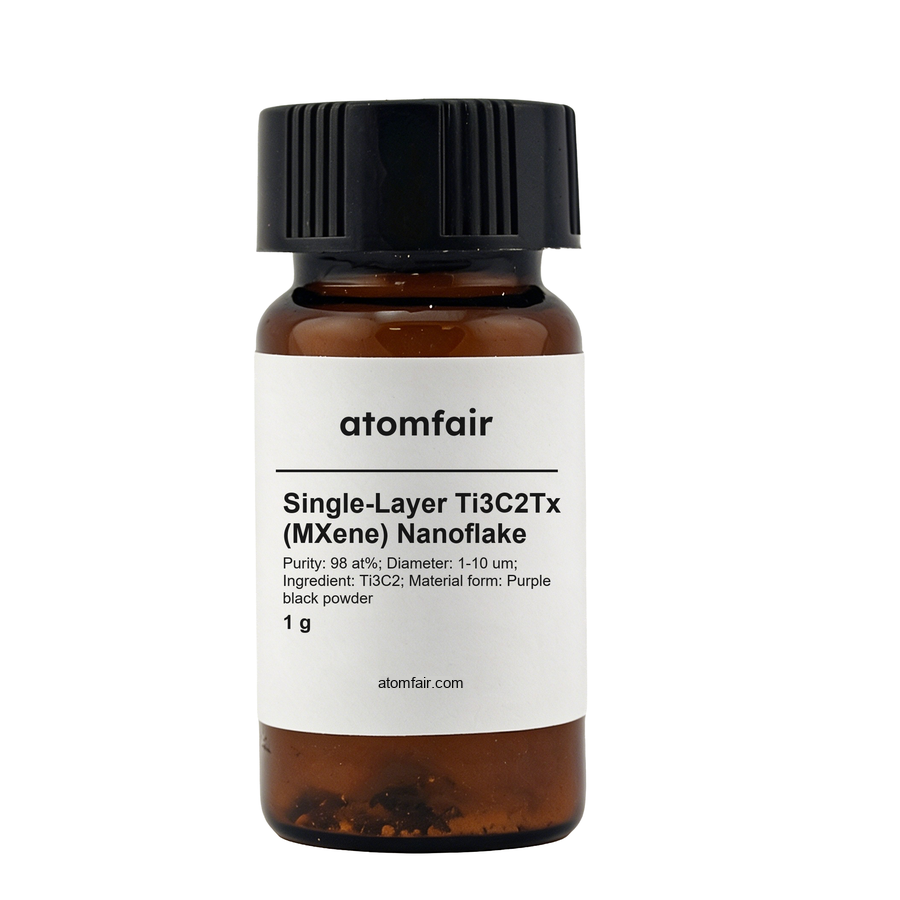
Single-Layer Ti3C2Tx MXene Nanoflake 98 at% ATOMFAIR®
$1,490.00 -
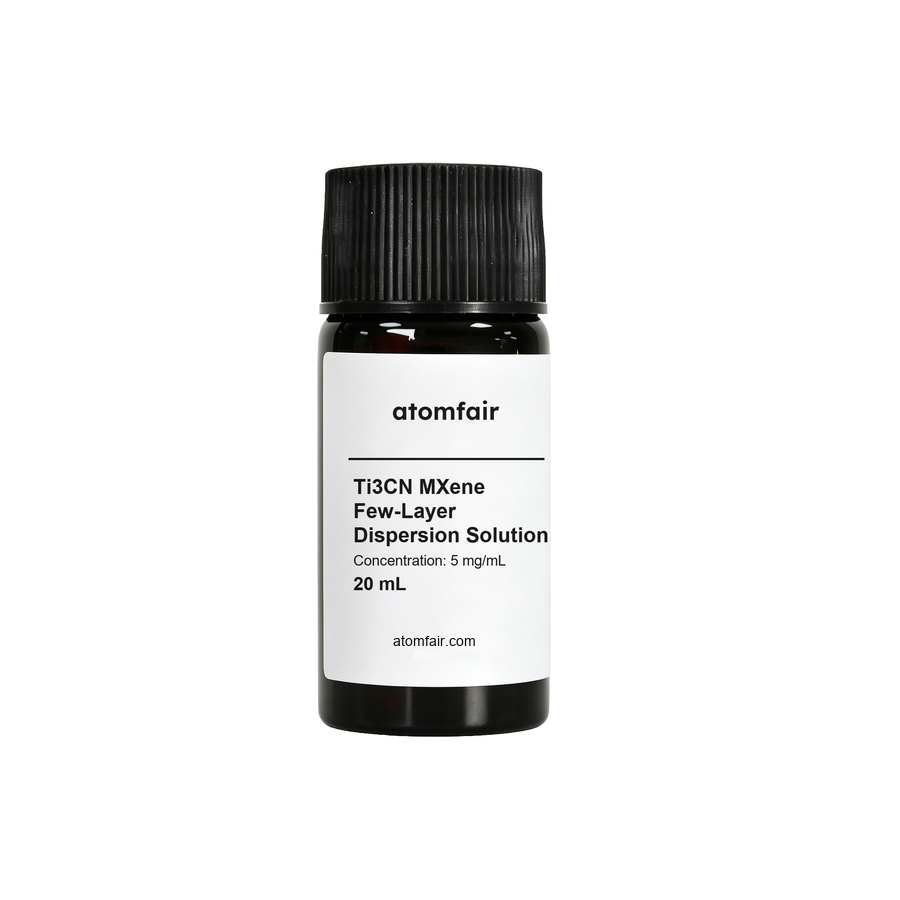
Ti3CN MXene Few-Layer Dispersion 5 mg/mL 20 mL ATOMFAIR®
$345.00 -
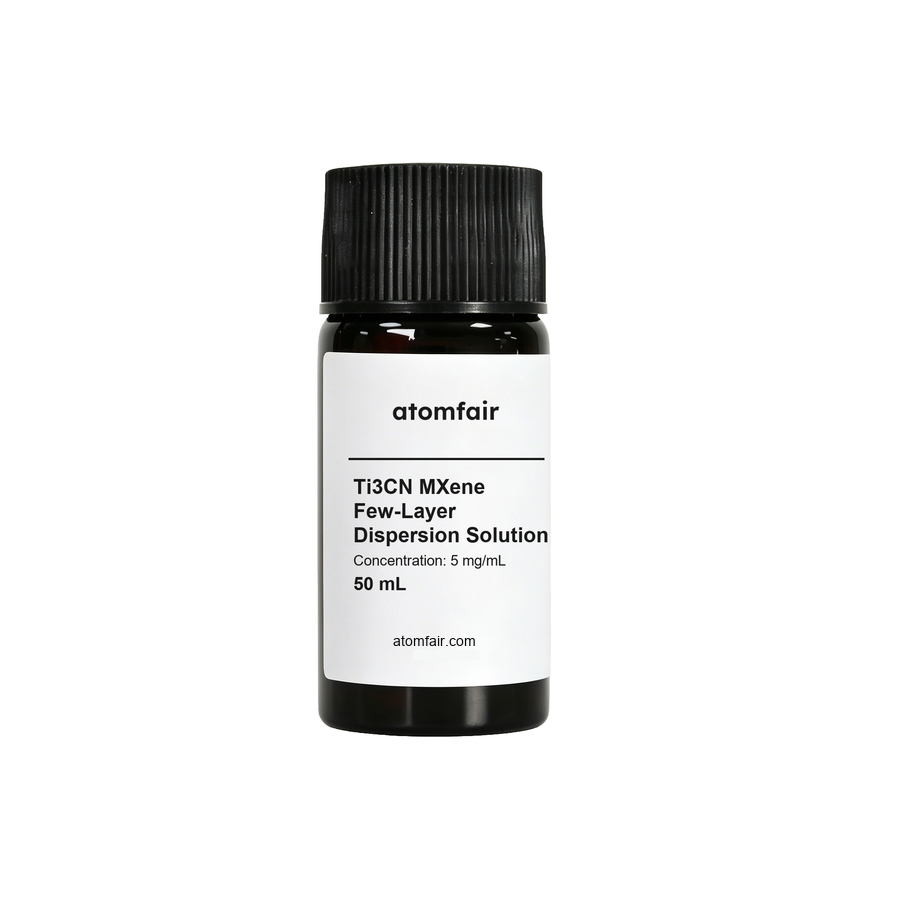
Ti3CN MXene Few-Layer Dispersion 5 mg/mL, 50 mL ATOMFAIR®
$652.00 -
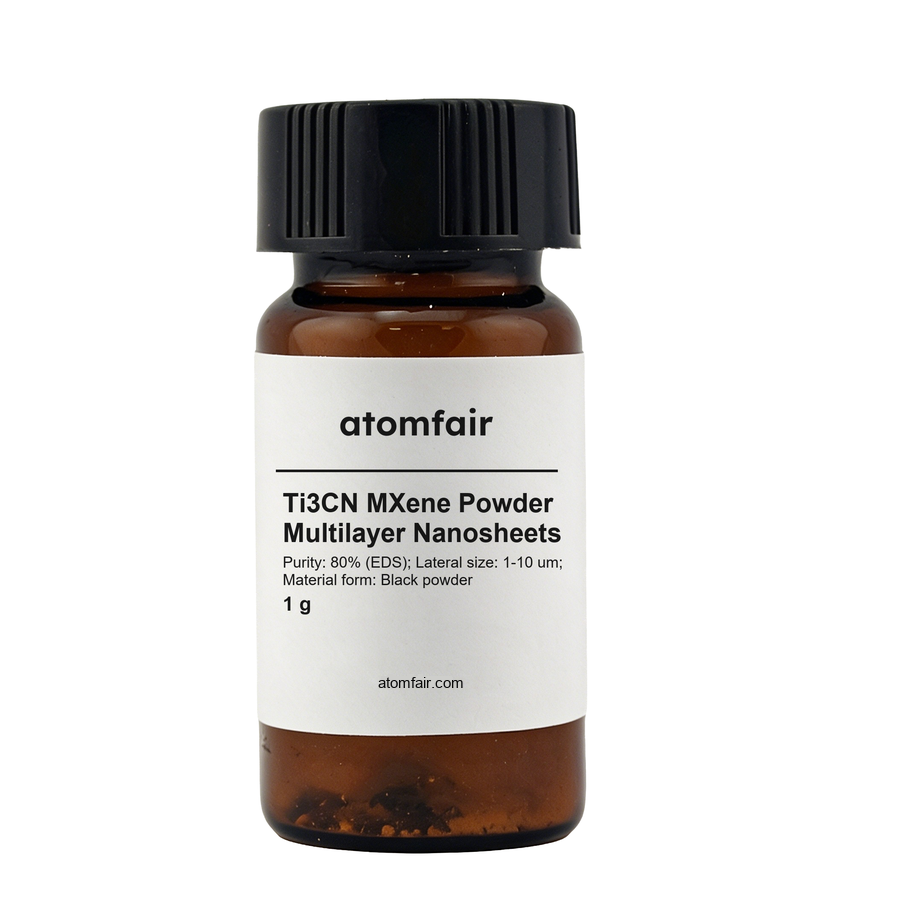
Ti3CN MXene Multilayer Nanosheets 80% EDS ATOMFAIR®
$272.00 -
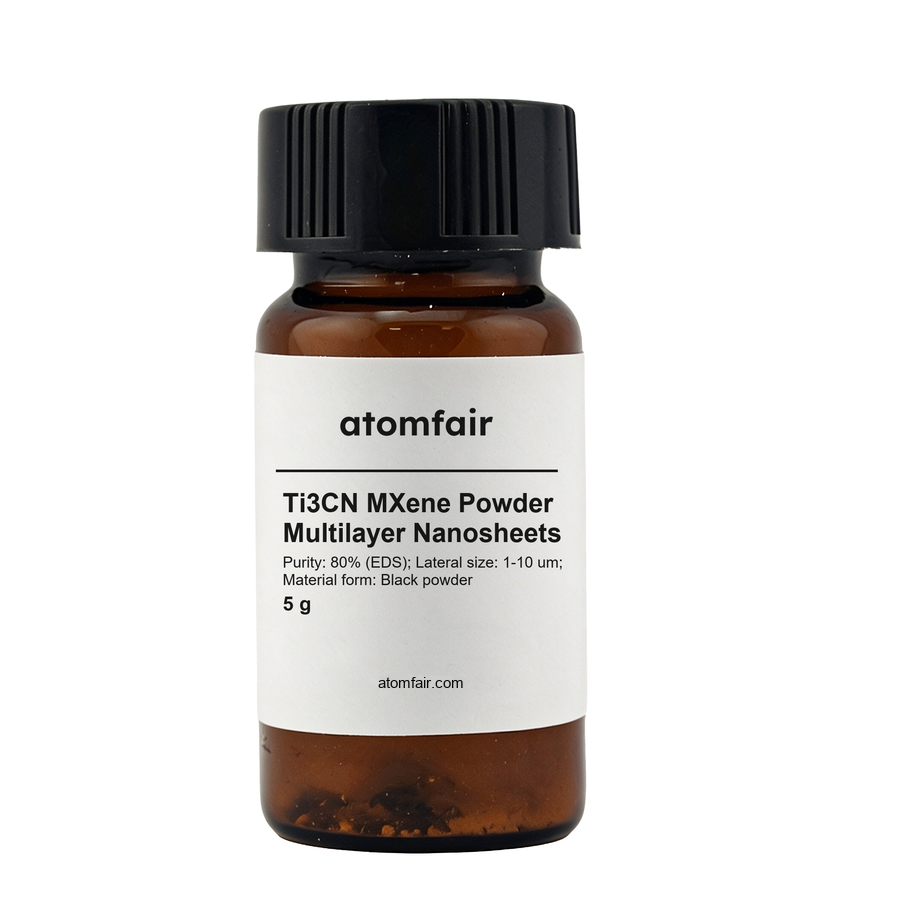
Ti3CN MXene Multilayer Powder 80% EDS 5 g ATOMFAIR®
$1,100.00