|
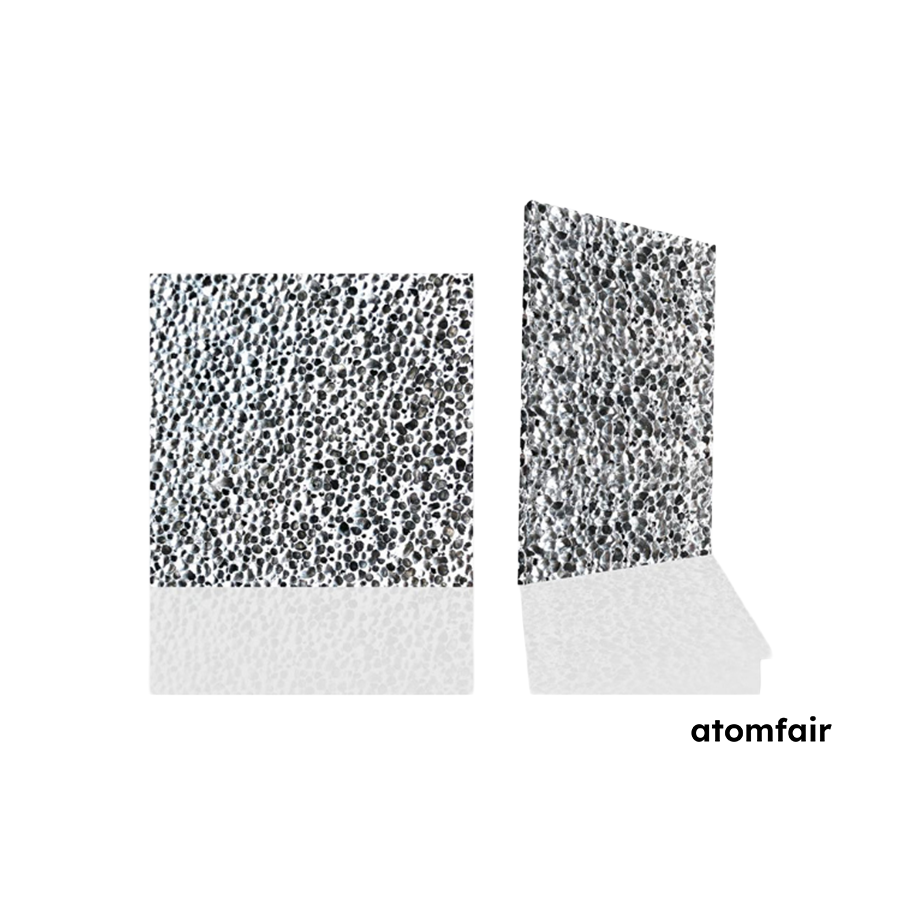
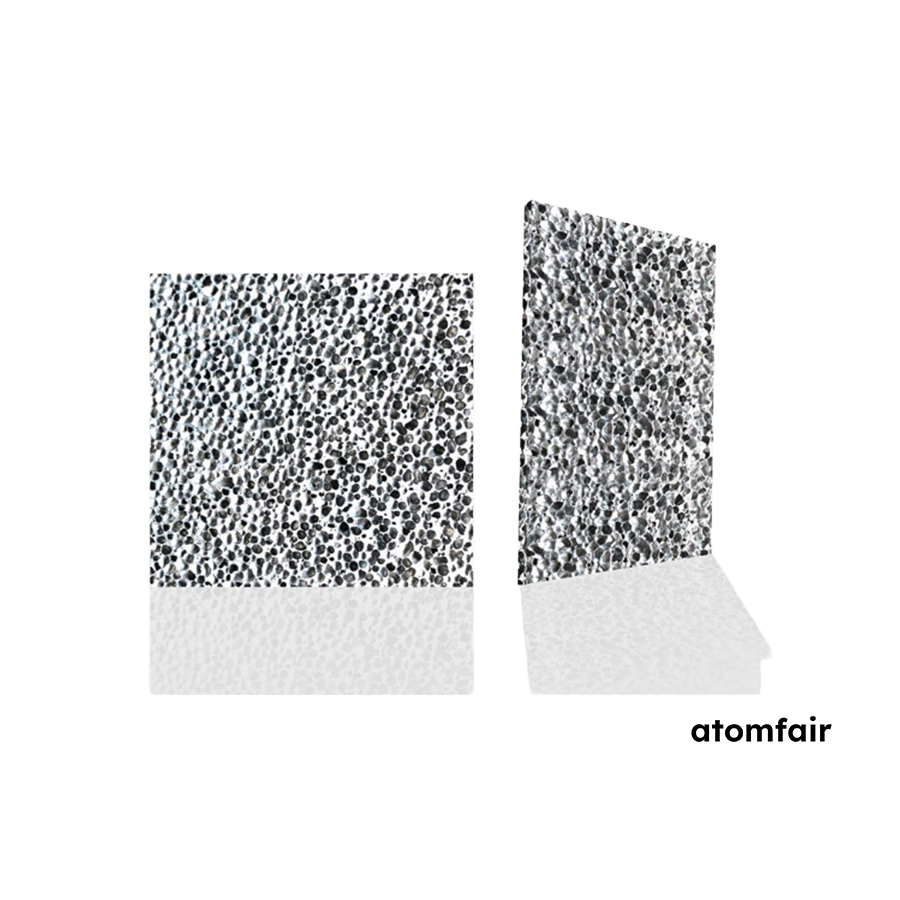
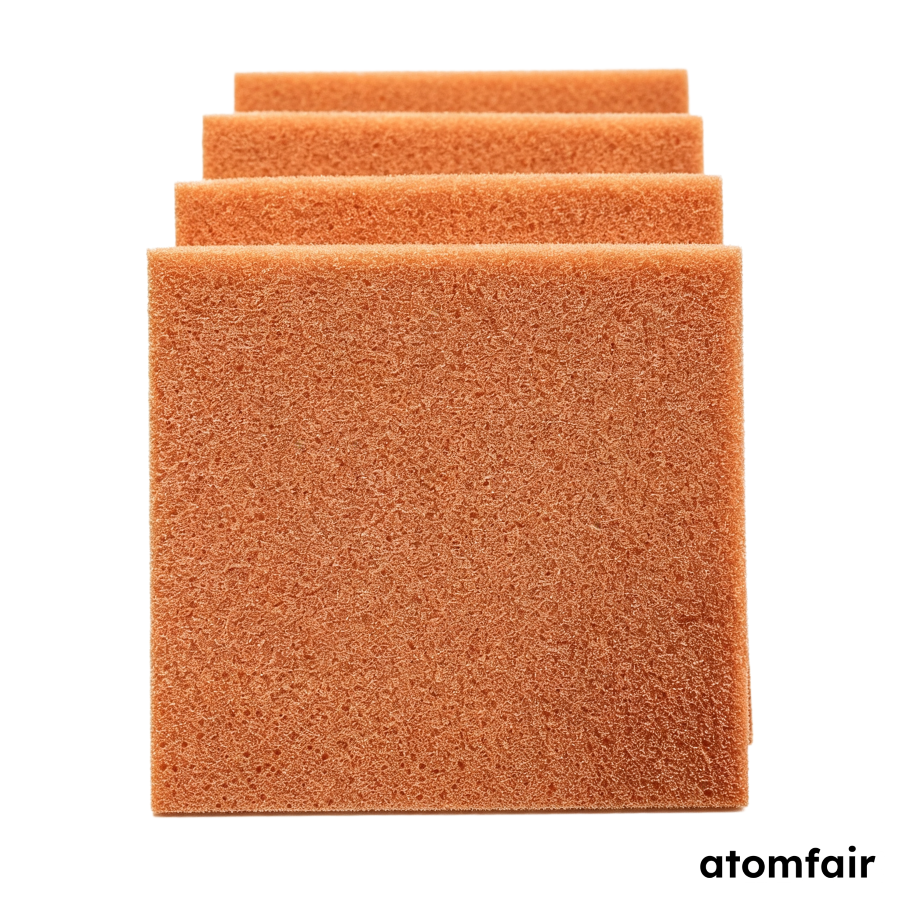
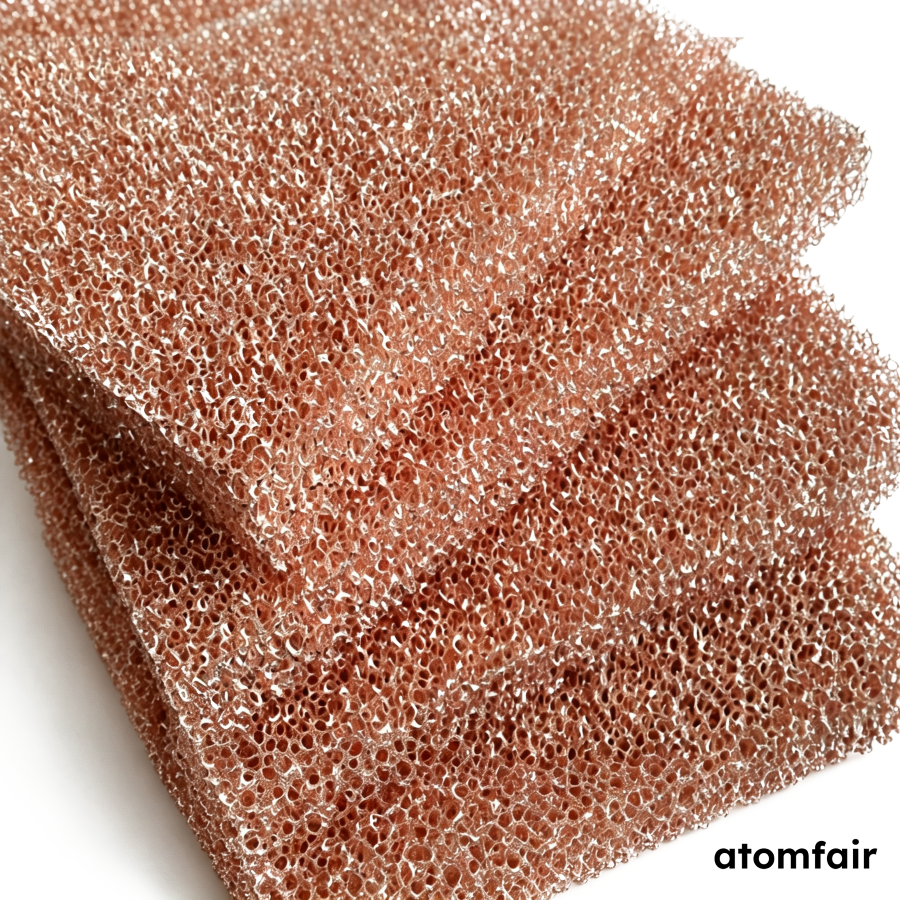
Laboratory Open-Cell Copper Foam, 110 PPI, 200 × 200 × 3 mm, 1/5 pcs
Research-grade laboratory product
|
|||||||||||||||||||||||||||||||||||||||
|
|||||||||||||||||||||||||||||||||||||||
|
LABORATORY PROCUREMENT SUPPORT
For PPI selection, sheet-dimension confirmation, package support or application-specific configuration review, contact our technical sales team.
E-MAIL: inquiry@atomfair.com
|
|||||||||||||||||||||||||||||||||||||||
|
Manufacturer: Atomfair LLC
Brand: ATOMFAIR®
|
Store the copper foam sheets in a clean, dry area to prevent contamination and oxidation of the open-cell structure. Protect the cellular surface from heavy impact, crushing, and contamination during handling and storage.
- Storage Environment: Maintain a clean, dry storage environment to avoid moisture-induced oxidation and particulate contamination of the porous copper network.
- Mechanical Protection: Protect the open-cell foam from heavy impact and crushing forces that could collapse the interconnected pore structure and reduce through-pore rate.
Inspect the delivered copper foam sheet for package condition, dimensional accuracy, and visible pore integrity before use. Confirm that the sheet dimensions and pore structure meet the application requirements prior to cutting, bonding, or installation.
Required Equipment: Clean, dry workspace, Protective gloves
- Inspect Package Condition
Inspect the shipping package for signs of damage, crushing, or moisture exposure that could compromise the foam sheet integrity. - Verify Sheet Dimensions
Measure the sheet length, width, and thickness to confirm they match the specified 200 × 200 × 3 mm dimensions. - Examine Pore Structure
Visually examine the open-cell structure to verify uniform pore distribution and absence of collapsed or blocked regions. - Store in Clean Area
Place the inspected sheet in a clean, dry storage area away from heavy objects and potential contaminants.
How does the bulk density range of 0.1–0.8 g/cm³ relate to the 50–80% porosity specification for this 110 PPI copper foam?
The bulk density of this copper foam varies inversely with porosity; within the specified 50–80% porosity range, the bulk density ranges from 0.1 to 0.8 g/cm³. This relationship is consistent with open-cell foams where higher porosity reduces mass per volume.
Is this 110 PPI copper foam suitable for use as an electrode current collector in nickel-zinc batteries?
Yes, this open-cell copper foam is explicitly listed for nickel-zinc battery electrode structures and current-collection applications. The 110 PPI interconnected network with ≥98% through-pore rate provides high internal surface exposure suitable for electrode frameworks, and the copper framework supports electrical conduction.
What storage conditions are required to maintain the integrity of this 110 PPI copper foam sheet?
Sheets should be stored in a clean, dry area and protected from heavy impact, crushing, and contamination to avoid damaging the open cellular structure. After delivery, inspect package condition, sheet dimensions, and visible pore structure before cutting or installation, as specified in the product’s handling and inspection section.
This 110 PPI open-cell copper foam sheet (200 × 200 × 3 mm) provides a high through-pore rate (≥98%) and a porosity range of 50–80%, making it suitable for electrode frameworks, catalyst supports, and thermal management applications, though its mechanical fragility and specified bulk-density range require careful handling and application-specific validation.
Positive
- High through-pore rate for fluid flow: The stated ≥98% through-pore rate ensures an interconnected open network, which is critical for applications requiring uniform fluid distribution, such as filtration media or electrode structures in electrochemical cells.
- Tunable porosity for application flexibility: With a porosity range of 50–80% and bulk density of 0.1–0.8 g/cm³, the material can be selected to balance mechanical strength against surface area, supporting diverse uses from catalyst carriers to thermal dissipation components.
Trade-offs
- Mechanical fragility requires careful handling: The open-cell structure with high porosity and low bulk density makes the sheet susceptible to deformation or crushing under heavy impact, necessitating protective storage and gentle handling during cutting or installation.
- Pore geometry must be validated per application: While nominal pore pitch is 0.23 mm, the general pore-size capability spans 0.1–10 mm, so users must confirm that the actual pore geometry meets application-critical requirements, especially for filtration or electrode designs where precision is essential.
Every advanced material, component, equipment, and instrument in our catalog is backed by rigorous testing. We maintain strict internal quality management frameworks and align with CE conformity metrics to deliver transparent, reproducible performance data via our public open-science repository.
To request raw batch performance data, submit formal vendor registration paperwork, or execute a fast-turnaround R&D manufacturing loop, contact us at inquiry@atomfair.com.
Item is dispatched under the Atomfair Shipping & Delivery Framework (Free worldwide shipping on orders over $59 USD excl. heavy equipment). Return is governed by the Atomfair Return & Refund Policy (7-day technical return window).