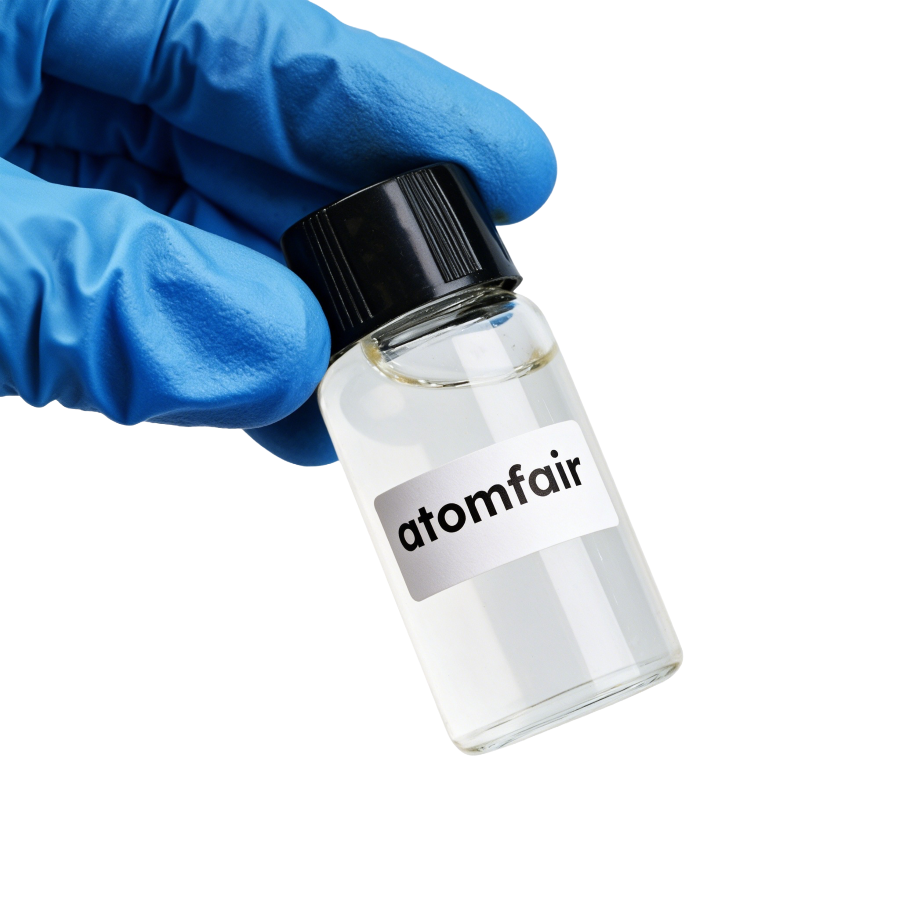
Cerium Oxide Nanoparticles, 2-6nm(TEM), 1 mg/mL, 10 mlProduct Type: Inorganic nanomaterial dispersion
Research-grade laboratory product
|
|||||||||||||||||||||||||
|
|||||||||||||||||||||||||
|
LABORATORY PROCUREMENT SUPPORT
For model selection, material form, dimensional range, concentration or package confirmation, contact our technical sales team.
E-MAIL: inquiry@atomfair.com
|
|||||||||||||||||||||||||
|
Manufacturer: Atomfair LLC
Brand: ATOMFAIR®
|
What is the significance of the particle size being specified as 2-6 nm from TEM, and how does this relate to the effective size in dispersion?
The TEM measurement provides the primary particle size of the cerium oxide core, which is 2-6 nm. In the ultrapure water dispersion, the hydrodynamic size may be larger due to hydration and potential agglomeration. The product description only provides the TEM size, so users should consider additional characterization (e.g., DLS) for their application.
Can this cerium oxide nanoparticle dispersion be used directly in electrochemical experiments without further modification?
The dispersion is provided in ultrapure water at 1 mg/mL. For electrochemical experiments, the water-based solvent and low concentration may be suitable for drop-casting or ink preparation, but the absence of conductive additives or binders means the dispersion may require formulation. The product is described as a research-grade dispersion, so it is intended as a starting material.
What are the recommended storage conditions to maintain the stability of this cerium oxide nanoparticle dispersion?
The product description does not specify storage conditions. As a research-grade inorganic nanomaterial dispersion in ultrapure water, standard practice includes storage at low temperature (2-8°C) and protection from light to prevent aggregation. For exact guidelines, users should contact the manufacturer at inquiry@atomfair.com.
This cerium oxide nanoparticle dispersion in ultrapure water at 1 mg/mL with 2-6 nm particle size (TEM) is suitable for research applications requiring high surface area and minimal solvent interference, but users should account for the limited total mass per package and potential differences between dry TEM size and hydrodynamic behavior.
Positive
- Ultrapure water solvent: The dispersion uses ultrapure water, minimizing chemical interference in biological or catalytic studies.
- Small particle size (2-6 nm): The 2-6 nm range (TEM) provides high surface area, beneficial for catalytic and surface-sensitive applications.
Trade-offs
- Limited total mass per package: At 1 mg/mL concentration and 10 mL volume, each package contains only 10 mg of nanoparticles, which may require multiple units for material-intensive experiments.
- TEM size vs. hydrodynamic size: Size is measured by TEM (dry state); actual hydrodynamic diameter in dispersion may be larger due to hydration or aggregation, affecting application behavior.
Every advanced material, component, equipment, and instrument in our catalog is backed by rigorous testing. We maintain strict internal quality management frameworks and align with CE conformity metrics to deliver transparent, reproducible performance data via our public open-science repository.
To request raw batch performance data, submit formal vendor registration paperwork, or execute a fast-turnaround R&D manufacturing loop, contact us at inquiry@atomfair.com.
Item is dispatched under the Atomfair Shipping & Delivery Framework (Free worldwide shipping on orders over $59 USD excl. heavy equipment). Return is governed by the Atomfair Return & Refund Policy (7-day technical return window).