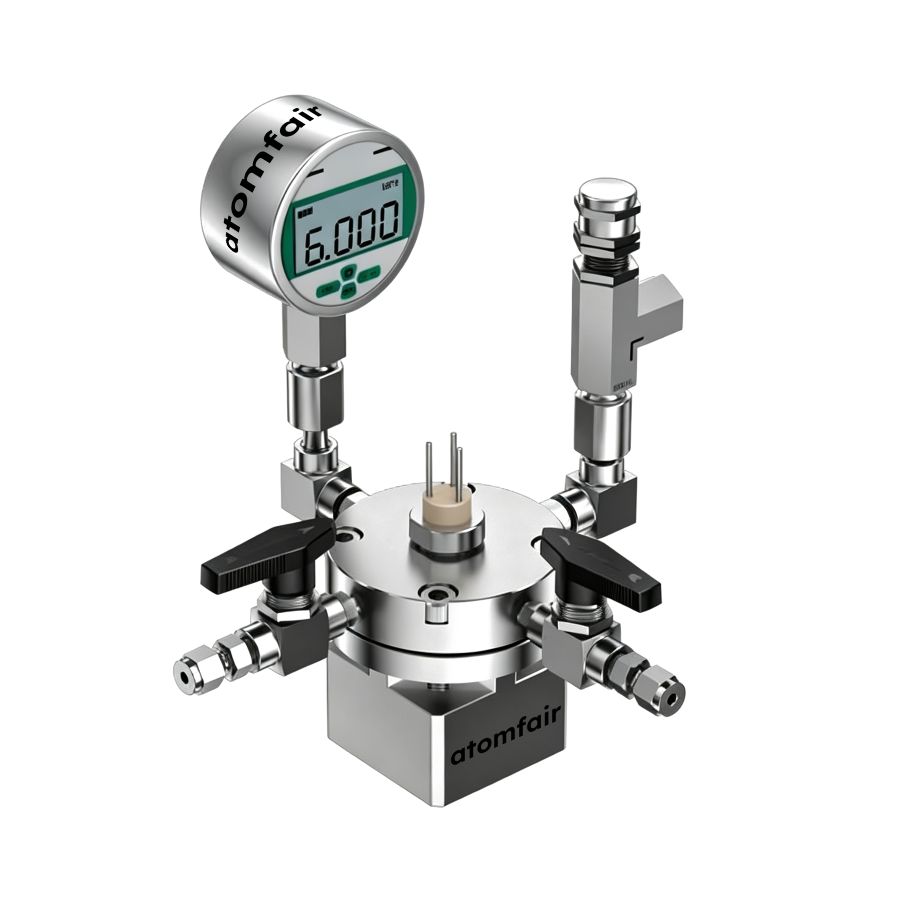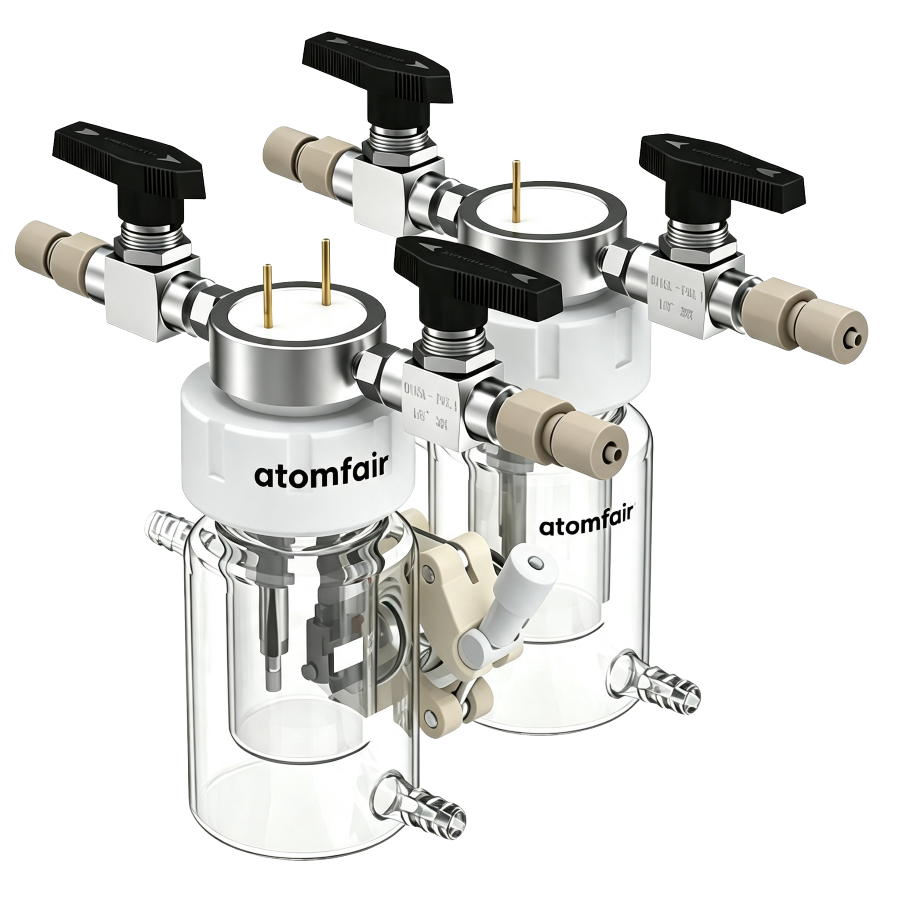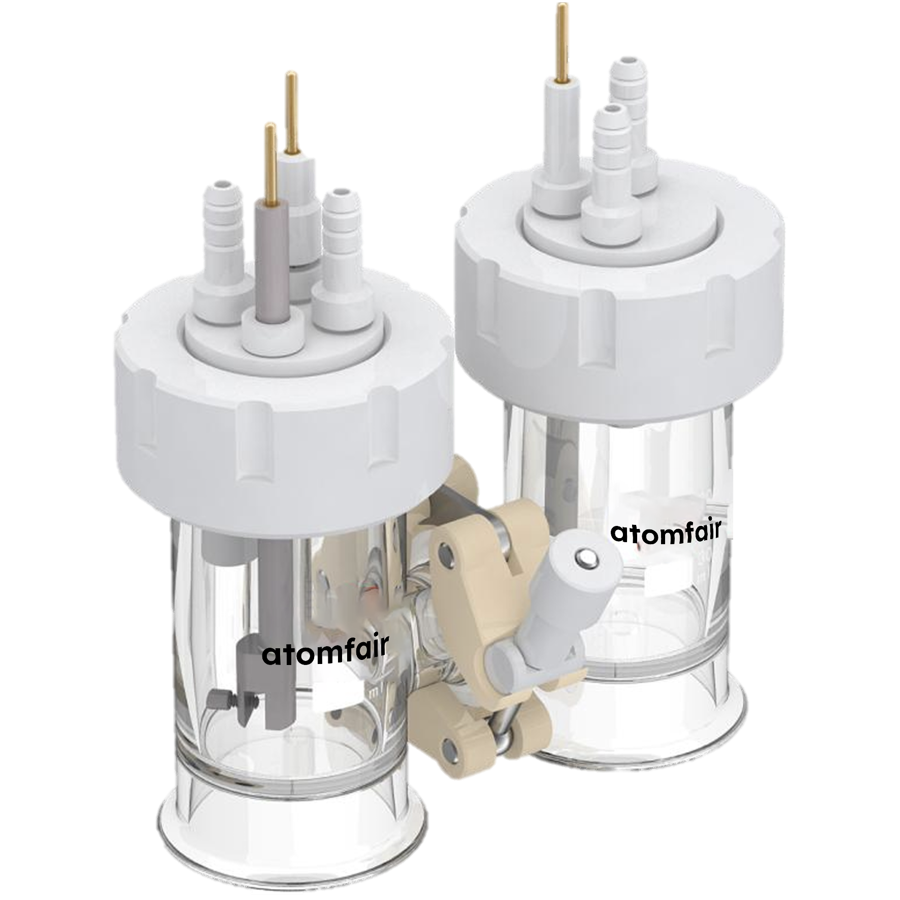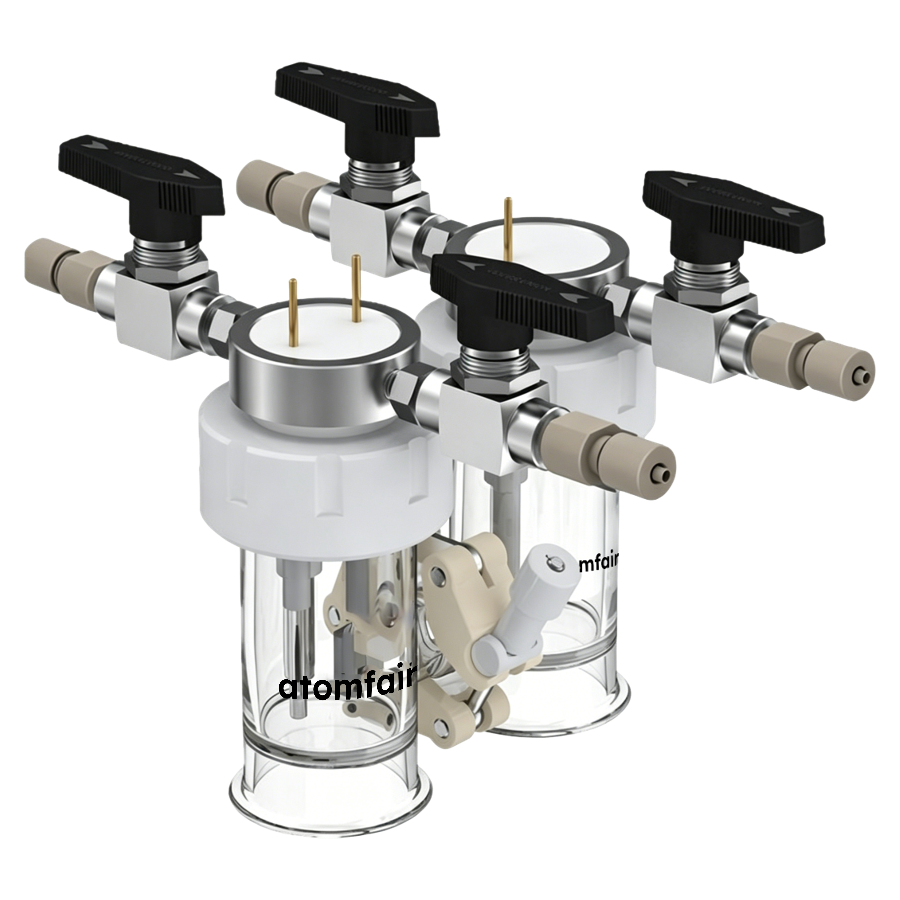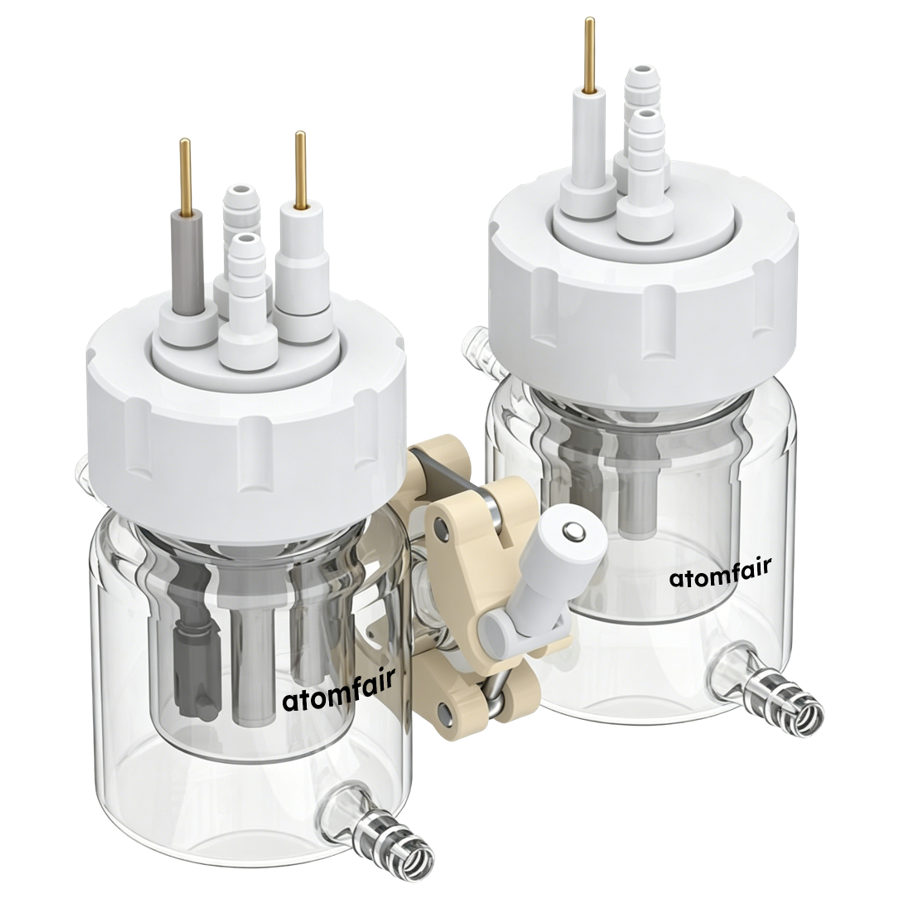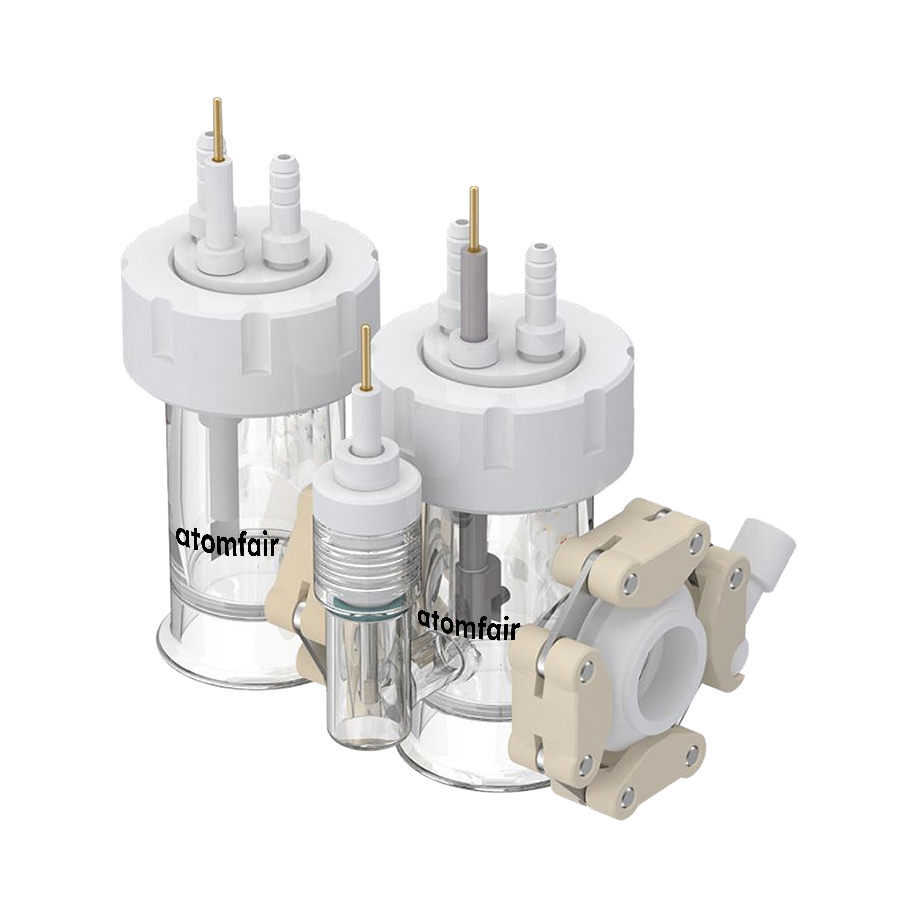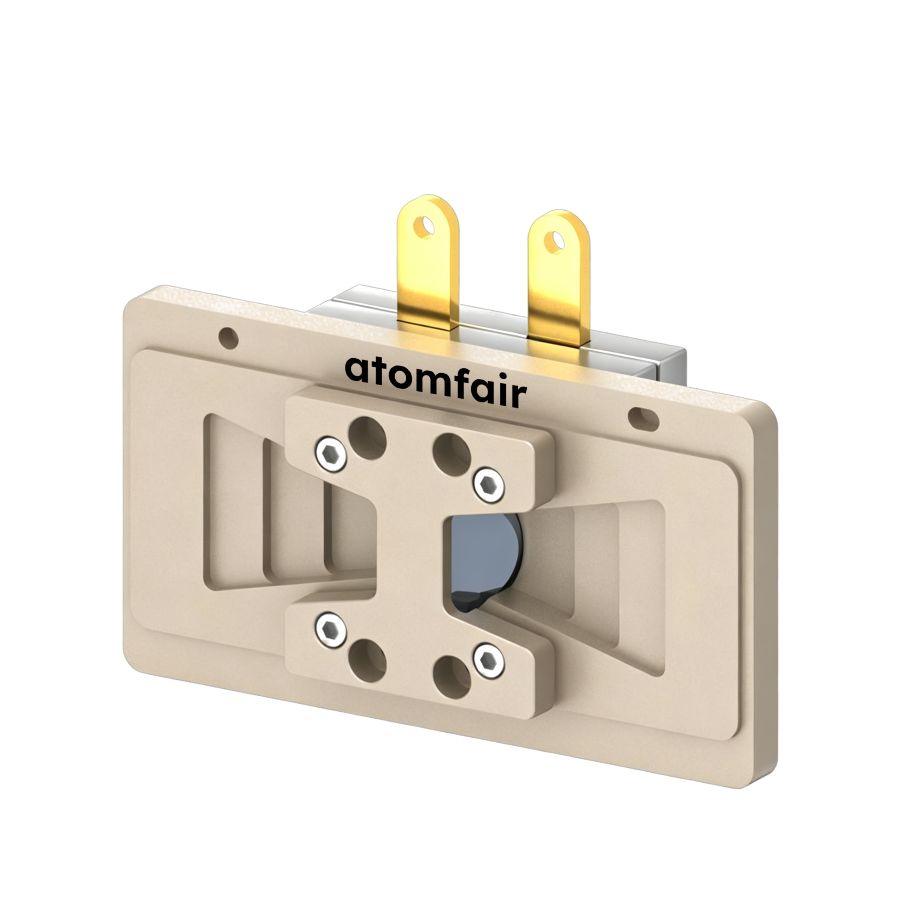
In-situ Infrared Lithium Battery Test CellProduct Type: In-situ battery test cell
Research-grade laboratory product
|
|||||||||||||||||||||||
|
|||||||||||||||||||||||
|
LABORATORY PROCUREMENT SUPPORT
For model selection, technical compatibility or configuration confirmation, contact our technical sales team.
E-MAIL: inquiry@atomfair.com
|
|||||||||||||||||||||||
|
Manufacturer: Atomfair LLC LLC
Brand: ATOMFAIR®
|
This test cell requires glovebox assembly to ensure an inert atmosphere before sealed operation. The double O-ring seal must be maintained to prevent electrolyte leakage and air ingress during in-situ ATR-SEIRAS measurements.
- Glovebox Assembly Requirement: Assemble the cell in a glovebox under inert atmosphere to avoid moisture and oxygen contamination.
- Double O-Ring Seal Integrity: Verify the double O-ring seals are properly seated to maintain airtight closure during testing.
- Spring-Loaded Compression: Ensure the spring-loaded mechanism applies uniform compression to maintain intimate electrode-separator contact.
- Silicon Window Care: Handle the single-crystal silicon window with care to avoid scratches or breakage that would compromise infrared transmission.
- Customization Coordination: Confirm electrode and window dimensions with technical sales before ordering to ensure compatibility with the cell body.
This procedure describes the assembly and sealing steps for the test cell in a glovebox environment. Following correct sequence ensures leak-free operation and reliable ATR-SEIRAS data acquisition.
Required Equipment: Glovebox
- Prepare the glovebox
Assemble the cell components inside a glovebox filled with inert gas to establish a moisture- and oxygen-free environment. - Insert electrodes and separator
Place the working and counter electrodes with a separator between them into the cell body. - Seal the cell with O-rings
Install the double O-ring seals and tighten the cell cap to create a gas-tight closure. - Apply spring compression
Engage the spring-loaded mechanism to ensure consistent contact between electrodes and separator. - Verify seal integrity
Check for any gaps or misalignment in the O-ring seals before removing from the glovebox. - Transfer to spectrometer
Move the sealed cell to the infrared spectrometer sample chamber for in-situ measurement.
Does the double O-ring sealing system allow operation outside a glovebox, and what are the performance trade-offs for lithium battery experiments?
Yes, the cell is designed for open-air use after glovebox assembly. The double O-ring sealing maintains an inert atmosphere, but the trade-off is that any compromise in sealing integrity during assembly can introduce moisture or oxygen, which degrades lithium battery performance. The spring-loaded structure ensures consistent electrode–separator contact, yet strict glovebox assembly protocol is critical to preserve measurement fidelity.
What electrode and window configurations are compatible with the AF-BAT-IR in-situ infrared lithium battery test cell?
The standard infrared window is single-crystal silicon for ATR-SEIRAS. Electrodes, membranes, windows, and gas diffusion electrodes are selected separately; the cell accommodates non-standard electrode sizes and window materials upon request. Compatibility depends on the specific experimental configuration, and it is recommended to confirm the selected items before ordering.
What are the handling, assembly, and storage requirements for the in-situ infrared battery test cell?
Assembly must be performed inside a glovebox to ensure an inert environment; after double O-ring sealing, the cell supports open-air use with body dimensions of 50×50×20 mm. Standard protective packaging is provided for delivery, and custom reinforcement is available. The high-purity titanium body offers chemical resistance, but no explicit storage temperature or humidity specifications are given beyond standard laboratory precautions.
The Atomfair AF-BAT-IR in-situ infrared lithium battery test cell provides spring-loaded electrode contact and double O-ring sealing for reproducible ATR-SEIRAS measurements, but requires glovebox assembly for initial sealing and does not include electrodes or membranes.
Positive
- Spring-loaded electrode contact: Spring-loaded structure maintains consistent contact between positive and negative battery samples and the separator, improving measurement reproducibility.
- Double O-ring sealing for open-air use: Double O-ring sealing enables sealed operation after glovebox assembly, allowing the cell to be used in open air without compromising the internal environment.
Trade-offs
- Glovebox assembly required: The cell must be assembled inside a glovebox to achieve proper sealing; this adds infrastructure dependency and procedural complexity for the user.
Every advanced material, component, equipment, and instrument in our catalog is backed by rigorous testing. We maintain strict internal quality management frameworks and align with CE conformity metrics to deliver transparent, reproducible performance data via our public open-science repository.
To request raw batch performance data, submit formal vendor registration paperwork, or execute a fast-turnaround R&D manufacturing loop, contact us at inquiry@atomfair.com.
Item is dispatched under the Atomfair Shipping & Delivery Framework (Free worldwide shipping on orders over $59 USD excl. heavy equipment). Return is governed by the Atomfair Return & Refund Policy (7-day technical return window).