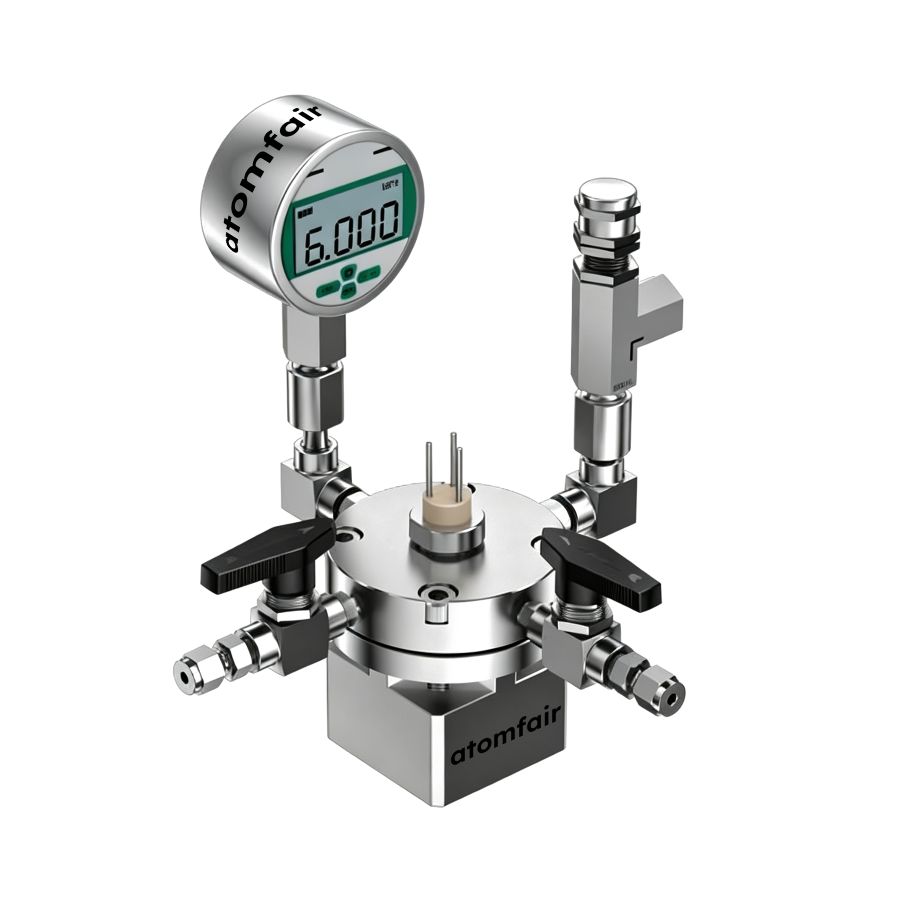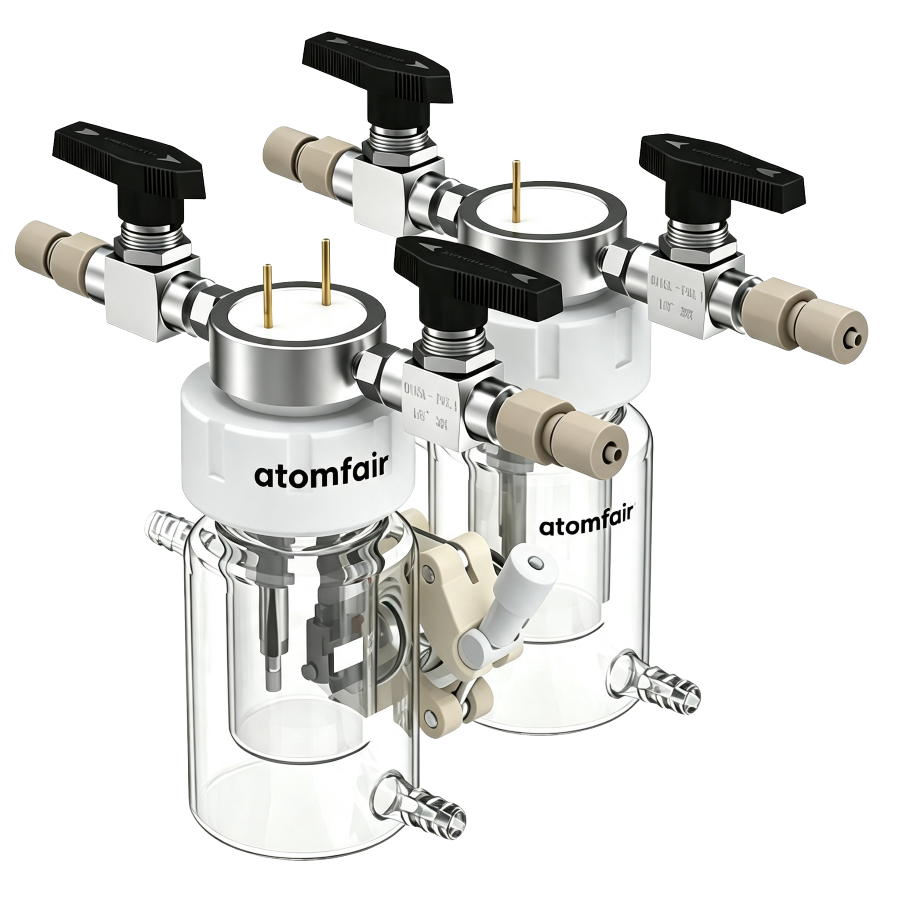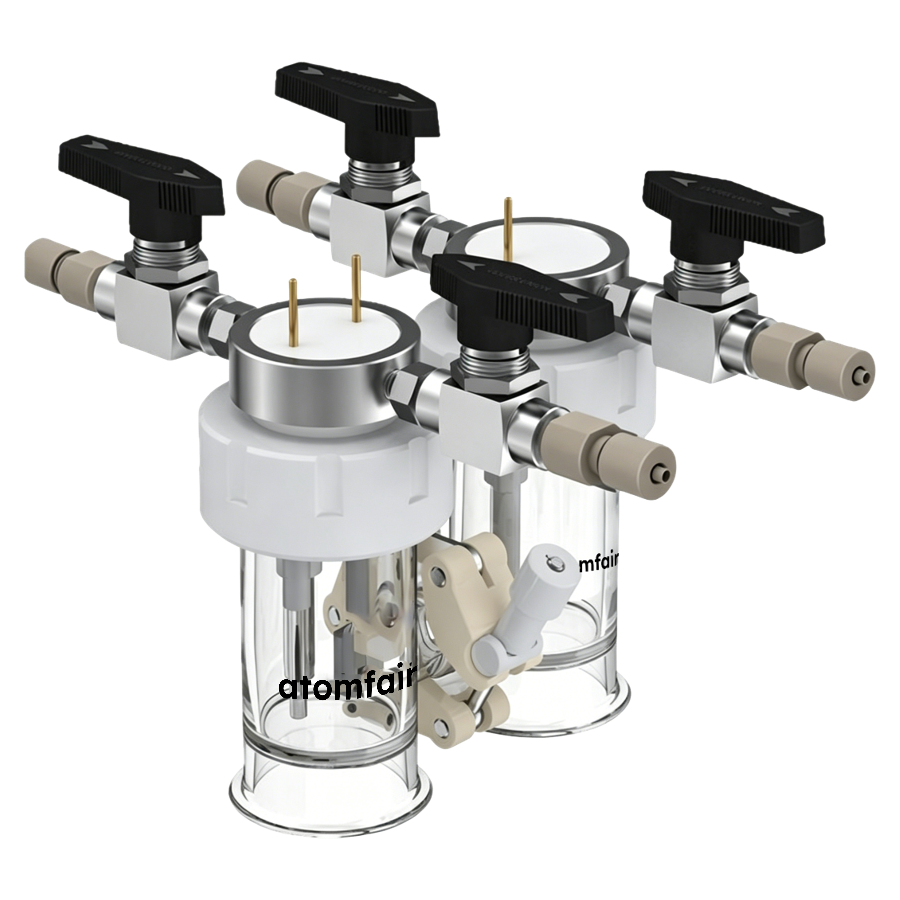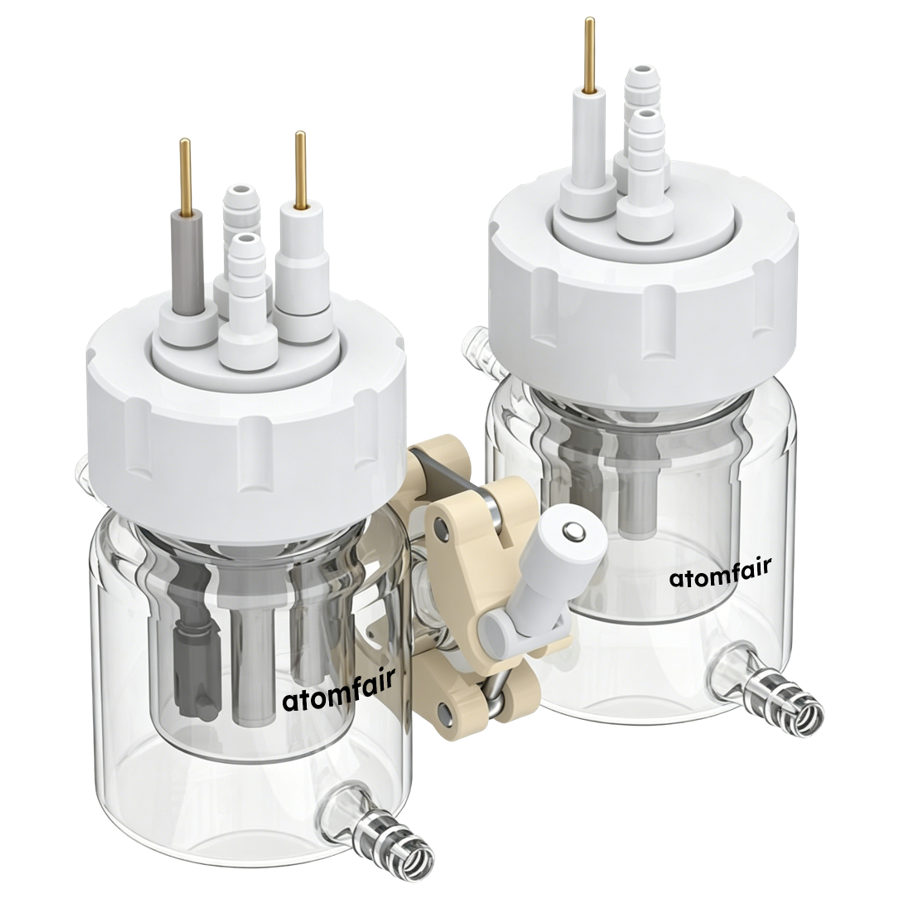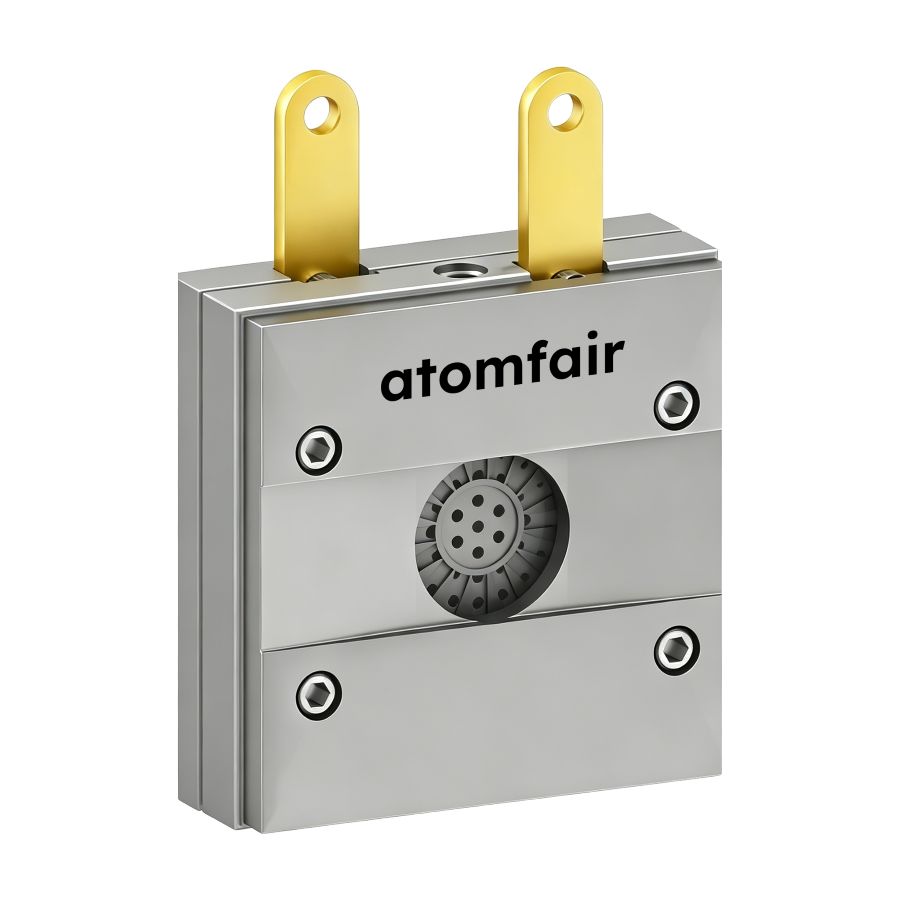
In-situ XRD Two-Electrode Battery Test CellProduct Type: In-situ battery test cell
Research-grade laboratory product
|
|||||||||||||||||||||||
|
|||||||||||||||||||||||
|
LABORATORY PROCUREMENT SUPPORT
For model selection, technical compatibility or configuration confirmation, contact our technical sales team.
E-MAIL: inquiry@atomfair.com
|
|||||||||||||||||||||||
|
Manufacturer: Atomfair LLC LLC
Brand: ATOMFAIR®
|
The cell must be assembled in a glovebox to prevent contamination from ambient air before electrochemical cycling. The working electrode to window distance must be less than 2 mm to ensure sufficient XRD signal intensity and resolution.
- Assembly Environment: Glovebox assembly is required to maintain an inert atmosphere during cell construction.
- Electrode-Window Gap: Maintain a working electrode to window distance below 2 mm for optimal in-situ diffraction measurements.
- Component Selection: All electrodes, membranes, and windows must be confirmed for compatibility with the cell body and electrolyte system.
- Load Adjustment: The spring-loaded structure allows reproducible load adjustment to ensure consistent cell assembly pressure.
- Customization Protocol: Non-standard electrode sizes or window materials require prior specification to the manufacturer for proper sealing and alignment.
How does the <2 mm working electrode-to-window distance in the AF-BAT-XRD2 cell influence the balance between XRD data quality and electrode configuration flexibility?
The short distance reduces X-ray absorption and scattering, enhancing signal quality for in-situ measurements, but it limits the thickness of the electrode assembly and the volume of electrolyte that can be accommodated. Users must select thin electrodes and minimal separators to maintain the <2 mm gap.
What electrode sizes and window materials are compatible with the Atomfair AF-BAT-XRD2 in-situ XRD cell?
The cell features an 8 mm optical window diameter and 8 mm channel width, so working electrodes must be smaller than 8 mm in diameter to fit within the window area. Standard electrode sizes are not specified; users must confirm compatibility with the seller. Custom window materials and non-standard electrode sizes are available upon request.
What are the handling and environmental requirements for using the AF-BAT-XRD2 cell after assembly?
The cell must be assembled in a glovebox for air-sensitive battery components, but once sealed, it can be transferred and used in open air. The spring-loaded structure ensures consistent electrode contact pressure, but no specific pressure values are provided, so users may need to calibrate the load for their specific cell construction.
The AF-BAT-XRD2 in-situ XRD two-electrode battery test cell provides direct structural characterization during electrochemical cycling with a working electrode-to-window distance under 2 mm and an 8 mm optical port, enabling real-time phase evolution tracking in titanium-bodied hardware.
Positive
- In-situ XRD capability with minimal path length: Working electrode-to-window distance < 2 mm and 8 mm optical window diameter enable high-resolution in-situ XRD acquisition during cycling without excessive beam attenuation.
- Spring-loaded assembly for reproducible load: Spring-loaded structure supports consistent electrode stack pressure across experiments, improving measurement repeatability in cycling and characterization tests.
Trade-offs
- Separate accessory sourcing required: Electrodes, membranes, windows, and gas diffusion electrodes are not included and must be specified separately, increasing procurement lead time and configuration complexity.
- Glovebox assembly with open-air use limitation: Cell assembly must be performed in a glovebox to prevent contamination; once sealed, operation in open air is possible, but this adds a required inert-atmosphere handling step.
Every advanced material, component, equipment, and instrument in our catalog is backed by rigorous testing. We maintain strict internal quality management frameworks and align with CE conformity metrics to deliver transparent, reproducible performance data via our public open-science repository.
To request raw batch performance data, submit formal vendor registration paperwork, or execute a fast-turnaround R&D manufacturing loop, contact us at inquiry@atomfair.com.
Item is dispatched under the Atomfair Shipping & Delivery Framework (Free worldwide shipping on orders over $59 USD excl. heavy equipment). Return is governed by the Atomfair Return & Refund Policy (7-day technical return window).