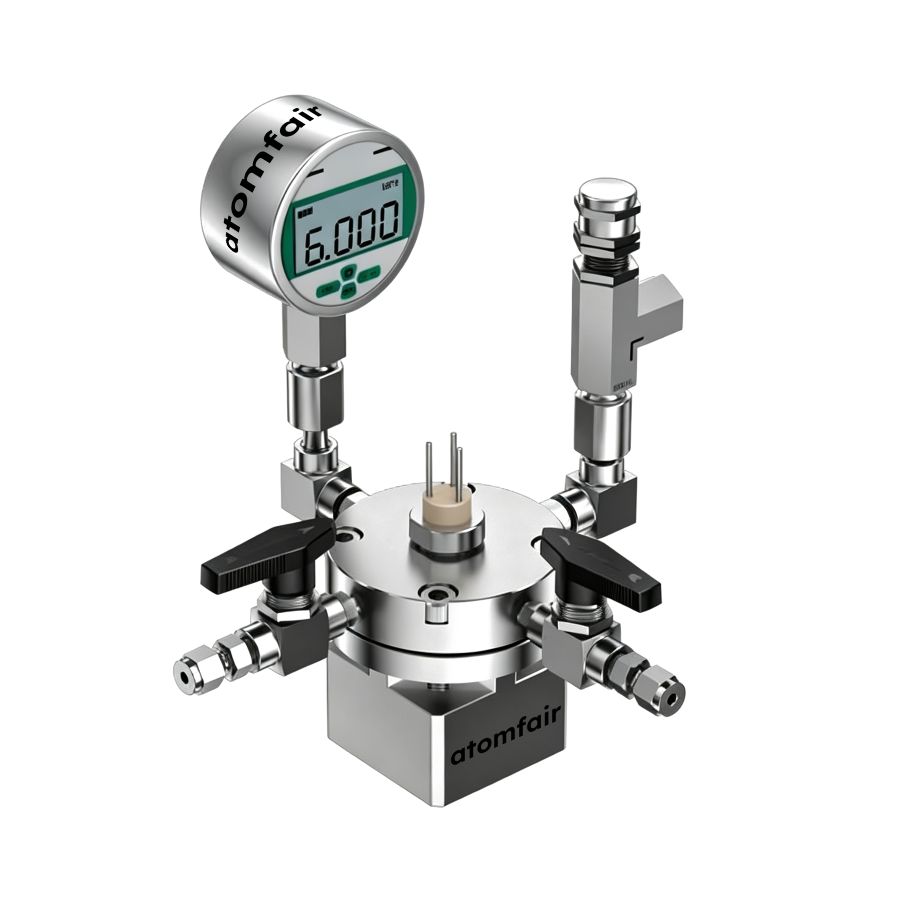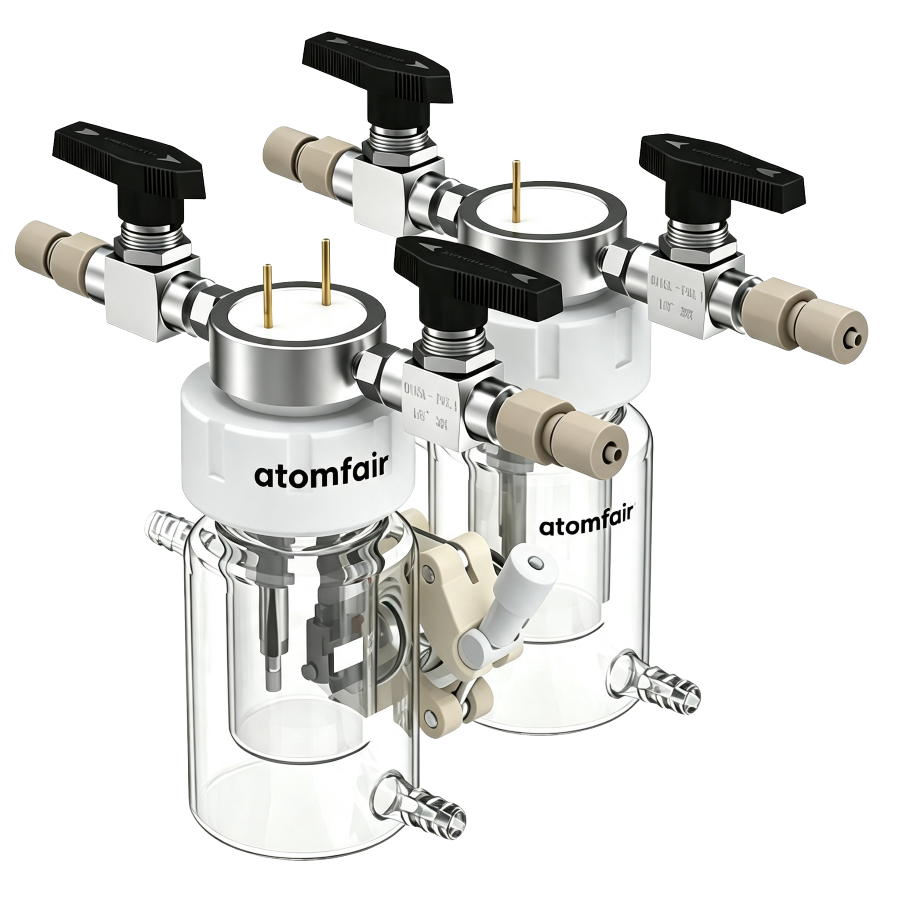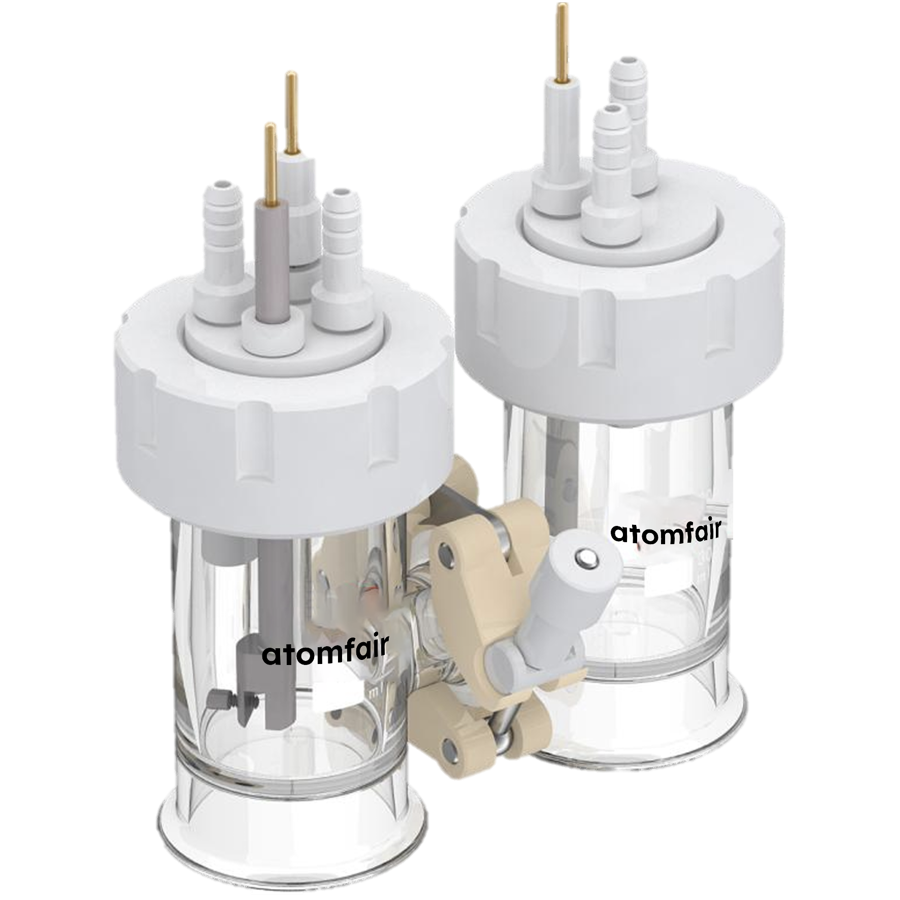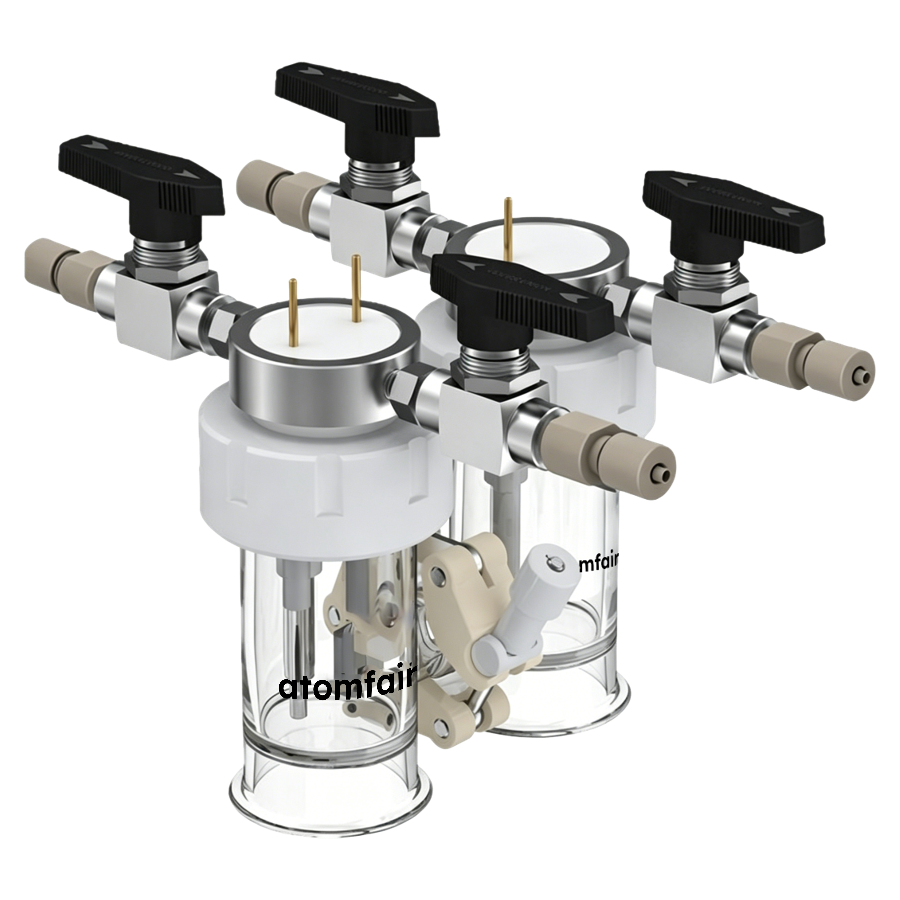
In-situ XRD Electrochemical Cell, Transmission ModeProduct Type: In-situ XRD electrochemical cell
Research-grade laboratory product
|
|||||||||||||||||||||||
|
|||||||||||||||||||||||
|
LABORATORY PROCUREMENT SUPPORT
For model selection, technical compatibility or configuration confirmation, contact our technical sales team.
E-MAIL: inquiry@atomfair.com
|
|||||||||||||||||||||||
|
Manufacturer: Atomfair LLC LLC
Brand: ATOMFAIR®
|
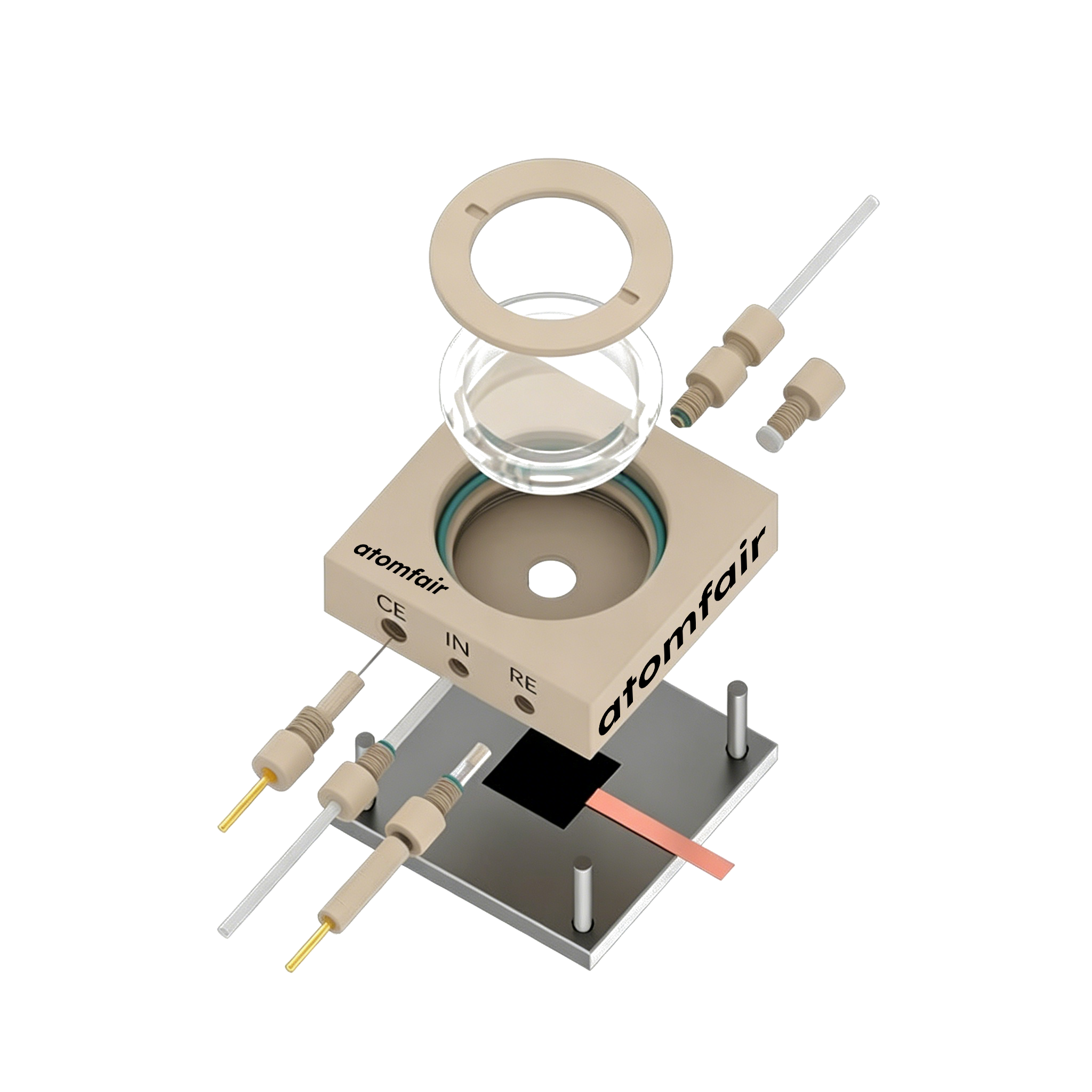
This in-situ XRD electrochemical cell imposes strict geometric constraints, with a working electrode-to-window distance of less than 3 mm to maintain transmission-mode diffraction geometry. The PEEK and titanium body, PI window, and specified electrode interfaces require careful assembly and material compatibility to avoid leakage or signal degradation.
- Working Electrode Spacing: The working electrode must be positioned less than 3 mm from the PI window to ensure proper XRD diffraction geometry.
- Electrode Compatibility: Only the specified 5 mm glassy carbon disk electrode or optional gold, platinum, or silver disk electrodes are compatible with the standard working electrode mount.
- Body Material Constraint: The PEEK and high-purity titanium body must be used with electrolytes that do not corrode or degrade these materials under operating conditions.
- Window Material Constraint: The PI window is transparent to X-rays but must not be exposed to solvents or temperatures that cause discoloration or mechanical failure.
- Operational Mode Flexibility: Flow operation or injection-fill mode requires that all ports and seals are properly tightened to prevent electrolyte leakage during XRD measurement.
What is the effect of the <3 mm working electrode-to-window distance on XRD signal intensity and electrochemical current distribution in the Atomfair AF-XRD-IS in-situ XRD cell?
The <3 mm distance minimizes X-ray absorption and scattering by the electrolyte, enhancing XRD signal quality, but also reduces the electrolyte volume above the electrode, which may limit current for high-rate electrochemical reactions. The design balances these factors for typical in-situ XRD experiments.
Can the Atomfair AF-XRD-IS in-situ XRD cell be used with non-aqueous electrolytes or air-sensitive samples?
Yes, the cell body is constructed from PEEK and high-purity titanium, which are chemically resistant to most organic solvents and mild acids. The cell supports both flow and injection-filled operation, allowing sealed handling. However, the standard PI window may have limited chemical resistance to certain aggressive solvents; confirm compatibility with the manufacturer for specific electrolyte compositions.
What are the recommended cleaning and assembly procedures for the Atomfair AF-XRD-IS cell to avoid contamination and ensure reproducible measurements?
The cell's quick assembly/disassembly design facilitates cleaning. The PEEK and titanium components can be cleaned with common laboratory solvents (e.g., isopropanol or ethanol) and dried carefully. The PI window is delicate and should be cleaned with a soft, lint-free cloth or replaced if scratched. Ensure the working electrode (standard 5 mm glassy carbon) is polished and clean before each use.
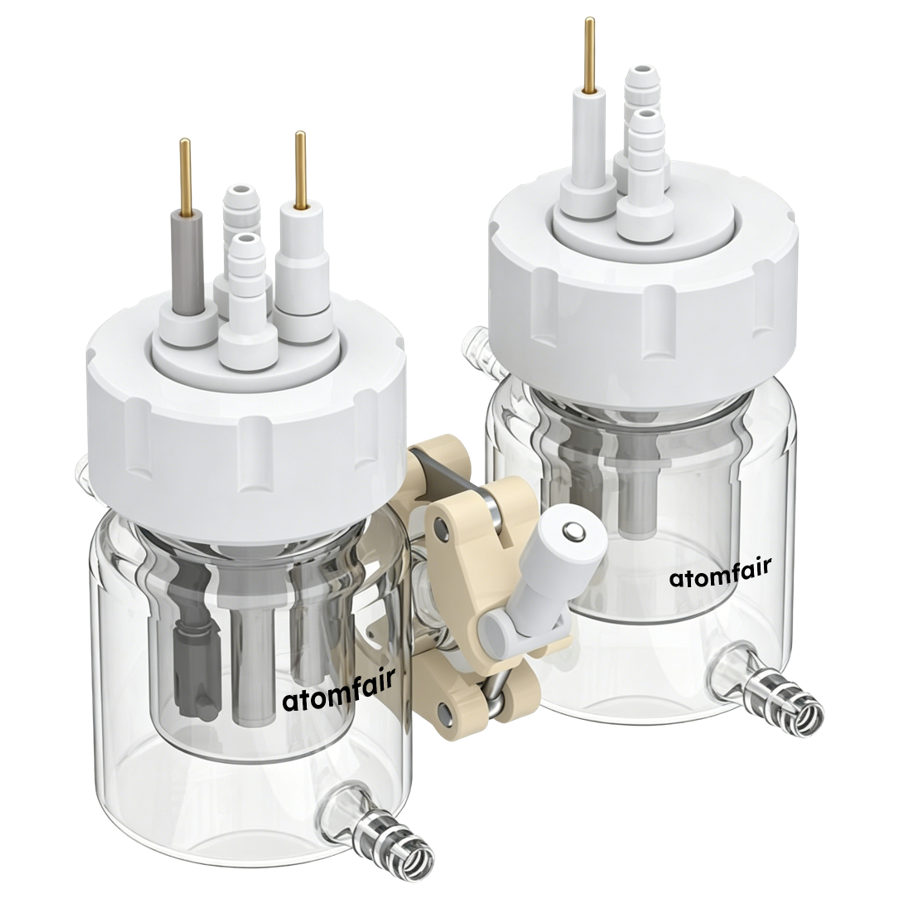
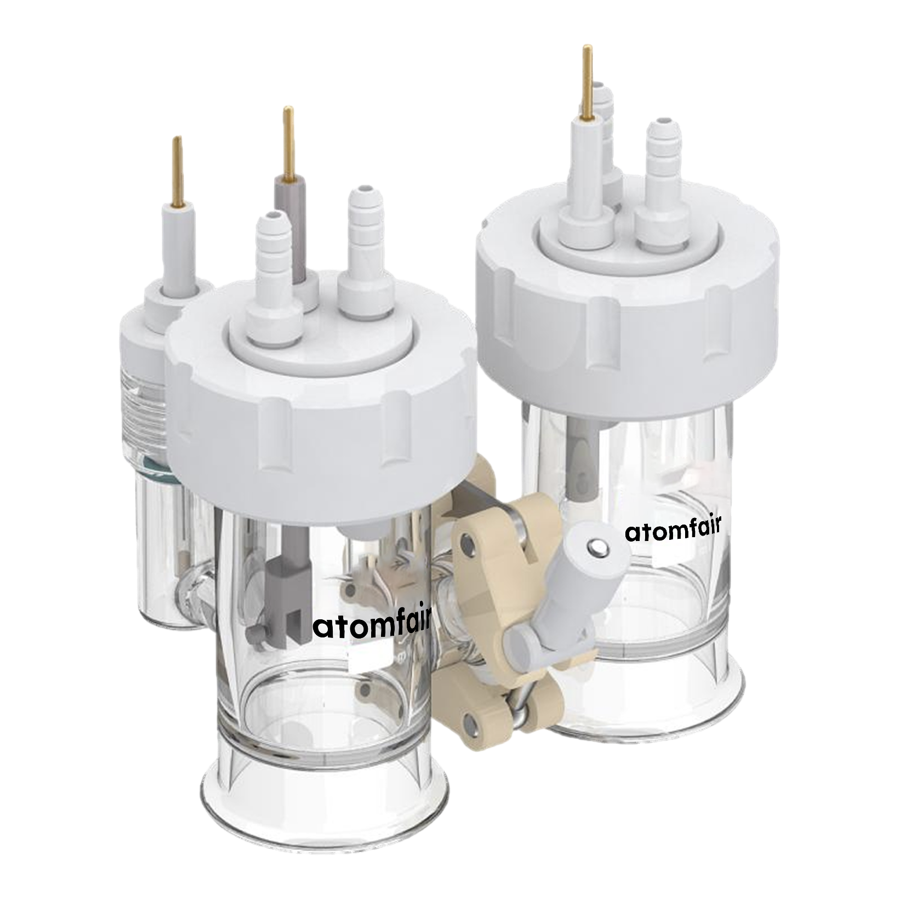
The Atomfair AF-XRD-IS in-situ XRD electrochemical cell is a transmission-mode cell designed for real-time structural observation of working electrodes during electrochemical cycling, using a PI window and a working electrode-to-window distance under 3 mm to minimize X-ray absorption and scattering artifacts.
Positive
- Short working electrode-to-window distance: The <3 mm distance between the working electrode and the PI window reduces X-ray path length, improving signal-to-noise ratio for in-situ diffraction measurements.
- Flow and injection electrolyte compatibility: Supports both flow-through and injection-filled electrolyte operation, enabling dynamic electrolyte exchange or static measurements without cell disassembly.
Trade-offs
- PI window material constraints: The polyimide (PI) optical window has limited X-ray transmission at lower energies and may degrade under prolonged high-flux synchrotron radiation, requiring careful beamline parameter selection.
- Customization lead time for non-standard parts: Non-standard electrode sizes or alternative window materials require custom fabrication, which may extend procurement lead times and necessitate pre-order technical confirmation.
Every advanced material, component, equipment, and instrument in our catalog is backed by rigorous testing. We maintain strict internal quality management frameworks and align with CE conformity metrics to deliver transparent, reproducible performance data via our public open-science repository.
To request raw batch performance data, submit formal vendor registration paperwork, or execute a fast-turnaround R&D manufacturing loop, contact us at inquiry@atomfair.com.
Item is dispatched under the Atomfair Shipping & Delivery Framework (Free worldwide shipping on orders over $59 USD excl. heavy equipment). Return is governed by the Atomfair Return & Refund Policy (7-day technical return window).