Standard Chromium Working Electrode Series | ATOMFAIRRESEARCH GRADE INSTRUMENT
|
|||||||||||||||||||||||
|
|||||||||||||||||||||||
|
TAILORED SOLUTIONS FOR RESEARCH
Contact our engineering team for technical support or official institutional quotations.
EMAIL: inquiry@atomfair.com
|
|||||||||||||||||||||||
|
Manufacturer: Atomfair LLC
Brand: ATOMFAIR®
|
|||||||||||||||||||||||
This electrode is highly sensitive to surface contamination. It must be stored in sealed containers and handled exclusively within an anhydrous inert environment to prevent degradation before electrochemical validation.
- Contamination Sensitivity: The electrode surface is vulnerable to contamination, requiring sealed storage and inert atmosphere handling.
How does the 3 mm standard diameter of the chromium working electrode balance edge effects and signal magnitude in rotating disk electrode experiments?
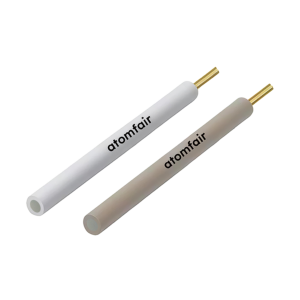
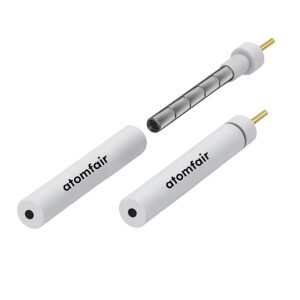
The 3 mm diameter is the most commonly used size because it minimizes edge current density artifacts while providing sufficient surface area for reproducible mass transport in rotating disk electrode setups. Smaller diameters reduce edge effects but lower the electrochemical signal, whereas larger diameters increase current at the expense of greater ohmic drop and non-uniform current distribution. The PTFE encapsulation ensures a defined exposed area and leak-proof sealing, critical for accurate RDE measurements.
Is the chromium working electrode compatible with non-aqueous electrolytes used in advanced energy system research?
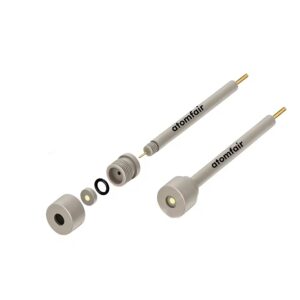
Yes, the high-grade PTFE encapsulation (or optional PEEK) is chemically resistant to most organic solvents, allowing use in non-aqueous electrolytes typical of battery and capacitor research. However, chromium's passive film behavior in aprotic media differs from aqueous systems; surface reproducibility requires potential-controlled conditioning and inert-atmosphere handling to prevent air exposure. The electrode is designed for applications in advanced energy systems, but electrolyte compatibility should be verified for each specific system.
What storage and handling procedures are required to prevent surface degradation of the chromium working electrode before use?
The product is highly sensitive to surface contamination; it must be kept in its sealed, shock-absorbing protective container under an anhydrous inert environment (e.g., argon glovebox) to prevent phase contamination or oxidation before electrochemical validation. Prior to each experiment, the chromium surface should be polished and cleaned according to standard protocols and transferred directly into the cell without exposure to ambient moisture. The PTFE encapsulation protects the seal from electrolyte seepage during handling but does not replace the need for inert-atmosphere storage.
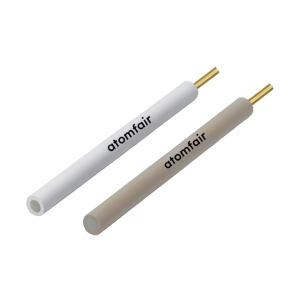
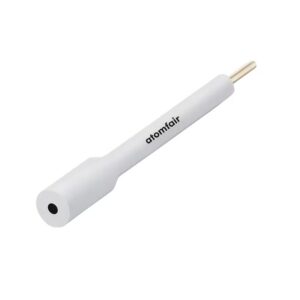
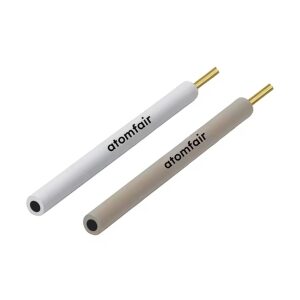
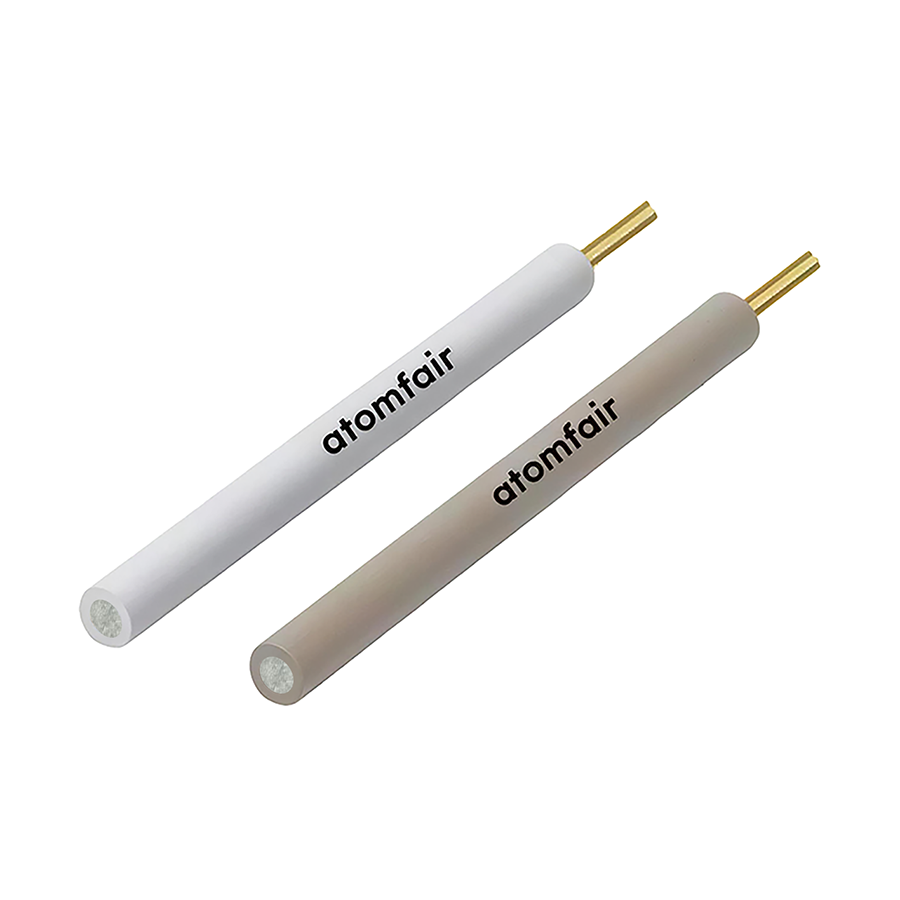
This 3mm chromium working electrode from ATOMFAIR provides high-purity chromium with PTFE encapsulation for leak-proof operation, suitable for corrosion, surface engineering, and catalytic redox applications. The electrode's sensitivity to surface contamination necessitates handling in anhydrous inert environments to maintain electrochemical integrity.
Positive
- Specialized Chromium Material: High-purity chromium with excellent hardness and wear resistance provides distinctive electrochemical characteristics for corrosion studies, surface engineering, electroplating, and catalytic redox systems.
- PTFE Leak-Proof Encapsulation: Advanced PTFE jacket ensures no electrolyte seepage, maintaining baseline stability and protecting the electrode seal during long-term experiments.
Trade-offs
- Surface Contamination Sensitivity: The electrode is highly sensitive to surface contamination; containers must be kept tightly sealed or handled exclusively in an anhydrous inert environment to prevent phase contamination or degradation before electrochemical validation.
Every advanced material, component, equipment, and instrument in our catalog is backed by rigorous testing. We maintain strict internal quality management frameworks and align with CE conformity metrics to deliver transparent, reproducible performance data via our public open-science repository.
To request raw batch performance data, submit formal vendor registration paperwork, or execute a fast-turnaround R&D manufacturing loop, contact us at inquiry@atomfair.com.
Item is dispatched under the Atomfair Shipping & Delivery Framework (Free worldwide shipping on orders over $59 USD excl. heavy equipment). Return is governed by the Atomfair Return & Refund Policy (7-day technical return window).