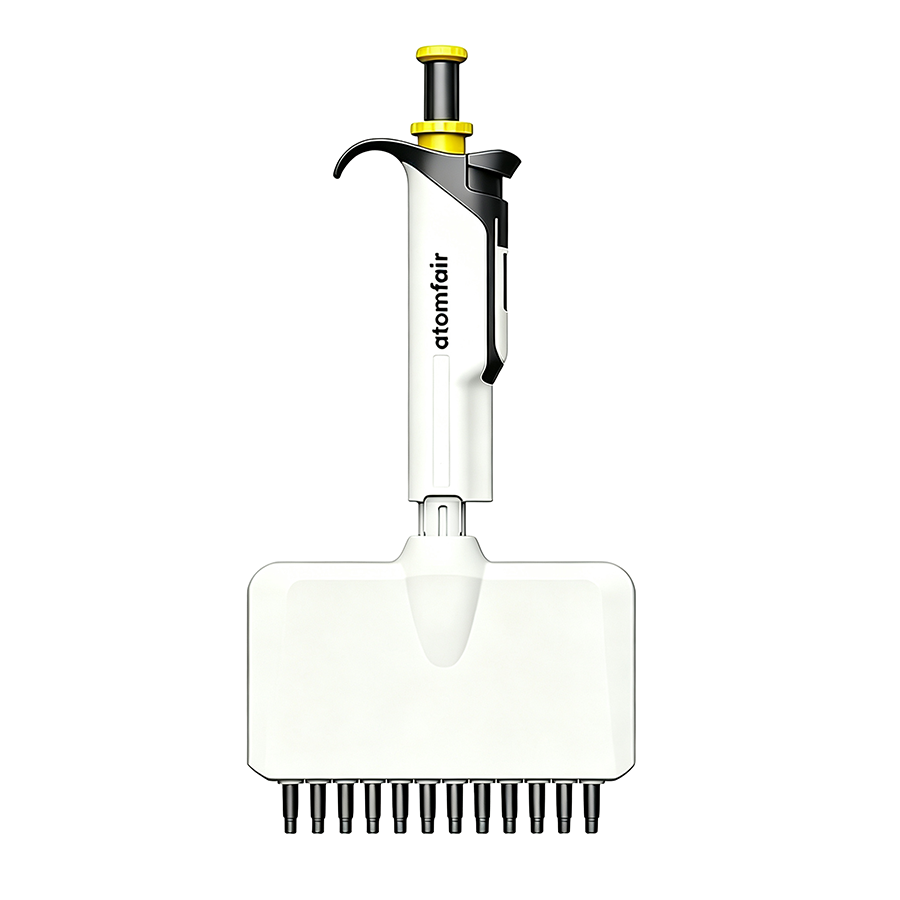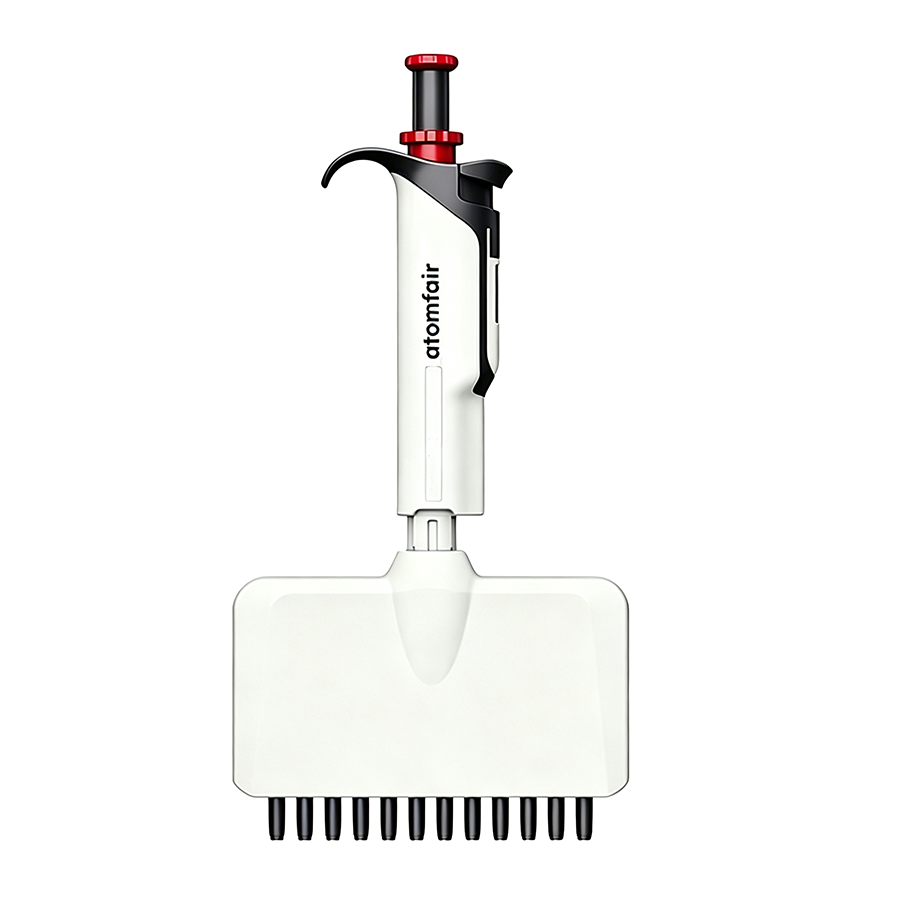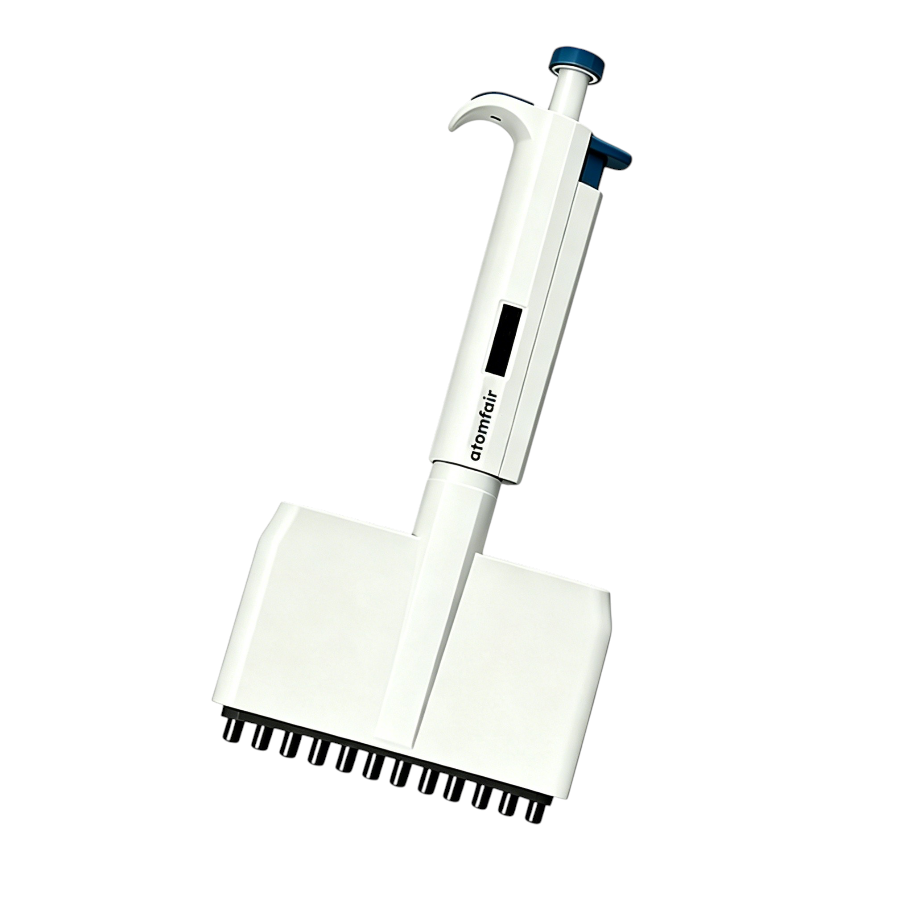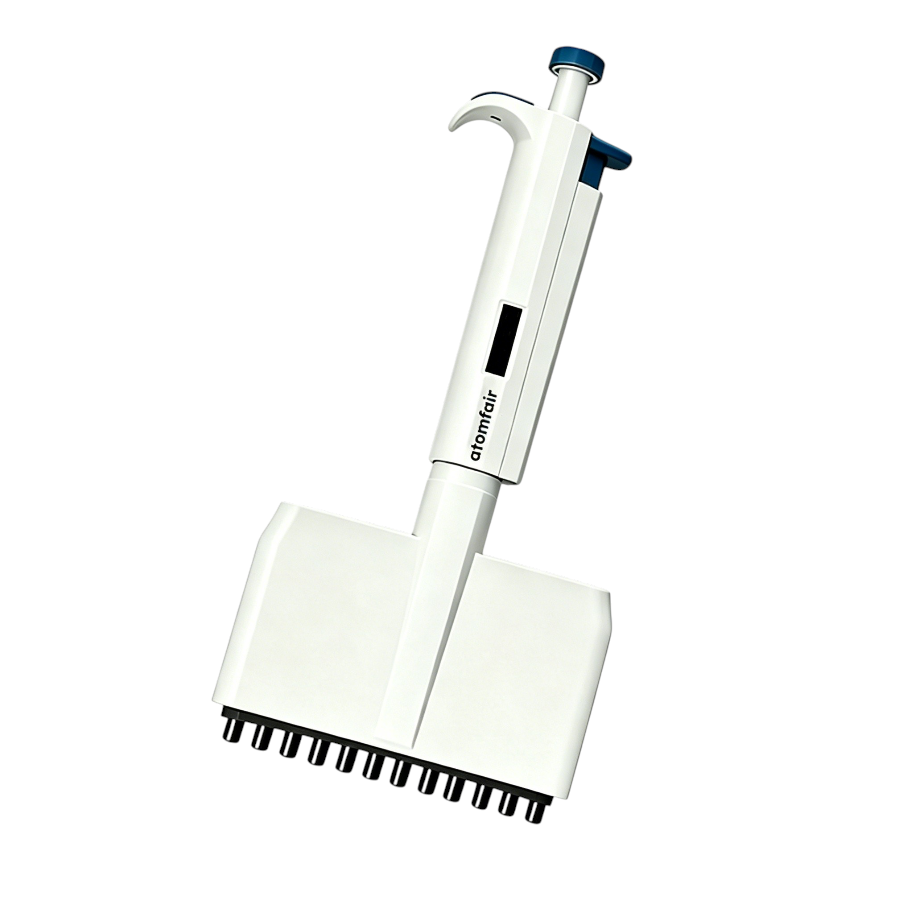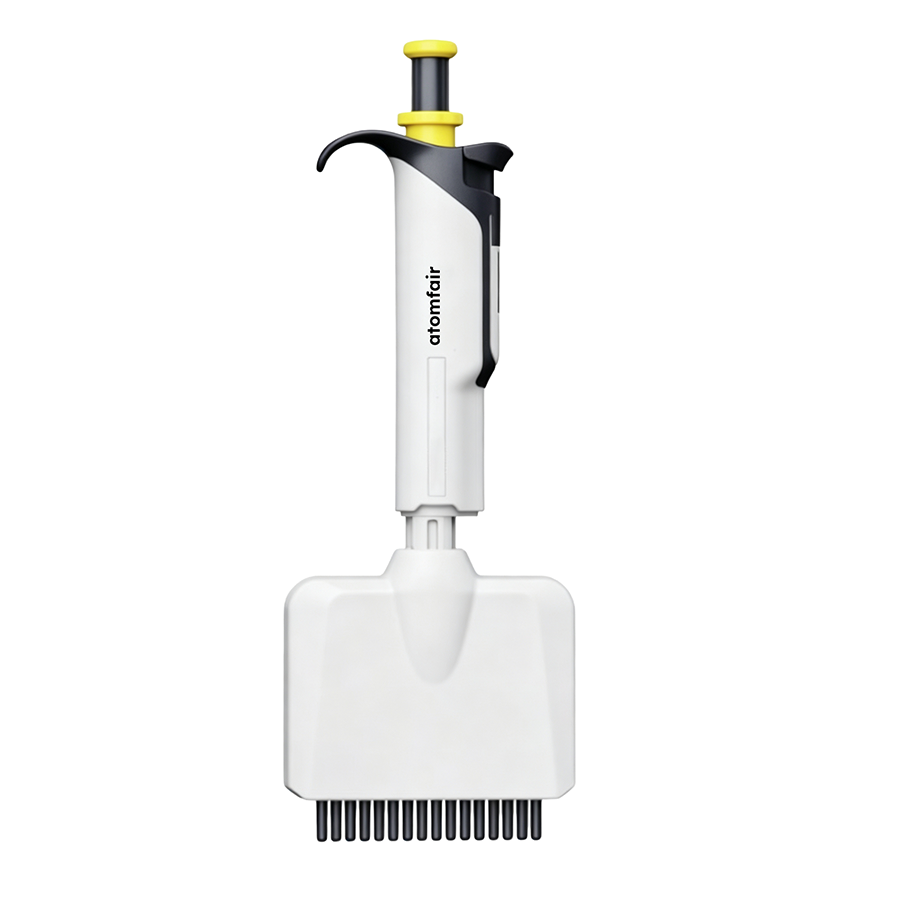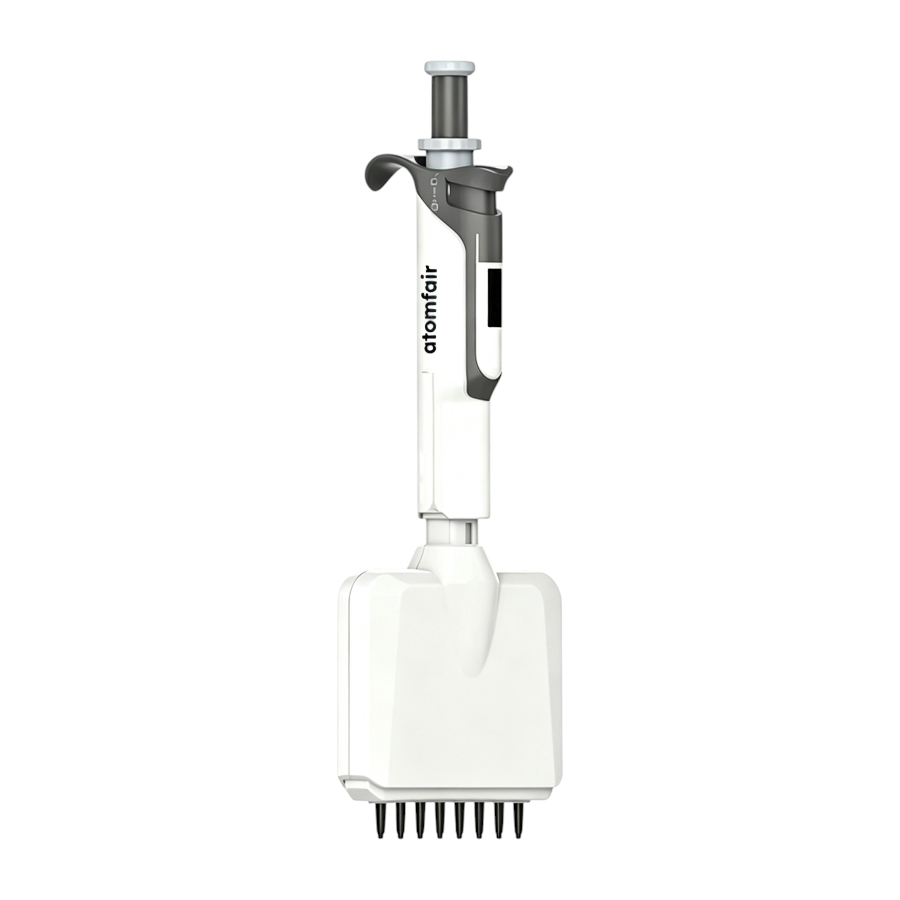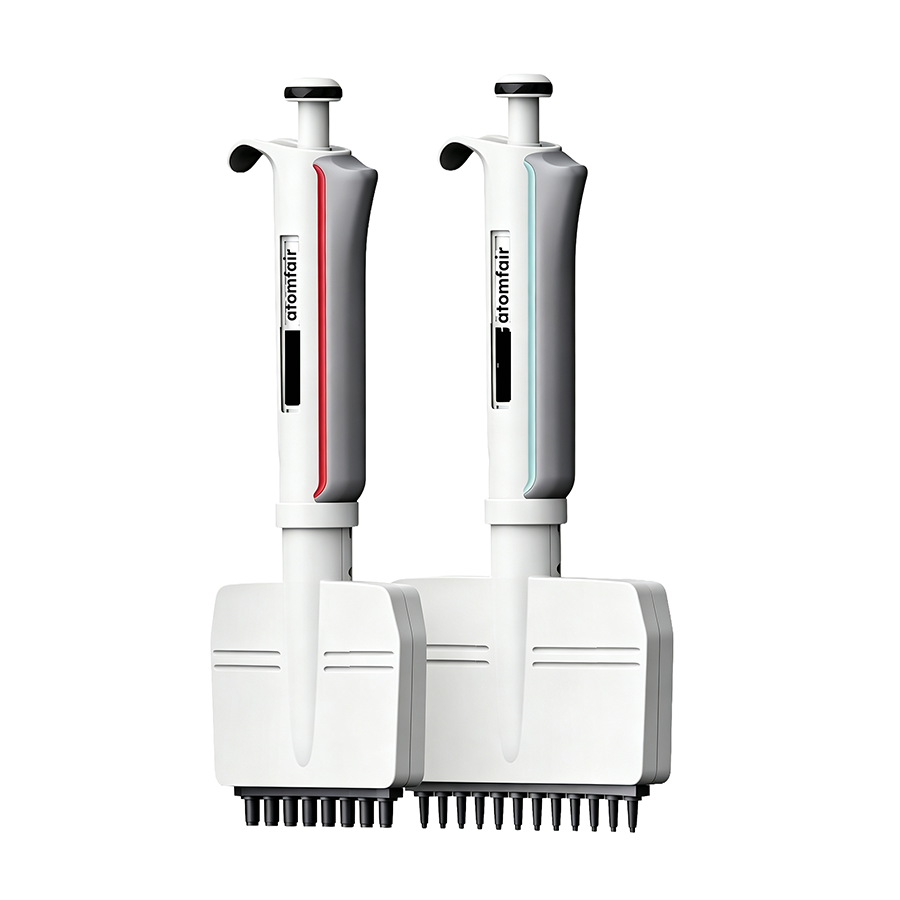
Mi-Pette 8-channel 10-100 µL PipetteProduct Type: Manual pipette
Research-grade liquid handling platform
|
|||||||||||||||||||||||||||||||
|
|||||||||||||||||||||||||||||||
|
TAILORED SOLUTIONS FOR RESEARCH
For bulk orders, OEM requirements, accessory matching, platform selection or configuration confirmation, contact our engineering sales team.
EMAIL: inquiry@atomfair.com
|
|||||||||||||||||||||||||||||||
|
Supplier: Atomfair
Brand: ATOMFAIR®
|
The pipette requires calibration per ISO 8655-2 to maintain specified accuracy at each test volume. High-temperature sterilization is supported but may affect calibration; recalibration after sterilization is recommended.
- Tip Compatibility: Compatible tips must be selected to ensure proper sealing and avoid leakage during multichannel operation.
- Calibration Reference: Systematic and random error values are provided for test volumes 100, 50, and 10 µL per ISO 8655-2.
- Sterilization Procedure: High-temperature autoclaving is permitted for models indicated; verify sterilization suitability before processing.
Begin by confirming tip compatibility and setting the desired volume. Calibrate according to ISO 8655-2 and sterilize if required before use.
- Select Compatible Tips
Confirm that tips are compatible with the 8-channel pipette model to ensure proper seal and accuracy. - Set Volume
Set the volume to the desired test value using the incremental dial at 0.1 µL increments. - Calibrate Pipette
Perform calibration using a gravimetric method per ISO 8655-2 at the selected test volume. - Sterilize if Required
Autoclave the pipette at high temperature only if the model supports sterilization and prior use demands it.
How does the systematic error of the Mi-Pette 8-channel 10-100 µL pipette vary across its volume range, and what is the practical implication for low-volume pipetting?
The systematic error is ±1.6 µL across all test volumes (100, 50, and 10 µL), but the relative error increases from ±1.6% at 100 µL to ±16% at 10 µL. This means that at low volumes, the absolute error is a larger fraction of the target volume, which can significantly affect accuracy in assays requiring precise 10 µL transfers.
What calibration standard does the Mi-Pette 8-channel pipette conform to, and what tip compatibility considerations are needed for ISO 8655-2 workflows?
The pipette is calibrated per ISO 8655-2, with systematic and random error values listed at 100, 50, and 10 µL. The source does not specify compatible tip brands or models; users must confirm tip compatibility before ordering, especially for multichannel applications and sterilization requirements.
Is the Mi-Pette 8-channel 10-100 µL pipette fully autoclavable, and what sterilization parameters are recommended?
The product is described as a fully autoclavable manual pipette, and high-temperature sterilization is supported as indicated by the source family. However, specific temperature or cycle parameters are not provided in the product description; users should refer to the source family documentation for sterilization guidelines.
The Mi-Pette 8-channel 10-100 µL pipette is a fully autoclavable manual pipette designed for parallel liquid handling in microplate, PCR, and ELISA workflows, with systematic error ranging from ±1.6% at 100 µL to ±16% at 10 µL and random error from ±0.6% to ±6.0%, requiring careful volume matching for low-volume accuracy.
Positive
- 8-channel parallel liquid handling: The 8-channel configuration enables simultaneous reagent transfer for microplate loading, PCR plate preparation, and ELISA workflows, improving throughput in routine and teaching laboratories.
- Full autoclavability for sterilization: High-temperature sterilization is supported, allowing decontamination between uses without disassembling the pipette, which is critical for aseptic laboratory protocols.
Trade-offs
- High systematic error at low volume: At 10 µL, systematic error reaches ±1.6 µL (±16%), which may compromise accuracy for applications requiring precise low-volume dispensing, such as qPCR or nanoliter-scale assays.
- Tip compatibility and calibration dependency: Optimal performance requires compatible tips and routine calibration per ISO 8655-2; users must verify tip fit and calibration schedules to maintain specified error tolerances.
Every advanced material, component, equipment, and instrument in our catalog is backed by rigorous testing. We maintain strict internal quality management frameworks and align with CE conformity metrics to deliver transparent, reproducible performance data via our public open-science repository.
To request raw batch performance data, submit formal vendor registration paperwork, or execute a fast-turnaround R&D manufacturing loop, contact us at inquiry@atomfair.com.
Item is dispatched under the Atomfair Shipping & Delivery Framework (Free worldwide shipping on orders over $59 USD excl. heavy equipment). Return is governed by the Atomfair Return & Refund Policy (7-day technical return window).