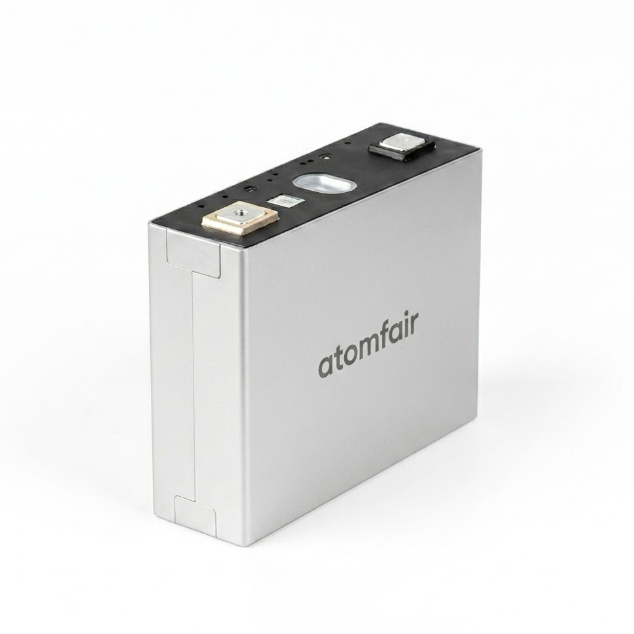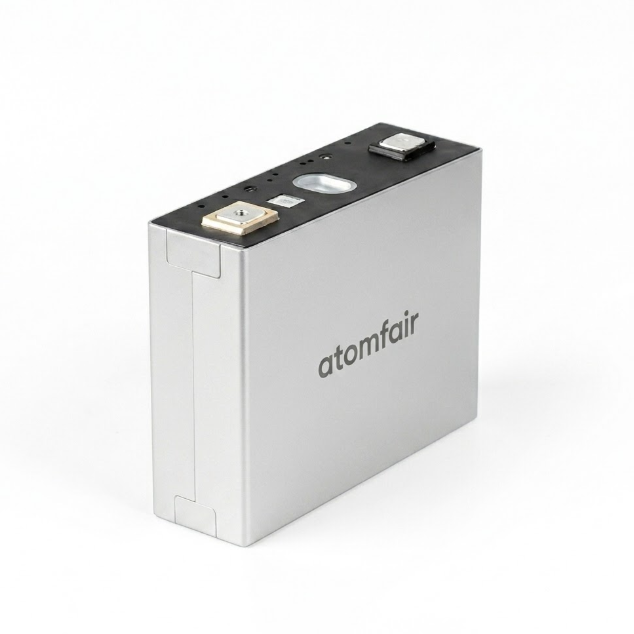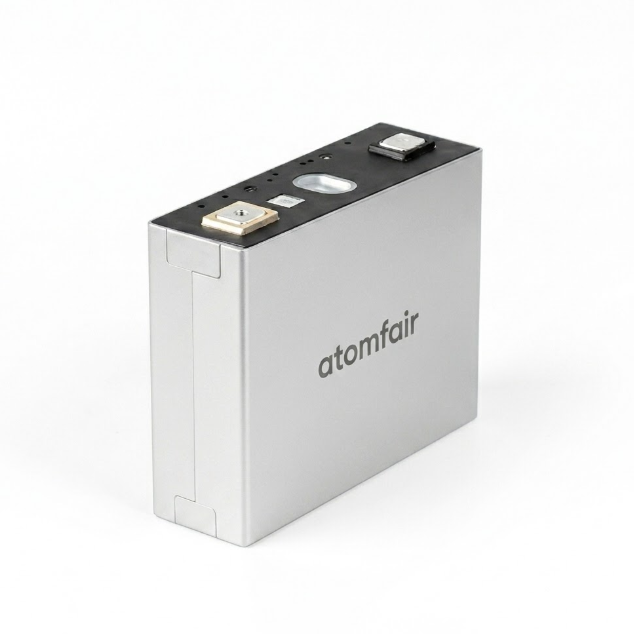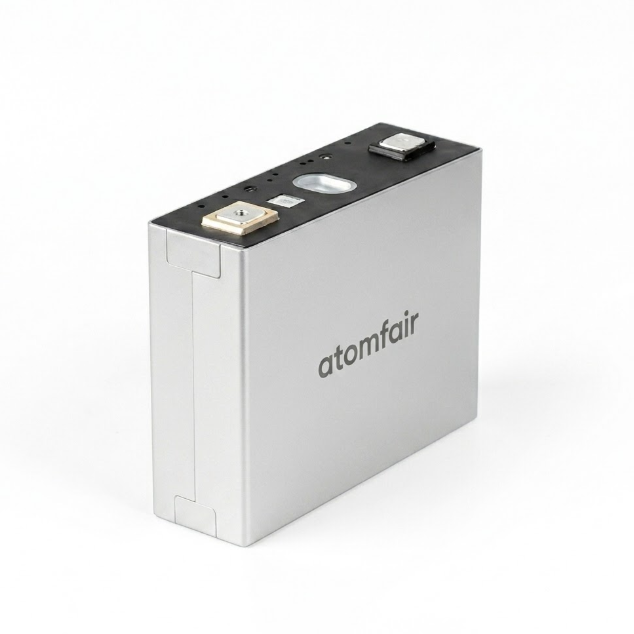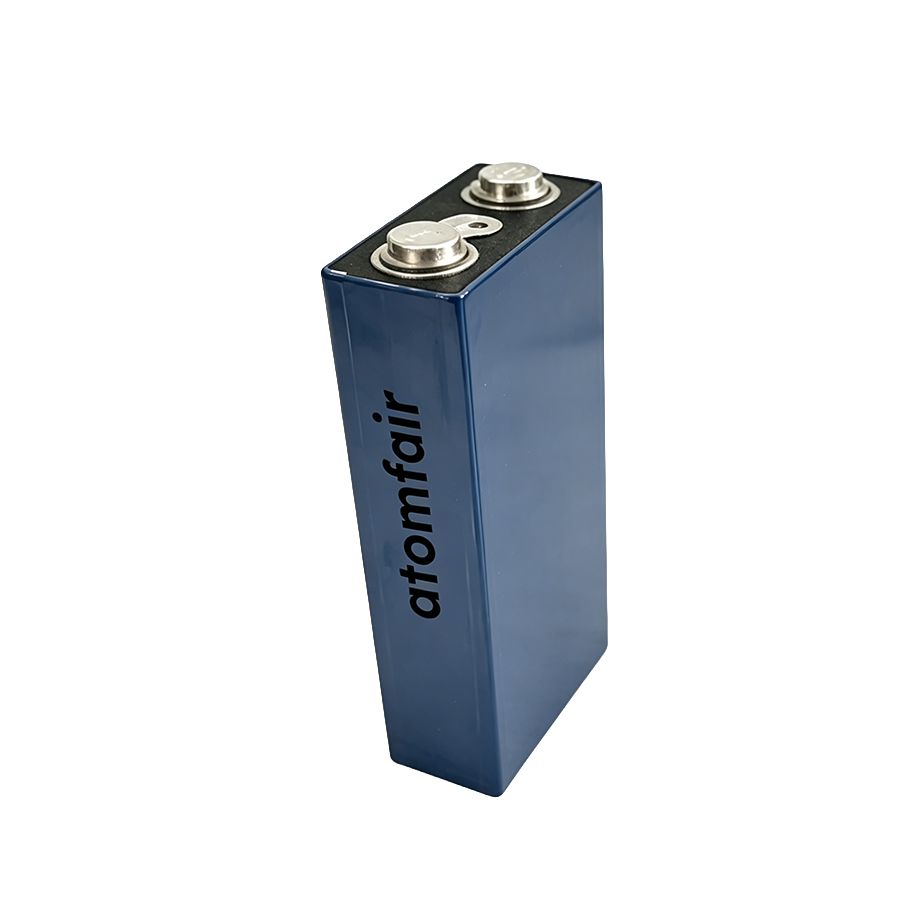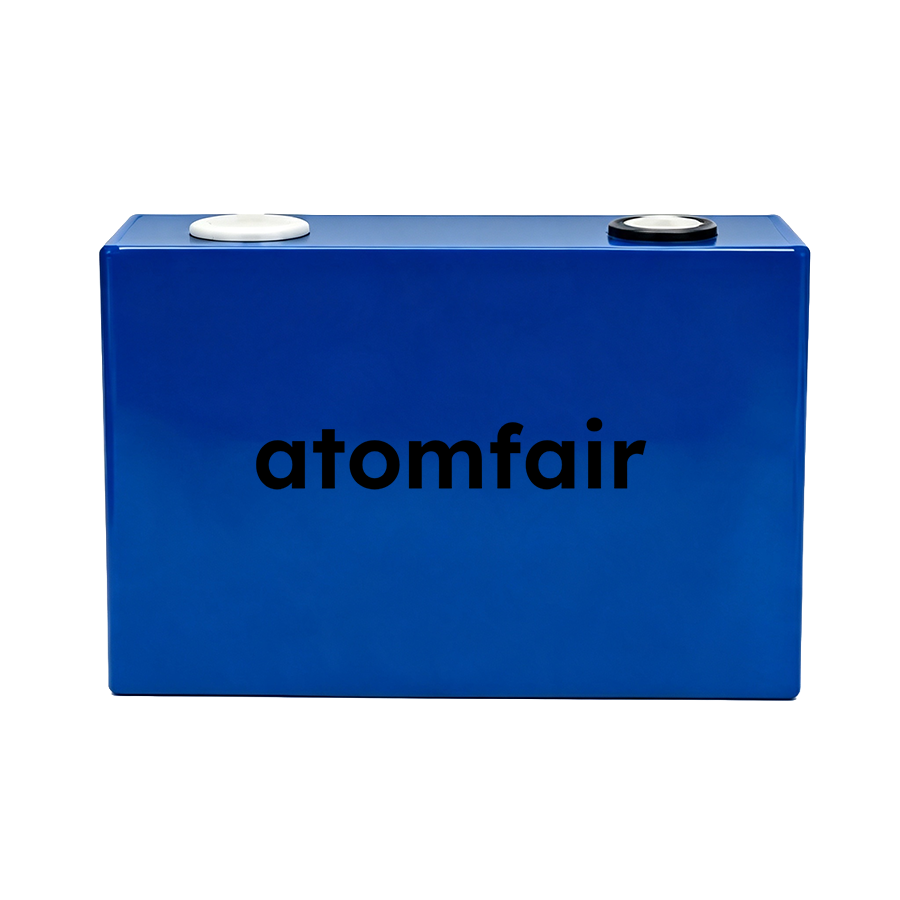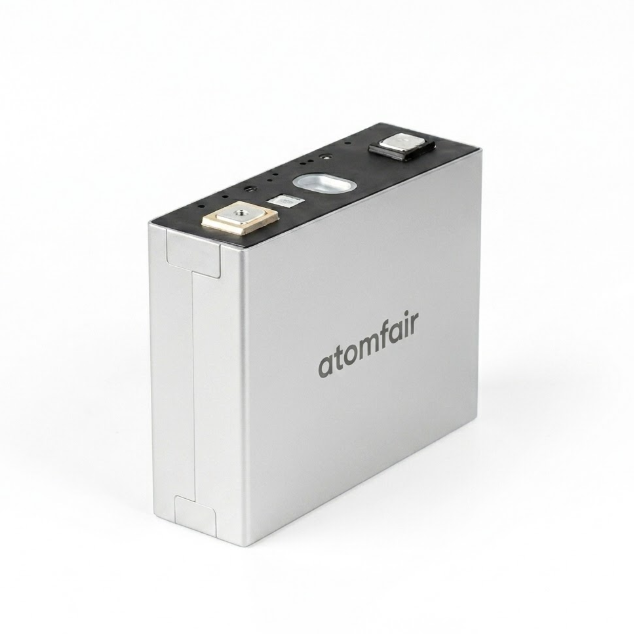
3.20V 314Ah LFP Prismatic Cell Series | ATOMFAIRCOMMERCIAL GRADE · PRODUCTION
|
|||||||||||||||||||||||||||||||||||||
|
|||||||||||||||||||||||||||||||||||||
|
TAILORED SOLUTIONS FOR RESEARCH
Contact our engineering team for technical support or official institutional quotations.
EMAIL: INQUIRY@ATOMFAIR.COM
|
|||||||||||||||||||||||||||||||||||||
|
MANUFACTURER: ATOMFAIR LLC
BRAND: ATOMFAIR®
|
Store cells in a dry, temperature-controlled environment to prevent moisture ingress and thermal stress. Always operate within the manufacturer's recommended voltage window and temperature range to ensure safe performance and cycle life.
- Storage Conditions: Maintain the cell in humidity-controlled vacuum sealed packaging until use to avoid moisture-induced degradation.
- Voltage and Temperature Limits: Operate the cell only within the specified voltage window and under suitable temperature conditions to prevent capacity loss or safety hazards.
- Mechanical Handling: Avoid mechanical abuse, deep over-discharge, and short circuits to prevent damage or thermal runaway.
- BMS Requirements: Use a dedicated BMS with over-discharge, over-charge, short-circuit protection, and cell balancing at all times.
- Disposal: Dispose of used cells in accordance with local regulations for lithium-ion batteries.
Follow these steps to prepare the cell for first use and ensure safe operation within an Energy Storage System. All actions assume use of proper personal protective equipment and a compatible BMS.
Required Equipment: Dedicated BMS with protection functions, Temperature-controlled storage area, Anti-static handling equipment
- Inspect packaging
Inspect the vacuum sealed packaging for any damage or breach before opening. - Transfer to controlled environment
Transfer the cell to a dry, temperature-controlled environment with stable conditions. - Connect BMS
Connect the cell to a dedicated BMS configured for over-discharge, over-charge, short-circuit protection, and cell balancing. - Condition the cell
Condition the cell under standard ambient conditions as advised by the manufacturer before first use. - Operate within limits
Operate the cell within the recommended voltage window and temperature range to ensure optimal performance and safety. - Dispose properly
Dispose of the cell in accordance with local regulations when its cycle life is exhausted.
What is the cycle life difference between the AFLFP314-8K and AFLFP314-12K models, and how does it affect application suitability?
The AFLFP314-8K delivers ≥8000 cycles, while the AFLFP314-12K provides ≥12000 cycles, both tested at 0.5C/0.5C, 100% DOD, and 70% capacity retention. The 12K variant is ideal for applications requiring two decades of daily deep cycling, such as grid-scale storage, whereas the 8K variant offers a cost-effective solution for standard ESS projects with shorter lifespan requirements.
Are the AFLFP314-8K and AFLFP314-12K cells physically interchangeable for pack integration?
Yes, both models share identical dimensions (71.8×174.2×207.1 mm including terminal) and weight (≤5.80 kg). This allows drop-in replacement or mixed configurations within the same battery pack design without mechanical modifications, simplifying BMS and assembly for utility-scale, C&I, and residential ESS projects.
What safety and operational requirements are critical for the ATOMFAIR 314Ah LFP prismatic cells?
The cells require a dedicated BMS with over-discharge, over-charge, short-circuit protection, and cell balancing. Operate within the recommended voltage window and suitable temperature conditions. Avoid mechanical abuse, deep over-discharge, or short circuits. Prior to first use, condition under standard ambient conditions. LFP chemistry provides intrinsic thermal stability, reducing thermal runaway risk.
The ATOMFAIR 3.20V 314Ah LFP Prismatic Cell Series offers high energy density (173Wh/kg) and dual cycle life options (≥8000 or ≥12000 cycles at 0.5C/0.5C, 100% DOD, 70% retention), making it suitable for stationary ESS applications requiring compact, long-life energy storage.
Positive
- High energy density 173Wh/kg: Reduces system footprint and total weight for commercial and utility-scale storage installations, enabling more compact ESS designs.
- Extended cycle life options: The 12k-cycle variant supports ≥12000 cycles at 0.5C/0.5C, 100% DOD with 70% retention, ideal for daily deep-cycling applications requiring two decades of service.
Trade-offs
- Requires dedicated BMS: A battery management system with over-discharge, over-charge, short-circuit protection, and cell balancing is mandatory to ensure safe operation and prevent cell damage.
- Sensitive to operating conditions: Operation must stay within recommended voltage window and temperature range; mechanical abuse, deep over-discharge, or short circuits can compromise performance and safety.
Every advanced material, component, equipment, and instrument in our catalog is backed by rigorous testing. We maintain strict internal quality management frameworks and align with CE conformity metrics to deliver transparent, reproducible performance data via our public open-science repository.
To request raw batch performance data, submit formal vendor registration paperwork, or execute a fast-turnaround R&D manufacturing loop, contact us at inquiry@atomfair.com.
Item is dispatched under the Atomfair Shipping & Delivery Framework (Free worldwide shipping on orders over $59 USD excl. heavy equipment). Return is governed by the Atomfair Return & Refund Policy (7-day technical return window).