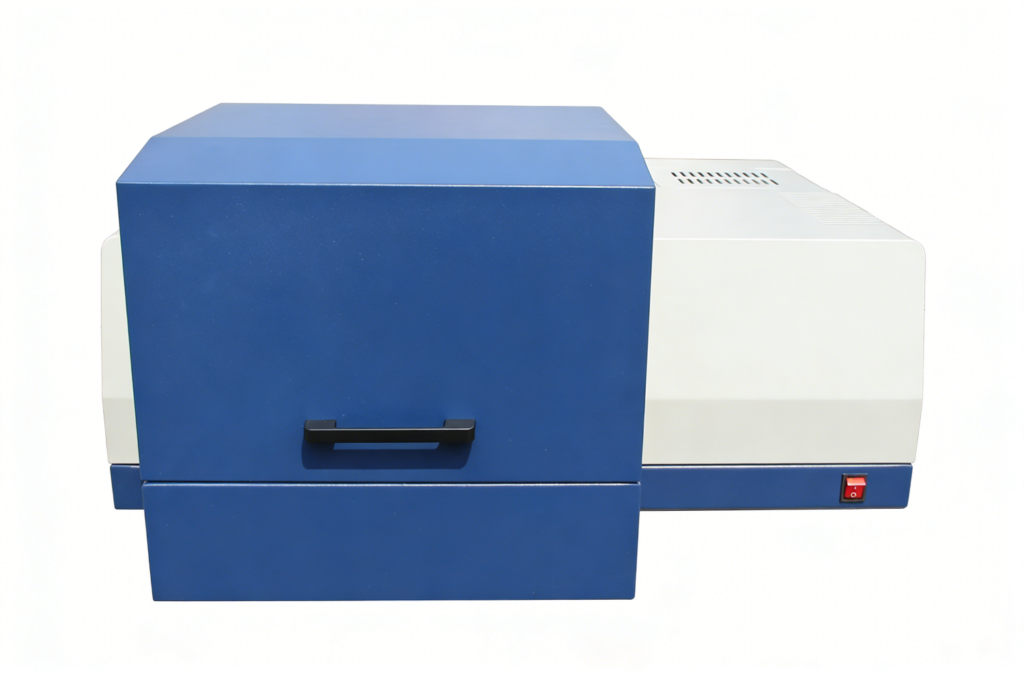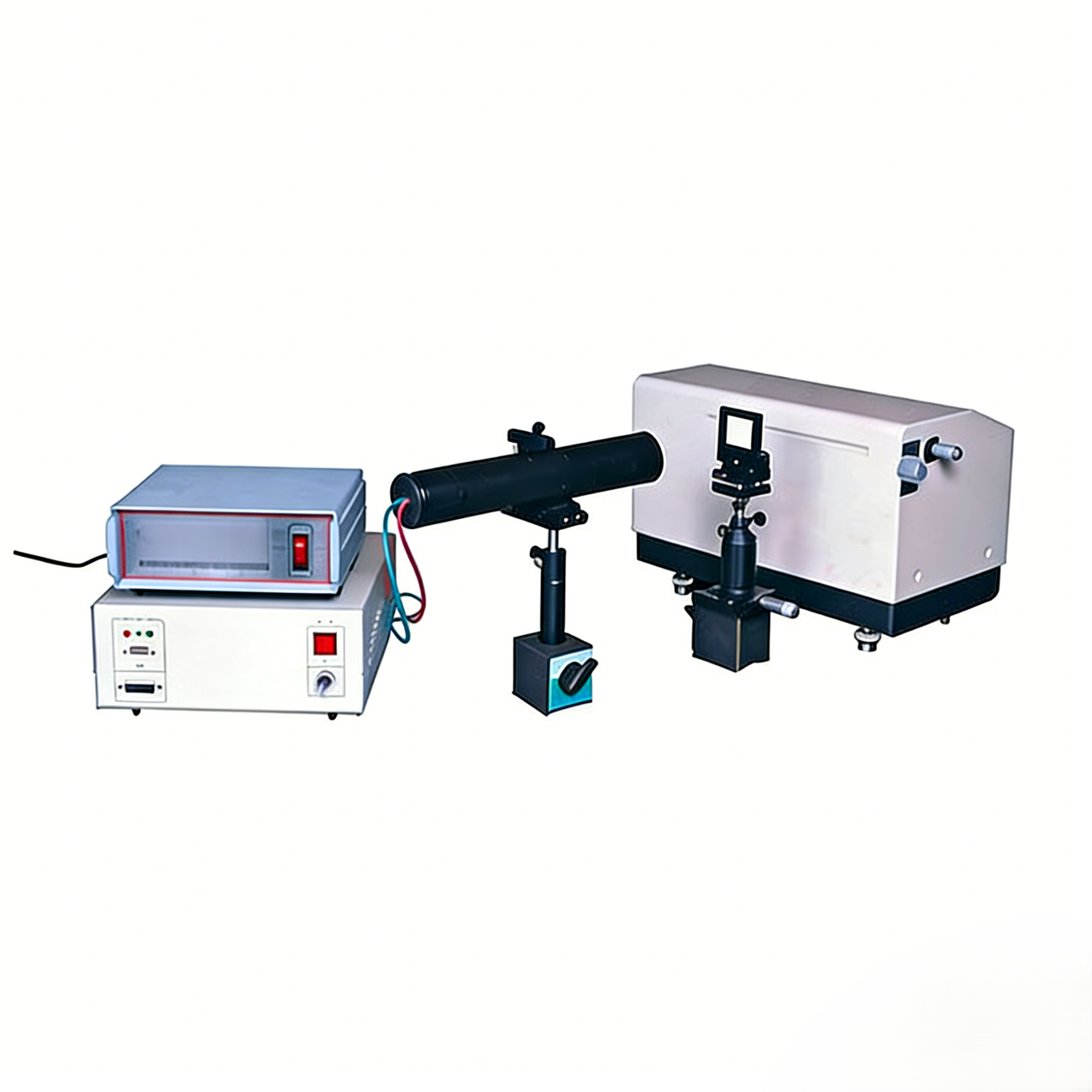
Atomfair Diffraction Intensity Auto-Recording System (ADARS-518)
Product Information
| Item | Details |
| Brand | Atomfair |
| Product Name | Diffraction Intensity Auto-Recording System |
| Model | ADARS-518 |
| Product Category | Interference, Diffraction and Polarization |
| Core Application | Scientific experiment, educational research, optical performance testing |
Product Overview
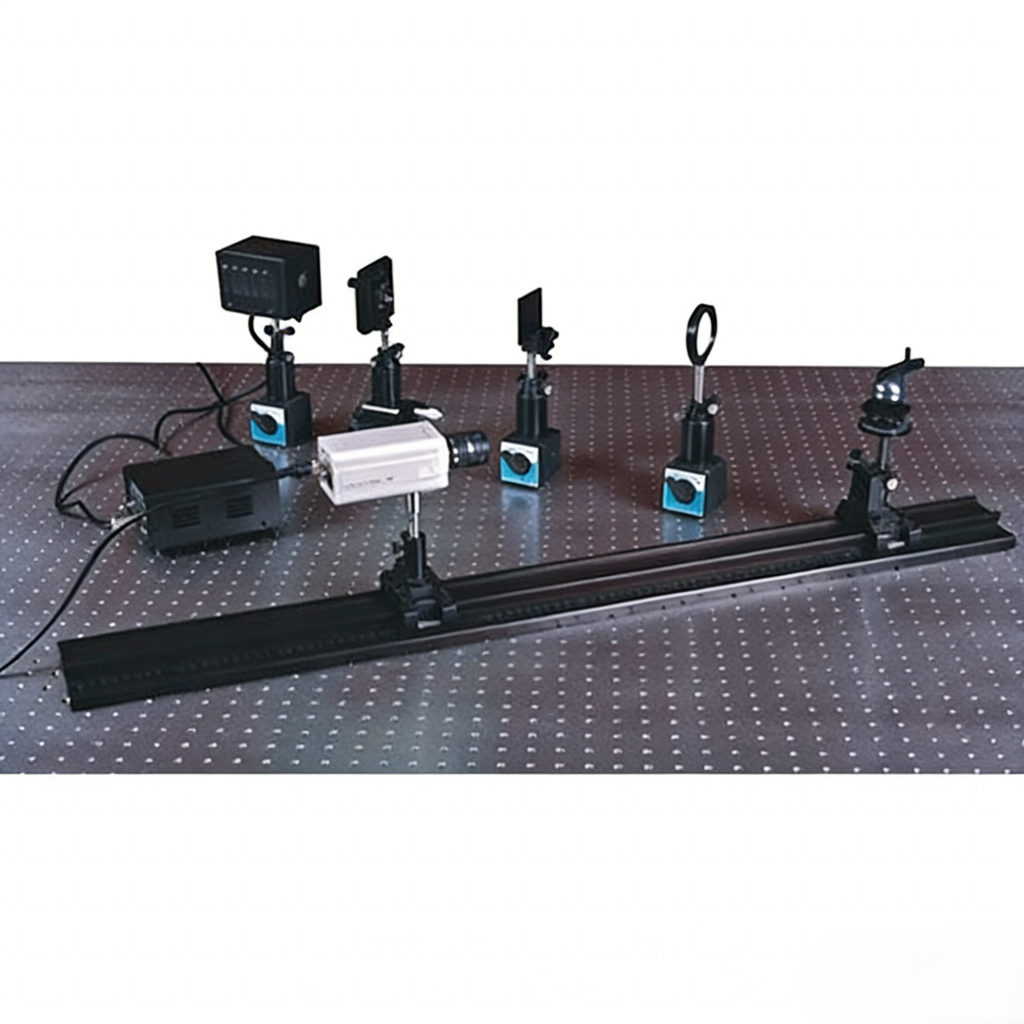
The Atomfair ADARS-518 Diffraction Intensity Auto-Recording System consists of a light source, diffraction plate set, receiving unit, computer, working software, and A/D converter. It enables intuitive display of experimental results through a computer interface, serving as both an accessory for optical platforms and a standalone experimental device. As a winning project of the World Bank Loan Higher Education Reform and Development Program, it offers stable performance and precise detection, fully complying with international standards for scientific research and educational applications.
Key Features
- Precise Light Intensity Measurement: Adopts a high-sensitivity photoelectric sensor to achieve accurate light intensity detection.
- High-Accuracy Displacement Sensing: Equipped with a precision grating ruler (not included in the basic version) to ensure reliable displacement measurement.
- Quantitative Distribution Analysis: Effectively conducts quantitative analysis of diffraction light intensity distribution, providing trustworthy data results.
- Automated Data Processing: Features full computer control over data collection and processing, enabling efficient and convenient operation.
- Theoretical Comparison Support: Allows direct comparison between measurement results and theoretical formulas, facilitating in-depth experimental research.
Application Scenarios
- Verify the variation law of diffraction light intensity with changing experimental conditions in single-slit, multi-slit, multi-hole, multi-rectangle, and other diffraction experiments.
- Suitable for various experiments requiring the measurement of light intensity distribution in optical research and educational institutions.
Standard Configuration & Specifications
| No. | Component Name | Specifications |
| 1 | Helium Laser | Wavelength: 632.8nm; Power: >1.5mW; Includes matching power supply |
| 2 | Control System | Main unit of diffraction light intensity auto-recording system, grating ruler structure, electronic control box (grating ruler not included in the basic version) |
| 3 | Optical Components | Plane mirror, multi-hole plate |
| 4 | Adjustment Frames | Plate holder, two-dimensional adjustment frame, laser holder |
| 5 | Diffraction Slit | Continuously adjustable: 0-2mm; Accuracy: 0.01mm; Height: 14mm |
| 6 | Multi-slit Diffraction Plate | 4 slit number options (2, 3, 4, 5); Slit width: 0.03mm; Spacing: 0.06mm |
| 7 | Others | USB cable, power cable, software CD, magnetic base |
Note: The above configuration and parameters are for reference only. Please refer to the actual packing list for exact specifications. Minor configuration adjustments will not be separately notified.
Optional Configurations
| No. | Component Name | Specifications |
| 1 | Computer | 2.5G dual-core processor, 200G hard disk, 3G memory, independent graphics card |
| 2 | Color Display | LCD Monitor |
| 3 | Printer | Standard configuration (no additional specifications) |
If you’re interested, have any questions, or have specific customization requirements, please feel free to contact us at inquiry@atomfair.com.
What is the effect of the helium laser's 632.8 nm wavelength and >1.5 mW power on diffraction pattern measurement with the ADARS-518?
The helium laser provides a monochromatic coherent light source at 632.8 nm with a power output greater than 1.5 mW, ensuring high signal-to-noise ratio for precise intensity detection. This wavelength is optimal for the included diffraction slits and plates, as it determines the angular spread of single- and multi-slit patterns, and the power level is sufficient to produce clear intensity profiles across the sensor range.
What computer specifications are recommended to run the ADARS-518 data acquisition and analysis software?
For full functionality, the system optionally includes a computer with a 2.5 GHz dual-core processor, 200 GB hard disk, 3 GB memory, and an independent graphics card. The software requires a USB connection for the A/D converter and a working display; the stated specifications are the minimum recommended for smooth operation of the auto-recording and theoretical comparison features.
Is the precision grating ruler essential for displacement measurement in the ADARS-518, and is it included in the standard configuration?
The precision grating ruler is used for high-accuracy displacement sensing but is not included in the basic version of the ADARS-518. The standard configuration includes the control system with grating ruler structure, but the grating ruler itself is a separate component. Without it, the system can still measure light intensity using the photoelectric sensor, but automated spatial mapping of intensity distribution with precise displacement tracking may not be achieved.
The ADARS-518 integrates a 632.8nm helium laser, high-sensitivity photoelectric sensor, and precision grating ruler (optional) to automate diffraction intensity recording, enabling quantitative comparison with theoretical distributions across single- and multi-slit configurations. Its continuously adjustable slit (0-2mm, 0.01mm accuracy) and multi-slit plates (2-5 slits) support versatile experimental setups, though the basic version omits the grating ruler and computer, requiring additional procurement for full displacement measurement and data acquisition.
Positive
- High-sensitivity photoelectric detection: The system employs a high-sensitivity photoelectric sensor for accurate light intensity measurement, enabling quantitative analysis of diffraction patterns with reliable data output.
- Automated data acquisition and comparison: Full computer control automates data collection and processing, allowing direct comparison of measured results with theoretical formulas, which streamlines experimental workflow and enhances research depth.
Trade-offs
- Grating ruler not included in basic version: The precision grating ruler, essential for high-accuracy displacement sensing, is not part of the standard configuration and must be procured separately, adding to the initial setup cost.
- Requires external computer and peripherals: The system depends on a computer (not included) for data processing and display; optional configurations list a 2.5G dual-core PC, monitor, and printer, which are necessary for full operation and result documentation.
Every advanced material, component, equipment, and instrument in our catalog is backed by rigorous testing. We maintain strict internal quality management frameworks and align with CE conformity metrics to deliver transparent, reproducible performance data via our public open-science repository.
To request raw batch performance data, submit formal vendor registration paperwork, or execute a fast-turnaround R&D manufacturing loop, contact us at inquiry@atomfair.com.
Item is dispatched under the Atomfair Shipping & Delivery Framework (Free worldwide shipping on orders over $59 USD excl. heavy equipment). Return is governed by the Atomfair Return & Refund Policy (7-day technical return window).