Atomfair MI-FPI 516 Interferometer
Product Overview
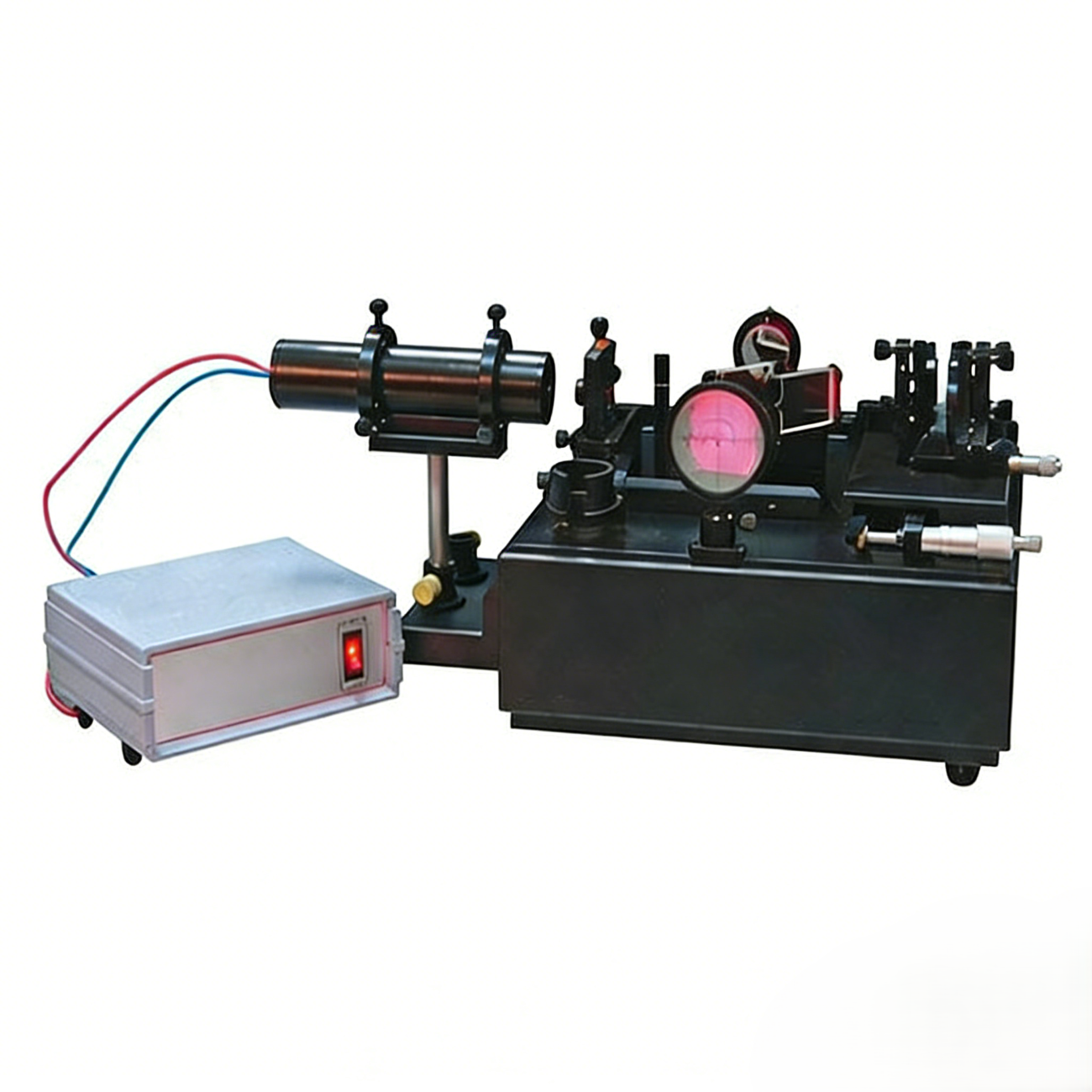
The Atomfair MI-FPI 516 is a high-precision optical instrument integrating Michelson interferometry and Fabry-Perot interferometry functions. Developed and manufactured by the Chinese brand ZKGD, with its origin in Tianjin and the manufacturer being a general distributor, this instrument is specialized in experiments and measurement applications related to interference, diffraction, and polarization. It is particularly suitable for physical optics experimental teaching in institutions of higher education. Its core advantage lies in the seamless switching between the two interferometer functions—no need to disassemble any components; only moving the light source and beam expander, and changing the observation direction are required to complete the switch.
Product Applications & Experimental Contents
Core Applications
With Michelson interferometry structure: Observe various interference phenomena such as equal-inclination interference, equal-thickness interference, and white light interference; achieve precise wavelength comparison and zero-path difference determination; measure the thickness of transparent medium sheets, coating thickness, and air refractive index.
With Fabry-Perot interferometry structure: Observe multi-beam interference phenomena (e.g., multi-beam interference sharp rings); observe the fine structure of spectral lines; measure the wavelength difference between adjacent spectral lines.
Specific Experimental Contents
Interference Phenomenon Observation: Observe equal-inclination interference, equal-thickness interference, and white light interference (sodium-tungsten dual lamp is required as an optional accessory).
Optical Parameter Measurement: Measure monochromatic light wavelength, thickness of transparent medium sheets, coating thickness, and air refractive index (air chamber, barometer, and gauge head are required as optional accessories).
Multi-beam Interference Experiment: Utilize the Fabry-Perot interferometry device to observe multi-beam interference sharp rings, measure the wavelength difference between adjacent spectral lines, and observe the fine structure of spectral lines.
Product Structure & Working Principle
Overall Structure
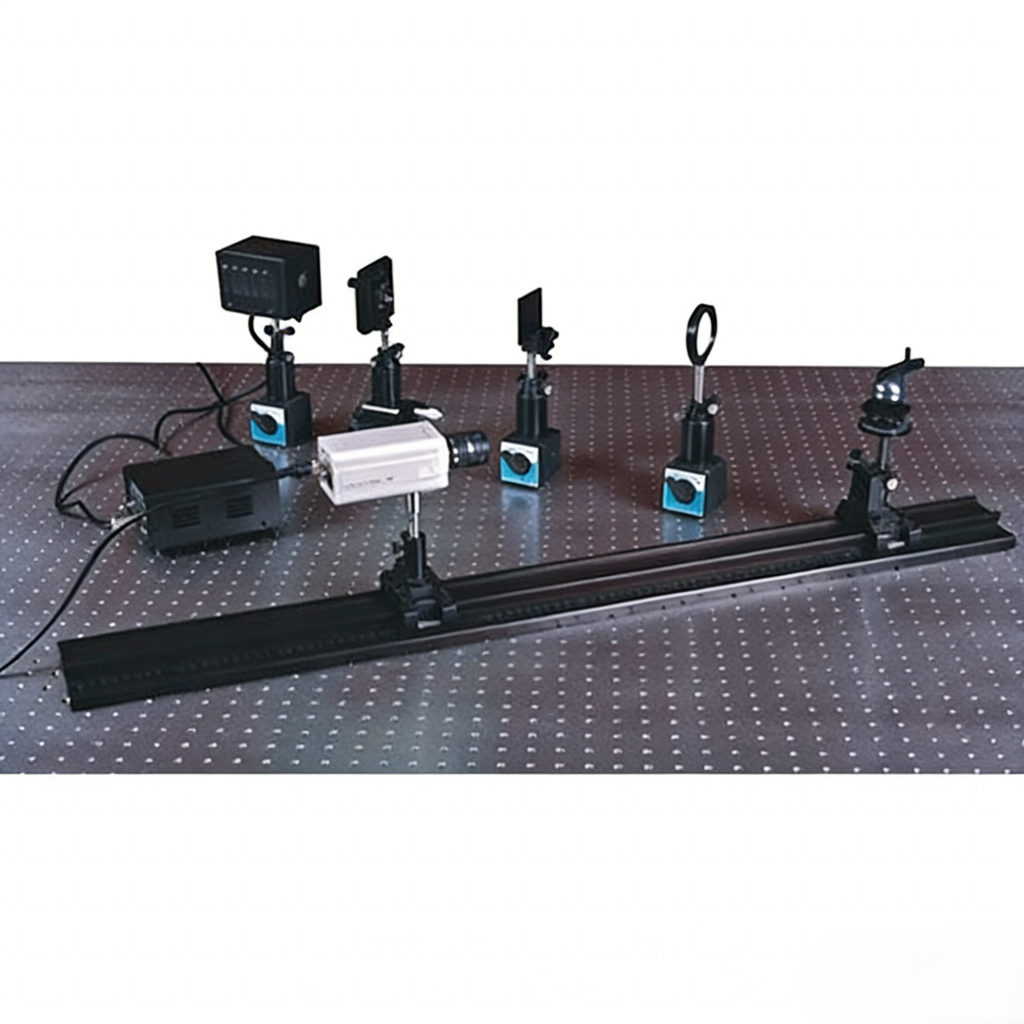
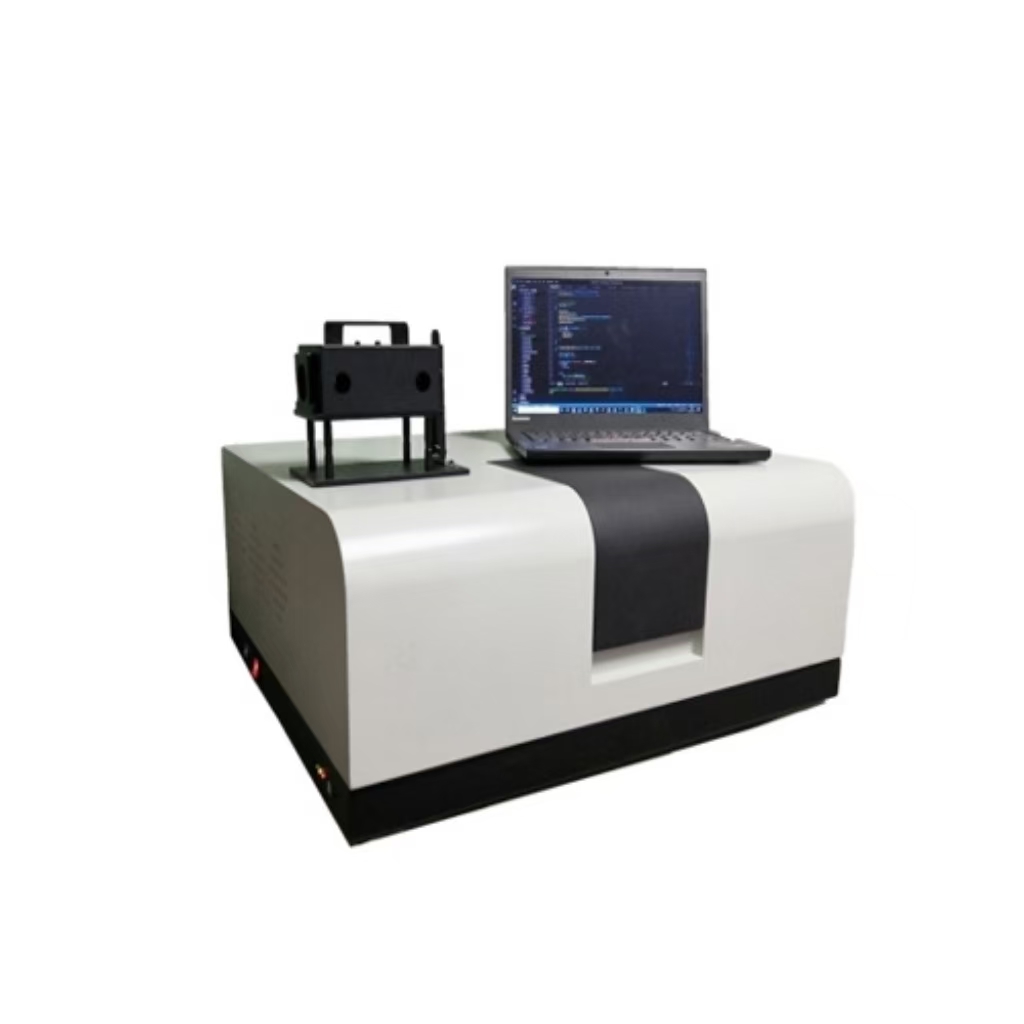
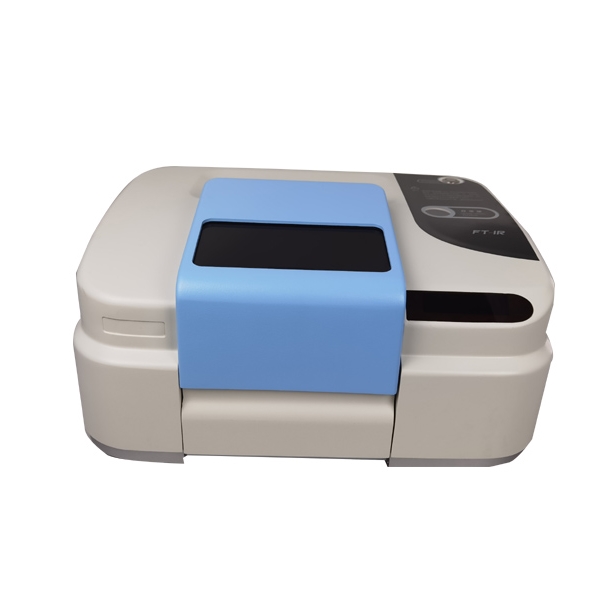
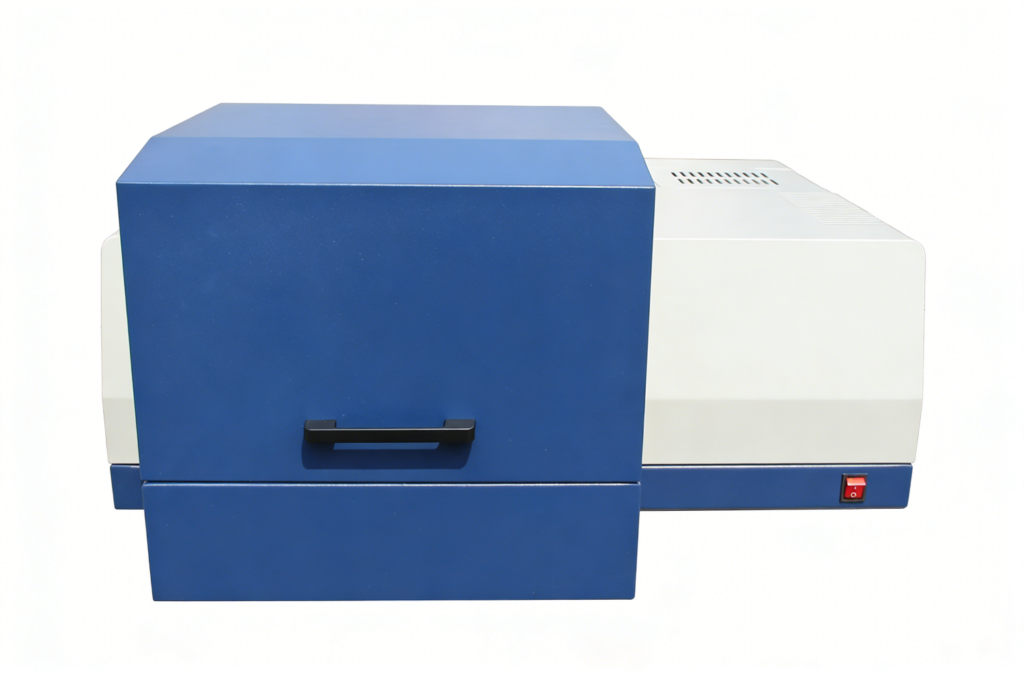
The instrument adopts a platform-type base design with a thick steel plate tabletop to ensure stable operation. The base integrates the core components of the two interferometers, including: He-Ne laser, side plate, beam expander (two-dimensionally adjustable and movable on a double-bar guide rail), fixed mirror (Michelson interferometer reference mirror), beam splitter (with semi-transparent film plated on the inner side), compensation plate (consistent with the beam splitter in material and thickness, adjusted to a parallel state before leaving the factory), F-P fixed mirror and F-P movable mirror, rotating arm frame, movable mirror preset screw, movable mirror, micrometer screw, movable mirror carriage, ground glass screen (receives Michelson fringes and prevents glare), pressure gauge base, etc. The transmission components are divided into upper and lower layers. The upper layer includes the F-P movable mirror, movable mirror preset screw, Michelson movable mirror, and movable mirror carriage, which facilitates presetting the movable mirror and is controlled by the lower micrometer mechanism.
Working Principle
Michelson Interferometer: The light beam emitted by the light source is directed to the beam splitter, which splits it into two paths through reflection and transmission—one path is reflected back by the fixed mirror, and the other path passes through the compensation plate and is reflected back along the original path by the movable mirror. The two light beams converge and interfere at the beam splitter, and the observer can see the interference pattern from a specific direction. The virtual image of the movable mirror and the fixed mirror form an “air parallel plate”. The interference effect is determined by the distance between the two mirror surfaces and the incident angle of the light. When specific conditions are met, concentric circular interference fringes will be formed.
Fabry-Perot Interferometer: Based on the principle of multi-beam superposition of monochromatic light reflected by parallel plane plates (F-P fixed mirror and F-P movable mirror), it produces narrow and bright interference fringes. Adjusting the distance between the two mirror surfaces allows observing different multi-beam interference effects, and spectral-related parameters can be measured through the characteristics of the fringes.
Configuration & Technical Parameters
Standard Configuration & Parameters
Configuration Name Specification Parameters Quantity
Interferometer Host Wavelength measurement accuracy: Relative error ≤2% when the fringe count is 100; Flatness of beam splitter and compensation plate: ≤1/20λ; Micrometer screw: Each small grid corresponds to a movable mirror movement of 0.0005mm, and each rotation of 0.01mm results in a movable mirror movement of 0.0005mm; Movable mirror stroke: Coarse adjustment (preset) 10mm, Fine adjustment (micrometer) 1.25mm; Overall dimensions: 450×340×250mm; Weight: Approximately 17kg (excluding light source) 1 Unit
Laser & Bracket He-Ne laser, Power: 0.7-1mW, Wavelength: 632.8nm, Including power supply 1 Set
Other Accessories Ground glass screen 1 Set
Note: The above configurations and parameters are for reference only. The final configuration shall be subject to the product packing list. No separate notice will be given for minor changes.
Optional Configurations
Optional Accessory Name Specification Parameters Quantity
Sodium-Tungsten Dual Lamp Sodium lamp power: 20W; Tungsten bromide lamp power: 15W, Voltage: 6V/3V 1 Set
Air Chamber Length: 80mm, Used for air refractive index measurement 1 Set
If you’re interested, have any questions, or have specific customization requirements, please feel free to contact us at inquiry@atomfair.com.
How does the Atomfair MI-FPI 516 achieve simultaneous Michelson and Fabry-Perot interferometry without component disassembly, and what accuracy can be expected?
The instrument integrates both interferometer structures on a single platform; switching requires only moving the light source and beam expander and changing the observation direction—no disassembly of mirrors or beam splitters. The wavelength measurement accuracy is ≤2% relative error when the fringe count is 100. The beam splitter and compensation plate have a flatness of ≤1/20λ, ensuring consistent performance in both modes.
What optional accessories are required to measure the thickness of transparent medium sheets or air refractive index with the MI-FPI 516?
For thickness measurement of transparent sheets, the standard Michelson configuration is sufficient. For air refractive index measurement, the optional air chamber (80mm length), barometer, and gauge head are required. For white light interference observation, the optional sodium-tungsten dual lamp is needed (sodium lamp 20W, tungsten lamp 15W). These accessories are not included in the standard configuration.
Why does the MI-FPI 516 include a ground glass screen, and what are the coarse and fine adjustment ranges for the movable mirror?
The ground glass screen receives Michelson interference fringes and prevents glare from the laser, protecting the observer's eyes. The movable mirror has a coarse adjustment (preset) stroke of 10mm for initial positioning, and a fine adjustment (micrometer) stroke of 1.25mm with a resolution of 0.0005mm per small micrometer grid, enabling precise fringe counting.
The Atomfair MI-FPI 516 integrates Michelson and Fabry-Perot interferometry in a single platform, enabling seamless switching between modes without disassembly. It supports a range of physical optics experiments, including interference observation, wavelength measurement, and multi-beam interferometry, with a specified wavelength measurement accuracy of relative error ≤2% at 100 fringes.
Positive
- Dual interferometer modes without disassembly: The instrument integrates Michelson and Fabry-Perot interferometry, allowing switching by only moving the light source and beam expander and changing observation direction, eliminating the need to disassemble components.
- High precision and stability: The platform-type base with thick steel plate ensures stable operation, and the micrometer screw provides fine adjustment with each small grid corresponding to 0.0005 mm mirror movement, supporting precise measurements.
Trade-offs
- Requires optional accessories for full capability: Certain experiments, such as white light interference and air refractive index measurement, require optional accessories like the sodium-tungsten dual lamp, air chamber, barometer, and gauge head, which are not included in the standard configuration.
- Heavy and bulky design: Weighing approximately 17 kg (excluding light source) and with overall dimensions of 450×340×250 mm, the instrument requires a dedicated lab bench and careful handling during setup and storage.
Every advanced material, component, equipment, and instrument in our catalog is backed by rigorous testing. We maintain strict internal quality management frameworks and align with CE conformity metrics to deliver transparent, reproducible performance data via our public open-science repository.
To request raw batch performance data, submit formal vendor registration paperwork, or execute a fast-turnaround R&D manufacturing loop, contact us at inquiry@atomfair.com.
Item is dispatched under the Atomfair Shipping & Delivery Framework (Free worldwide shipping on orders over $59 USD excl. heavy equipment). Return is governed by the Atomfair Return & Refund Policy (7-day technical return window).