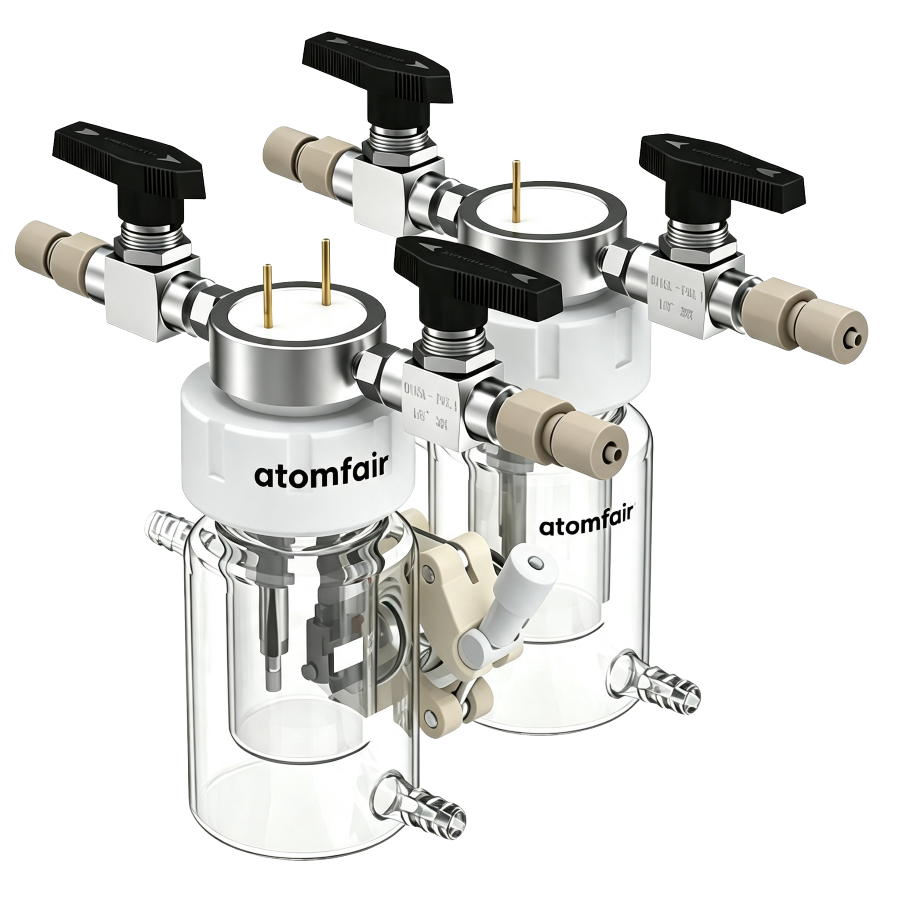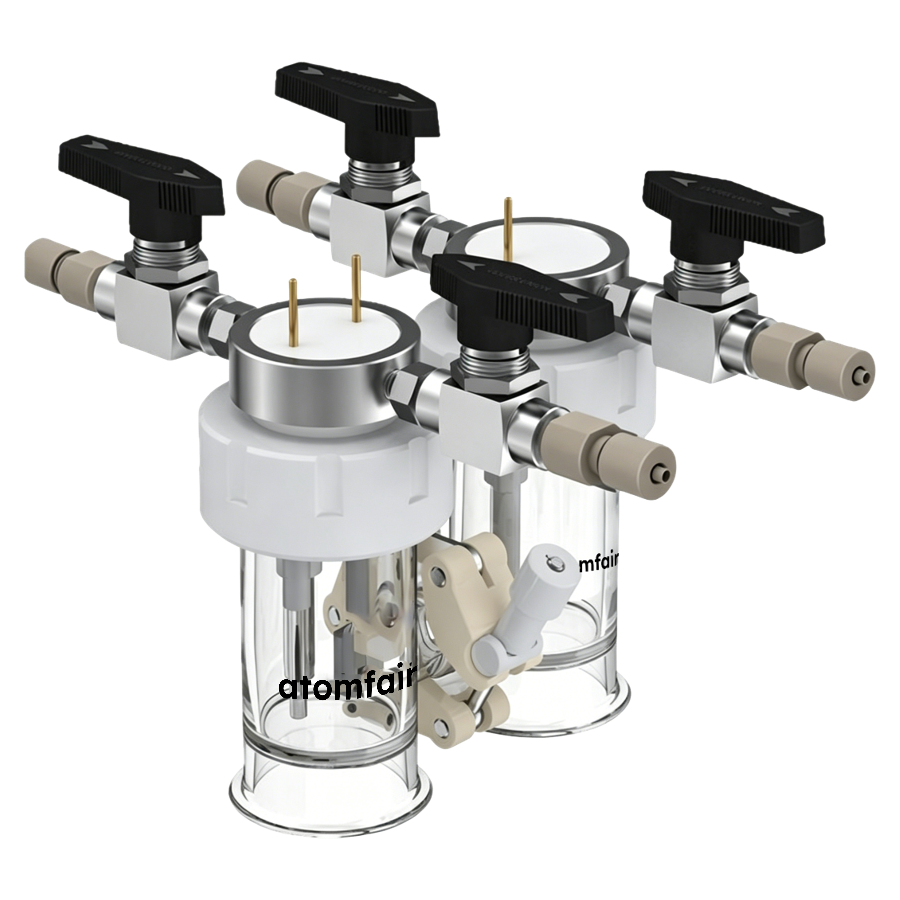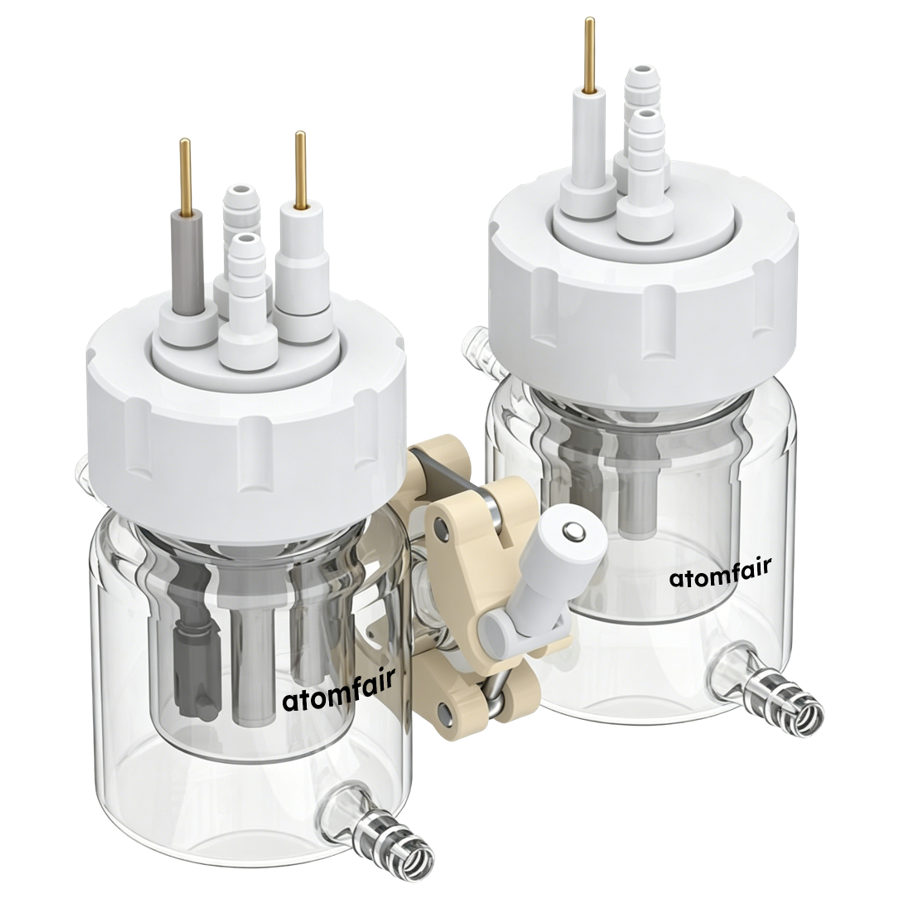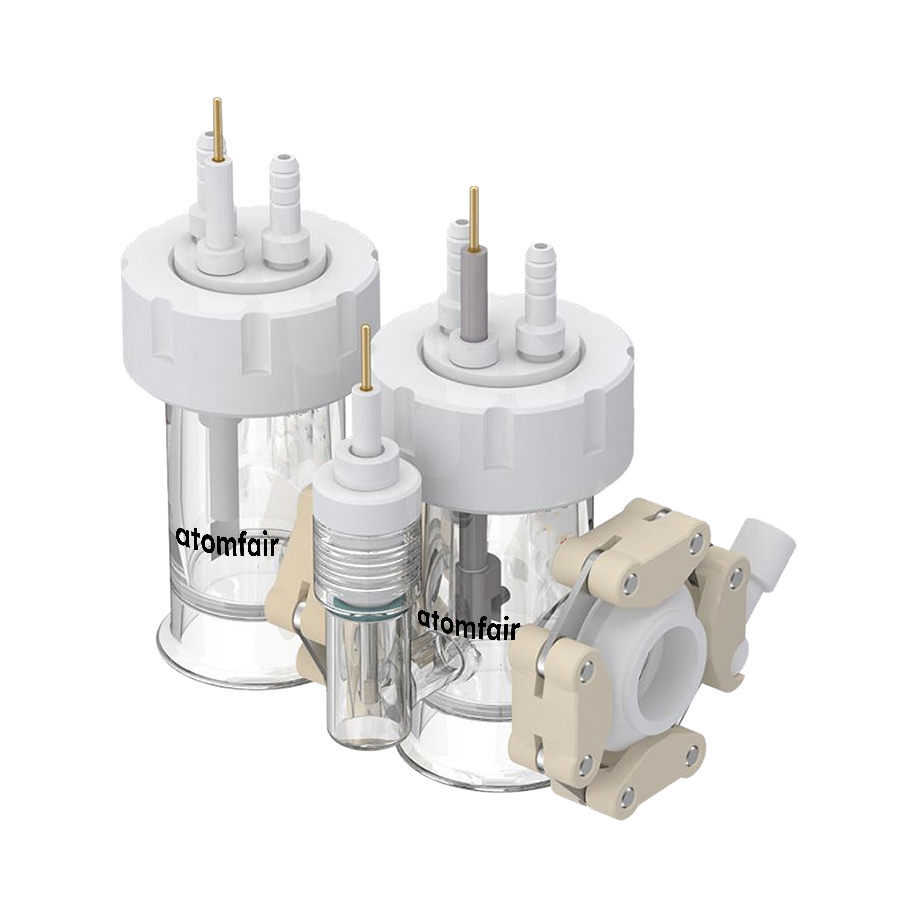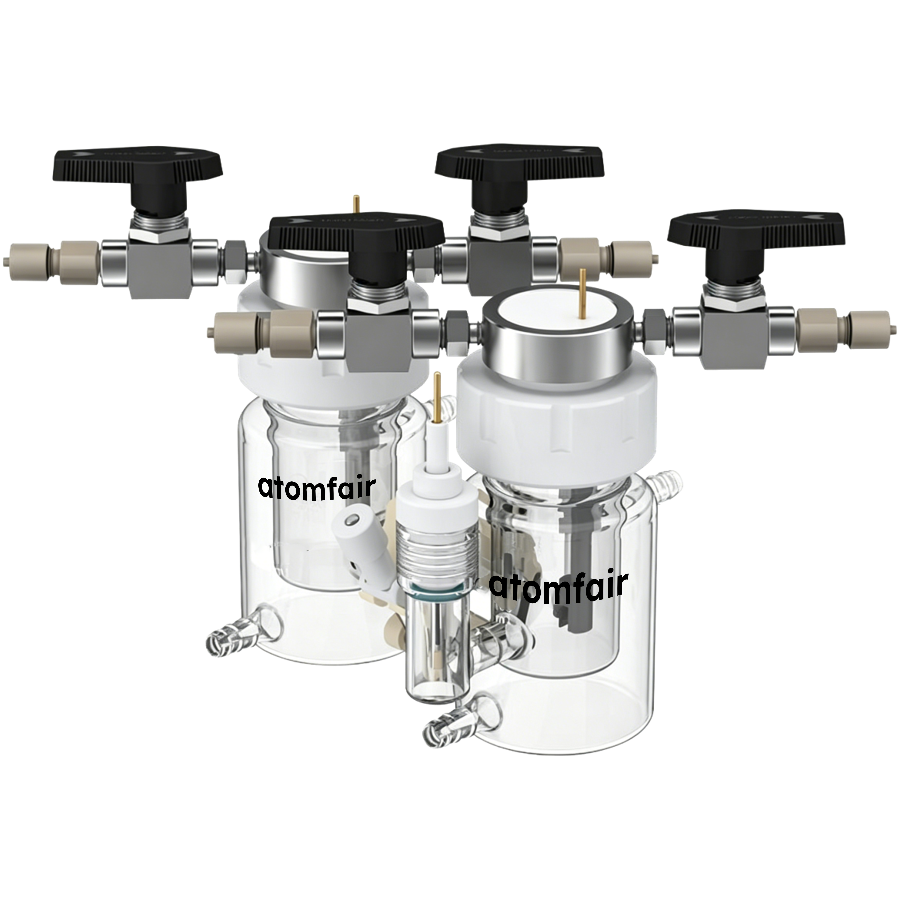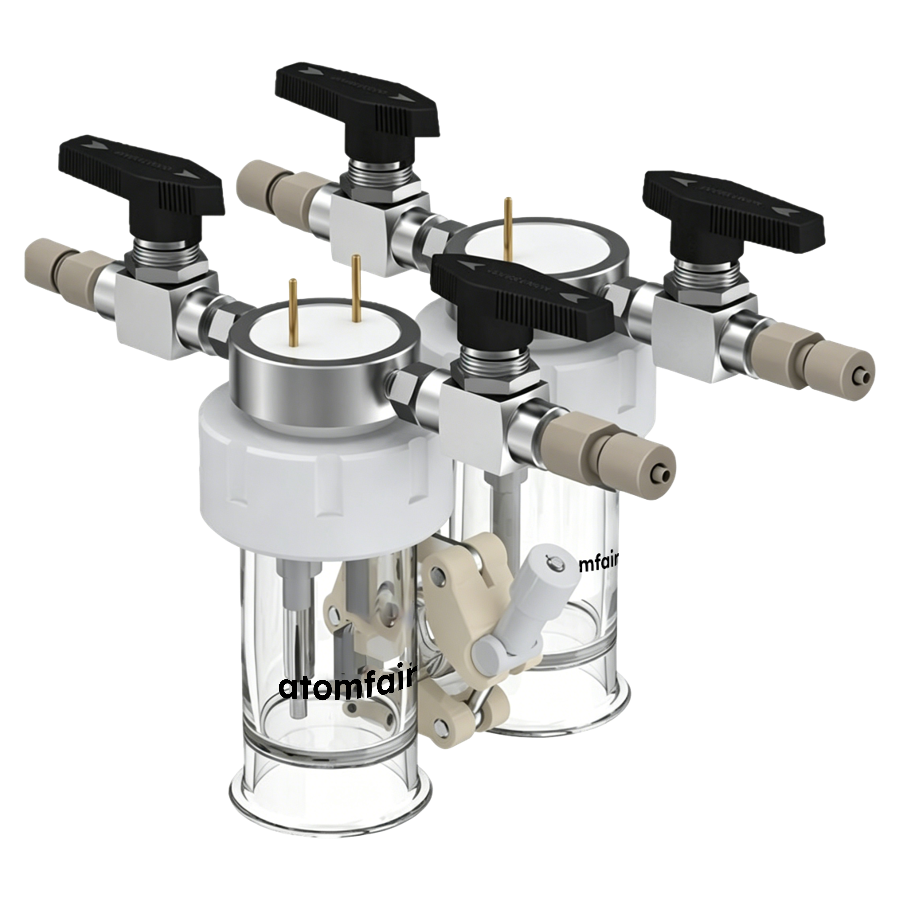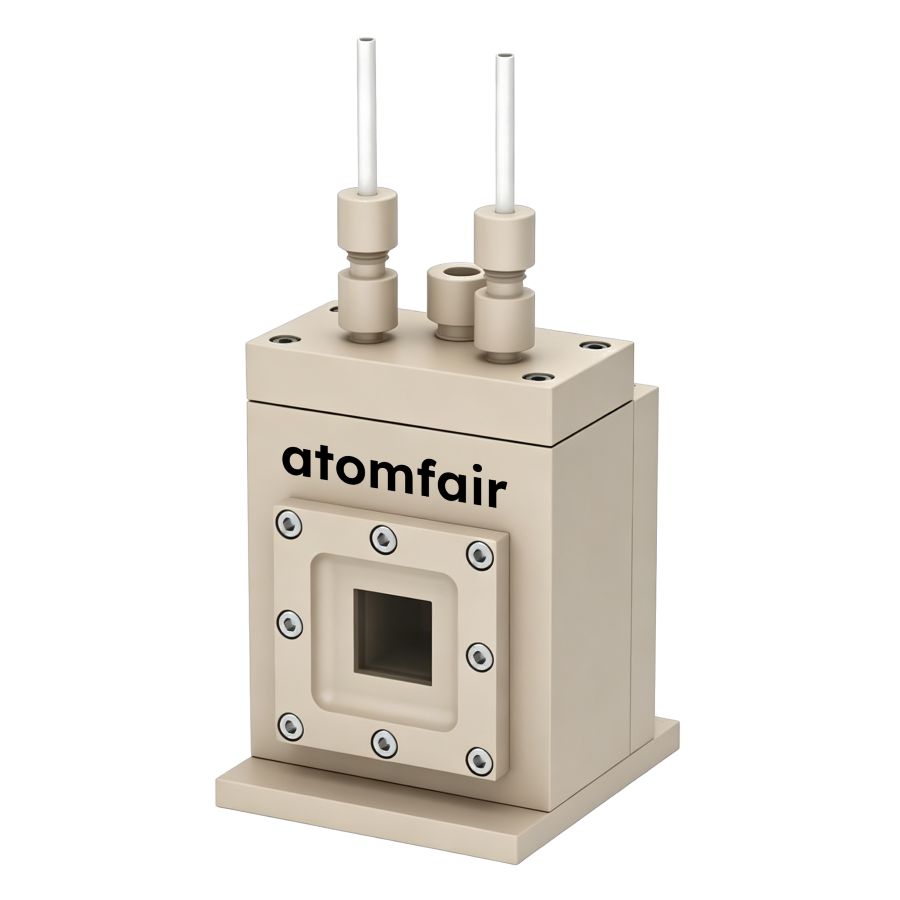
In-situ X-ray Absorption Spectroscopy Reactor Cell, Single-Chamber TypeProduct Type: In-situ X-ray absorption spectroscopy reactor
Research-grade laboratory product
|
|||||||||||||||||||||||
|
|||||||||||||||||||||||
|
LABORATORY PROCUREMENT SUPPORT
For model selection, technical compatibility or configuration confirmation, contact our technical sales team.
E-MAIL: inquiry@atomfair.com
|
|||||||||||||||||||||||
|
Manufacturer: Atomfair LLC LLC
Brand: ATOMFAIR®
|
This single-chamber reactor cell requires user-prepared Kapton windows and user-configured electrode systems. Gas inlet and outlet ports enable controlled atmosphere operation, and cell volume is customizable.
- Optical Window Preparation: The Kapton film for the optical window must be prepared by the user.
- Electrode Configuration: The electrode system can be configured as either two-electrode or three-electrode mode.
- Atmosphere Control: Gas inlet and outlet ports must be connected to a controlled atmosphere supply.
- Cell Volume Customization: The cell volume is customizable and must be specified before ordering.
- Accessory Selection: Separately purchased electrodes, membranes, windows, and gas diffusion electrodes must be confirmed for the selected configuration.
This procedure covers window preparation, gas connection, and electrode configuration for the single-chamber cell. Follow these steps to set up the cell for synchrotron XAS experiments.
- Prepare Kapton Window
Prepare a Kapton film of appropriate dimensions for the optical window. - Connect Gas Lines
Connect gas inlet and outlet ports to a controlled atmosphere supply. - Configure Electrode System
Configure the electrode system by selecting two-electrode or three-electrode mode.
What are the practical trade-offs between using a two-electrode versus three-electrode configuration in this single-chamber XAS reactor?
The choice between two- and three-electrode configurations involves a trade-off between simplicity and potential control accuracy. A two-electrode setup is easier to implement but lacks a separate reference electrode, which can introduce errors in potential measurement during in-situ XAS experiments. The three-electrode configuration provides more precise potential control by isolating the reference electrode, at the cost of additional wiring and increased cell complexity. Both configurations are supported by the Atomfair AF-XAFS-1, as stated in the technical specifications.
How does the requirement for user-prepared Kapton film windows constrain integration with different synchrotron beamlines or electrochemical conditions?
The optical window is user-prepared Kapton film, meaning its thickness, uniformity, and sealing quality directly affect X-ray transmission and the cell's ability to maintain a controlled atmosphere. This requires the user to select a Kapton grade compatible with both the incident X-ray energy range (minimizing absorption artifacts) and the electrolyte chemistry (avoiding degradation or leakage). No standard film specification is provided by the manufacturer, so each experiment demands custom preparation validated against the beamline and reaction conditions.
What infrastructure and safety considerations are needed to operate this PEEK single-chamber reactor with controlled atmosphere gas ports in a synchrotron environment?
Operation requires a synchrotron beamline, a potentiostat for electrochemical control, and a gas handling system for the inlet and outlet ports that support controlled atmosphere conditions. The PEEK body offers chemical resistance, but no pressure or temperature limits are specified; therefore, the user must verify compatibility with their specific gas flow rates, overpressure, and any heating requirements. Standard laboratory safety for pressurized gas lines and X-ray exposure applies, but no additional safety features are documented beyond the protective packaging.
The AF-XAFS-1 single-chamber in-situ XAS reactor cell, constructed from chemically inert PEEK, is designed for synchrotron-based electrochemical experiments requiring controlled atmospheres and customizable electrode configurations, though it demands user-prepared Kapton windows and separate procurement of electrodes and membranes.
Positive
- Chemically inert PEEK body: The PEEK construction provides excellent chemical resistance and low outgassing, making it suitable for controlled-atmosphere synchrotron XAS experiments without introducing contaminants.
- Flexible electrode configuration: Supports both two-electrode and three-electrode setups with a customized working electrode, enabling adaptation to diverse electrochemical measurement protocols.
Trade-offs
- User-prepared Kapton window: The optical window is made from Kapton film that must be prepared by the user, introducing variability in X-ray transmission and requiring careful handling to avoid leaks or contamination.
- Separate accessory procurement required: Electrodes, membranes, and gas diffusion electrodes are not included and must be sourced separately, increasing procurement complexity and lead time for full system assembly.
Every advanced material, component, equipment, and instrument in our catalog is backed by rigorous testing. We maintain strict internal quality management frameworks and align with CE conformity metrics to deliver transparent, reproducible performance data via our public open-science repository.
To request raw batch performance data, submit formal vendor registration paperwork, or execute a fast-turnaround R&D manufacturing loop, contact us at inquiry@atomfair.com.
Item is dispatched under the Atomfair Shipping & Delivery Framework (Free worldwide shipping on orders over $59 USD excl. heavy equipment). Return is governed by the Atomfair Return & Refund Policy (7-day technical return window).