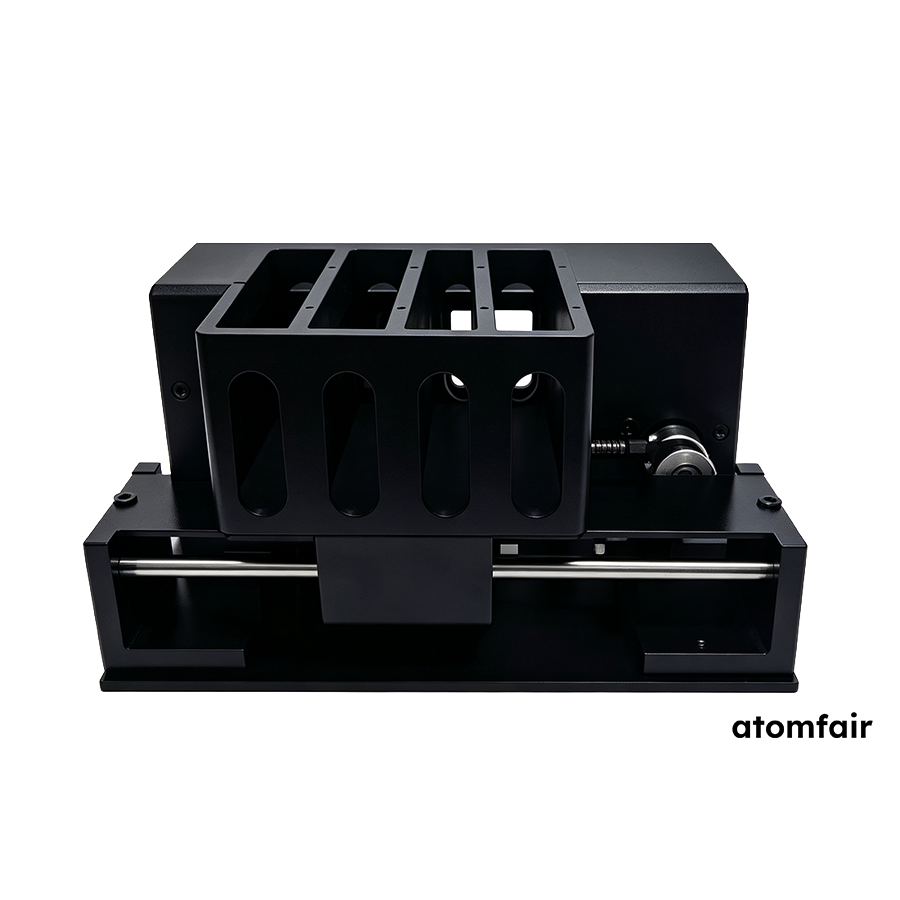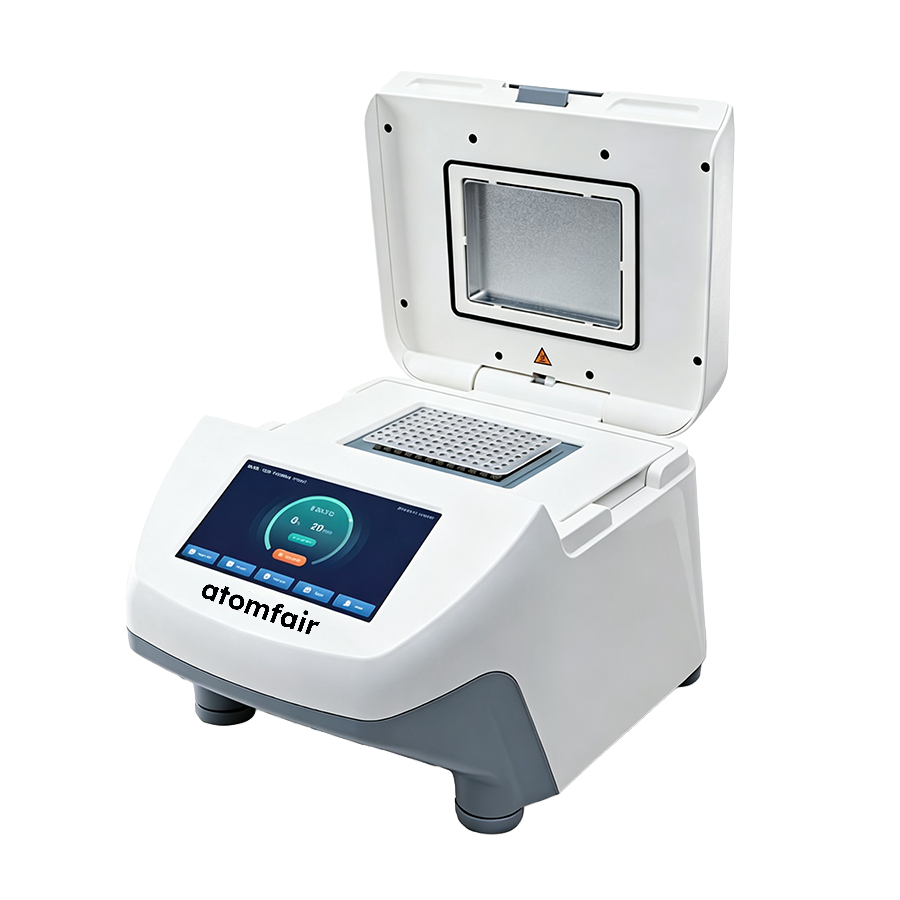
TC1000-G-Pro Gradient Thermal CyclerProduct Type: Temperature control instrument
Research-grade temperature control platform
|
|||||||||||||||||||||||||||||||||||||||||||||||||||||||||
|
|||||||||||||||||||||||||||||||||||||||||||||||||||||||||
|
TAILORED SOLUTIONS FOR RESEARCH
For bulk orders, OEM requirements, accessory matching or configuration confirmation, contact our engineering sales team.
EMAIL: inquiry@atomfair.com
|
|||||||||||||||||||||||||||||||||||||||||||||||||||||||||
|
Supplier: Atomfair
Brand: ATOMFAIR®
|
The instrument requires connection to a grounded power supply of the specified voltage and frequency to prevent electrical hazards. The heated lid and sample block surfaces reach temperatures up to 115°C and 105°C respectively, creating a burn risk during operation.
- Electrical Supply: Connect to a grounded outlet rated at 100-120 V or 200-240 V, 50/60 Hz, with a 600 W capacity.
- Environmental Conditions: Operate in an environment between 5 to 40 °C and below 80% relative humidity to avoid condensation and ensure thermal control accuracy.
- Sample Vessel Compatibility: Use only 0.2 mL PCR tubes, 8-strip tubes, or 96-well plates that are compatible with the 96-well sample module.
- Heated Lid Operation: Ensure the heated lid is set between 30 and 115 °C and properly closed to prevent sample evaporation and contamination.
- Program Storage: Save programs internally (up to 20000+) or export via USB FLASH to retain methods and support power-off protection.
Follow these steps to safely set up and run a thermal cycling protocol. Ensure all sample vessels and block are compatible before starting.
Required Equipment: TC1000-G-Pro Gradient Thermal Cycler
- Connect Power
Connect the instrument to a grounded power outlet matching the rated voltage and frequency from the technical specifications. - Set Heated Lid
Set the heated lid temperature between 30 and 115 °C using the touch screen interface to prevent sample evaporation. - Load Samples
Load the 0.2 mL PCR tubes, strips, or 96-well plate into the sample block, ensuring proper sealing and orientation. - Program the Run
Enter the desired thermal cycling program with up to 30 steps and 99 cycles via the touch screen display. - Start Cycling
Close the heated lid and start the program, monitoring progress on the 7-inch LCD screen.
Should I use Block or Tube control mode in the TC1000-G-Pro gradient thermal cycler, and how does this choice affect temperature accuracy?
The TC1000-G-Pro offers both Block and Tube control modes as specified in its control mode settings. Block mode regulates the block temperature directly, while Tube mode simulates the sample temperature for more precise reaction control. The temperature accuracy is ±0.1°C and uniformity is ±0.2°C at 55°C across both modes, but Tube mode is typically recommended for protocols where exact sample temperature is critical, such as PCR. Choose the mode based on your specific application requirements.
What tube and plate formats are compatible with the TC1000-G-Pro without requiring an additional block?
The TC1000-G-Pro sample module is designed for 0.2 mL format vessels only: 96 x 0.2 mL PCR tubes, 12 x 0.2 mL PCR 8-strip tubes, and a 0.2 mL 96-well PCR plate. It does not natively support 0.5 mL tubes, 0.1 mL tubes, or other formats without purchasing a separate compatible heating block. Confirm your vessel format before ordering, as the module is a fixed 1 x 96-well block.
What are the electrical power and environmental requirements for installing the TC1000-G-Pro gradient thermal cycler?
The TC1000-G-Pro requires a power supply of 100 to 120 V or 200 to 240 V, 50/60 Hz, with a maximum power consumption of 600 W. It must be operated in an environment of 5 to 40 °C and up to 80% relative humidity. The unit occupies a footprint of 296 x 370 x 295 mm and weighs 9.5 kg, so ensure adequate bench space and ventilation around the instrument.
The TC1000-G-Pro Gradient Thermal Cycler delivers research-grade dry-block temperature control with ±0.1 °C accuracy and a gradient range of 1–42 °C, enabling precise PCR optimization. However, its 600 W power requirement and lack of an integrated shaking module impose infrastructure and workflow limitations that must be accounted for in lab planning.
Positive
- High temperature accuracy and uniformity: Temperature accuracy of ±0.1 °C and uniformity of ±0.2 °C at 55 °C ensure reproducible incubation and amplification conditions across the block.
- Wide gradient range for optimization: Gradient setting range from 30 to 105 °C with a programmable difference of 1–42 °C allows simultaneous annealing temperature screening directly on a single block.
Trade-offs
- No integrated shaking module: The instrument lacks a shaking function, limiting its utility for assays or digestions that require intermittent or continuous mixing during incubation.
- Power supply and compatibility checks required: Operation requires 100–120 V or 200–240 V AC at 600 W, and the user must confirm block/module compatibility with specific sample vessels before ordering or deploying.
Every advanced material, component, equipment, and instrument in our catalog is backed by rigorous testing. We maintain strict internal quality management frameworks and align with CE conformity metrics to deliver transparent, reproducible performance data via our public open-science repository.
To request raw batch performance data, submit formal vendor registration paperwork, or execute a fast-turnaround R&D manufacturing loop, contact us at inquiry@atomfair.com.
Item is dispatched under the Atomfair Shipping & Delivery Framework (Free worldwide shipping on orders over $59 USD excl. heavy equipment). Return is governed by the Atomfair Return & Refund Policy (7-day technical return window).