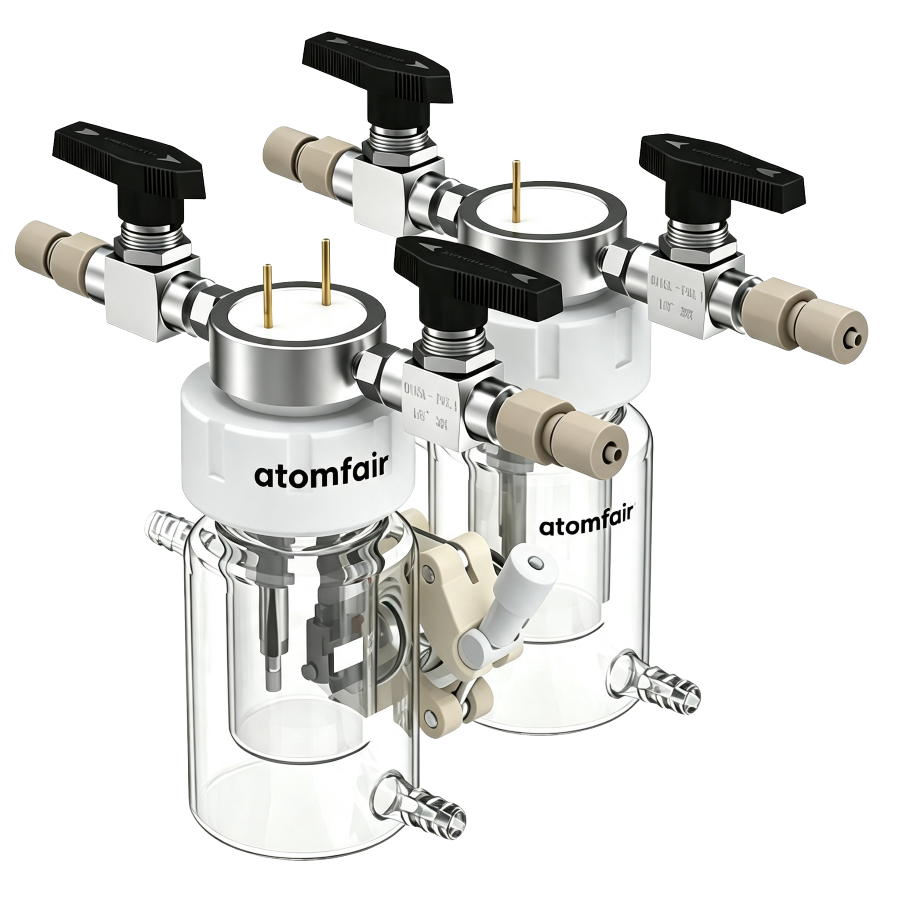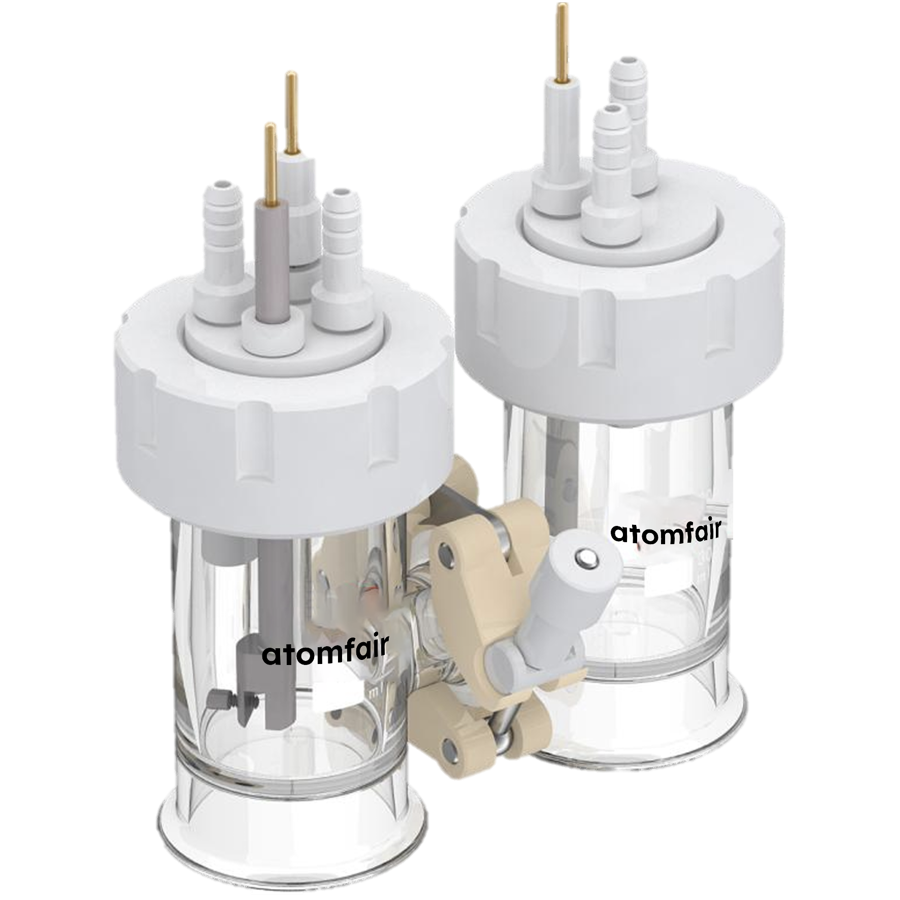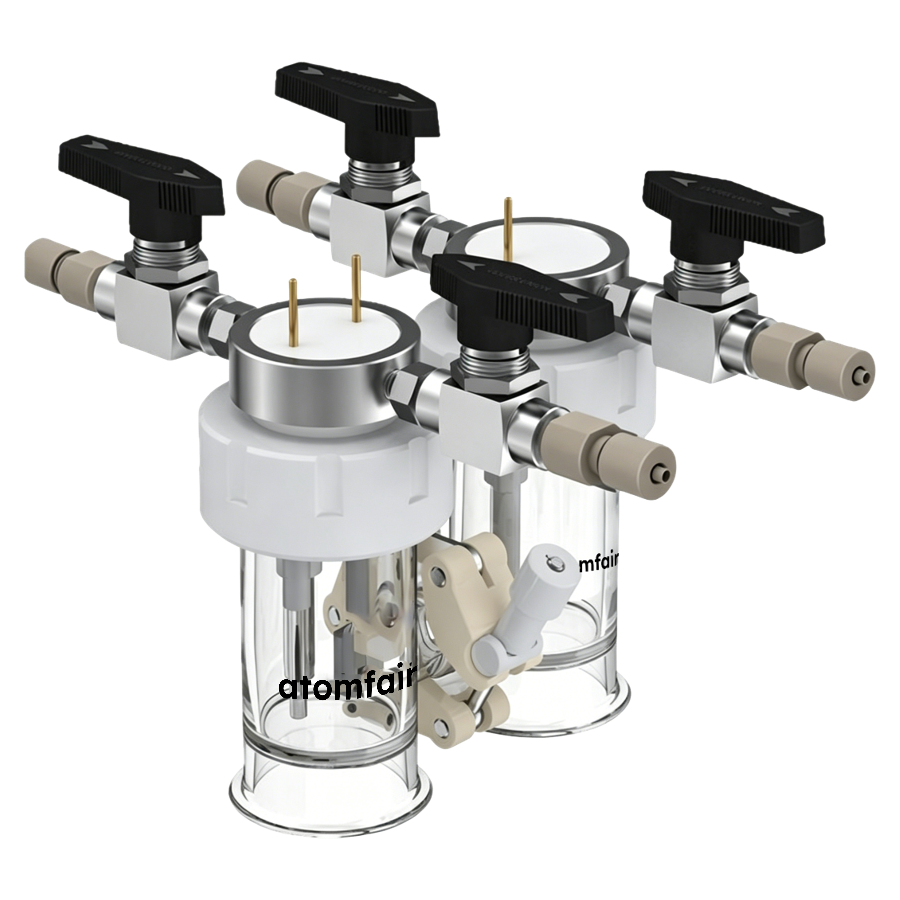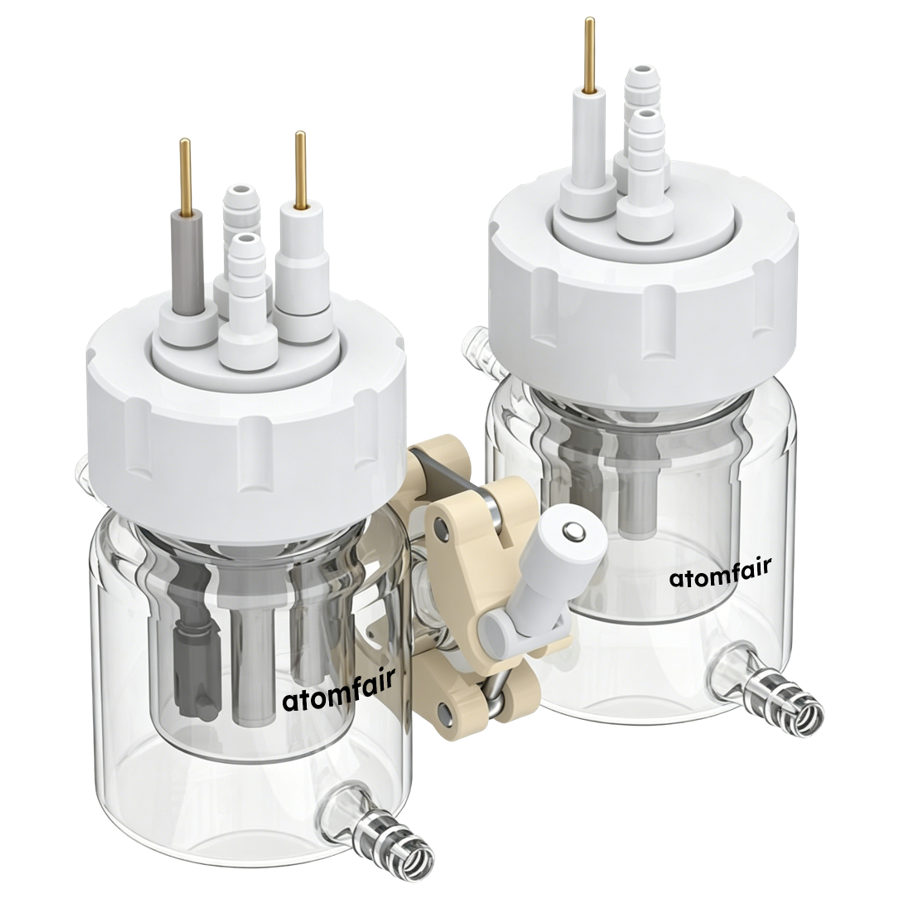
Straight Five-Port Electrolytic Cell, Double-Layer | ATOMFAIRProduct Type: Electrochemical cell
Research-grade laboratory product
|
|||||||||||||||||||||||||||||||||||||||||||
|
|||||||||||||||||||||||||||||||||||||||||||
|
LABORATORY PROCUREMENT SUPPORT
For model selection, accessory matching, platform compatibility or configuration confirmation, contact our technical sales team.
E-MAIL: inquiry@atomfair.com
|
|||||||||||||||||||||||||||||||||||||||||||
|
Manufacturer: Atomfair LLC
Brand: ATOMFAIR®
|
Manufacturer: Atomfair LLC
Brand: ATOMFAIR®
This electrochemical cell requires careful handling to avoid thermal shock and chemical attack from strong alkalis. The semi-sealed design is not rated for absolute vacuum or strict oxygen-free conditions; inspect glass and O-rings before each use.
- Chemical Compatibility: Do not use with strong alkaline electrolytes as they may attack the borosilicate glass.
- Thermal Management: Avoid rapid temperature changes to prevent thermal shock; use the water jacket for controlled heating or cooling.
- Leak Check: Verify the water jacket integrity before each experiment by checking for leaks.
- Atmosphere Control Limitation: The cell is semi-sealed and not suitable for absolute vacuum or strict oxygen-free conditions; use inert gas purging for oxygen-sensitive work.
- Pre-Use Inspection: Inspect the glass body and O-rings for cracks, chips, or wear before assembly.
This procedure describes the assembly and preparation of the cell for three-electrode electrochemical experiments. Follow these steps to ensure proper sealing, temperature control, and atmosphere management.
Required Equipment: Water bath circulator, Inert gas supply, Electrode set (working, reference, counter)
- Inspect components
Inspect all glass components and O-rings for damage before assembly. - Assemble lid
Assemble the PTFE lid onto the glass body using threaded compression to seal the cell. - Connect water bath
Connect the water bath circulator to the double-layer jacket inlet and outlet for temperature control. - Connect gas supply
Connect an inert gas supply to the gas inlet port and adjust flow for atmosphere control via the sparger. - Insert electrodes
Insert the working, reference, and counter electrodes into the designated ports and tighten compression fittings.
Can the ATOMFAIR double-layer electrolytic cell be used for experiments requiring strict oxygen-free conditions?
No, the cell is designed as a semi-sealed system, not for absolute vacuum or strict oxygen-free conditions. While it features gas inlet/outlet ports with a sparger for atmosphere protection, the O-ring and compression fitting seals provide good but not absolute sealing. For applications requiring an oxygen-free environment, additional measures such as a glovebox are recommended.
What electrode types can be used with the straight five-port electrolytic cell?
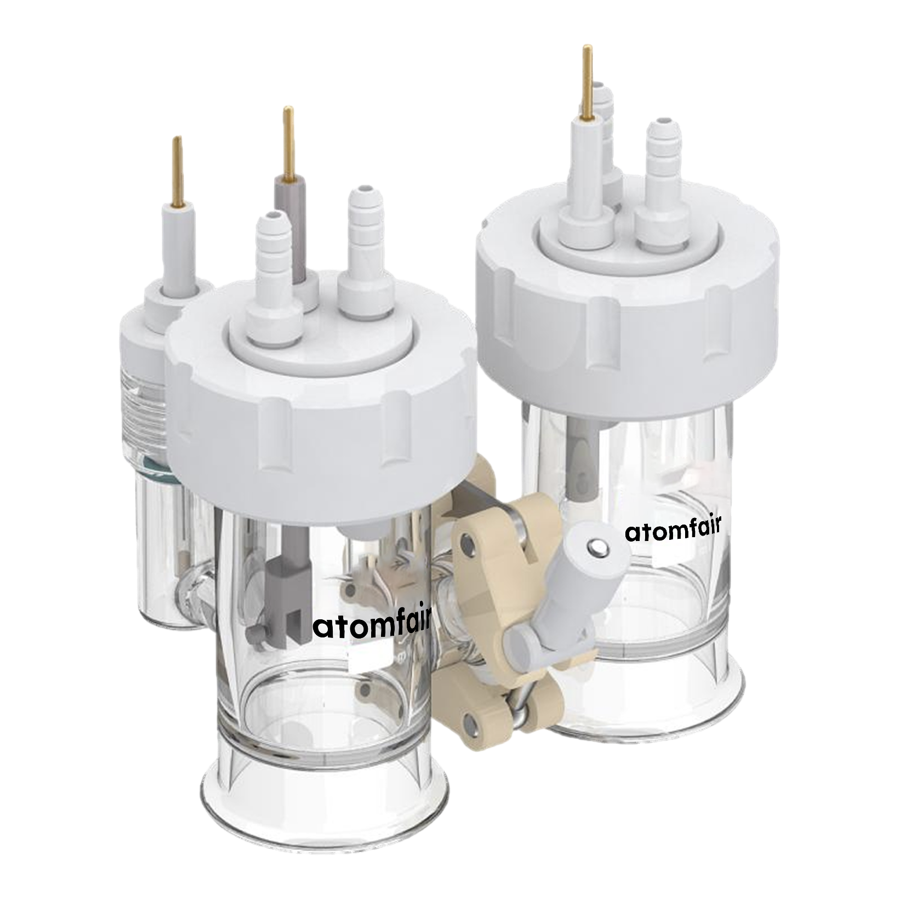
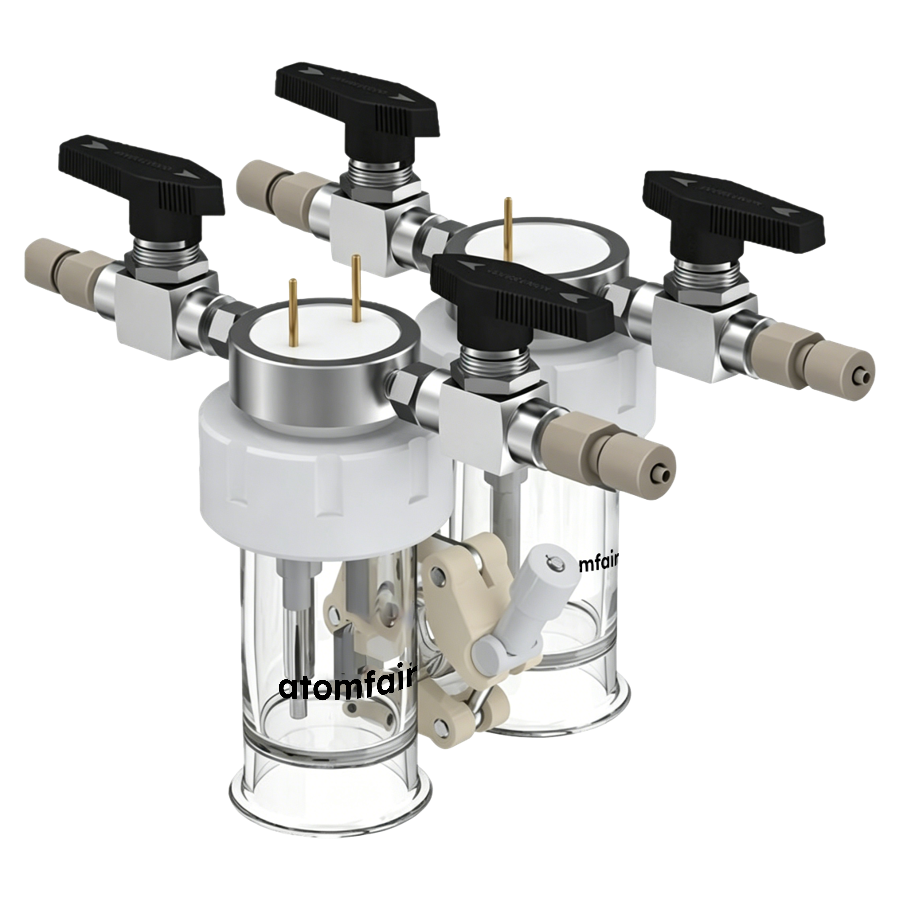
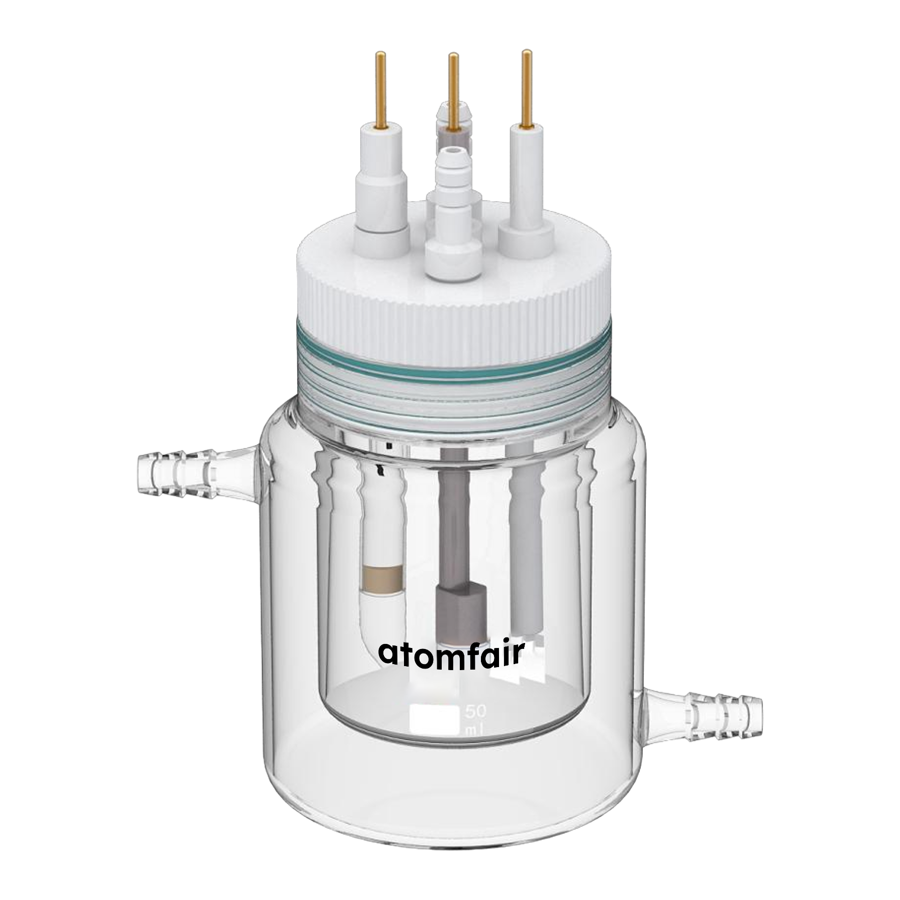
The cell is designed for three-electrode applications and includes five ports: typically for working, counter, and reference electrodes, plus gas inlet and outlet. The PTFE lid and compression fittings allow for airtight sealing of standard electrode diameters. For specific electrode compatibility, contact the manufacturer's technical sales team.
What are the key safety and handling precautions for the ATOMFAIR double-layer glass cell?
Inspect glass and O-rings before each use. The cell is not suitable for strong alkali solutions. Avoid thermal shock, especially when using the water jacket, and check the water jacket for leaks. The cell is not designed for absolute vacuum or strict oxygen-free conditions.
The ATOMFAIR Double-Layer Straight Five-Port Electrolytic Cell offers a semi-sealed, temperature-controlled environment for three-electrode electrochemical experiments, with capacities from 30mL to 1000mL and a built-in salt bridge for minimized junction potential.
Positive
- Integrated water bath jacket: The double-layer design enables precise temperature control via circulating constant-temperature water, critical for temperature-dependent electrochemical studies such as corrosion or battery testing.
- Semi-sealed O-ring and PTFE construction: Threaded compression seals on the PTFE lid and electrode ports provide reliable sealing against air ingress while maintaining chemical inertness, suitable for a wide range of electrolytes.
Trade-offs
- Chemical and thermal handling limits: Not recommended for strong alkali solutions; thermal shock must be avoided, and the glass and O-rings require inspection before each use to prevent failure.
- Semi-sealed design constraints: The cell is not intended for absolute vacuum or strict oxygen-free environments; the semi-sealed nature limits atmosphere control, requiring careful gas management for oxygen-sensitive experiments.
Every advanced material, component, equipment, and instrument in our catalog is backed by rigorous testing. We maintain strict internal quality management frameworks and align with CE conformity metrics to deliver transparent, reproducible performance data via our public open-science repository.
To request raw batch performance data, submit formal vendor registration paperwork, or execute a fast-turnaround R&D manufacturing loop, contact us at inquiry@atomfair.com.
Item is dispatched under the Atomfair Shipping & Delivery Framework (Free worldwide shipping on orders over $59 USD excl. heavy equipment). Return is governed by the Atomfair Return & Refund Policy (7-day technical return window).