Side-Illumination Single-Chamber Photoelectrochemical Cell, Relative Sealed, Single-Layer | ATOMFAIRProduct Type: Electrochemical cell
Research-grade laboratory product
|
|||||||||||||||||||||||
|
|||||||||||||||||||||||
|
LABORATORY PROCUREMENT SUPPORT
For model selection, accessory matching, platform compatibility or configuration confirmation, contact our technical sales team.
E-MAIL: inquiry@atomfair.com
|
|||||||||||||||||||||||
|
Manufacturer: Atomfair LLC
Brand: ATOMFAIR®
|
Manufacturer: Atomfair LLC
Brand: ATOMFAIR®
This photoelectrochemical cell requires careful handling of the quartz window to prevent scratches and thermal shock. Chemical compatibility with borosilicate glass and quartz must be verified before use, and extended-length electrodes are necessary for three-electrode operation.
- Quartz Window Care: Handle the quartz window with care to avoid scratches and maintain optical clarity.
- Sealing Integrity: Ensure proper sealing of the window assembly before use to prevent electrolyte leakage.
- Thermal Shock Avoidance: Avoid subjecting the cell to rapid temperature changes to prevent glass fracture.
- Chemical Compatibility Check: Verify chemical compatibility of all electrolytes with borosilicate glass and quartz before use.
- Electrode Requirement: Use only extended-length electrodes designed for this cell to ensure proper fit and sealing.
This procedure describes the initial assembly and preparation of the single-chamber photoelectrochemical cell for use. Follow these steps to ensure proper sealing, electrode alignment, and gas purging.
- Inspect Quartz Window
Inspect the quartz window for scratches or damage before assembly. - Verify Chemical Compatibility
Verify chemical compatibility of the electrolyte with borosilicate glass and quartz. - Insert and Seal Electrodes
Insert extended-length electrodes through the compression fittings and tighten the O-ring seals. - Align Electrodes
Rotate the PTFE inner core to align the electrodes precisely with the quartz window. - Purge with Gas
Connect a gas line to the sub-surface sparger and purge the cell with inert gas if required. - Confirm Window Seal
Confirm the window assembly is properly sealed by checking the galvanized plate connection.
What is the advantage of the ≥95% light transmittance quartz window in photoelectrochemical measurements?
The high-transparency quartz window (≥95% transmittance) ensures maximum light delivery to the electrode surface, which is critical for photoelectrochemical and UV-Vis spectroscopic studies where standard borosilicate glass would absorb a significant portion of the incident light. This design enables superior photocurrent response and more accurate measurement of photo-induced charge carrier dynamics.
Do I need special electrodes for the ATOMFAIR side-illumination photoelectrochemical cell?
Yes, extended-length electrodes are required and must be ordered separately because the cell's geometry positions the electrode far from the top opening. The cell is designed for three-electrode systems, and the 360° rotatable PTFE inner core allows precise alignment of these extended electrodes to the quartz window for optimal illumination geometry.
What handling precautions are necessary for the quartz window and borosilicate glass body?
The quartz window must be handled carefully to avoid scratches, and the window assembly must be properly sealed before each use to prevent leakage. Avoid thermal shock to the high-borosilicate glass body, and verify chemical compatibility of your electrolyte with borosilicate glass and quartz. The sub-surface sparger for gas purging requires careful attachment to avoid damage.
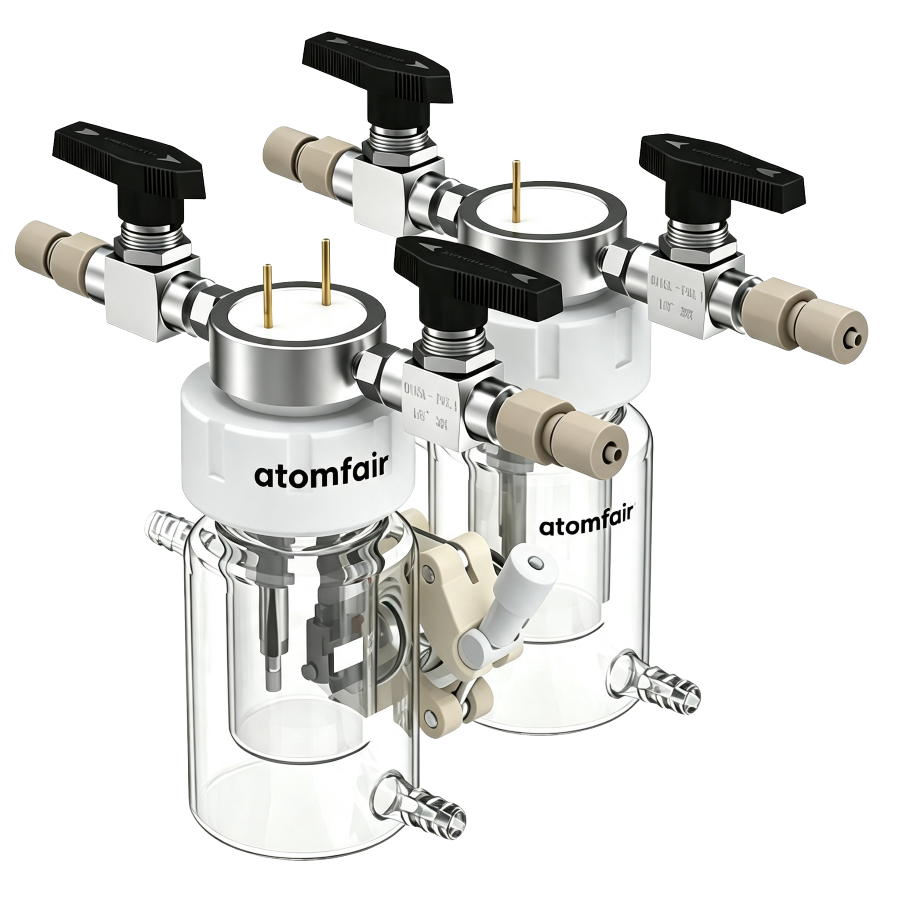
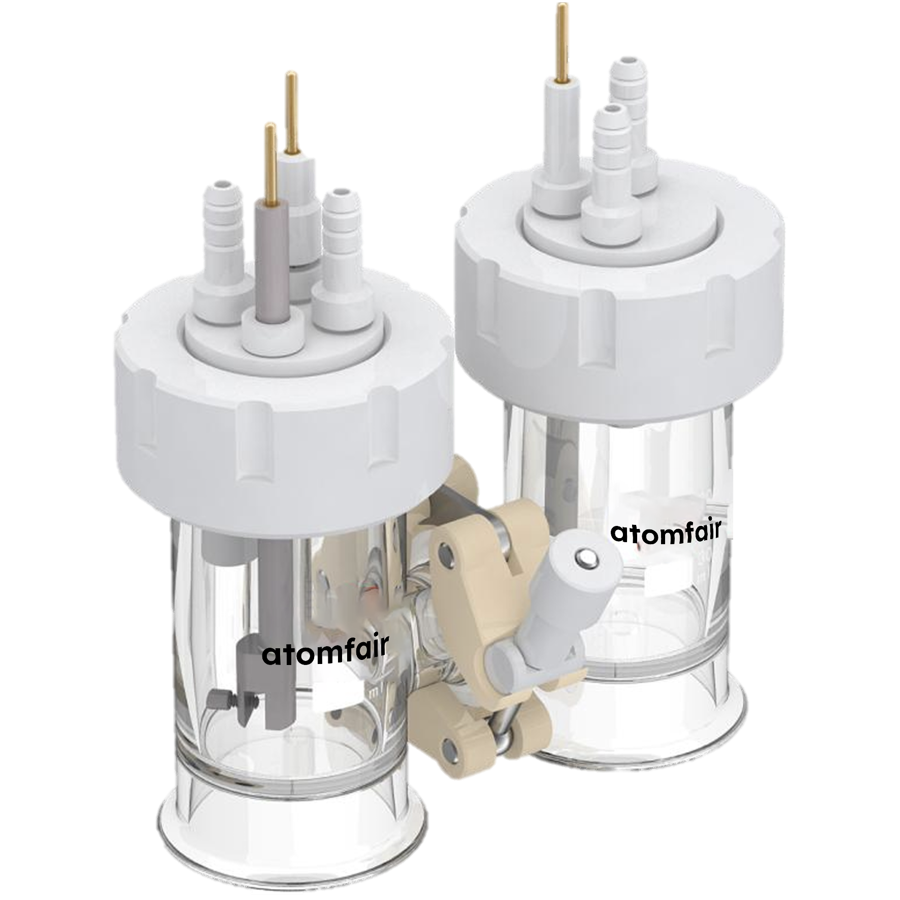
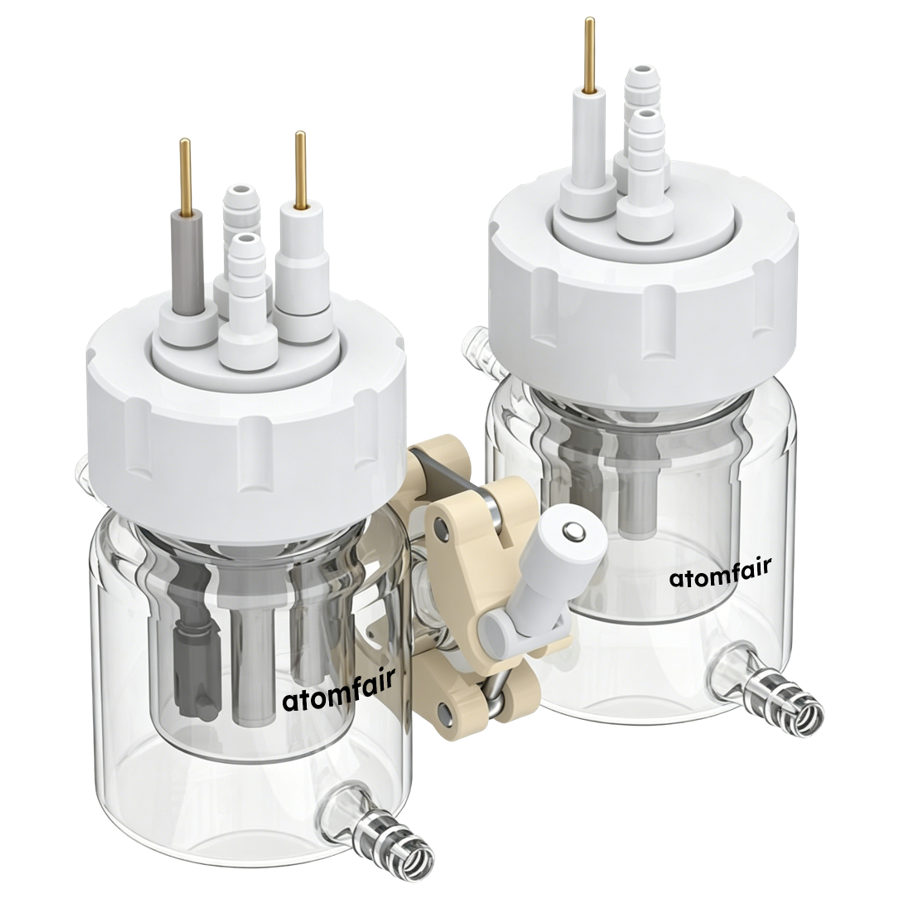
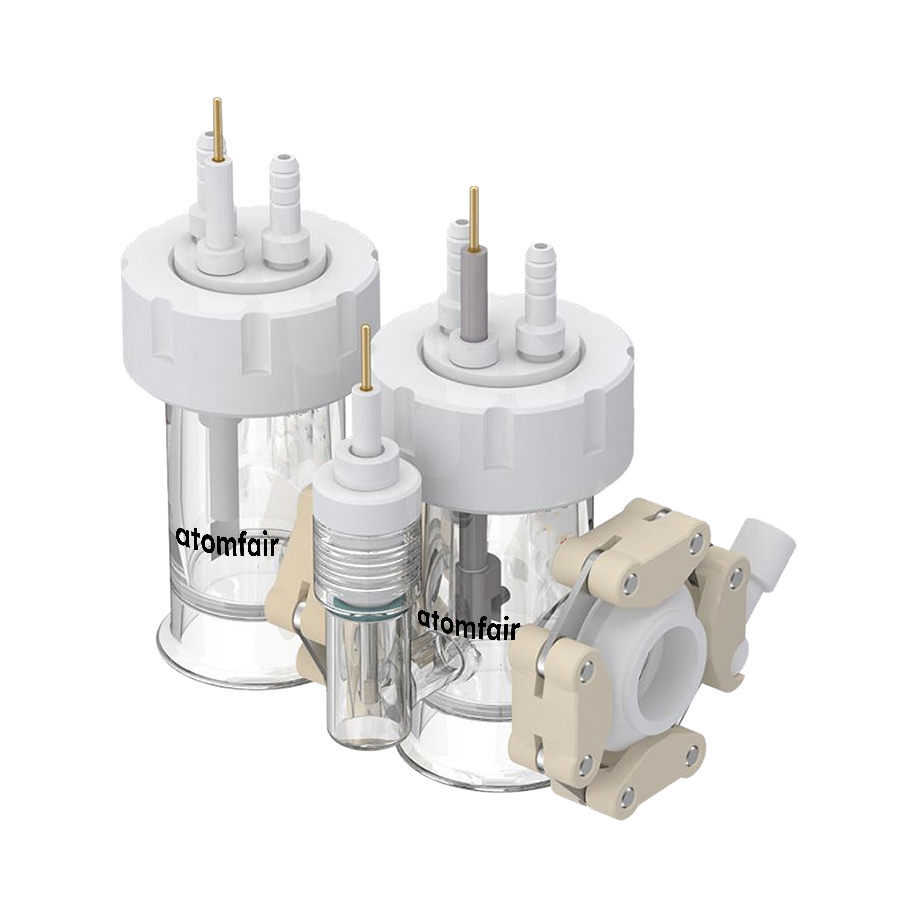
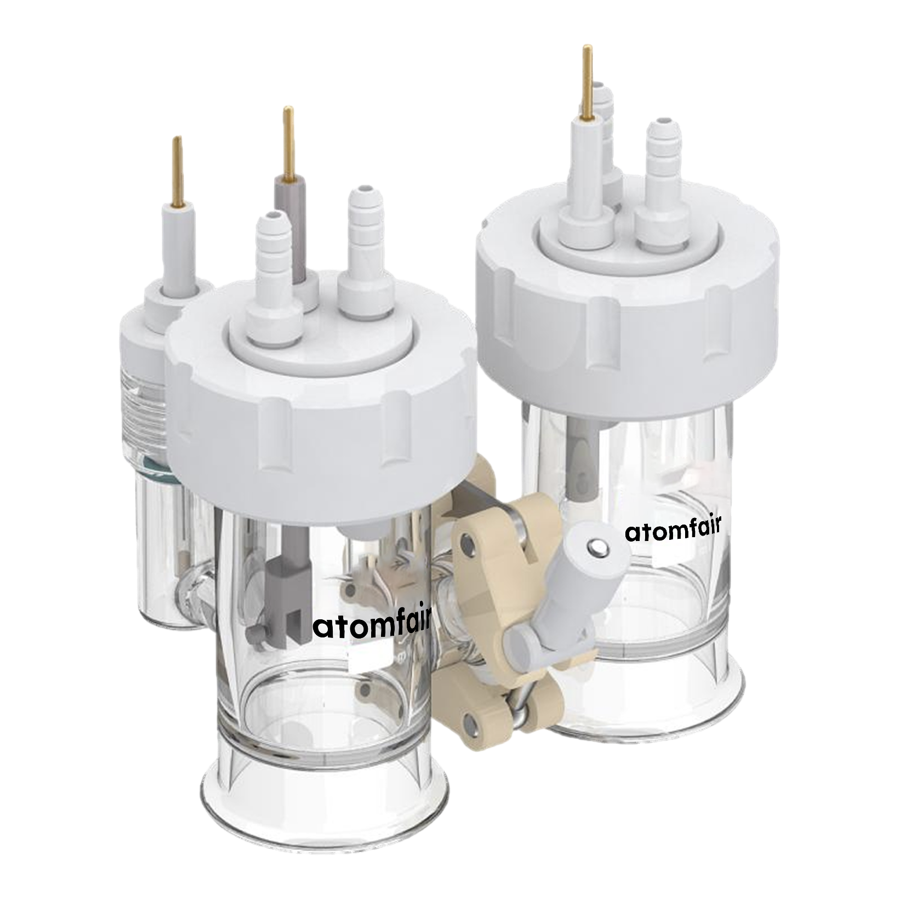
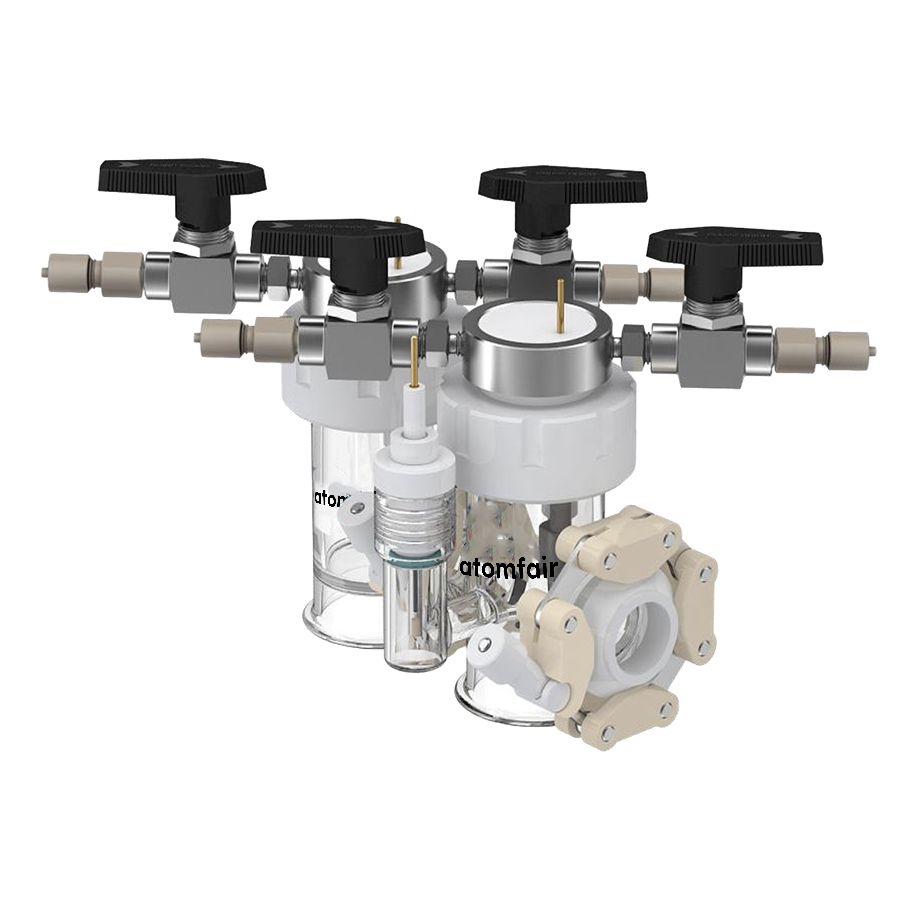
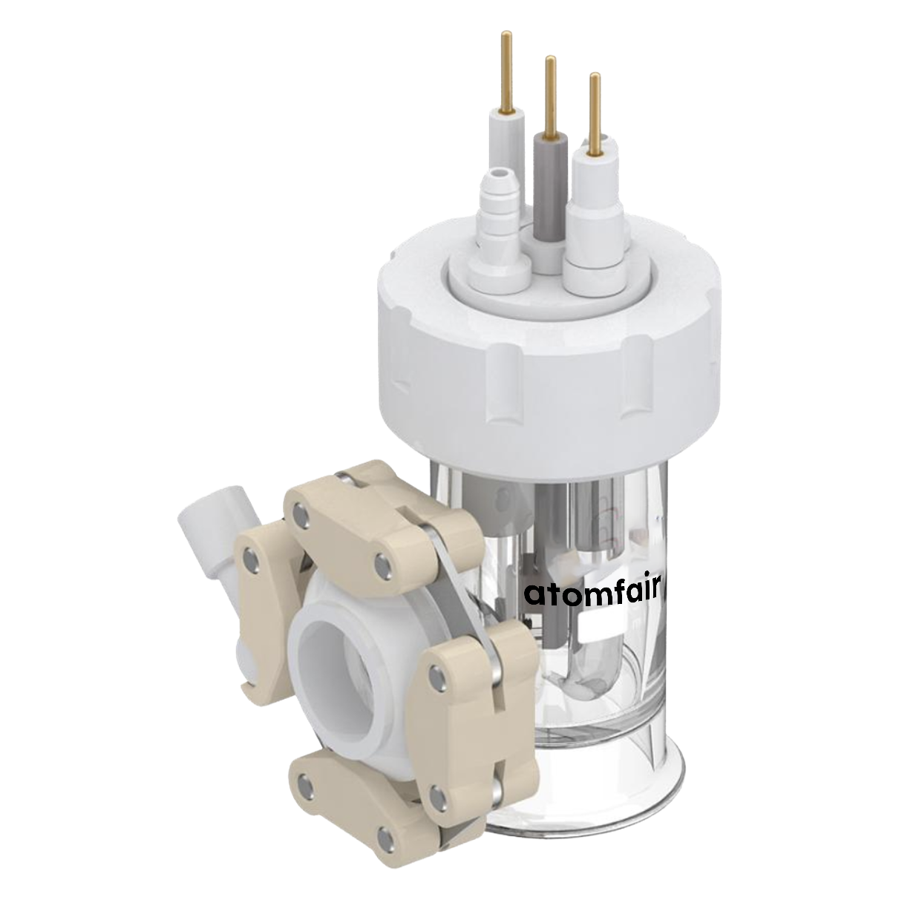
The ATOMFAIR Single-Layer Relative Sealed Side-Illumination Single-Chamber Photoelectrochemical Cell (AF-EC-C-C019-0100-0057-PARENT) is a variable-volume (50, 100, 150 mL) high-borosilicate glass cell with a ≥95% transmittance quartz window and 360° rotatable PTFE core for precise electrode alignment, designed for three-electrode photoelectrochemical and spectroscopic measurements requiring optical access.
Positive
- High-transparency quartz window: The quartz window offers ≥95% light transmittance, enabling superior photoelectrochemical and spectroscopic measurements with minimal optical loss.
- 360° rotatable PTFE core: The PTFE inner core allows precise electrode alignment to the quartz window for optimal illumination geometry, secured by tightening the POM outer cap.
Trade-offs
- Extended-length electrodes required: Standard electrodes are incompatible; extended-length electrodes must be ordered separately, adding procurement complexity and cost.
- Quartz window scratch sensitivity: The quartz window must be handled with care to avoid scratches, which could degrade optical performance and require replacement via the quick-change assembly.
Every advanced material, component, equipment, and instrument in our catalog is backed by rigorous testing. We maintain strict internal quality management frameworks and align with CE conformity metrics to deliver transparent, reproducible performance data via our public open-science repository.
To request raw batch performance data, submit formal vendor registration paperwork, or execute a fast-turnaround R&D manufacturing loop, contact us at inquiry@atomfair.com.
Item is dispatched under the Atomfair Shipping & Delivery Framework (Free worldwide shipping on orders over $59 USD excl. heavy equipment). Return is governed by the Atomfair Return & Refund Policy (7-day technical return window).