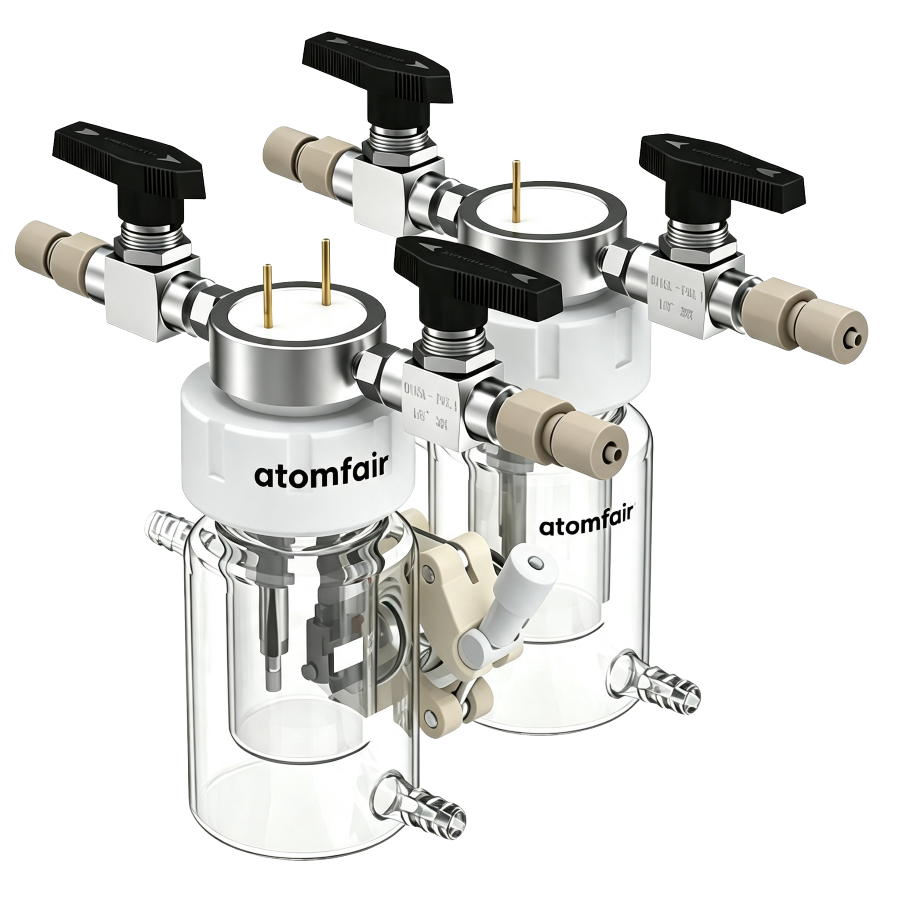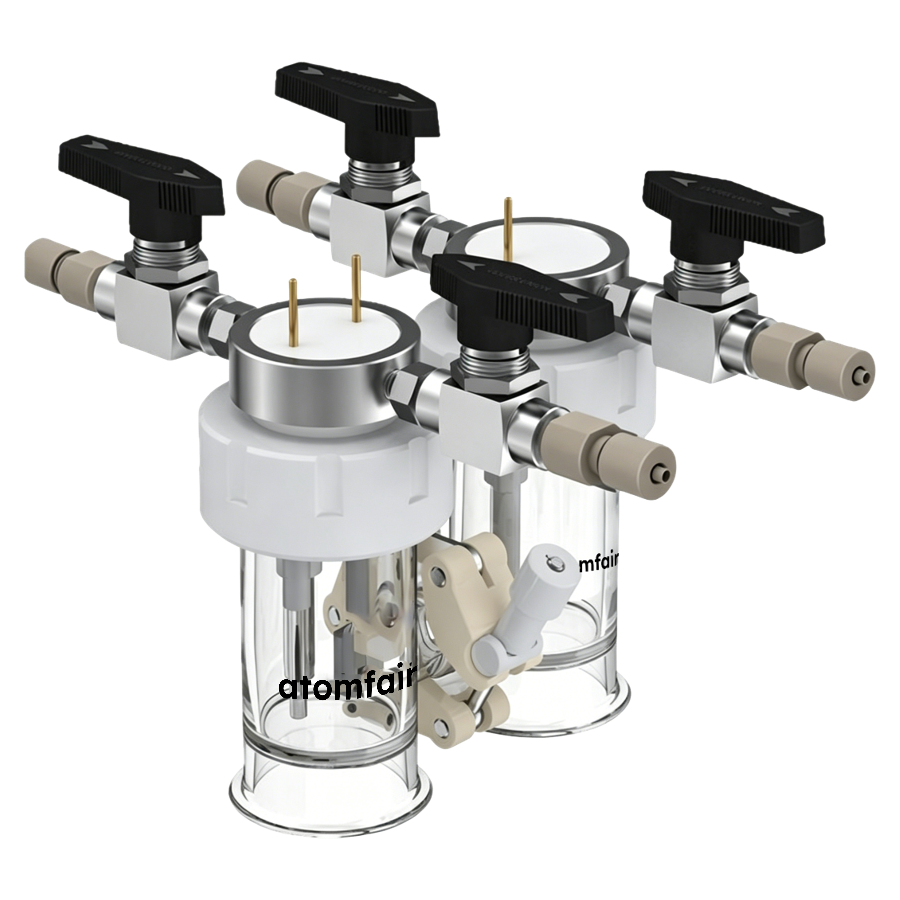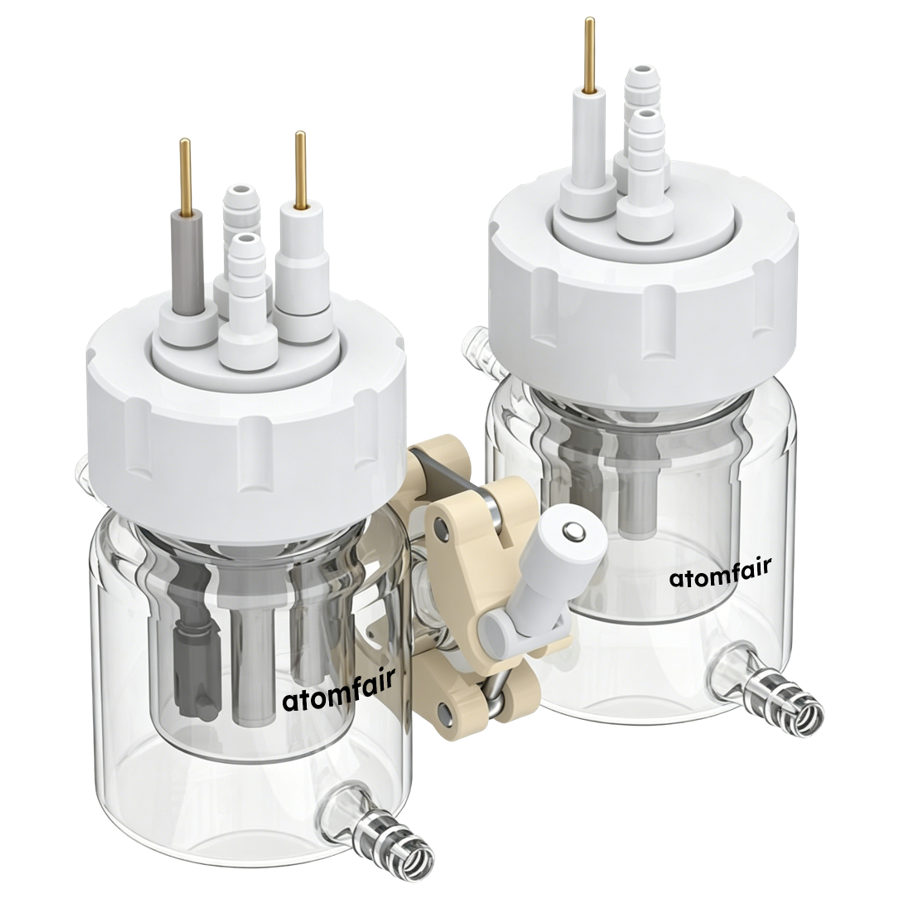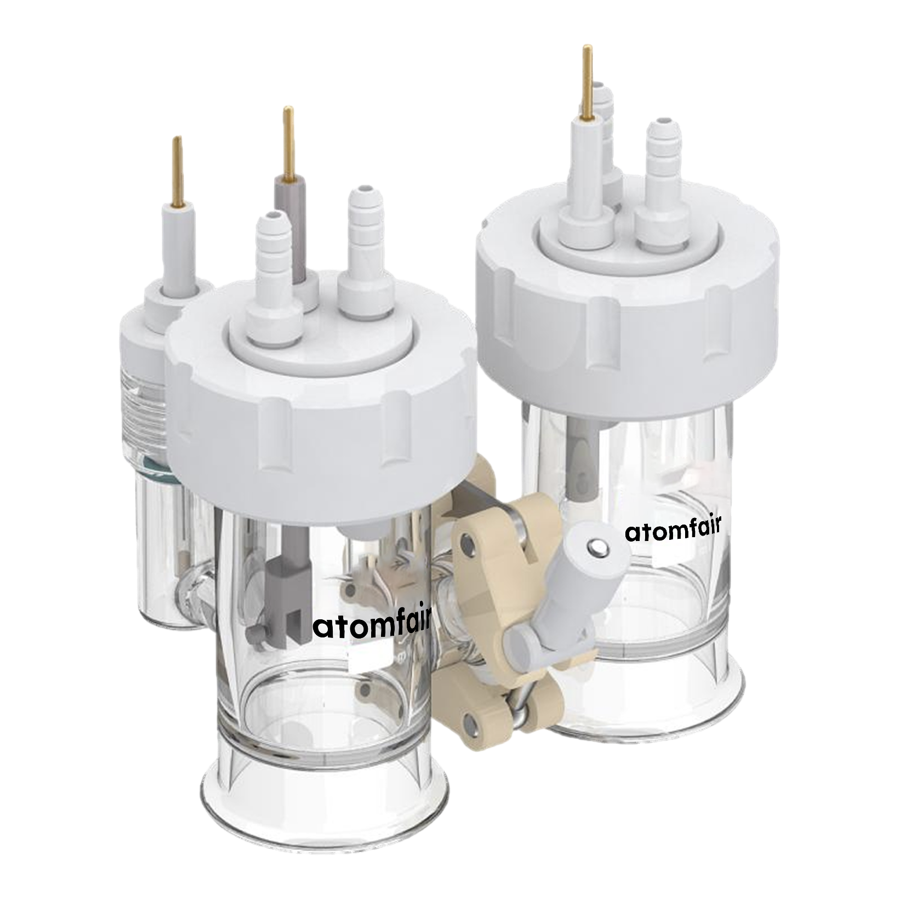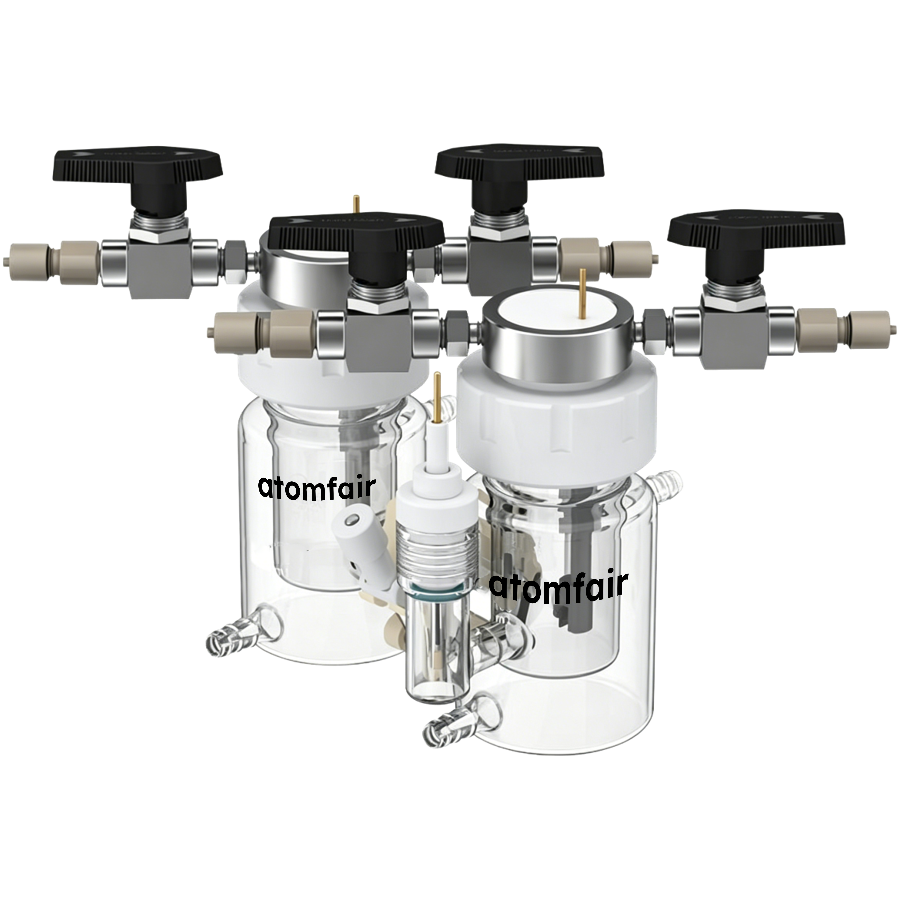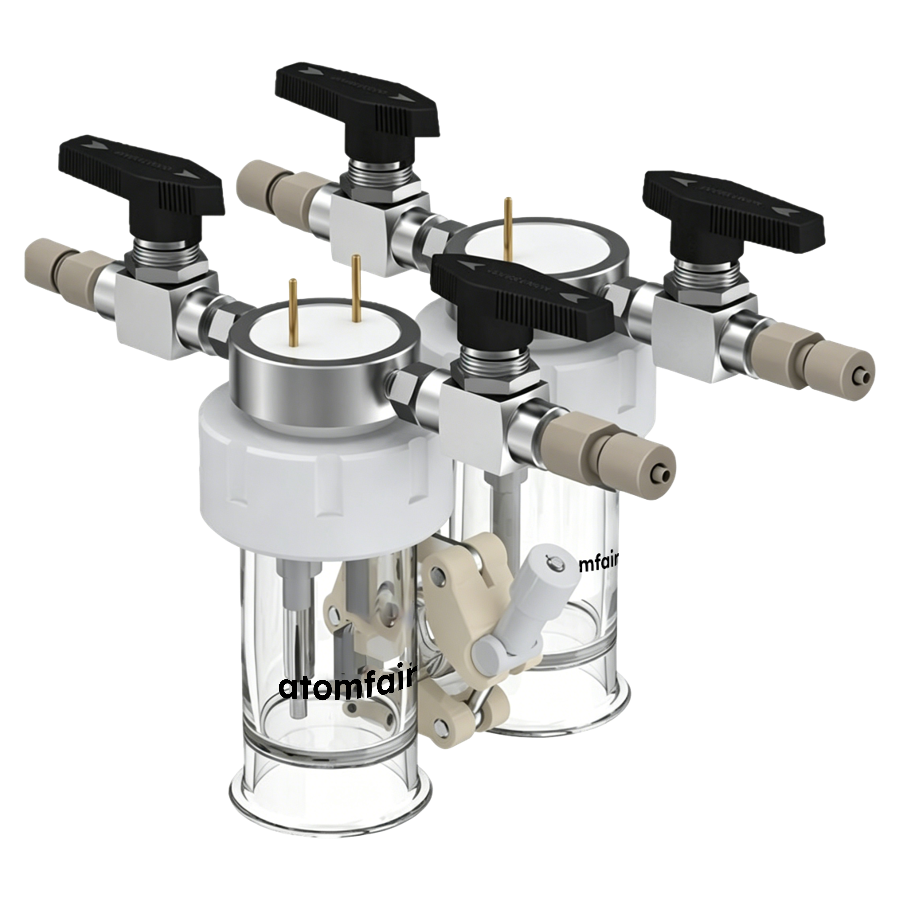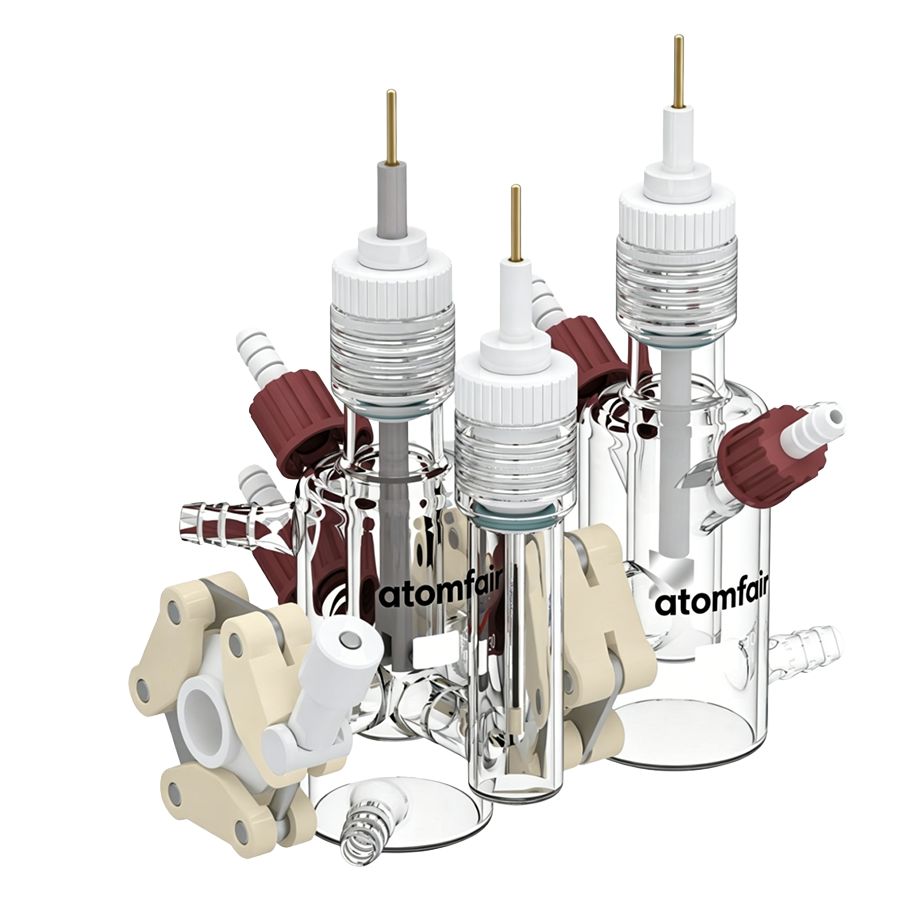
Small-Volume 3H Single-Window Replaceable-Membrane Photoelectrochemical Cell, Relative Sealing | ATOMFAIRProduct Type: Electrochemical cell
Research-grade laboratory product
|
|||||||||||||||||||||||||
|
|||||||||||||||||||||||||
|
LABORATORY PROCUREMENT SUPPORT
For model selection, accessory matching, platform compatibility or configuration confirmation, contact our technical sales team.
E-MAIL: inquiry@atomfair.com
|
|||||||||||||||||||||||||
|
Manufacturer: Atomfair LLC
Brand: ATOMFAIR®
|
Manufacturer: Atomfair LLC
Brand: ATOMFAIR®
This cell requires user-supplied ion-exchange membrane and extended-length electrodes for operation. Proper sealing of the reference chamber and careful handling of the quartz window are essential to prevent leakage and damage.
- Luggin capillary filling: Fill the Luggin capillary with agar to reduce electrolyte flow rate and minimize iR drop.
- Reference chamber sealing: Ensure the internal threaded sealing of the reference chamber is properly tightened to prevent siphon-effect leakage.
- Membrane compatibility: Verify that the user-supplied ion-exchange membrane is chemically compatible with the electrolyte before assembly.
- Electrode requirement: Use only extended-length electrodes to fit the cell geometry and maintain proper electrode spacing.
- Window handling: Handle the quartz window with care to avoid scratches or breakage, and secure it using the locking ring assembly.
Follow these steps to correctly assemble the cell with membrane and electrodes. Proper preparation ensures accurate measurements and prevents leakage or damage.
Required Equipment:
- Inspect components
Inspect all seals and glass surfaces for cracks or damage before assembly. - Fill Luggin capillary
Fill the Luggin capillary with agar to reduce electrolyte flow rate. - Install membrane
Install the user-supplied ion-exchange membrane between the cathode and anode chambers. - Insert electrodes
Insert extended-length electrodes into the appropriate ports. - Tighten reference seal
Tighten the internal threaded sealing of the reference chamber to prevent leakage. - Secure quartz window
Secure the quartz window using the locking ring assembly, handling it carefully. - Verify compatibility and seals
Verify membrane compatibility and seal integrity before adding electrolyte.
How does the Luggin capillary tip aperture of less than 0.2 mm affect measurement accuracy in this photoelectrochemical cell?
The Luggin capillary tip aperture of <0.2 mm minimizes iR drop by positioning the reference electrode very close to the working electrode, improving measurement accuracy. The capillary can be filled with agar to further reduce electrolyte flow rate, but this introduces a diffusion constraint. This design is specific to single-compartment configurations and requires user-supplied membrane separation.
What electrode compatibility requirements exist for the ATOMFAIR Relative Sealing PEC cell?
This cell requires extended-length electrodes for the three-electrode system because the Luggin capillary and membrane separation alter electrode placement. The reference electrode is physically separated from the working electrode and connected via the Luggin capillary with a <0.2 mm tip aperture. No electrodes or membrane are included; the user must supply both and verify compatibility before use.
What sealing and handling precautions are critical when operating this small-volume photoelectrochemical cell?
The internal threaded sealing of the reference chamber prevents electrolyte leakage due to the siphon effect, but it must be properly sealed before each use. The quartz window is fragile and should be handled with care; it connects via a locking ring for quick replacement and offers ≥95% light transmittance. This cell has no temperature control, valves, or pressurization capability, so operate only under ambient atmospheric conditions.
This small-volume photoelectrochemical cell integrates a Luggin capillary with a sub-0.2 mm tip aperture to minimize iR drop in three-electrode measurements, paired with a user-replaceable quartz window (>95% transmittance) and internal threaded reference sealing to prevent siphon-effect leaks. Its 10 mL single-compartment design with user-supplied membrane isolation targets photoelectrochemistry and gas reduction studies but demands extended-length electrodes and careful manual sealing without integrated temperature or pressurization control.
Positive
- Low iR drop Luggin capillary: The reference electrode Luggin capillary tip aperture of less than 0.2 mm minimizes uncompensated resistance, improving accuracy in three-electrode potential measurements.
- High-transmittance replaceable quartz window: The quartz window provides ≥95% light transmittance and is secured via a locking ring assembly, enabling quick replacement for optical access in photoelectrochemical studies.
Trade-offs
- Extended-length electrodes mandatory: Standard electrodes are incompatible; only extended-length electrodes can reach the working electrode position, limiting direct substitution with common lab electrodes.
- No integrated environmental controls: The cell lacks temperature control, valves, or pressurization capabilities, requiring external infrastructure or manual sealing for experiments that demand thermal or pressure regulation.
Every advanced material, component, equipment, and instrument in our catalog is backed by rigorous testing. We maintain strict internal quality management frameworks and align with CE conformity metrics to deliver transparent, reproducible performance data via our public open-science repository.
To request raw batch performance data, submit formal vendor registration paperwork, or execute a fast-turnaround R&D manufacturing loop, contact us at inquiry@atomfair.com.
Item is dispatched under the Atomfair Shipping & Delivery Framework (Free worldwide shipping on orders over $59 USD excl. heavy equipment). Return is governed by the Atomfair Return & Refund Policy (7-day technical return window).