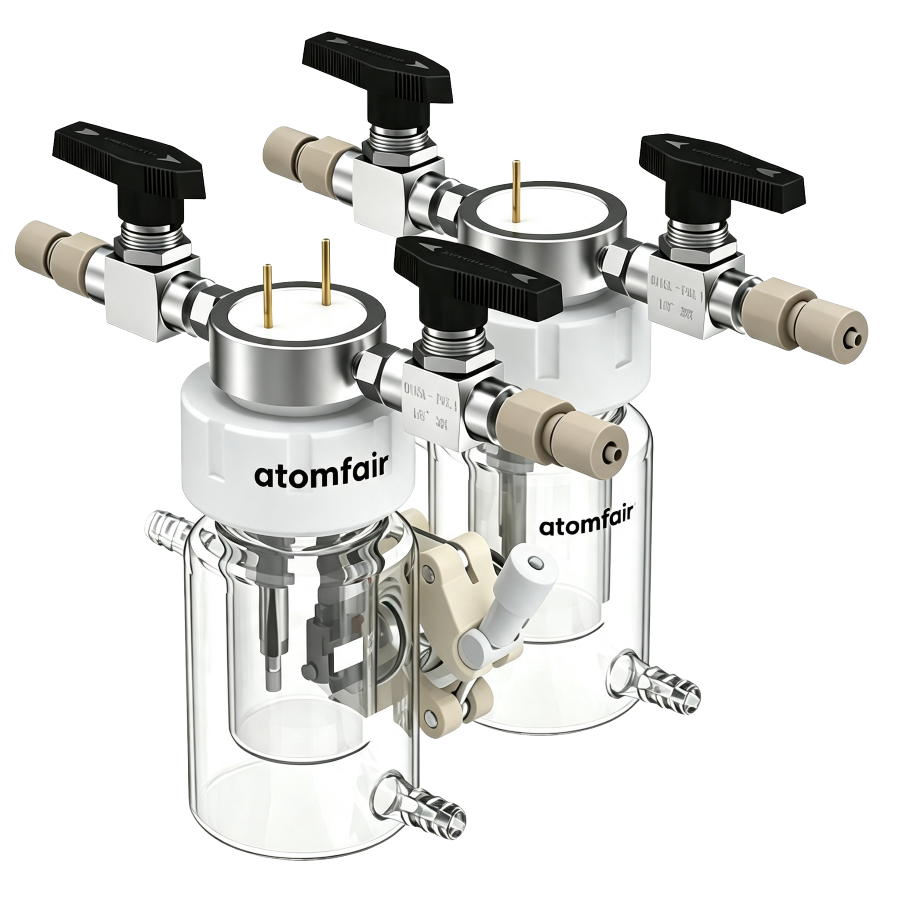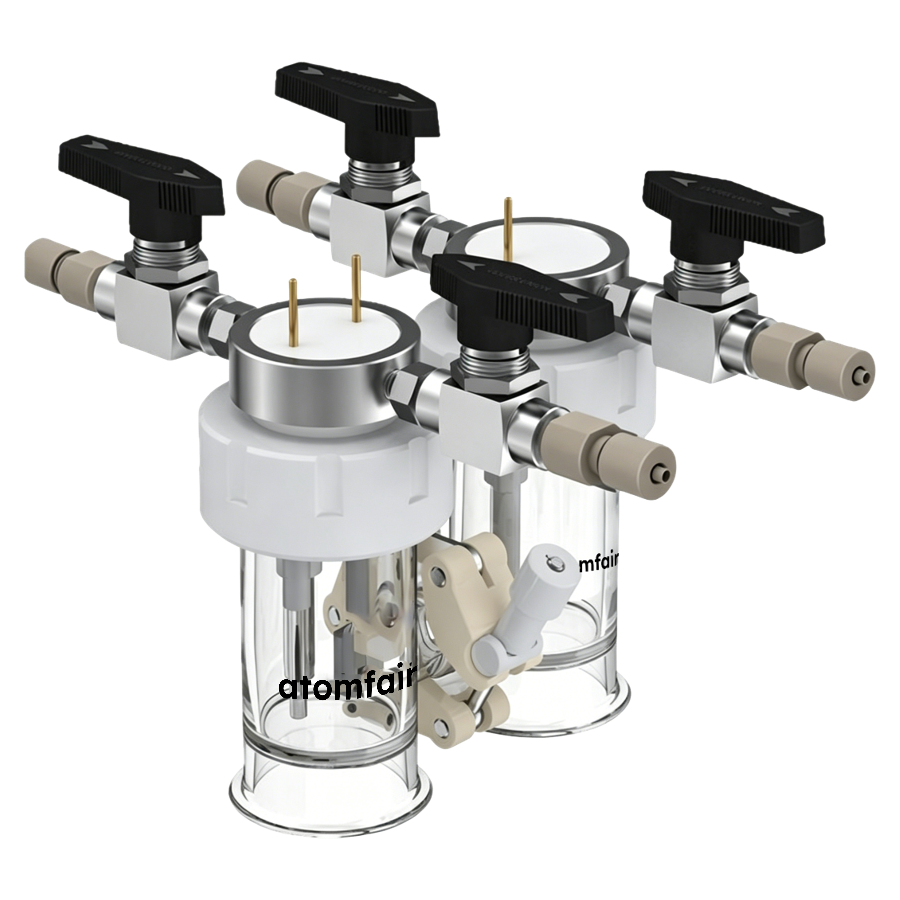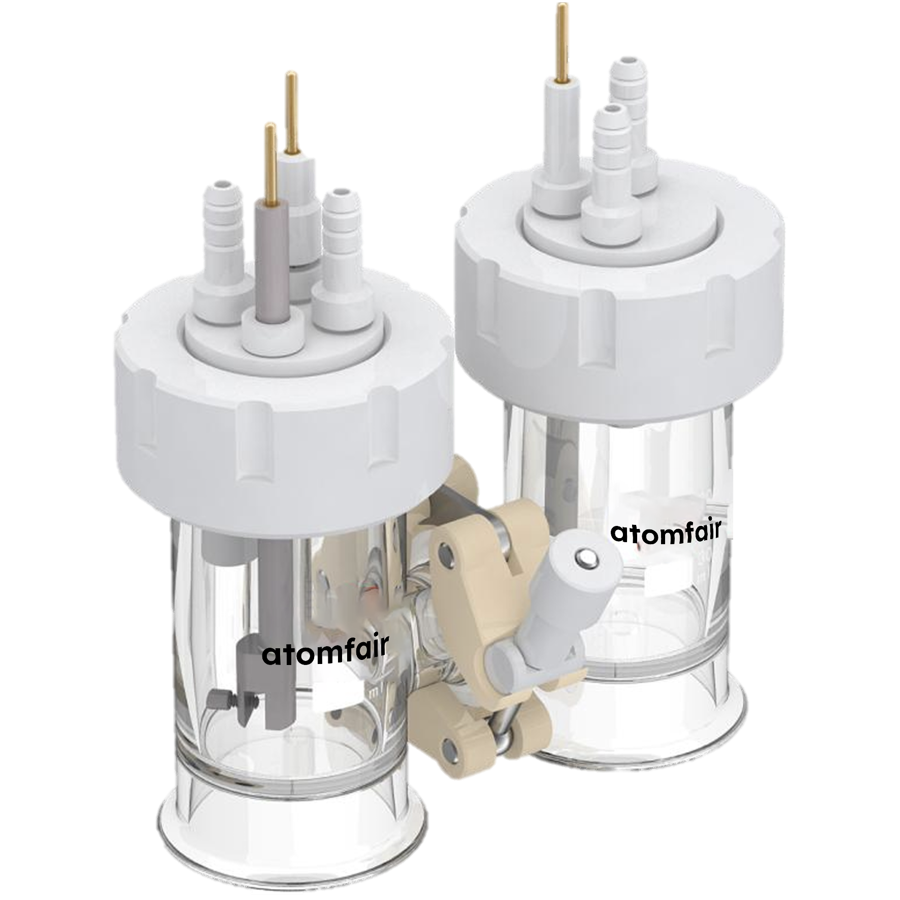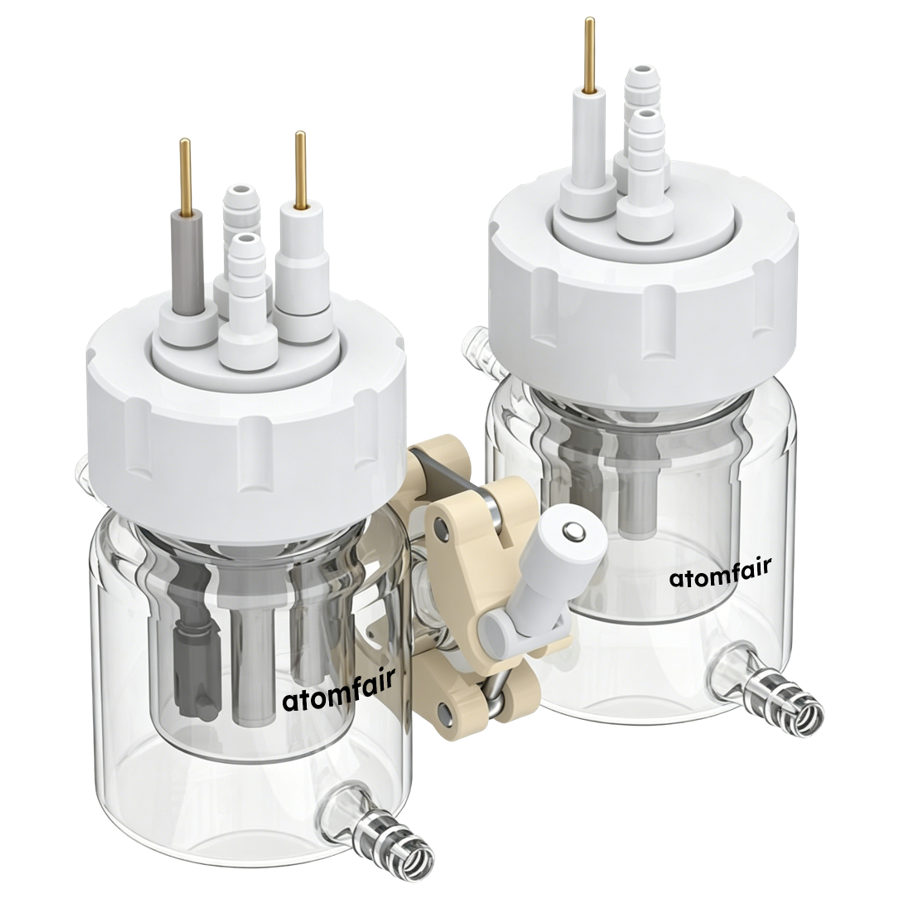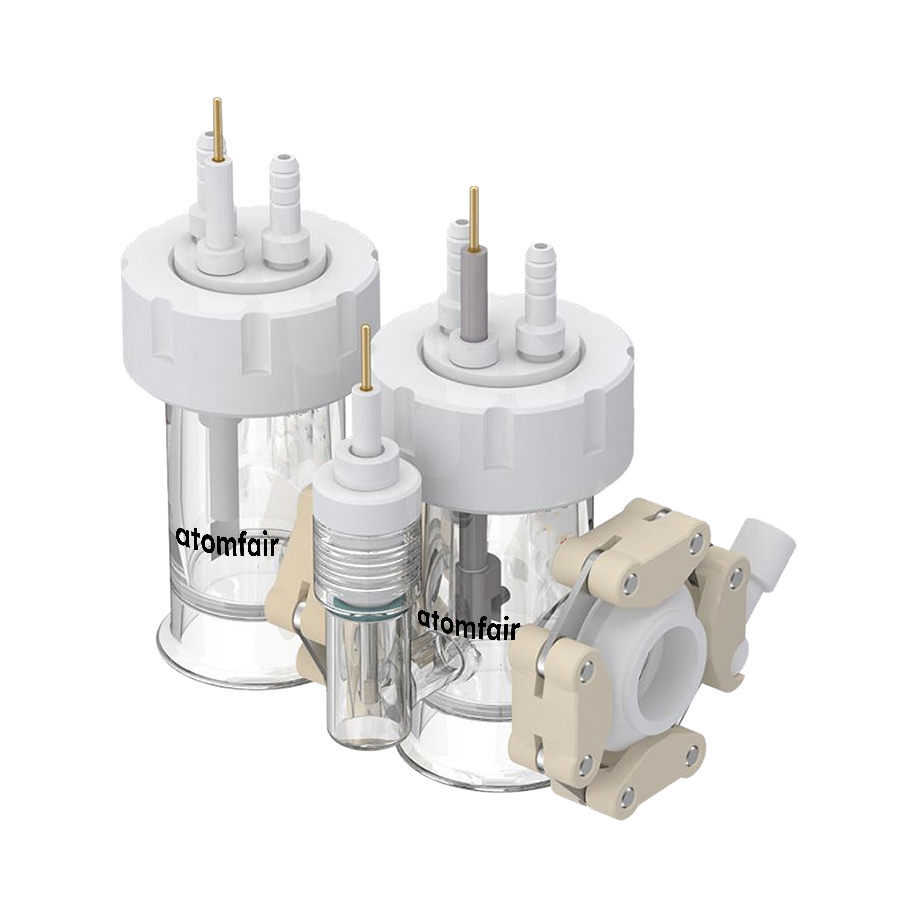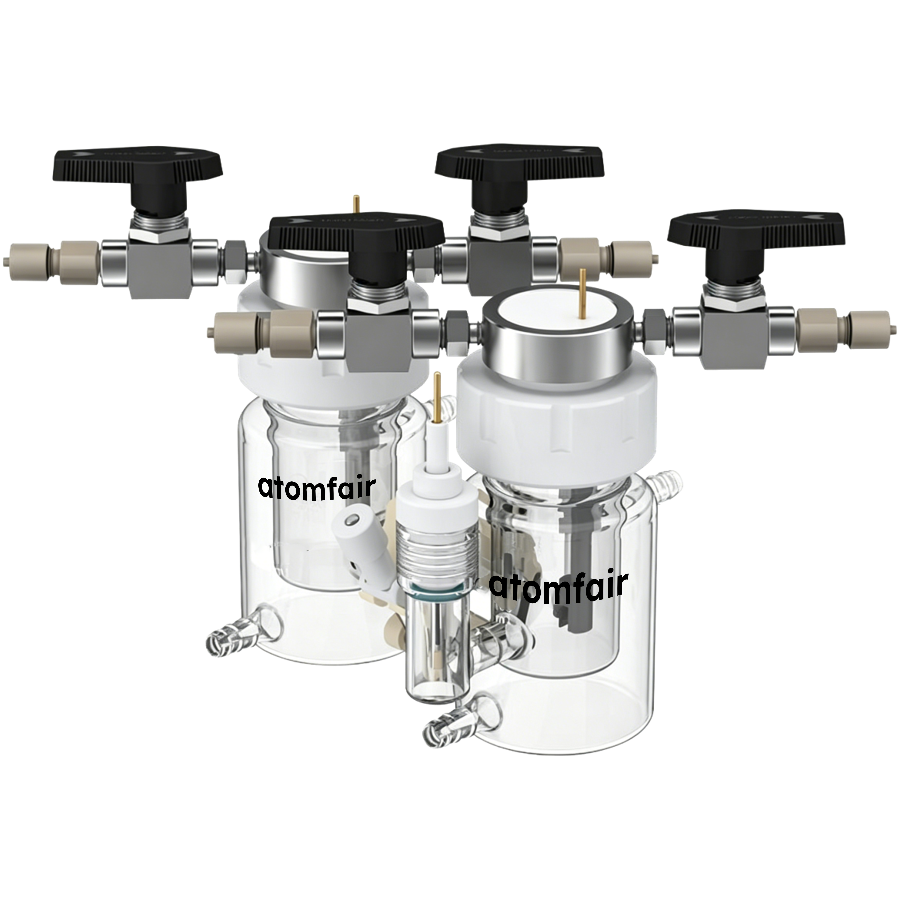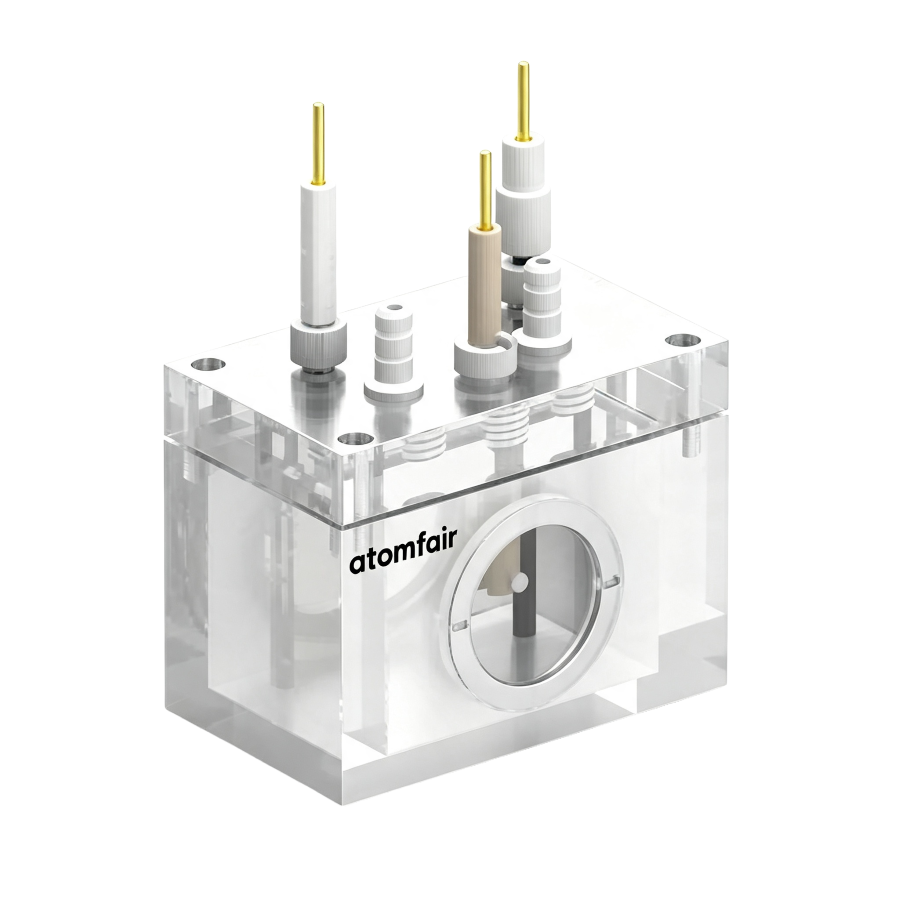
Single-Chamber Photoelectrochemical Cell, PEEK Type | ATOMFAIRProduct Type: Electrochemical cell
Research-grade laboratory product
|
|||||||||||||||||||
|
|||||||||||||||||||
|
LABORATORY PROCUREMENT SUPPORT
For model selection, accessory matching, platform compatibility or configuration confirmation, contact our technical sales team.
E-MAIL: inquiry@atomfair.com
|
|||||||||||||||||||
|
Manufacturer: Atomfair LLC
Brand: ATOMFAIR®
|
Manufacturer: Atomfair LLC
Brand: ATOMFAIR®
The cell requires chemical compatibility verification with PEEK, quartz, and fluororubber before use. Proper sealing of all ports and careful handling of the quartz window are essential to prevent leakage and damage.
- Chemical Compatibility: Verify that all electrolytes and solvents are compatible with PEEK, quartz, and fluororubber to avoid material degradation.
- Sealing Integrity: Ensure all electrode ports and spare plugs are tightly sealed before introducing gas or liquid to maintain an airtight environment.
- Quartz Window Handling: Handle the quartz window with care to avoid scratches or cracks that could compromise optical access and sealing.
- Nitrogen Purging: Purge the cell with nitrogen to remove dissolved oxygen for anaerobic electrochemical experiments.
- Spare Plug Usage: Use the provided spare plugs to seal any unused electrode ports to maintain system integrity.
Assemble the cell with electrodes, seal all ports, and purge with nitrogen before starting electrochemical measurements. Ensure chemical compatibility and proper handling of the quartz window throughout the procedure.
Required Equipment: Spare sealing plugs, Nitrogen gas supply, Electrode set (working, reference, counter)
- Inspect components
Inspect the fluororubber sealing rings and quartz window for cracks, debris, or defects before assembly. - Verify chemical compatibility
Verify chemical compatibility of PEEK, quartz, and fluororubber with all intended electrolytes and solvents. - Insert electrodes
Insert the working, reference, and counter electrodes into the designated ports and secure them with the provided sealing plugs. - Seal unused ports
Seal any unused electrode ports with spare plugs to maintain an airtight environment. - Purge with nitrogen
Purge the cell with nitrogen gas to remove dissolved oxygen before introducing the electrolyte.
What are the advantages of PEEK over PTFE for photoelectrochemical cell construction?
PEEK offers higher mechanical strength and thermal stability while maintaining excellent chemical resistance. The product description specifically cites 'high mechanical strength, excellent chemical resistance, and thermal stability' as key benefits of the PEEK construction for demanding applications.
Can this photoelectrochemical cell be used with organic electrolytes and standard reference electrodes?
Yes, the cell features a three-electrode configuration with ports designed to accept standard working, reference, and counter electrodes. However, chemical compatibility with PEEK, quartz glass, and fluororubber sealing rings must be verified before use with any electrolyte or solvent. Spare plugs are provided for unused ports.
What precautions are necessary when using nitrogen purging with this sealed photoelectrochemical cell?
Proper sealing must be ensured before initiating gas operation, as the cell is a sealed system designed for nitrogen purging to remove oxygen for anaerobic experiments. The quartz window should be handled with care to avoid damage, and all material compatibilities (PEEK, quartz, fluororubber) should be verified prior to use.
The ATOMFAIR PEEK Single-Chamber Photoelectrochemical Cell provides a chemically inert, sealed environment for spectroelectrochemical and photoelectrochemical experiments, with PEEK construction offering high chemical resistance and thermal stability, and nitrogen purging capability for anaerobic conditions. However, users must supply electrodes separately and handle the quartz window with care, while verifying chemical compatibility of all wetted materials.
Positive
- PEEK chemical resistance and stability: PEEK construction provides high mechanical strength, excellent chemical resistance, and thermal stability, making the cell suitable for aggressive electrolytes and elevated-temperature experiments.
- Sealed system with nitrogen purging: The sealed design with nitrogen purging capability enables reliable oxygen removal for anaerobic electrochemical and photoelectrochemical studies.
Trade-offs
- Electrodes not included: Working, reference, and counter electrodes must be sourced separately, increasing initial procurement complexity and compatibility verification requirements.
- Quartz window fragility and chemical compatibility: The quartz window requires careful handling to avoid breakage, and chemical compatibility with PEEK, quartz, and fluororubber seals must be verified before use to prevent degradation or leakage.
Every advanced material, component, equipment, and instrument in our catalog is backed by rigorous testing. We maintain strict internal quality management frameworks and align with CE conformity metrics to deliver transparent, reproducible performance data via our public open-science repository.
To request raw batch performance data, submit formal vendor registration paperwork, or execute a fast-turnaround R&D manufacturing loop, contact us at inquiry@atomfair.com.
Item is dispatched under the Atomfair Shipping & Delivery Framework (Free worldwide shipping on orders over $59 USD excl. heavy equipment). Return is governed by the Atomfair Return & Refund Policy (7-day technical return window).