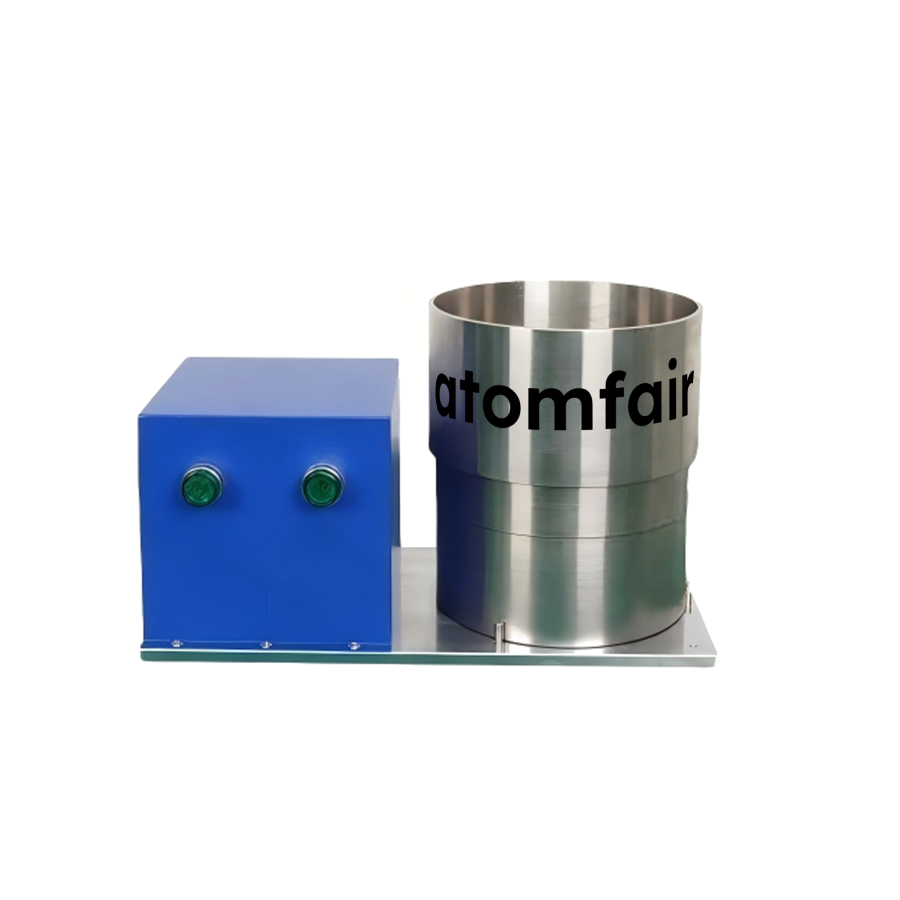
ATOMFAIR® ATOMFAIR-SLF-358 FILTRATION DEVICERESEARCH GRADE MATERIAL
|
|||||||||||||||||||||||||||||||||||||||
|
|||||||||||||||||||||||||||||||||||||||
This device requires storage in a dry, non-condensing environment to prevent electrical hazards. It must be operated with proper grounding and within the specified voltage range to ensure safe and reliable operation.
- Power Cord Inspection: Inspect the power cord and plug for damage before each use.
- Environmental Placement: Ensure the device is placed on a stable, level surface away from water sources.
- Operator Safety: Do not operate the device with wet hands or in humid conditions.
- Post-Use Cleaning: Clean the filter screens thoroughly after each filtration to prevent cross-contamination.
- Mesh Compatibility: Use only the specified mesh sizes to avoid damaging the filtration mechanism.
This procedure outlines the safe and effective steps to initialize and operate the filtration device. Follow these steps sequentially to ensure optimal performance and avoid damage or injury.
Required Equipment: Stainless steel filter mesh (80–120 mesh)
- Inspection
Inspect the device and all components for any visible damage or contamination. - Power Connection
Connect the device to a properly grounded AC 220V 50Hz power outlet using the supplied cord. - Mesh Selection
Select and install the appropriate mesh size (80–120 mesh for standard lithium battery slurries). - Slurry Loading
Pour the slurry into the filtration chamber, ensuring not to exceed the 500 ml capacity. - Filtration Start
Turn on the power switch to begin the filtration process. - Process Monitoring
Monitor the filtration progress and turn off the device once filtration is complete. - Post-Operation Cleanup
Disconnect the power cord and clean the filter screens immediately after use.
How does the filtration precision of up to 124 μm compare with optional mesh sizes under 1000 mesh for nanoscale slurry applications?
The standard 80–120 mesh screens provide filtration precision up to 124 μm, adequate for typical lithium battery slurry particles. Optional screens under 1000 mesh offer significantly finer filtration for nanoscale materials. The trade-off is reduced throughput with finer meshes, but the device's large filter area and low pressure loss design mitigate this effect.
Is the Atomfair-SLF-358 compatible with slurries containing organic solvents, or is it limited to aqueous-based systems?
The device is constructed entirely from SUS304 stainless steel, which offers general corrosion resistance to many solvents. However, the product description explicitly specifies use for lithium battery slurry with 80–120 mesh screens. Compatibility with organic solvents is not confirmed, as mesh and sealing material details are not provided; consultation with the manufacturer is recommended.
What handling precautions are necessary when switching between positive and negative electrode slurries to avoid particle cross-contamination?
The device includes separate screens for positive and negative electrode particles. To prevent cross-contamination, each screen must be thoroughly cleaned immediately after use with deionized water or a compatible solvent. The SUS304 stainless steel housing is easy to clean and corrosion-resistant, but no specific protocol is provided in the product description, so careful disassembly and rinsing of all wetted parts is essential.
This compact slurry filtration unit offers robust stainless steel construction and efficient low-pressure operation for lithium battery electrode slurry processing, but its standard mesh limits filtration to micron-scale particles, and the 220V power requirement necessitates electrical infrastructure consideration for global lab deployment.
Positive
- Corrosion-resistant stainless steel construction: All-SUS304 stainless steel provides chemical resistance to slurry components and simplifies cleaning protocols, reducing maintenance downtime.
- High-throughput low-pressure filtration: Large filter area with low pressure loss enables efficient particle separation for lithium battery slurries, with screens tailored for positive and negative electrode materials.
Trade-offs
- 220V/50Hz power dependency: Requires a dedicated AC 220V±10%, 50Hz power supply, limiting direct deployment in labs with 110V/60Hz infrastructure without a transformer.
- Standard mesh not nanoscale-rated: Default 80–120 mesh screens capture particles only in the micron range (~124–177 μm); achieving sub-micron or nanoscale filtration necessitates optional under-1000 mesh screens, adding procurement lead time and cost.
Every advanced material, component, equipment, and instrument in our catalog is backed by rigorous testing. We maintain strict internal quality management frameworks and align with CE conformity metrics to deliver transparent, reproducible performance data via our public open-science repository.
To request raw batch performance data, submit formal vendor registration paperwork, or execute a fast-turnaround R&D manufacturing loop, contact us at inquiry@atomfair.com.
Item is dispatched under the Atomfair Shipping & Delivery Framework (Free worldwide shipping on orders over $59 USD excl. heavy equipment). Return is governed by the Atomfair Return & Refund Policy (7-day technical return window).