|
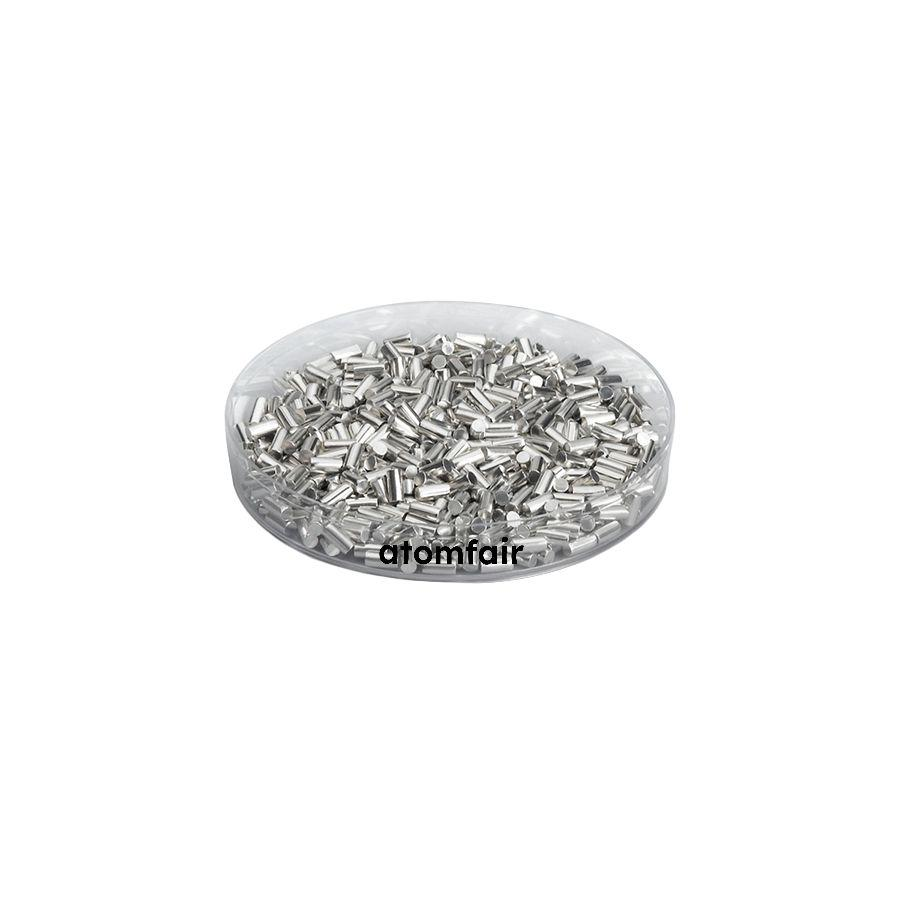
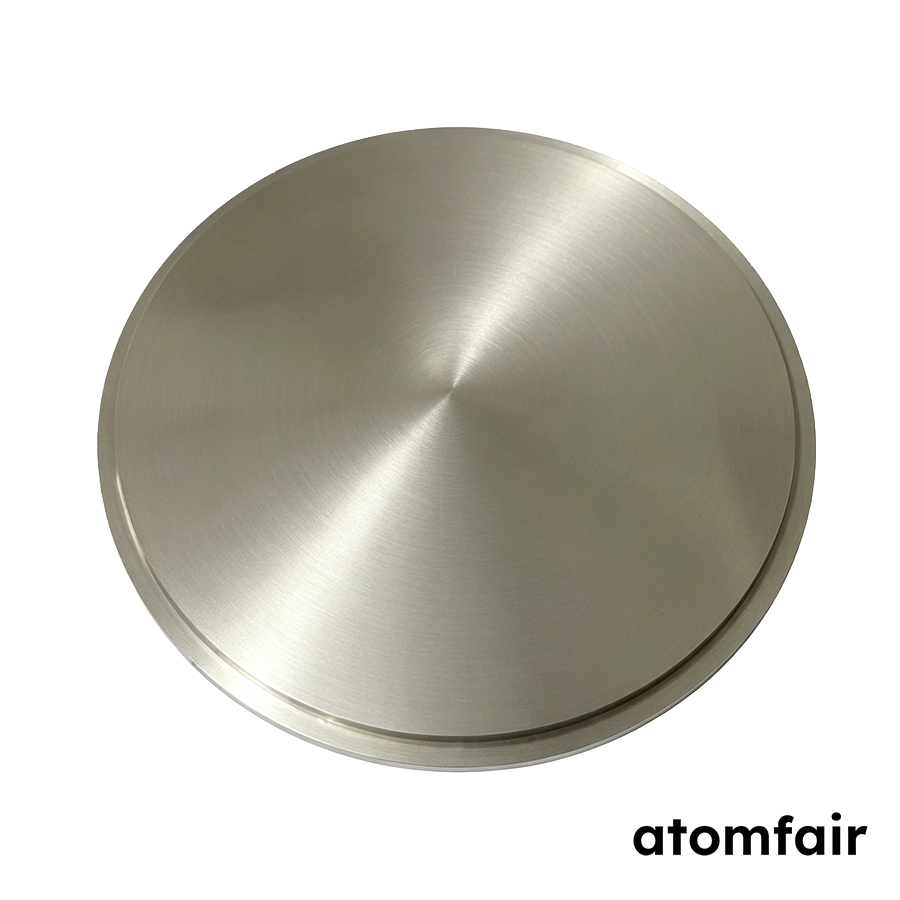
Molybdenum-Niobium Alloy Sputtering Target (MoNb)
Product Type: Metal alloy sputtering target
Research-grade laboratory product
|
|||||||||||||||||||||||||||||||||||||
|
|||||||||||||||||||||||||||||||||||||
|
LABORATORY PROCUREMENT SUPPORT
INQUIRY: inquiry@atomfair.com
|
|||||||||||||||||||||||||||||||||||||
|
Manufacturer: Atomfair LLC
Brand: ATOMFAIR®
|
The target must be stored in a dry, inert atmosphere to prevent surface oxidation and moisture adsorption. Bonding type and backing plate material must be confirmed compatible with the deposition system's cooling and thermal management requirements.
- Environmental Sensitivity: Exposure to ambient humidity or oxygen can degrade the target surface, leading to arcing or film contamination during sputtering.
- Processing Constraint: DC power density must be limited to 3-15 W/cm² and RF power density to 1-5 W/cm² under 0.5-2.0 Pa Ar atmosphere to avoid target cracking or delamination.
- Failure Mode: Exceeding maximum power density or operating without adequate substrate cooling can cause indium bond failure or thermal stress fracture.
- Compatibility Constraint: The target's indium or elastomer bonding must be compatible with the sputter gun's cooling system to maintain thermal contact during deposition.
Proper installation and conditioning of the MoNb target ensure stable deposition rates and film uniformity. Follow these steps to mount, bond, and pre-sputter the target before production runs.
Required Equipment: Sputter deposition system with DC/RF power supply, Argon gas supply (99.999% purity), Substrate holder with temperature control
- Inspect target surface
Inspect the target surface for scratches, pits, or contamination before mounting to ensure uniform erosion. - Mount target onto backing plate
Mount the target onto the oxygen-free copper or CuCrZr backing plate using the specified indium or elastomer bonding method. - Install assembly into sputter gun
Install the bonded target assembly into the sputter gun and verify thermal contact by measuring backside temperature during a low-power test. - Evacuate chamber and introduce argon
Evacuate the deposition chamber to base pressure below 1×10⁻⁴ Pa and backfill with argon to 0.5-2.0 Pa working pressure. - Pre-sputter target to remove surface oxide
Pre-sputter the target at 50% of maximum rated power for 10-15 minutes with shutter closed to remove any surface oxide layer. - Set deposition parameters
Set DC power density to 3-15 W/cm² or RF power density to 1-5 W/cm² and adjust substrate distance to achieve the desired deposition rate. - Verify film thickness uniformity
Verify film thickness uniformity across a 100 mm substrate using a profilometer or ellipsometer after a short test deposition.
How does the fine grain size (≤50 µm) and relative density (≥97%) of the MoNb sputtering target affect film uniformity and deposition rate?
The fine grain size (≤50 µm) and high relative density (≥97% of theoretical) of this MoNb target promote uniform sputter erosion and reduce arcing, contributing to ±5% thickness uniformity across a 100 mm substrate. Under optimized conditions (0.5–2.0 Pa Ar, 3–15 W/cm² DC or 1–5 W/cm² RF), deposition rates of 10–80 nm/min are achievable while maintaining the target’s stoichiometric transfer within ±2 at%.
What are the recommended sputtering parameters and achievable deposition rate for this 2-inch MoNb target on a 100 mm substrate?
For this 2-inch diameter × 0.125-inch thick MoNb target, recommended DC magnetron sputtering operates at 3–15 W/cm² power density and RF at 1–5 W/cm², both under 0.5–2.0 Pa Ar atmosphere. Under these conditions, deposition rates of 10–80 nm/min with ±5% thickness uniformity across a 100 mm substrate are specified.
What bonding and backing plate options are available for the MoNb sputtering target, and how do they influence thermal management in high-power sputtering?
The target is available with indium bonding or elastomer bonding as optional bonding methods, and backing plates can be oxygen-free copper or CuCrZr. These choices affect thermal conductivity and heat dissipation during high-power density operation (up to 15 W/cm² DC), with indium bonding on oxygen-free copper providing the highest thermal transfer for sustained deposition runs.
Molybdenum-Niobium alloy sputtering target with 99.95% purity, fine-grained microstructure, and ≥97% relative density, optimized for DC/RF magnetron sputtering to produce stoichiometric films with low impurity levels for applications in diffusion barriers and gate electrodes.
Positive
- High purity and low impurities: The 99.95% purity with total metallic impurities <500 ppm and O+N <100 ppm reduces contamination in deposited films, improving resistivity and adhesion.
- Optimized sputtering conditions: Supports DC/RF magnetron sputtering at 3-15 W/cm² (DC) or 1-5 W/cm² (RF) under 0.5-2.0 Pa Ar, achieving deposition rates of 10-80 nm/min with ±5% thickness uniformity on 100 mm substrates.
Trade-offs
- Requires precise deposition parameters: Achieving stated performance requires careful control of power density, Ar pressure, and substrate preparation; deviations may reduce film quality and adhesion.
- Optional bonding and backing plate add setup complexity: Indium or elastomer bonding and backing plate material are optional, requiring the user to confirm compatibility with their sputtering system and deposition conditions.
Every advanced material, component, equipment, and instrument in our catalog is backed by rigorous testing. We maintain strict internal quality management frameworks and align with CE conformity metrics to deliver transparent, reproducible performance data via our public open-science repository.
To request raw batch performance data, submit formal vendor registration paperwork, or execute a fast-turnaround R&D manufacturing loop, contact us at inquiry@atomfair.com.
Item is dispatched under the Atomfair Shipping & Delivery Framework (Free worldwide shipping on orders over $59 USD excl. heavy equipment). Return is governed by the Atomfair Return & Refund Policy (7-day technical return window).