|
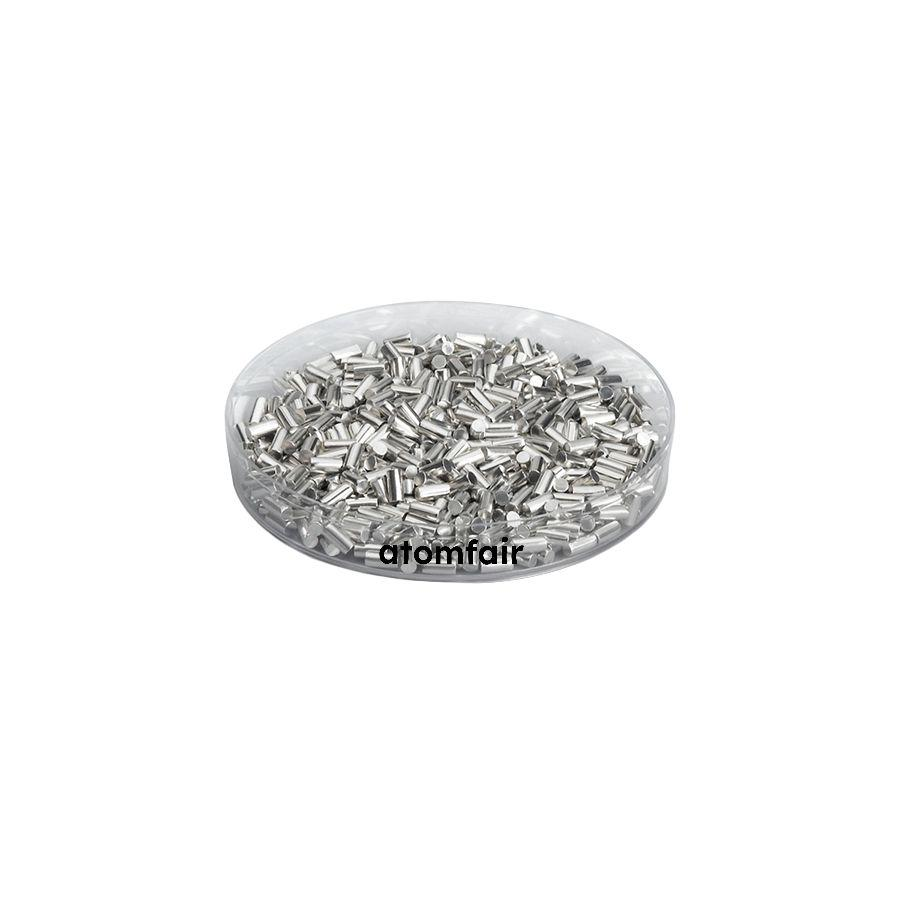
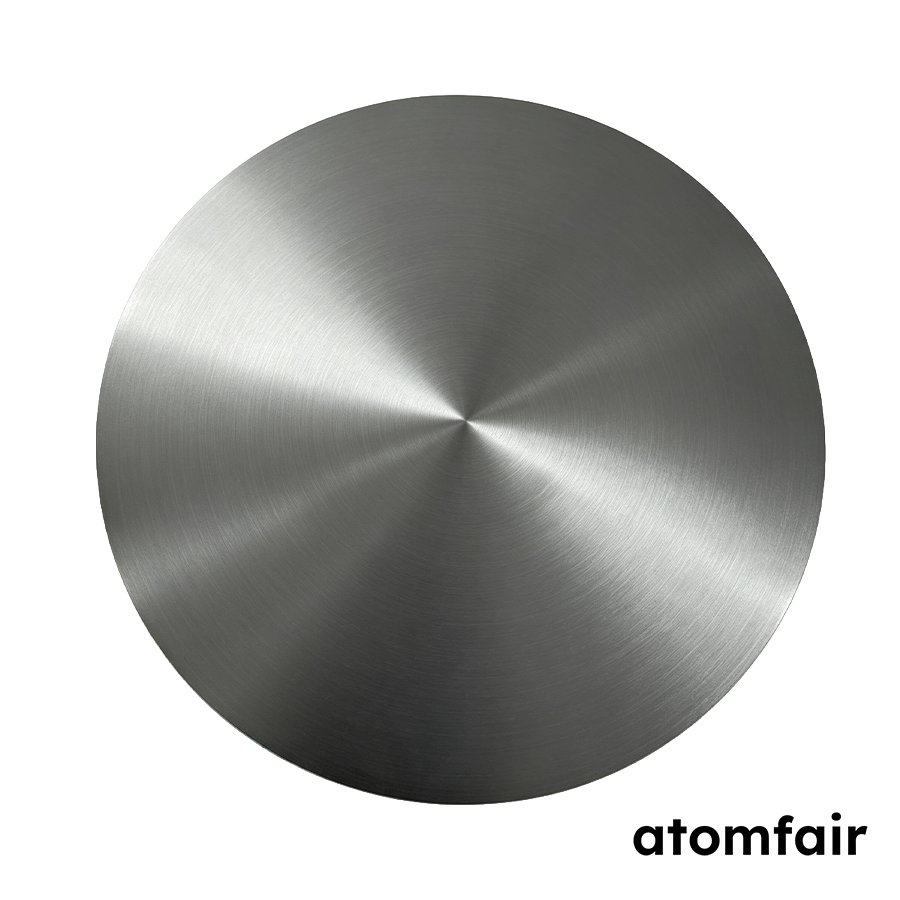
Molybdenum-Germanium Alloy Sputtering Target (MoGe (78:22 at%))
Product Type: Metal alloy sputtering target
Research-grade laboratory product
|
|||||||||||||||||||||||||||||||||||||
|
|||||||||||||||||||||||||||||||||||||
|
LABORATORY PROCUREMENT SUPPORT
INQUIRY: inquiry@atomfair.com
|
|||||||||||||||||||||||||||||||||||||
|
Manufacturer: Atomfair LLC
Brand: ATOMFAIR®
|
The target must be stored in a dry, inert atmosphere to prevent surface oxidation that degrades film adhesion and resistivity. Bonding integrity degrades above 150°C for indium-bonded targets, requiring active cooling during high-power sputtering runs.
- Oxidation Sensitivity: Exposure to ambient humidity or oxygen for extended periods prior to deposition can form a native oxide layer that reduces film purity and adhesion strength.
- Thermal Management: Indium-bonded targets must not exceed 150°C during operation to prevent bond-line failure and target delamination.
- Power Density Limit: Exceeding 15 W/cm² (DC) or 5 W/cm² (RF) can cause localized melting, cracking, or arcing that renders the target unusable.
- Substrate Preparation Requirement: Deposited film adhesion >15 MPa (ASTM D4541) requires substrates that are ultrasonically cleaned and plasma-etched immediately before coating.
This procedure covers mounting, bonding verification, and pre-sputter conditioning of a MoGe (78:22 at%) alloy target in a magnetron sputtering system. Proper conditioning ensures stoichiometric transfer and minimizes particulate contamination during the first deposition run.
Required Equipment: Magnetron sputtering cathode assembly, Torque wrench with calibrated driver, Inert gas supply (Ar, 99.999% purity)
- Inspect target surface and bonding
Inspect the target surface for scratches, pits, or discoloration and verify that the indium or elastomer bond layer is continuous and free of voids. - Mount target onto backing plate
Mount the target onto the oxygen-free copper or CuCrZr backing plate using the specified torque sequence to ensure uniform thermal contact. - Install assembly into vacuum chamber
Install the assembled cathode into the sputtering chamber and evacuate to a base pressure below 5×10⁻⁴ Pa to remove adsorbed moisture and oxygen. - Set argon working pressure
Set the argon working pressure to 0.5–2.0 Pa and allow the gas flow to stabilize for at least 5 minutes before igniting the plasma. - Condition target by pre-sputtering
Pre-sputter the target for 10–15 minutes at 50% of the intended deposition power with the shutter closed to remove surface contaminants and stabilize the plasma. - Verify deposition rate and uniformity
Verify the deposition rate using a quartz crystal microbalance and confirm thickness uniformity across a test substrate before starting the production run.
What is the typical deposition rate and thickness uniformity achievable with this MoGe (78:22) sputtering target under recommended conditions?
Under optimized DC/RF magnetron sputtering at 3-15 W/cm² (DC) or 1-5 W/cm² (RF) in 0.5-2.0 Pa Ar atmosphere, deposition rates of 10-80 nm/min are achievable with ±5% thickness uniformity across a 100 mm substrate. The fine-grained structure (≤50 µm) supports consistent sputtering yield and film homogeneity.
What bonding and backing plate options are available for the MoGe sputtering target, and how do they influence thermal management in high-power deposition?
The target is available with indium bonding or elastomer bonding, and backing plates of oxygen-free copper or CuCrZr. Indium bonding provides superior thermal conductivity for high-power DC sputtering, while elastomer bonding is suitable for lower power RF applications. The backing plate material must be matched to the sputtering system's cooling and mounting requirements.
How does the powder metallurgy/vacuum hot pressing manufacturing method affect the grain size and density of this MoGe sputtering target?
The target is produced by powder metallurgy and vacuum hot pressing, achieving a relative density ≥97% of theoretical and a fine grain size ≤50 µm. This manufacturing approach minimizes voids and ensures homogeneous composition, which contributes to stable sputtering rates and reduced particle generation during deposition.
Molybdenum-Germanium (78:22 at%) alloy sputtering target with 99.95% purity and fine grain size (≤50 µm) optimized for DC/RF magnetron sputtering, providing stoichiometric film transfer within ±2 at% and deposition rates of 10-80 nm/min with ±5% thickness uniformity.
Positive
- High-purity alloy with controlled stoichiometry: 99.95% purity with metallic impurities <500 ppm and O+N <100 ppm ensures minimal contamination, while the 78:22 at% composition transfers to films within ±2 at% under optimized sputtering conditions.
- Broad deposition rate and uniformity: Achieves deposition rates of 10-80 nm/min with ±5% thickness uniformity across a 100 mm substrate, suitable for diffusion barriers, gate electrodes, and high-temperature protective coatings with adhesion >15 MPa.
Trade-offs
- Fixed target size limits system compatibility: Target is supplied as 2 in diameter x 0.125 in; users must confirm this size fits their deposition system, as larger or custom dimensions are not available as standard.
- Stoichiometric transfer requires precise process control: Maintaining the ±2 at% composition transfer depends on operating within the specified DC 3-15 W/cm² or RF 1-5 W/cm² power density range and 0.5-2.0 Pa Ar atmosphere, requiring careful optimization.
Every advanced material, component, equipment, and instrument in our catalog is backed by rigorous testing. We maintain strict internal quality management frameworks and align with CE conformity metrics to deliver transparent, reproducible performance data via our public open-science repository.
To request raw batch performance data, submit formal vendor registration paperwork, or execute a fast-turnaround R&D manufacturing loop, contact us at inquiry@atomfair.com.
Item is dispatched under the Atomfair Shipping & Delivery Framework (Free worldwide shipping on orders over $59 USD excl. heavy equipment). Return is governed by the Atomfair Return & Refund Policy (7-day technical return window).