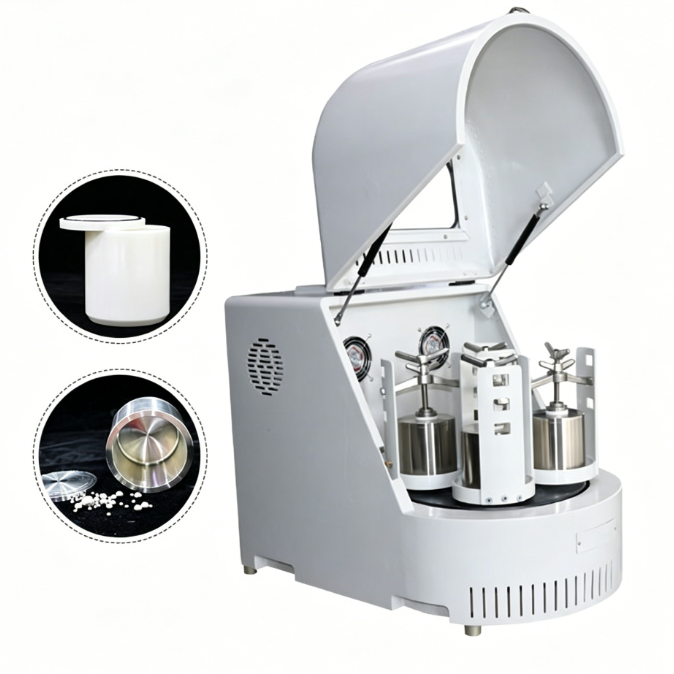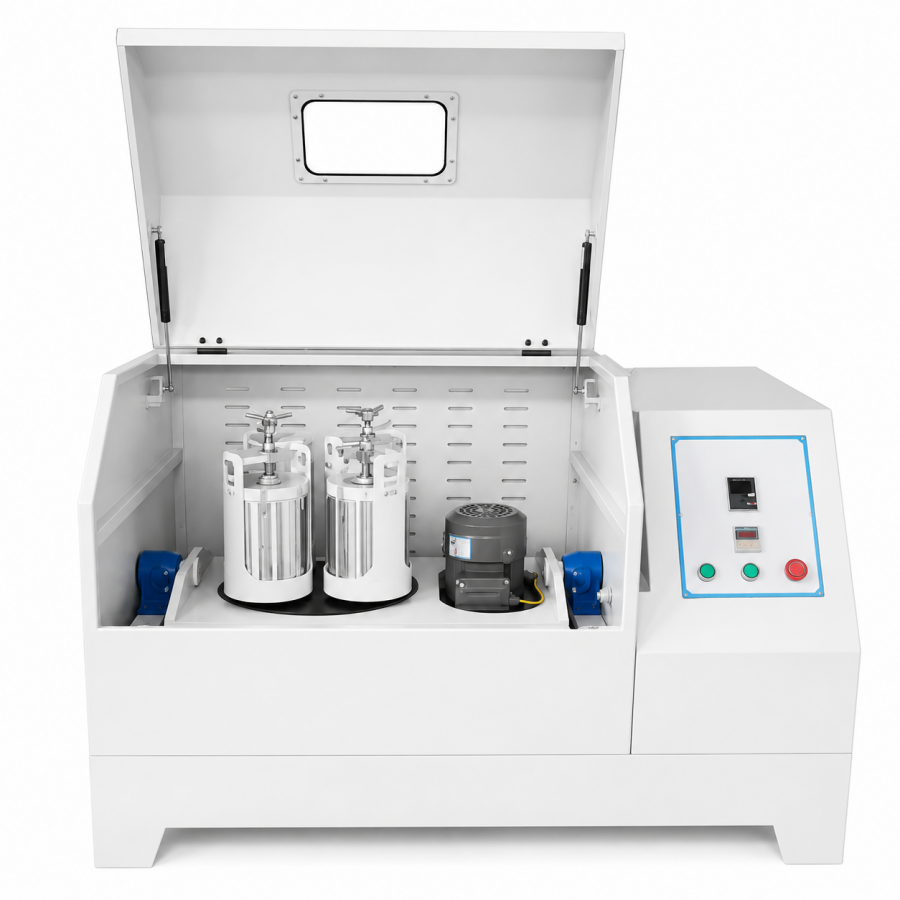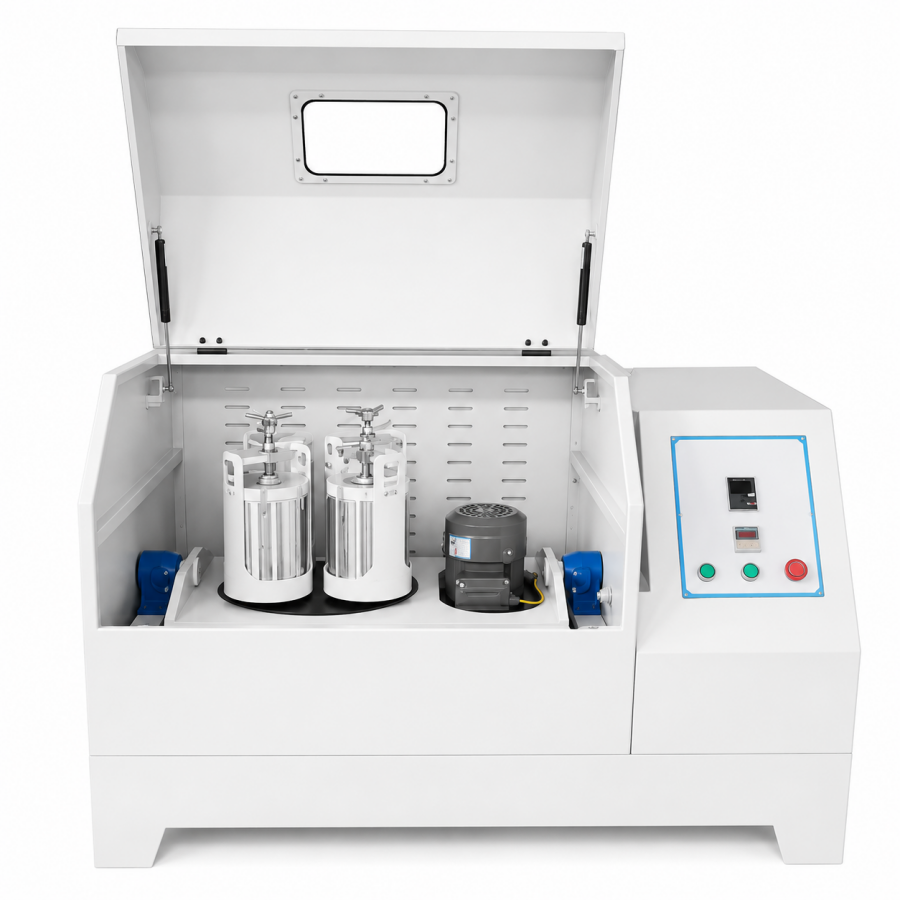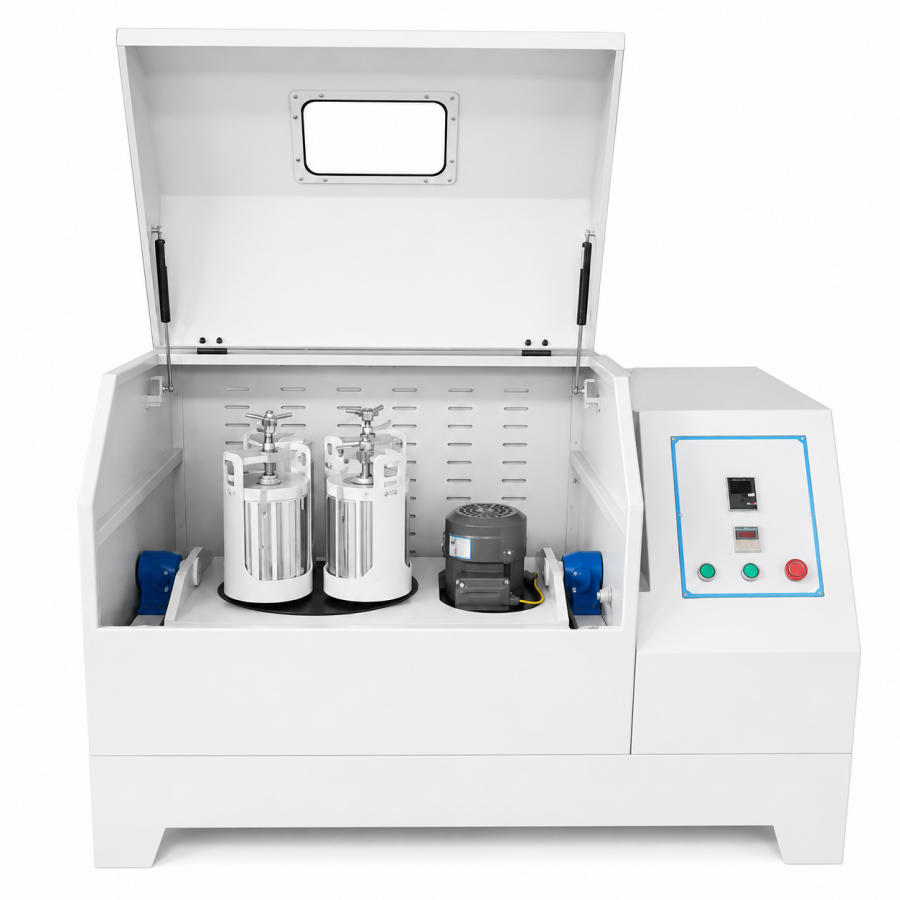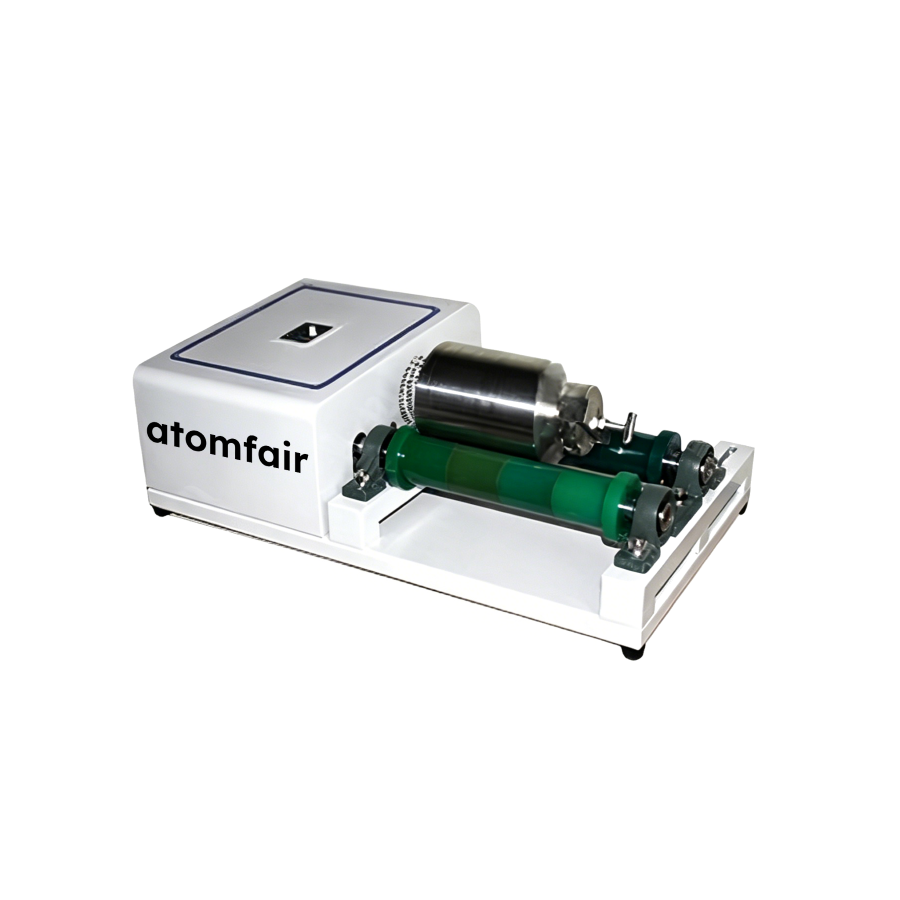
ATOMFAIR® ROLLER BALL MILL / MODEL ATOMFAIR-RBM-927RESEARCH GRADE MATERIAL
|
|||||||||||||||||||||||||
|
|||||||||||||||||||||||||
|
TAILORED SOLUTIONS FOR RESEARCH
Contact our engineering team for technical support or official quotations.
EMAIL: inquiry@atomfair.com
|
|||||||||||||||||||||||||
|
Manufacturer: Atomfair LLC
Brand: ATOMFAIR®
|
The mill requires careful alignment of containers on rubber-coated rollers before operation to prevent slippage. Roller shafts must be cleaned periodically with dry cloths, and jar seals must be tightly clamped in wet grinding modes to isolate solvent vapors from the digital control panel.
- Container Alignment: Ensure container positions are aligned exactly along the rubber-coated roller bars before engaging high-speed rotation to prevent physical slippage.
- Roller Shaft Cleaning: Clean the roller shafts periodically using dry cloth wipers to maintain robust mechanical traction.
- Wet Grinding Sealing: When utilizing wet grinding modes, ensure jar seals are tightly clamped to isolate active solvent vapors from the integrated digital control panel.
This guide describes the safe initialization and operation of the roller ball mill for grinding and mixing. Proper alignment and sealing are critical to prevent slippage and solvent vapor exposure.
Required Equipment: ATOMFAIR® Roller Ball Mill (Model ATOMFAIR-RBM-927), Grinding jars (Zirconia, Alumina, or Stainless Steel), Dry cloth wipers
- Align containers
Align the grinding containers exactly along the rubber-coated roller bars to prevent physical slippage during operation. - Set parameters
Set the desired rotation velocity and running time via the digital control interface. - Seal for wet grinding
Confirm that the jar seals are tightly clamped to isolate solvent vapors from the digital control panel when using wet grinding modes. - Start milling
Initiate the milling cycle and monitor the real-time roller speed telemetry on the digital display. - Clean roller shafts
Clean the roller shafts with dry cloth wipers after each use to maintain robust mechanical traction.
What is the advantage of the bi-directional alternating rotation over unidirectional milling for battery material homogenization?
The bi-directional alternating rotation eliminates material dead zones during processing, ensuring ultra-uniform grinding fineness across varying material matrices. This provides solid baseline data repeatability for multi-batch academic and corporate energy storage R&D paradigms, as stated in the product description.
What types of grinding jars are compatible with the Atomfair-RBM-927 roller ball mill?
The Atomfair-RBM-927 is compatible with Zirconia, Alumina, and Stainless Steel grinding jars. For specific recommendations or customized roller dimensions, the manufacturer advises contacting their engineering group at inquiry@atomfair.com.
What precautions are necessary when using the Atomfair-RBM-927 for wet grinding with solvent-based slurries?
When using wet grinding modes, ensure jar seals are tightly clamped to isolate active solvent vapors from the integrated digital control panel. Additionally, carefully align container positions along the rubber-coated roller bars before engaging high-speed operation up to 600 rpm to prevent physical slippage.
The Atomfair-RBM-927 roller ball mill provides bi-directional alternating rotation and stepless velocity control (60–600 rpm) for uniform grinding of battery materials and mineral samples, with the trade-off of requiring careful container alignment to prevent slippage at high speeds and periodic roller shaft cleaning to maintain traction, especially during wet solvent-based milling.
Positive
- Bi-directional alternating rotation: Program-driven clockwise/counterclockwise cycles minimize material stratification and dead zones, ensuring ultra-uniform grinding fineness across repeated batches.
- Stepless velocity management: A 400W motor supports 60–600 rpm range with digital control, allowing precise energy transfer matching to variable hardness of battery pastes, minerals, or chemical compounds.
Trade-offs
- Container alignment required: Containers must be carefully positioned along the rubber-coated roller bars before engaging high-speed sequences up to 600 rpm to prevent physical slippage during operation.
- Periodic cleaning and seal checks: Roller shafts require periodic cleaning with dry cloth to maintain traction; wet grinding demands tightly clamped jar seals to isolate solvent vapors from the digital control panel.
Every advanced material, component, equipment, and instrument in our catalog is backed by rigorous testing. We maintain strict internal quality management frameworks and align with CE conformity metrics to deliver transparent, reproducible performance data via our public open-science repository.
To request raw batch performance data, submit formal vendor registration paperwork, or execute a fast-turnaround R&D manufacturing loop, contact us at inquiry@atomfair.com.
Item is dispatched under the Atomfair Shipping & Delivery Framework (Free worldwide shipping on orders over $59 USD excl. heavy equipment). Return is governed by the Atomfair Return & Refund Policy (7-day technical return window).