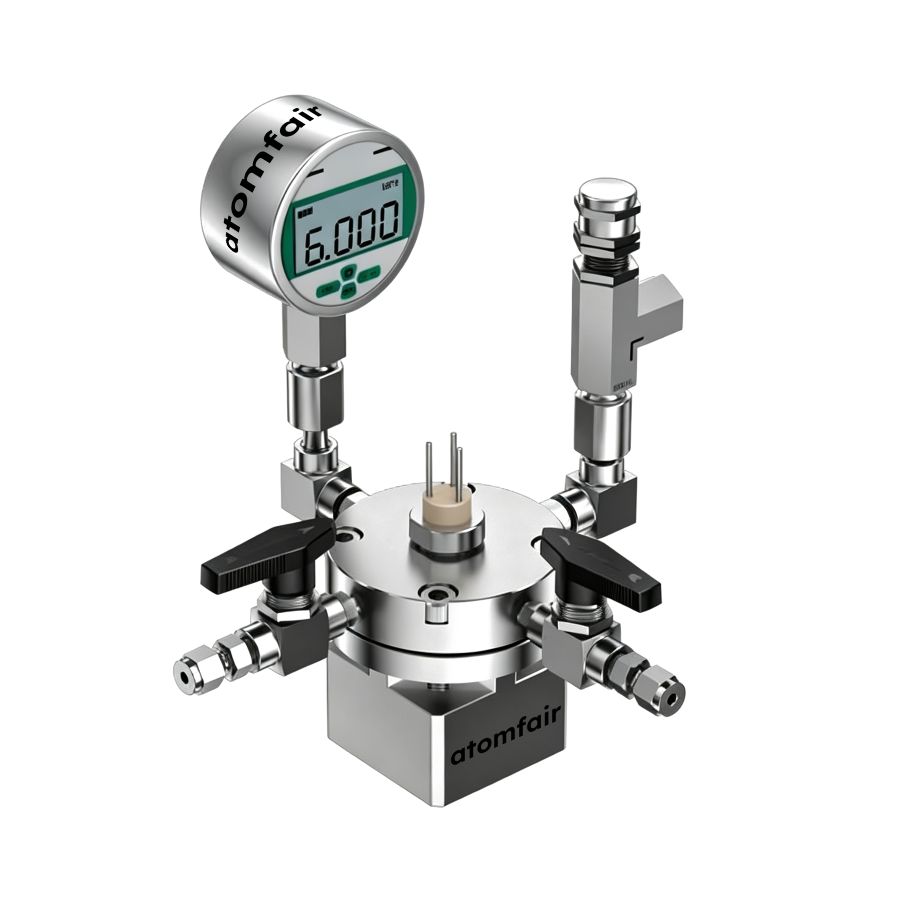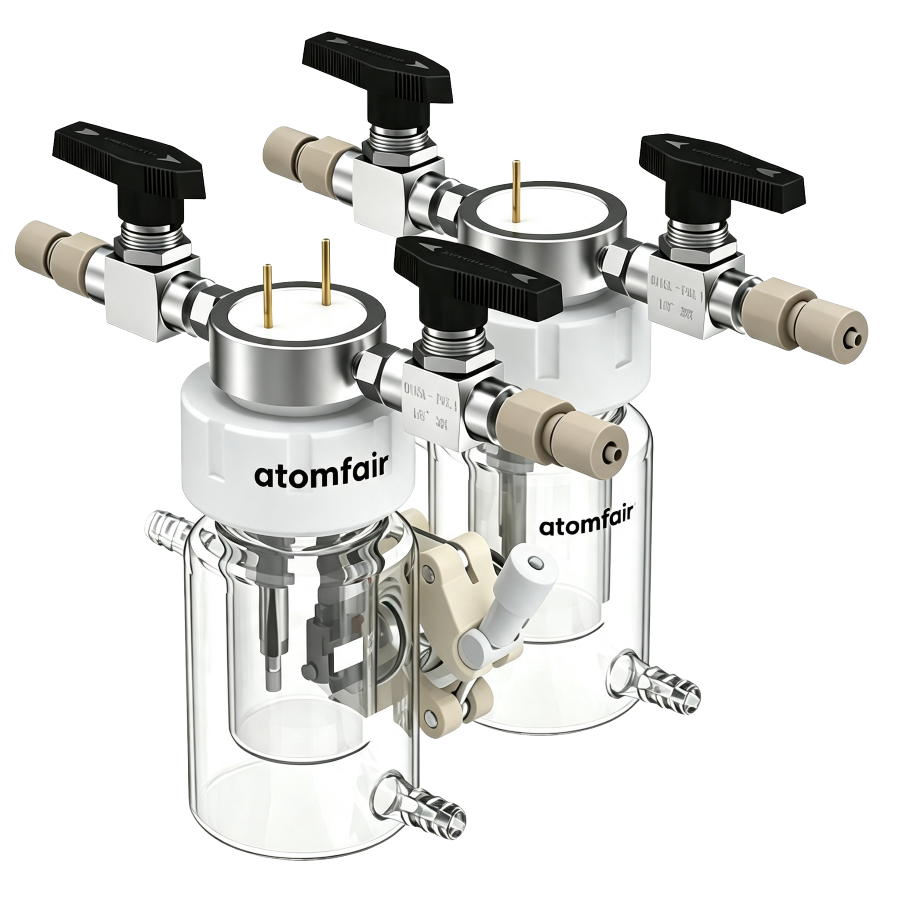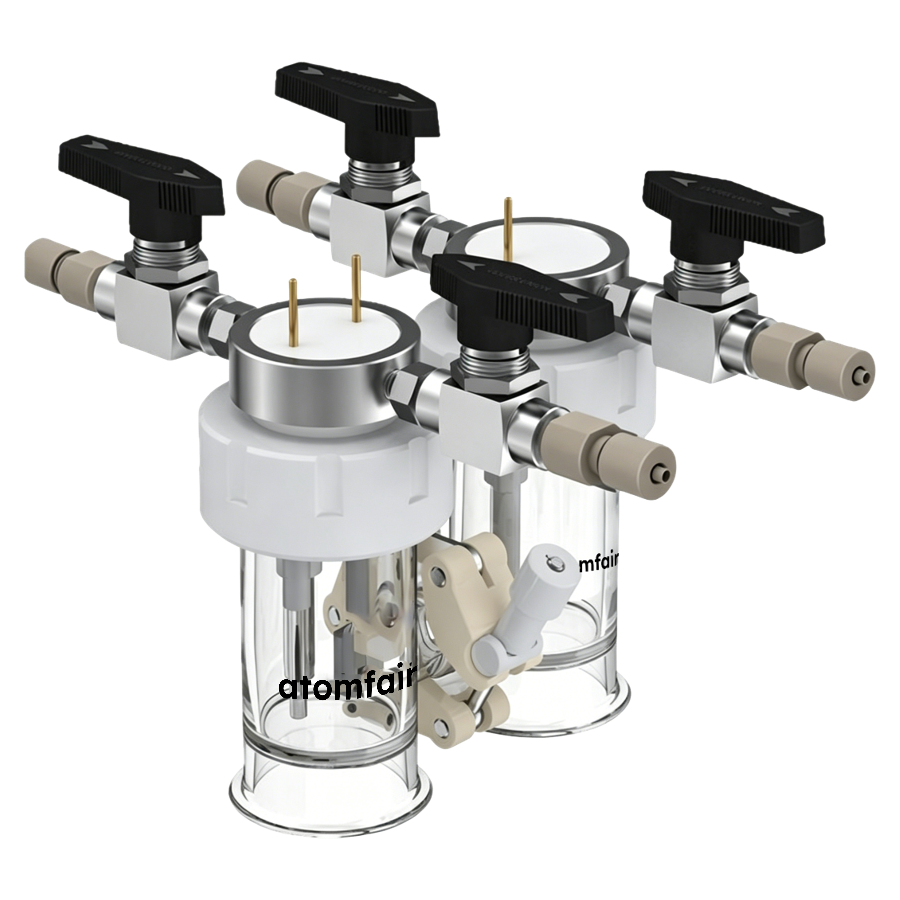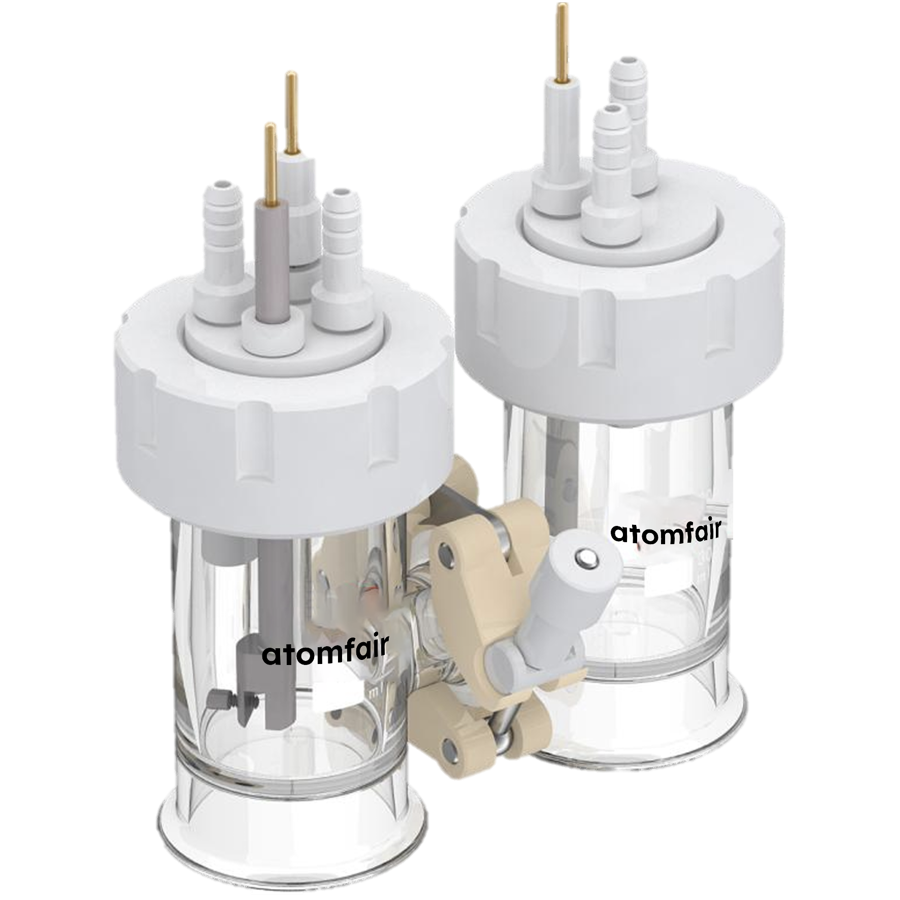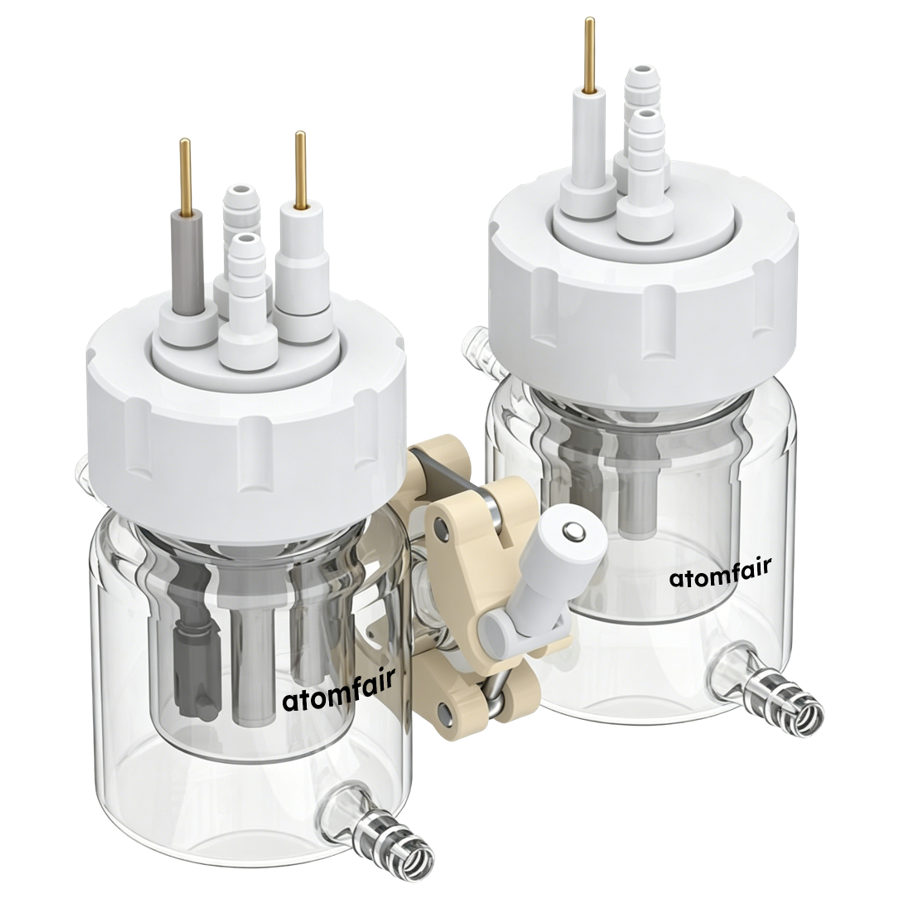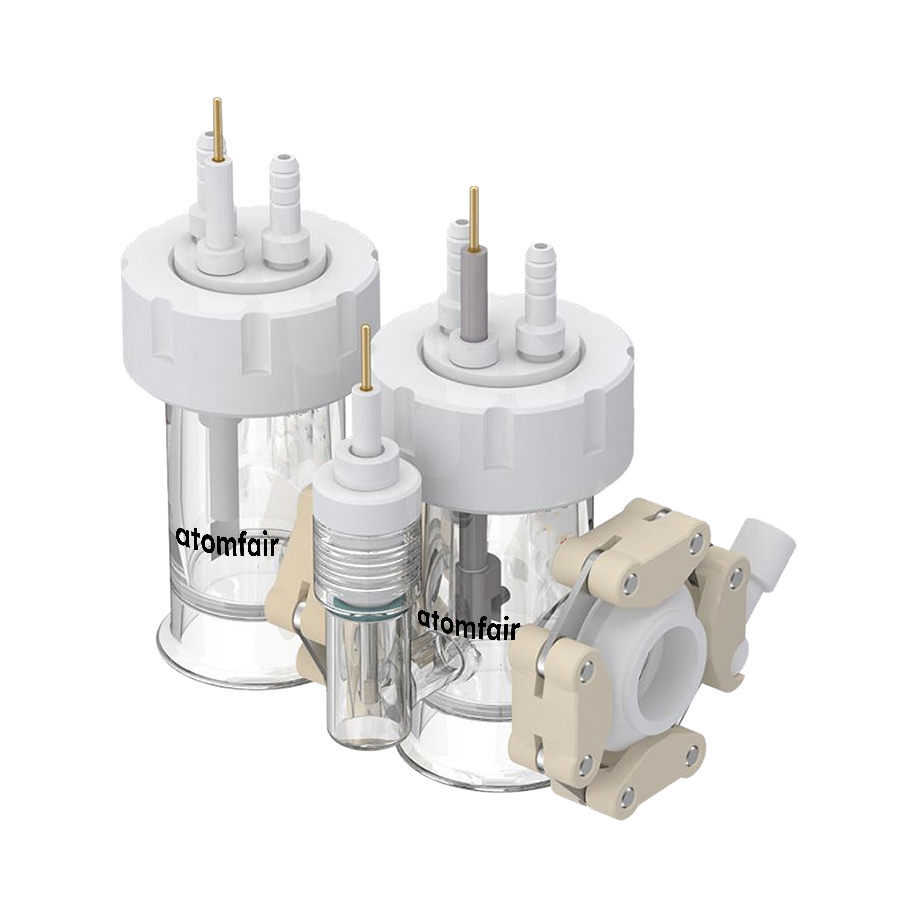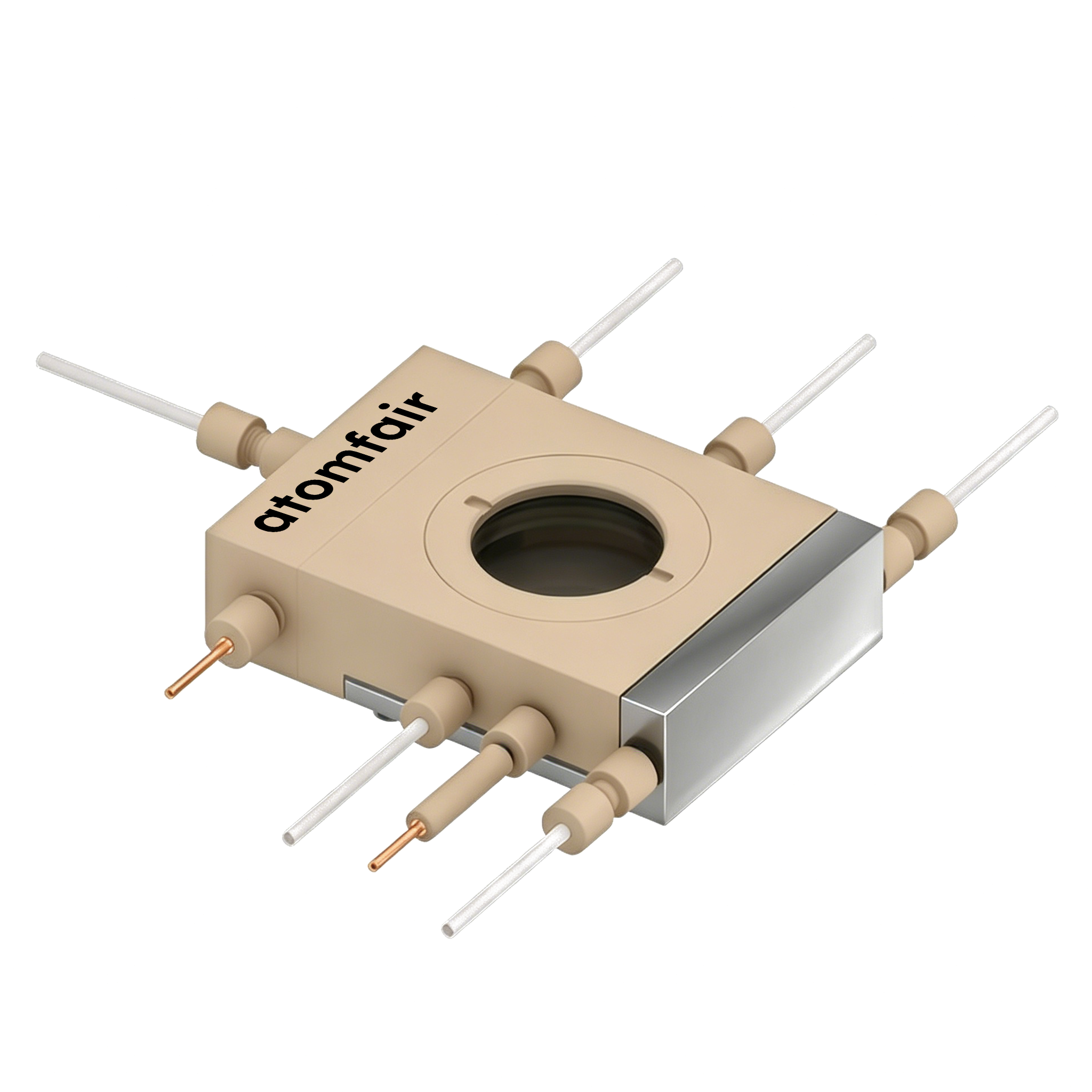
In-situ Raman Electrochemical Cell, 3H Gas Diffusion TypeProduct Type: In-situ Raman electrochemical cell
Research-grade laboratory product
|
|||||||||||||||||||||||
|
|||||||||||||||||||||||
|
LABORATORY PROCUREMENT SUPPORT
For model selection, technical compatibility or configuration confirmation, contact our technical sales team.
E-MAIL: inquiry@atomfair.com
|
|||||||||||||||||||||||
|
Manufacturer: Atomfair LLC LLC
Brand: ATOMFAIR®
|
This cell requires careful selection of compatible electrodes, membranes, and windows to ensure proper electrochemical and optical performance. The working electrode must be positioned within 6 mm of the optical window to maintain Raman signal quality.
- Electrode Compatibility: The cell accepts gas diffusion electrodes or plate-type electrode materials with a standard area of 1 cm², but custom sizes can be accommodated.
- Membrane Separation: The membrane-separated chambers require a membrane that is compatible with the chosen electrolyte and gas diffusion conditions.
- Optical Window Alignment: The optical window diameter is fixed at 37 mm, and the working electrode-to-window distance must be less than 6 mm for optimal Raman signal collection.
- Gas Diffusion Channel: The lower gas channel enables gas diffusion through the electrode, requiring a gas diffusion electrode that is properly sealed to prevent leakage.
Assemble the cell by installing the membrane, electrodes, and window while ensuring proper sealing and alignment. Verify all connections before introducing electrolyte or gas.
Required Equipment: Ag/AgCl reference electrode, Graphite rod counter electrode, Membrane, Gas diffusion electrode
- Inspect components
Inspect all cell components for cleanliness and damage before assembly. - Install membrane
Install the membrane between the cathode and anode chambers, ensuring a tight seal. - Position working electrode
Position the working electrode at a distance of less than 6 mm from the optical window. - Connect reference and counter electrodes
Connect the reference and counter electrodes to their respective ports. - Seal gas channel
Seal the gas channel and verify the gas diffusion electrode is properly connected.
What are the key trade-offs between using gas diffusion electrodes versus plate-type electrodes in the Atomfair AF-RM-3HGD in-situ Raman cell?
The cell is optimized for gas diffusion electrodes due to the integrated lower gas channel, enabling in-situ gas-phase electrochemistry. Plate-type electrodes are compatible but do not utilize the gas diffusion function, potentially limiting the range of reactions. The trade-off involves gas phase vs. liquid phase studies, with membrane separation and chamber design tailored for gas diffusion configurations.
What Raman spectrometer specifications are required to integrate with the AF-RM-3HGD cell?
The 37 mm diameter optical window and less than 6 mm working electrode-to-window distance require a Raman microscope objective with sufficient working distance to focus through the window onto the electrode. The 1 cm² electrode area is compatible with macro-Raman or micro-Raman spot sizes. No further optical constraints are specified; users should verify objective clearance and alignment.
What infrastructure is required to safely operate the AF-RM-3HGD cell in a gas diffusion electrochemical experiment?
The cell requires connection of the lower gas channel to a controlled gas supply with pressure regulation, along with a potentiostat for three-electrode measurements using the provided Ag/AgCl reference and graphite rod counter electrode. The membrane-separated chambers demand careful assembly to avoid cross-contamination, and the system should be used in a fume hood if volatile electrolytes or gases are involved.
This in-situ Raman electrochemical cell integrates a lower gas channel for gas diffusion studies with membrane-separated dual chambers, enabling independent electrolyte control. The fixed optical geometry and electrode specifications require careful configuration for non-standard applications.
Positive
- Gas diffusion function integrated: The lower gas channel adds gas diffusion capability, enabling in-situ Raman electrochemical testing of gas-involved reactions such as CO2 reduction or fuel cell processes.
- Membrane-separated dual chambers: Cathode and anode chambers are separated by a membrane, allowing isolated electrolyte environments for independent control of half-cell conditions.
Trade-offs
- Fixed working distance constraint: The working electrode to optical window distance is less than 6 mm, which may limit optical path length or require precise alignment for certain Raman configurations.
- Electrode customization required: Standard electrodes are Ag/AgCl reference and graphite rod counter; alternative electrodes (e.g., Ag+ reference, Pt wire) must be specified at order, and non-standard electrode sizes or window materials require additional inquiry.
Every advanced material, component, equipment, and instrument in our catalog is backed by rigorous testing. We maintain strict internal quality management frameworks and align with CE conformity metrics to deliver transparent, reproducible performance data via our public open-science repository.
To request raw batch performance data, submit formal vendor registration paperwork, or execute a fast-turnaround R&D manufacturing loop, contact us at inquiry@atomfair.com.
Item is dispatched under the Atomfair Shipping & Delivery Framework (Free worldwide shipping on orders over $59 USD excl. heavy equipment). Return is governed by the Atomfair Return & Refund Policy (7-day technical return window).