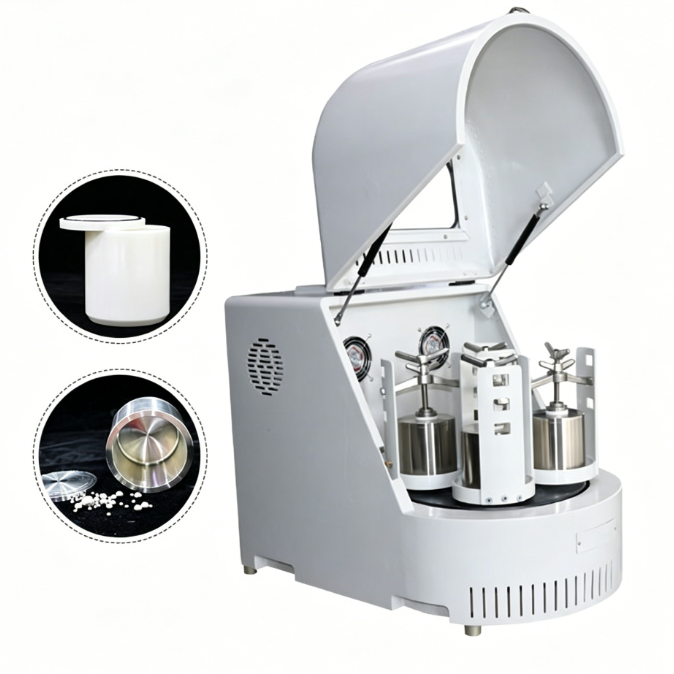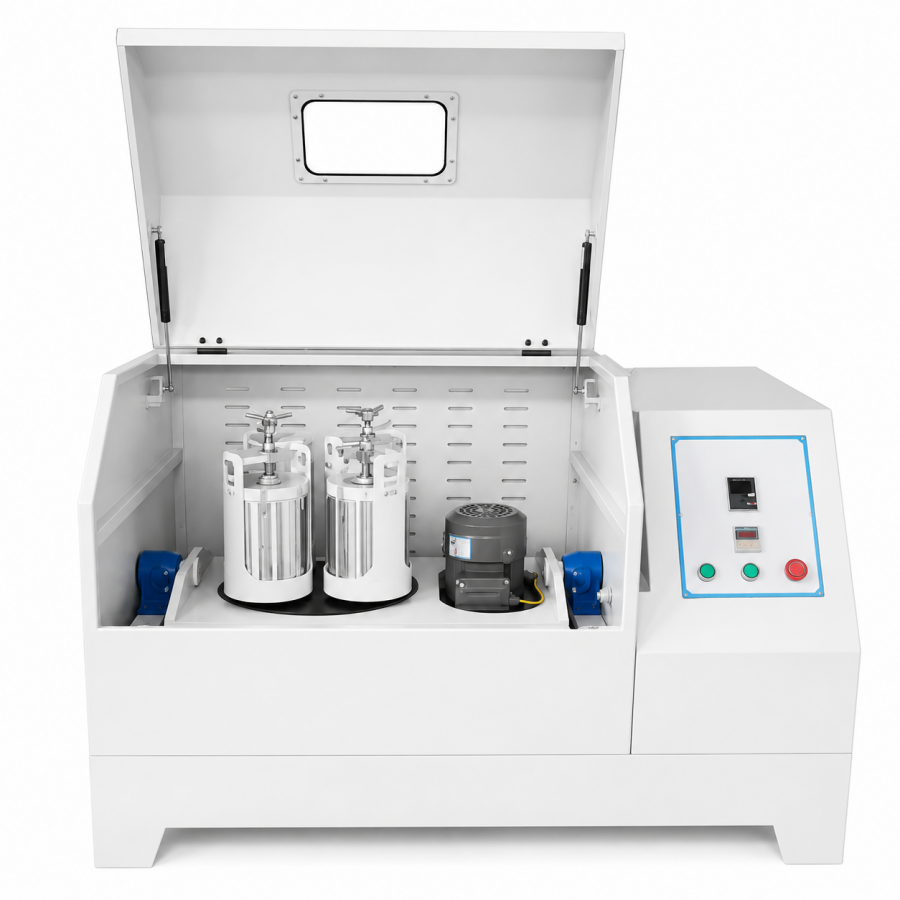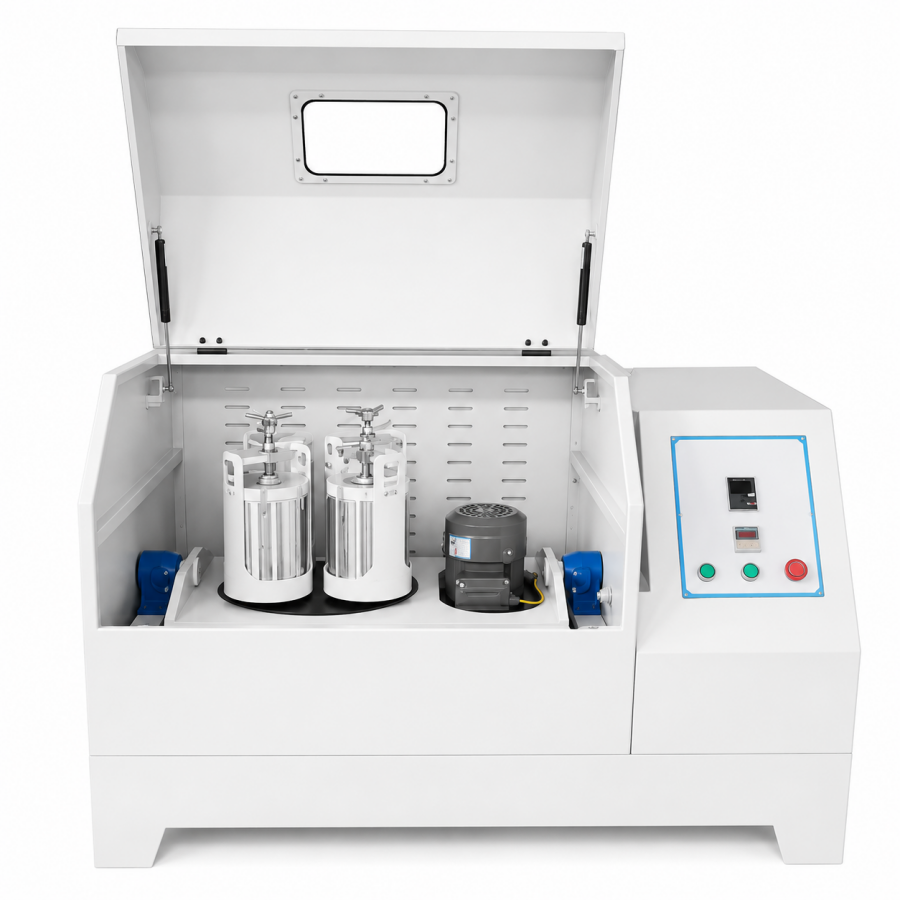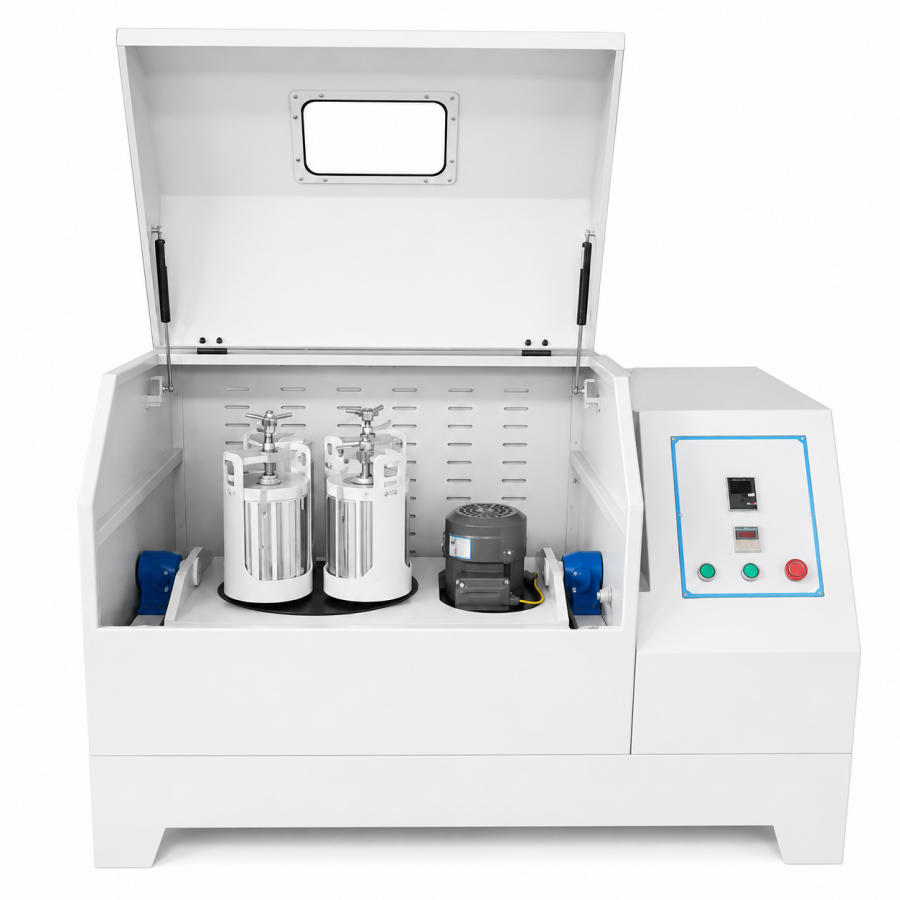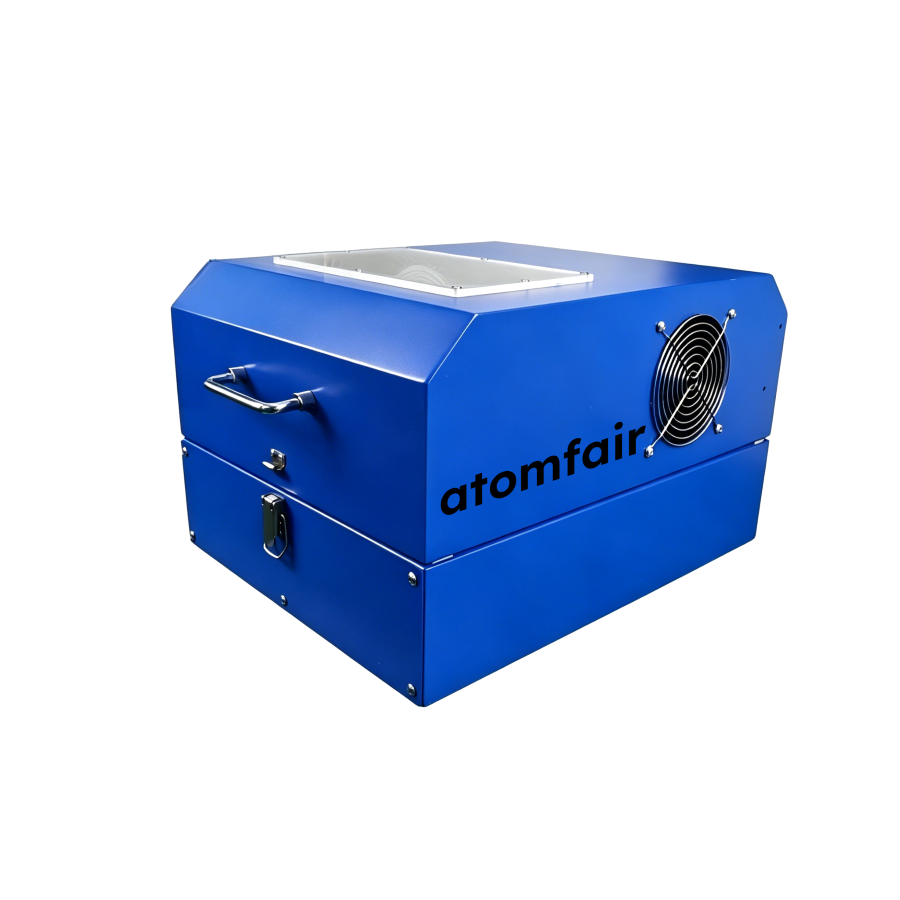
ATOMFAIR® HIGH-SPEED VIBRATING BALL MILL / MODEL ATOMFAIR-HSVM-638RESEARCH GRADE MATERIAL
|
|||||||||||||||||||||||||||||
|
|||||||||||||||||||||||||||||
|
TAILORED SOLUTIONS FOR RESEARCH
Contact our engineering team for technical support or official quotations.
EMAIL: inquiry@atomfair.com
|
|||||||||||||||||||||||||||||
|
Manufacturer: Atomfair LLC
Brand: ATOMFAIR®
|
This document outlines critical safety and operational constraints for the Atomfair high-speed vibrating ball mill. Adherence to these limits prevents mechanical failure and ensures user safety.
- Loading Limit: Total sample and media volume must not exceed one-third of the ball mill jar capacity to prevent imbalance and mechanical failure.
- Clamp Security: Ensure the main mechanical clamps are fully secured before initiating the high-speed vibration sequence.
- Post-Operative Cleaning: Wash all wetted stainless steel components with electronics-grade solvent immediately after wet milling to prevent oxidation.
This guide provides step-by-step instructions for safe and effective operation of the high-speed vibrating ball mill. Follow these steps to achieve optimal sample preparation while avoiding damage or injury.
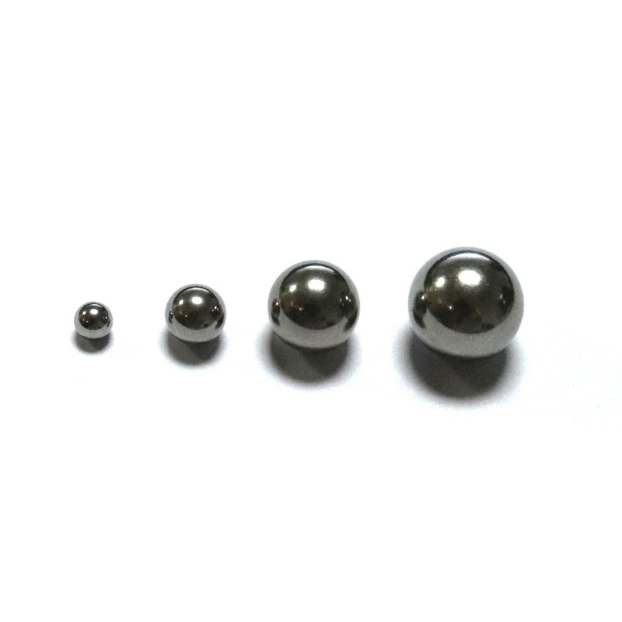
Required Equipment: Atomfair-HSVM-638 High-Speed Vibrating Ball Mill, 80 mL Stainless Steel Mixing Jar, Multi-Diameter Grinding Ball Set
- Inspect Components
Inspect the mixing jar and grinding balls for cleanliness and damage. - Load Sample and Media
Transfer the sample and grinding media into the jar, ensuring the total volume does not exceed one-third of the jar capacity. - Secure the Jar
Secure the main mechanical clamps completely to lock the jar in place. - Set the Timer
Set the integrated timer to the desired duration within the 0-120 minute range. - Start the Mill
Start the mill and allow it to run until the timer stops. - Clean After Wet Runs
Immediately wash all wetted stainless steel components with electronics-grade solvent to prevent oxidation.
How does the 1200 cycles/min vibration frequency affect achievable particle size for different materials?
The mill operates at 1200 cycles per minute, capable of reducing particles down to 0.1 μm. However, the maximum feed size must be <1 mm, and the jar loading must not exceed 1/3 volume to maintain effective milling. Actual achievable fineness depends on material brittleness and milling time within the 0–120 minute range.
Can the Atomfair-HSVM-638 handle wet milling with aggressive solvents without contamination?
Yes, the mill is engineered for both dry and wet ball milling protocols, with a fully sealed chamber to prevent leakage and cross-contamination. However, after wet runs, stainless steel elements must be washed immediately with electronics-grade solvents to mitigate oxidation. Alternative jar materials such as agate, alumina, or zirconia are available for enhanced chemical compatibility.
What critical operational constraints must be followed to avoid damage during high-speed vibration?
Never exceed the maximum 1/3 volumetric jar load constraint for combined samples and milling media to prevent internal chamber balance malfunctions. Secure the main mechanical clamps completely before initializing the 1200 cycles/min vibration sequence. Wash wetted stainless elements immediately after wet runs to mitigate oxidation.
The Atomfair-HSVM-638 high-speed vibrating ball mill delivers sub-micron milling down to 0.1 μm at 1200 cycles/min with sealed dual-modality dry/wet processing, but requires strict adherence to the 1/3 jar loading limit and immediate cleaning of stainless steel components after wet runs to prevent oxidation.
Positive
- Sub-micron milling to 0.1 μm: The 1200 cycles/min high-velocity drive achieves certified minimum discharge particle sizes down to 0.1 μm, enabling fine grinding for advanced material synthesis without localized thermal spikes.
- Sealed dual-modality dry/wet processing: Custom-engineered sealed chamber prevents cross-contamination and leakage during both dry grinding and solvent-heavy wet ball milling protocols, preserving sample integrity.
Trade-offs
- Strict 1/3 jar loading limit: Total sample and media volume must not exceed one-third of the jar capacity to avoid internal balance malfunctions during the 1200 cycles/min vibration sequence.
- Oxidation risk on stainless steel components: Wetted stainless steel parts must be washed immediately with electronics-grade solvents after wet runs to mitigate oxidation, adding mandatory post-processing steps.
Every advanced material, component, equipment, and instrument in our catalog is backed by rigorous testing. We maintain strict internal quality management frameworks and align with CE conformity metrics to deliver transparent, reproducible performance data via our public open-science repository.
To request raw batch performance data, submit formal vendor registration paperwork, or execute a fast-turnaround R&D manufacturing loop, contact us at inquiry@atomfair.com.
Item is dispatched under the Atomfair Shipping & Delivery Framework (Free worldwide shipping on orders over $59 USD excl. heavy equipment). Return is governed by the Atomfair Return & Refund Policy (7-day technical return window).