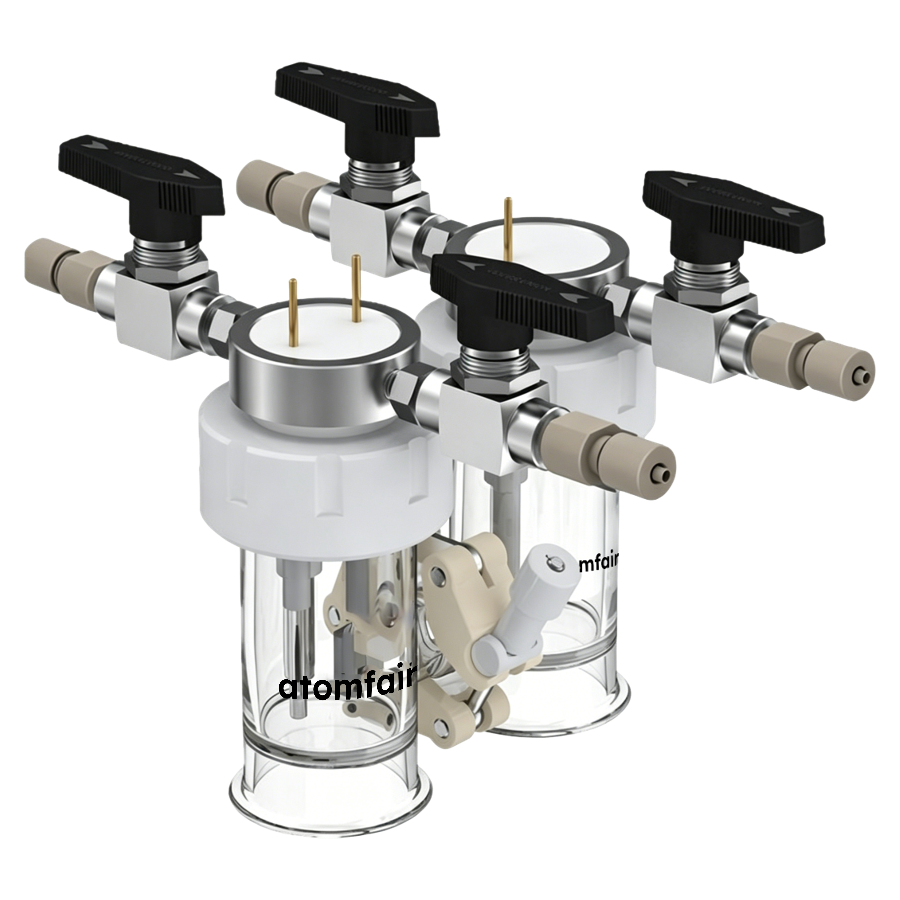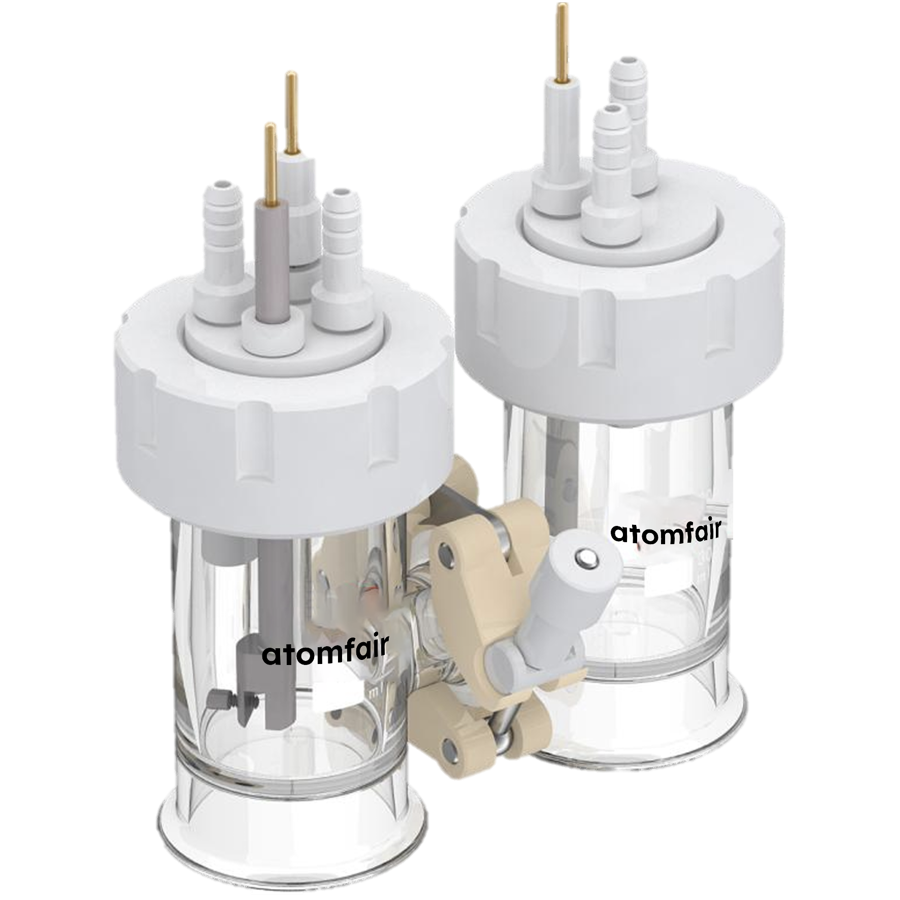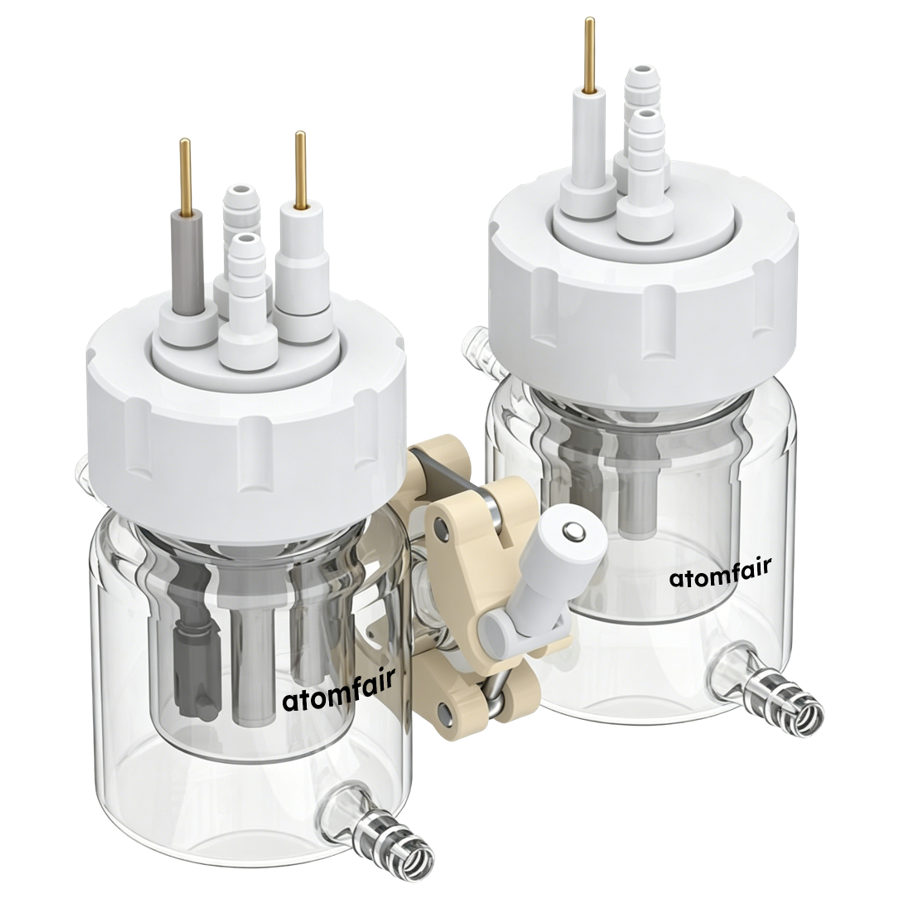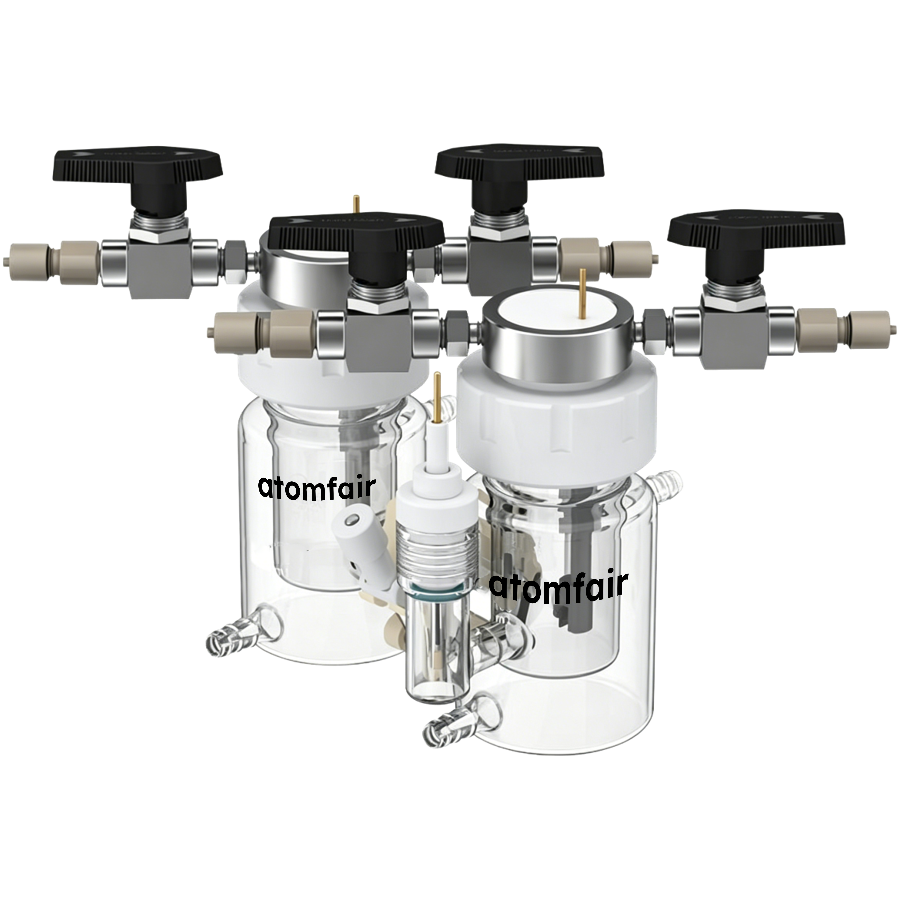
Small-Volume H-Type Replaceable-Membrane Electrolytic Cell, Relative Sealing, Single Layer, Sampling Port | ATOMFAIRProduct Type: Electrochemical cell
Research-grade laboratory product
|
|||||||||||||||||||||||
|
|||||||||||||||||||||||
|
LABORATORY PROCUREMENT SUPPORT
For model selection, accessory matching, platform compatibility or configuration confirmation, contact our technical sales team.
E-MAIL: inquiry@atomfair.com
|
|||||||||||||||||||||||
|
Manufacturer: Atomfair LLC
Brand: ATOMFAIR®
|
Manufacturer: Atomfair LLC
Brand: ATOMFAIR®
This electrochemical cell requires extended-length electrodes and membrane compatibility verification with the electrolyte before use. Seals must be inspected prior to assembly to ensure proper compression sealing and prevent leakage.
- Membrane Compatibility Verification: Verify that the ion-exchange membrane is chemically compatible with the intended electrolyte before use to prevent degradation or contamination.
- Extended-Length Electrode Requirement: Use only extended-length electrodes to ensure complete immersion in the compact cell geometry.
- Seal Inspection Before Assembly: Inspect all O-rings and PTFE compression seals for damage or wear before each assembly to ensure leak-free operation.
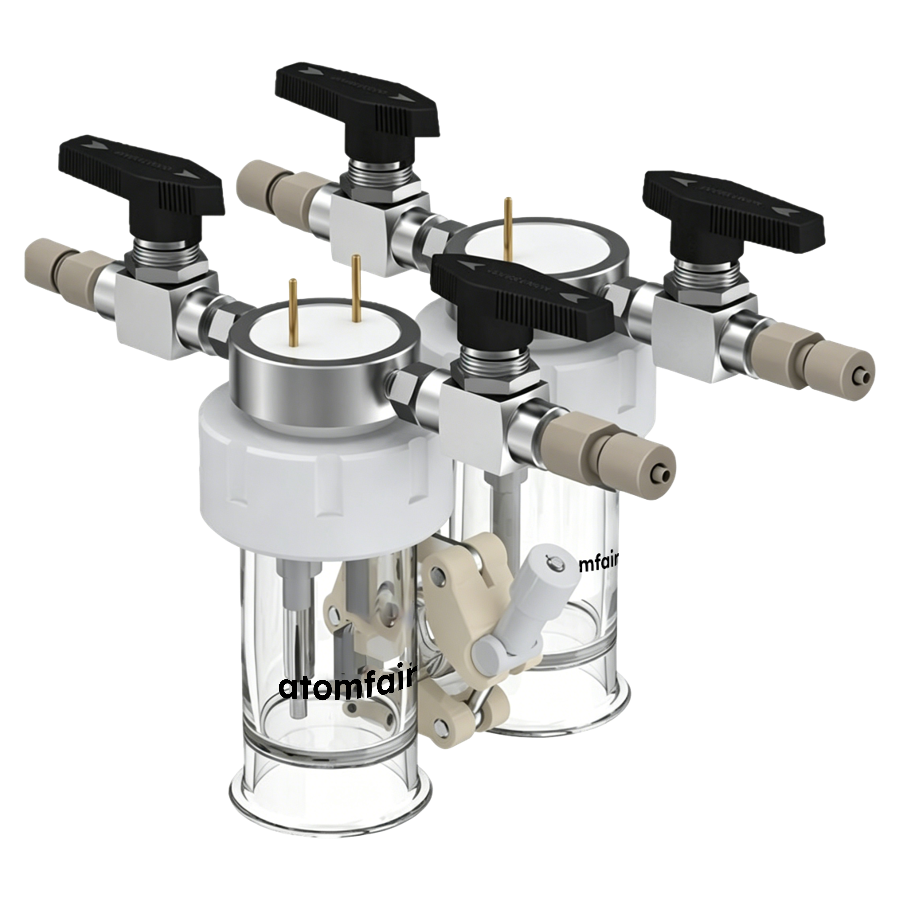
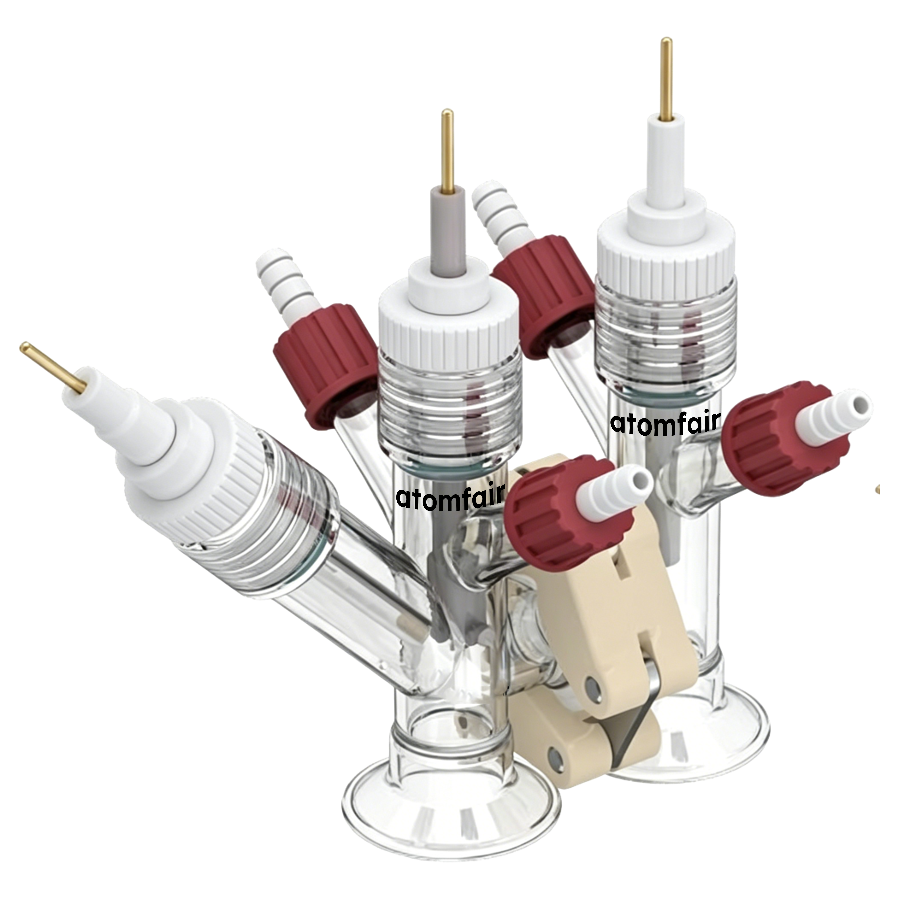
- Sampling Port Operation: The integrated sampling port allows sample extraction without disturbing the sealed environment; ensure the port cap is securely closed after use.
- Membrane Replacement Procedure: Replace the ion-exchange membrane using the chain-sealed connections to maintain seal integrity during reassembly.
This procedure describes the assembly, sealing, and sampling steps for the single-layer replaceable-membrane cell. Follow these steps to ensure proper sealing and accurate electrochemical measurements.
Required Equipment: PTFE compression cap, O-ring seals, Chain-sealed membrane connector, Sampling port cap
- Inspect seals
Inspect all O-rings and PTFE compression seals for damage or wear before assembly. - Install membrane
Install the ion-exchange membrane into the chain-sealed connection between the two compartments. - Assemble compartments
Secure the two compartments together using the internal threaded PTFE cap with compression sealing. - Insert electrodes
Insert extended-length working and reference electrodes through the compression fittings and tighten the O-ring seals. - Extract sample
Use the integrated sampling port to extract samples during the experiment without opening the cell. - Verify seal integrity
After assembly, verify that all seals are tight and no leakage occurs before starting the experiment.
How does the elevated floor design in the ATOMFAIR H-type cell eliminate solution hiding effects?
The elevated floor design physically raises the working electrode above the bottom of the cell, preventing accumulation of stagnant electrolyte or reaction products at the bottom. This eliminates solution hiding effects and improves mass transport to the electrode surface, as stated in the product specifications.
What type of electrodes and membrane are required for the ATOMFAIR small-volume H-type electrolytic cell?
This cell requires extended-length electrodes for complete immersion in the compact 10 mL per compartment geometry. An ion-exchange membrane is required but sold separately, and features chain-sealed connections for easy replacement. Users must verify membrane compatibility with their specific electrolyte before use, as noted in the important notice.
What precautions should be taken when assembling and sealing the ATOMFAIR H-type cell?
The cell uses internal threaded PTFE compression caps for glass sealing and O-ring compression fittings for electrode seals. Before assembly, inspect all seals and O-rings for damage. Ensure the ion-exchange membrane is properly seated in the chain-sealed connection. The semi-sealed design is not fully airtight; for temperature-controlled experiments, consider the double-layer version available upon request.
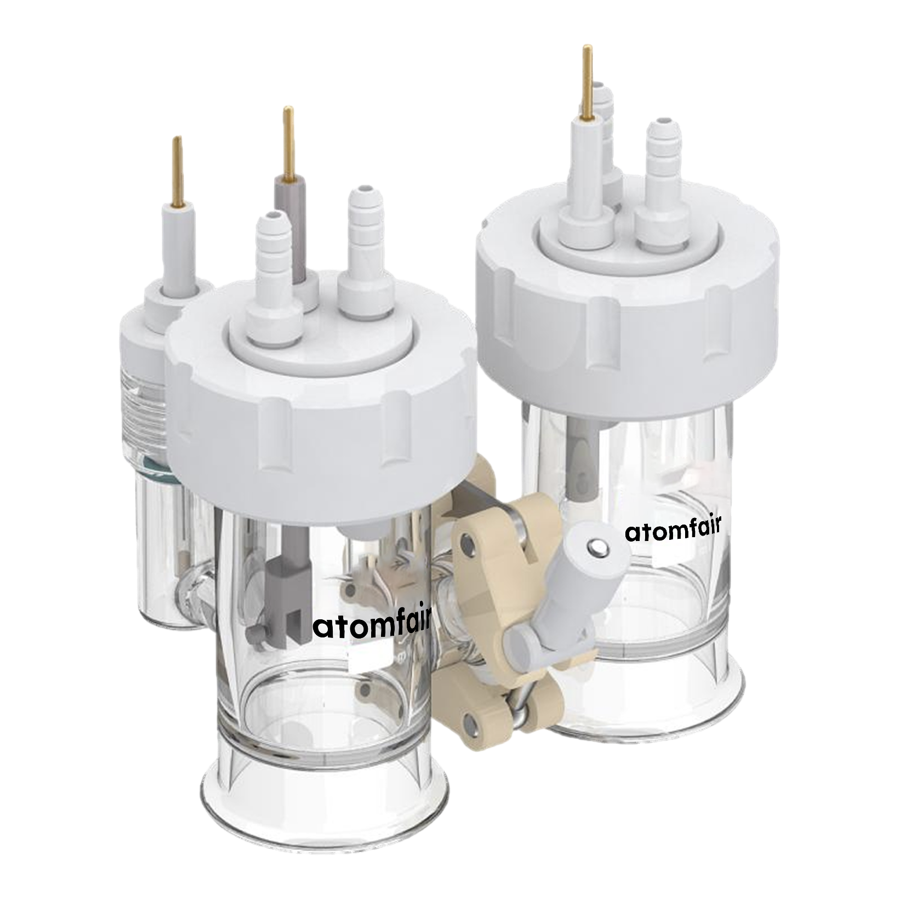
This H-type electrolytic cell offers a semi-sealed two-compartment design with integrated sampling port and co-located electrodes to reduce iR drop, but requires extended-length electrodes and external membrane procurement.
Positive
- Integrated sampling port: Enables convenient sample extraction during experiments without compromising system integrity, allowing for operando analysis.
- Co-located electrodes reduce iR drop: Working and reference electrodes placed in the same compartment minimize uncompensated resistance, improving measurement accuracy in three-electrode configurations.
Trade-offs
- Extended-length electrodes required: The cell is designed for extended-length electrodes, which must be ordered separately and are not included, adding procurement steps and compatibility considerations.
- Ion-exchange membrane not included: The membrane is not supplied with the cell; users must source a compatible membrane separately and verify compatibility with the electrolyte before assembly.
Every advanced material, component, equipment, and instrument in our catalog is backed by rigorous testing. We maintain strict internal quality management frameworks and align with CE conformity metrics to deliver transparent, reproducible performance data via our public open-science repository.
To request raw batch performance data, submit formal vendor registration paperwork, or execute a fast-turnaround R&D manufacturing loop, contact us at inquiry@atomfair.com.
Item is dispatched under the Atomfair Shipping & Delivery Framework (Free worldwide shipping on orders over $59 USD excl. heavy equipment). Return is governed by the Atomfair Return & Refund Policy (7-day technical return window).